Leaderboard

Popular Content
Showing content with the highest reputation since 05/25/2026 in all areas
-
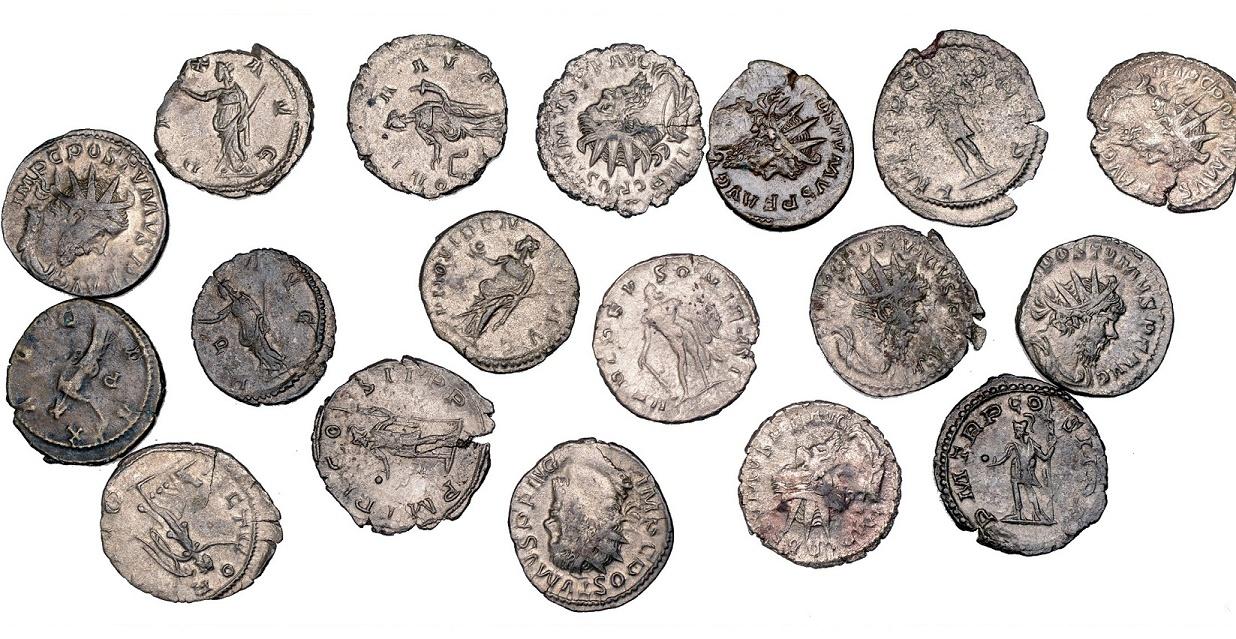
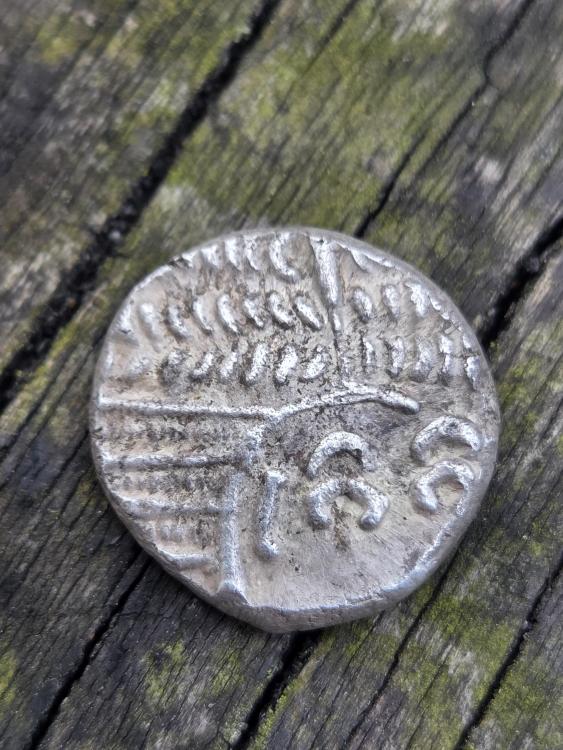
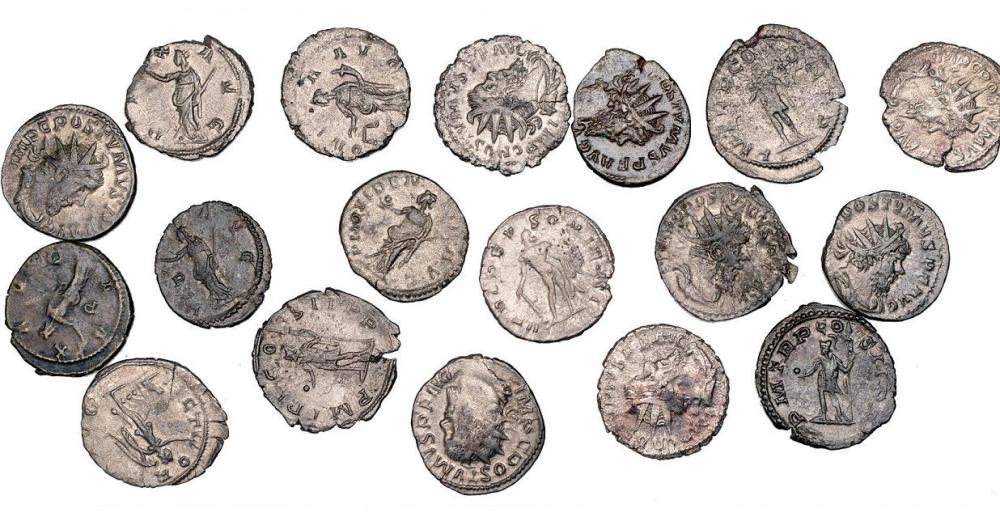
I just won 18 Postumus (A.D. 260- 269) coins from the Oliver's Orchard Hoard of 1983. The hoard was found while plowing a field and consisted of 1,559 coins, almost entirely of Postumus antoniniani except for 14 denarii of Septimius Severus.
 6 points
 -
awesome...how many forums are you going to join to advertise your coin for sale?5 points
-
1862 2+G F38 Another rare slot in the collection filled
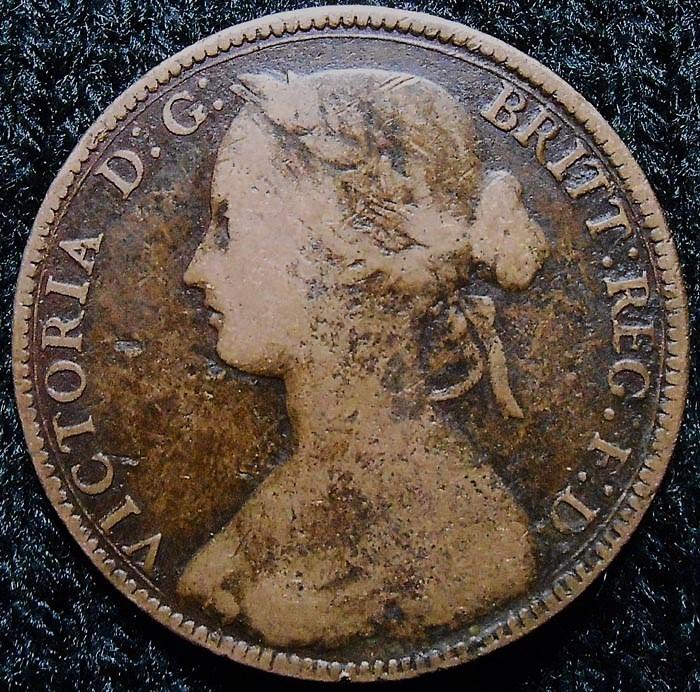
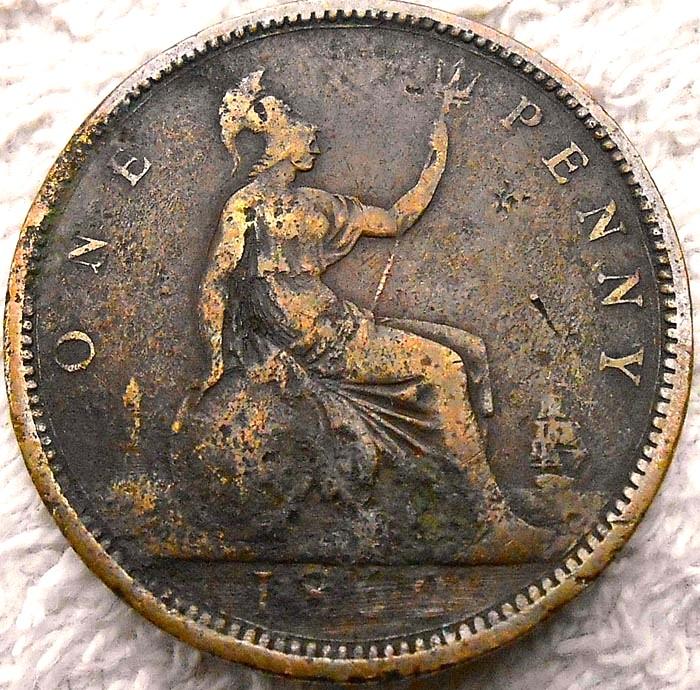 5 points
 -
Hadrian Ӕ Tetradrachm of Alexandria Dated Year 20. AD 135-136 Obv: AYT KAIC TRAIA ADRIANOC CEB clockwise from top right, laureate head left. Rev: Date LK (year 20) to left of Nilus sitting left, holding reed and cornucopiae, crocodile beneath him. Emmett 10165 points
-
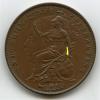
I wonder what Linda would make of this one. Perhaps missing waves......and lighthouse!!
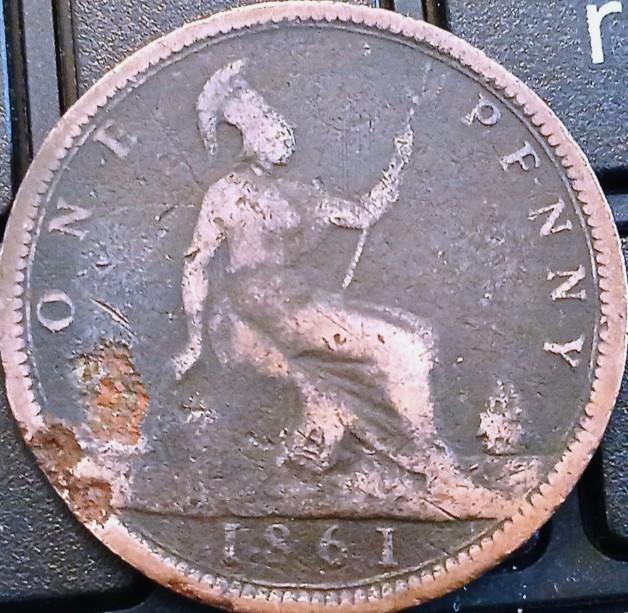 4 points
 -
Its a rotated die clash which this overlayed picture shows quite well.
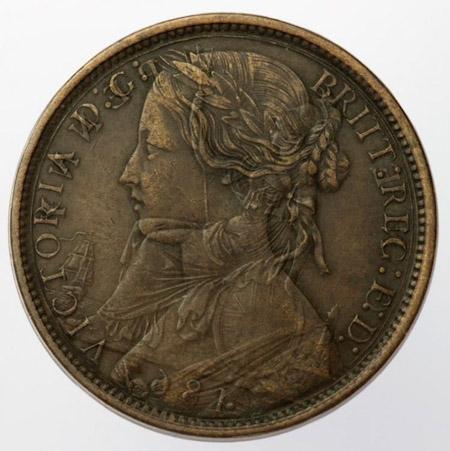 4 points
 -
In A.D. 286, the Roman emperor Diocletian put Carausius in charge of clearing out the Frank and Saxon pirates pillaging the English Channel. Carausius defeated the pirates, but then declared himself ruler of Britain, in effect, becoming a pirate himself. Carausius struck coins in his name along with Diocletian and Maximianus in hopes that he would be formally named as a co-ruler; which did not happen. In A.D. 293, Carausius was murdered by his chief minister Allectus. In A.D. 293, Diocletian appointed Constantius I his Caesar and he defeated Allectus in A.D. 296 and control of Britannia was restored to Rome. Carausius struck coins in the names of the Roman Emperors Diocletian and Maximianus. This presumptuous and ill-fated desire to be recognized is why the reverse legend of these coins end with AVGGG- - one G for each Augustus. These coins also have XXI in the exergue, which is likely a mark of value, meaning 20 parts alloy to 1 part silver. They also have ML at the beginning of the mintmark; which translates as "money from London." Carausius A.D. 291 Ӕ Antoninianus 24mm 4.3g IMP C CARAVSIVS P F AVG; radiate and cuirassed bust right PAX AVGGG; Pax stg. l., holding olive branch and transverse sceptre; S-P across fields. In ex. MLXXI RIC V London 143; RIC V.5 London 2197 Diocletian A.D. 291 Ӕ Antoninianus 21x24mm 4.4gm IMP C DIOCLETIANVS P F AVG; radiate and cuirassed bust right PAX AVGGG; Pax stg. l., holding olive branch and transverse sceptre; S-P across fields. In ex. MLXXI RIC V London 9; RIC V.5 London 3546 Maximianus A.D. 291 Ӕ Antoninianus 24mm 3.8g IMP C MAXIMIANVS P F AVG; radiate and cuirassed bust right PAX AVGGG; Pax stg. l., holding olive branch and sceptre; S-P across fields. In ex. MLXXI RIC V London 34; RIC V.5 London 3607 Allectus A.D. 293-296 Ӕ Quinarius 19mm 1.9g IMP C ALLECTVS P F AVG; radiate and cuirassed bust right. VIRTVS AVG; galley with five oars. In ex. QL RIC V London 55; RIC V.5 London 276 This topic is merely a gloss on a subject that has several good books written about it. Two suggested books-- Roman Britain's Pirate King: Carausius, Constantius Chlorus and the Fourth Roman Invasion of Britain by Simon Elliot Rebel Emperors of Britannia: Carausius and Allectus by Graham Barker and Sam Moorehead
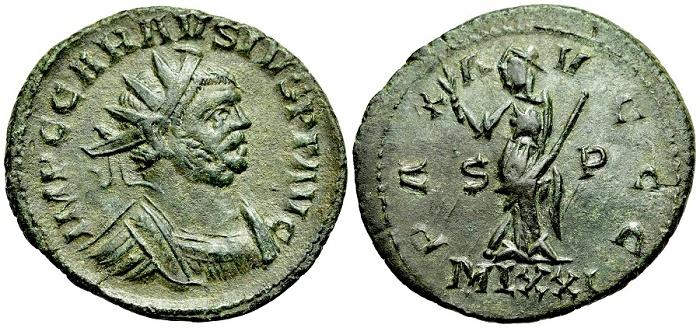
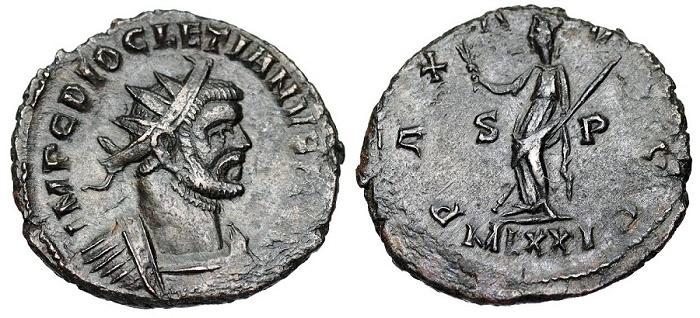
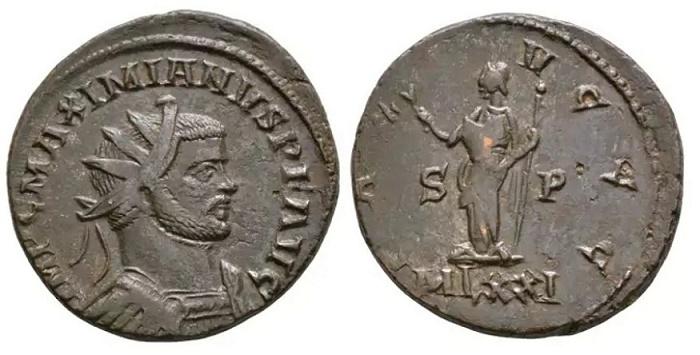
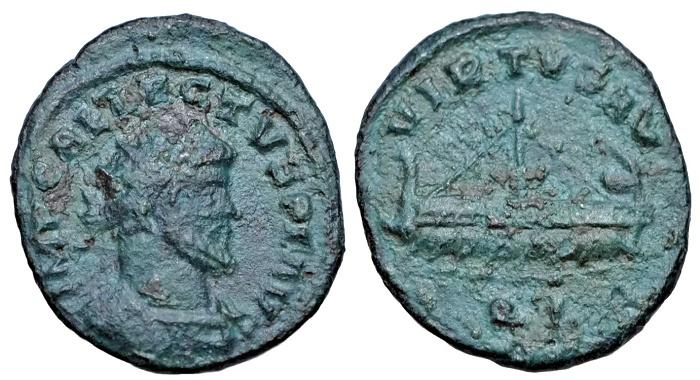
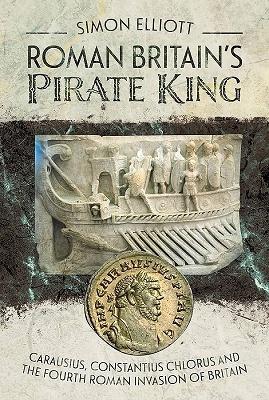
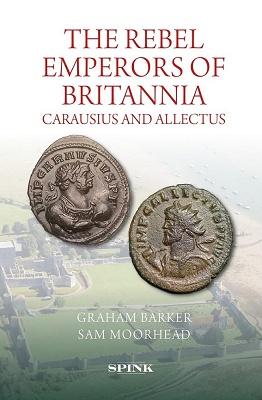 3 points
 -
Another possibility, given the stylised hands, which are very eastern/indian looking, is that it represents ‘fate,’ ‘meant to be,’ etc.? A word taken from Arabic/Turkish/Indian roots meaning ‘lot’ or unshakeable destiny. Here’s a clip I found on Google: ‘Historically (particularly in the Victorian era), people would smooth down one side of a circulating coin and hand-engrave it with names, initials, or symbolic words like Kismet. These were gifted to romantic partners as a physical representation of unshakeable destiny.’’ edit: and from Dictionary.com Kismet means fate or destiny. In Islam, kismet refers to the will of Allah. But it is popularly used to refer to something that one believes was “meant to be”— ...3 points
-
I'm afraid I will have to agree with the vendor here. It is problem free - because the coin is too flat to see them.3 points
-
Quite an impressive first post, to say the least.3 points
-
... and it turns out the lines were some kind of glue/varnish residue. Same coin after an acetone bath:
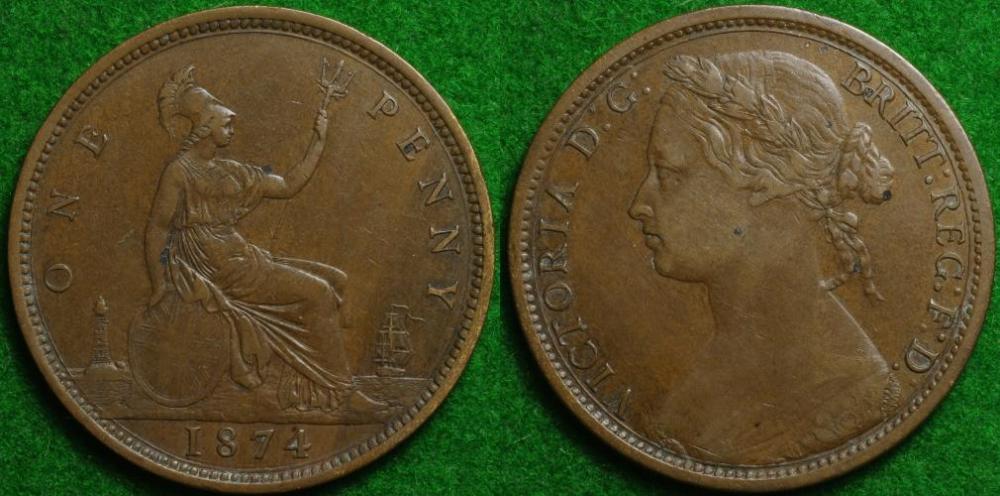 3 points
 -
It suddenly occurred to me the other day I had put a bid in for a nice looking penny on eBay. I had to put the bid in early as I had a long drive when it was due to mature. By the time I got home the auction was over. Now here is my conundrum. I could check with the web site to see if I had been successful or not. But if I did I might have failed in my bid and had lost the coin. However, if I don’t check it out I could still hold the winning bid, but I won’t know until I looked at the listing. Therefor, I might have won that coin, or not, until I find out one way or the other. I( I have lost the bid then I would be disappointed, so am I in a better position by not looking? Unless I have won it.3 points
-
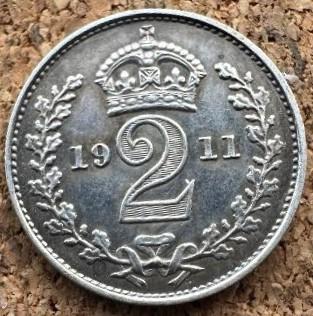
Loddy Heck!!! errrmmmm... This George V 1911 2 pence Maundy is also in nice condition as well 😕 I don't no how has happed but its in nice condition all the same. 👍
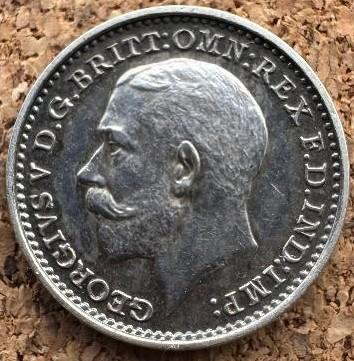
 3 points
 -
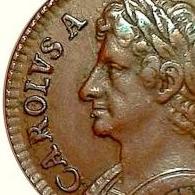
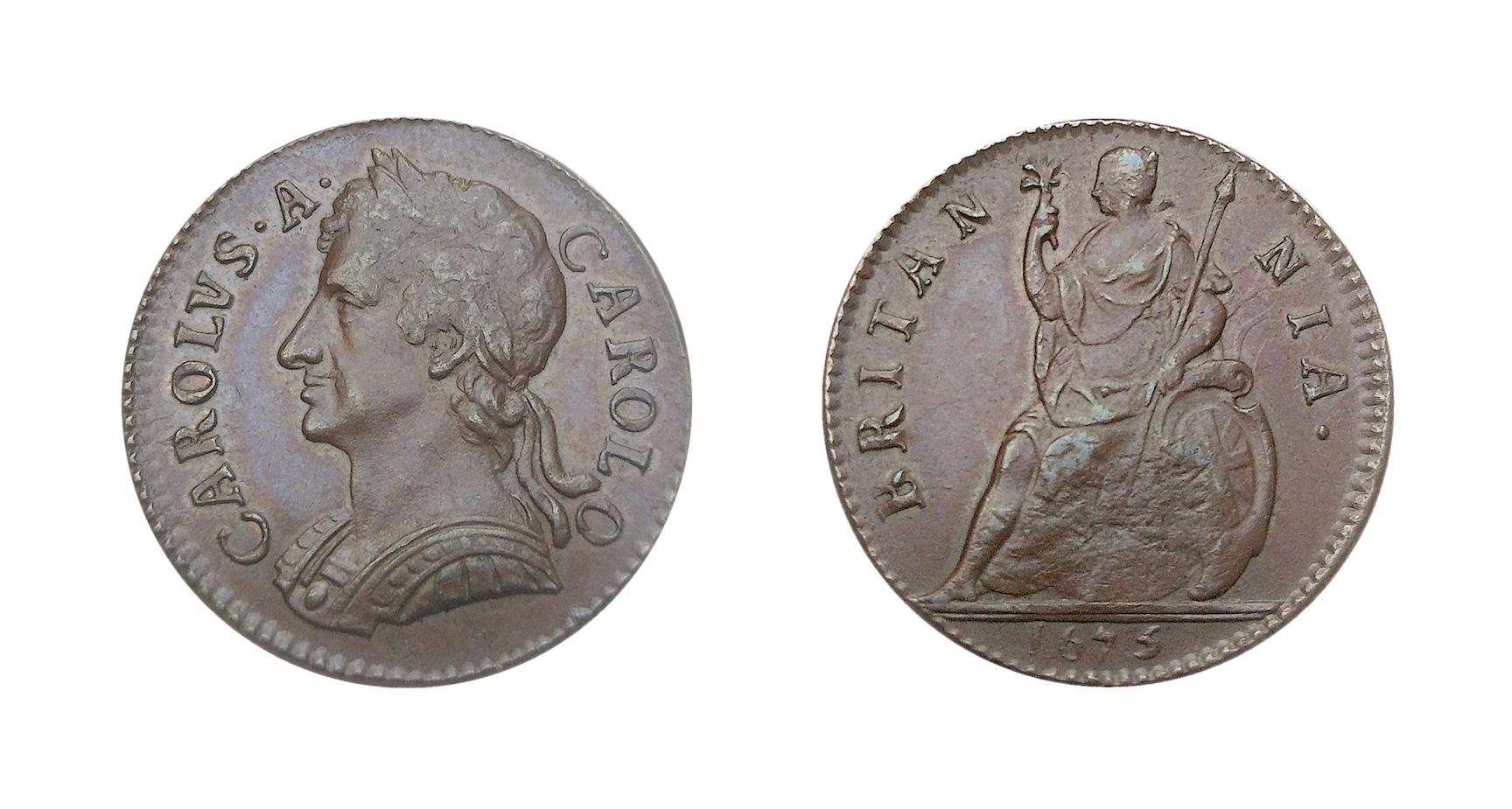
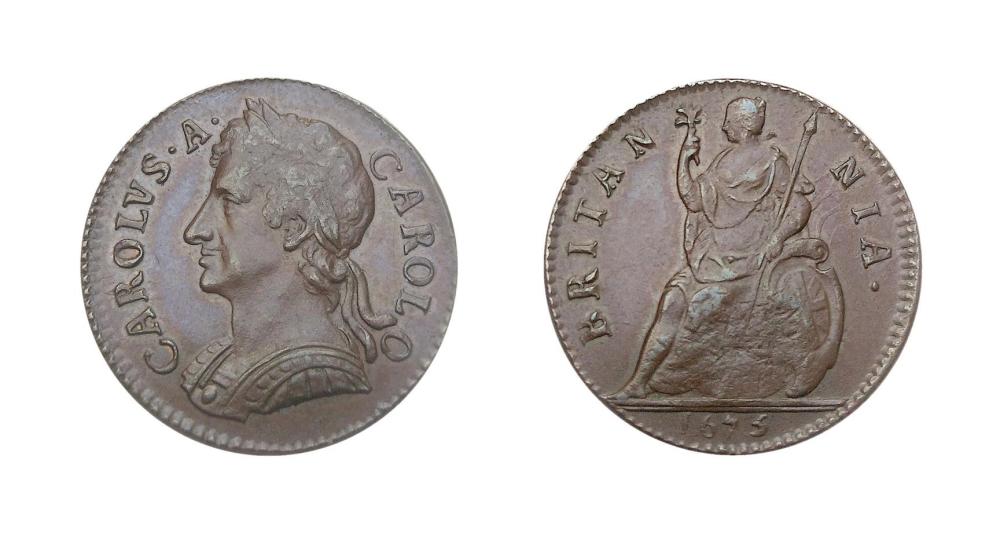
Here's one of mine displaying the same die deterioration. A not uncommon feature on farthings of 1675.
 2 points
 -
For me it would depend on whether the brightness indicated by the one on the left is a result of polishing to within an inch of it life. I can live with faults if the coin is sufficiently rare, but it isn't. Personally, I would bin (sell) both and put the proceeds towards something better, which would be easy given the number extant. The detail visible has been covered by the previous posts.2 points
-
Definitely the one on the left. As well as @Coinery's comments, the detail on the reverse is far nicer.2 points
-
You've answered your own questions/observations perfectly.2 points
-
I can see this as a possibility, and I did test the water with the family....little interest on any front other than "What's it worth?" or..... I could consider a Viking Burial ? 🤔 in regards to the future of my coins... nothings been set in stone ,,,,or been put in a slab 😉👍2 points
-
I could see doing that but I'd rather give my son a shit ton of good silvers that can be sold here and there as needed rather than everything all at once. I'll never sell any of my collection. But my son is free to do anything he wants/needs to do.2 points
-
"It is still a classic example of being reminded to grab the best you can afford because that's better than none. " couldn't agree more with this statement...its kinda the way I've been through life, I was "Collecting / Hoarding ?!?!" in a day of uncertainty with recession ..... times moved on and over everything....once I was asked Why??? rubbed worn out scrap??? its what's around and what's I can afford, yeah! some good...some bad....but good to have a something to show for my efforts...the slab thing I don't get either is it just hype or what ultra purest collectors really want?? how many of mine can be considered to be slabbed?? However, I must admit I'm considering at one point in history I will auction all the silver coins off, and buy a single gold coin with the proceeds, this will be a heirloom and to remain within the family........2 points
-
Lobel or Noble? Trying to work out if it is a misprunt. Jim Noble in Oz used to send out lists too, hence the request for clarification. Good luck finding someone who keeps Coincraft's price lists. most aren't even read before the bin calls. I usually peruse them before binning, but only keep them if there is something worthy of recording. And amusing as it may seem, 1967 pennies at a fiver a pop, or whatever, is not a good reason.2 points
-
Going to see"he music box" at the bridgewater hall tomorrow well its not really genesis but its very close its 48 years almost to the first time i saw them in 1978 at knebworth for a fiver tickets for tomorrow are £60 but hey you cannot take it with you and life is for living ......... just put some old cds on and enjoying myself2 points
-
Just for the hell of it I messaged the seller yesterday evening to point out it was a replica (being polite!) and I see this morning that it has been taken down.2 points
-
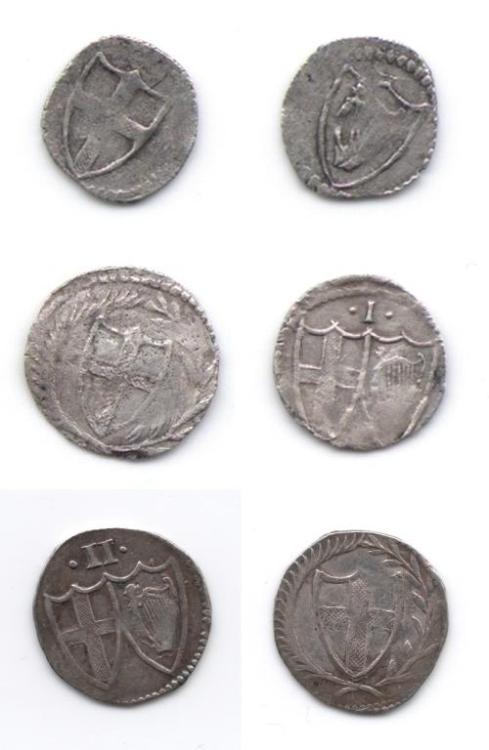
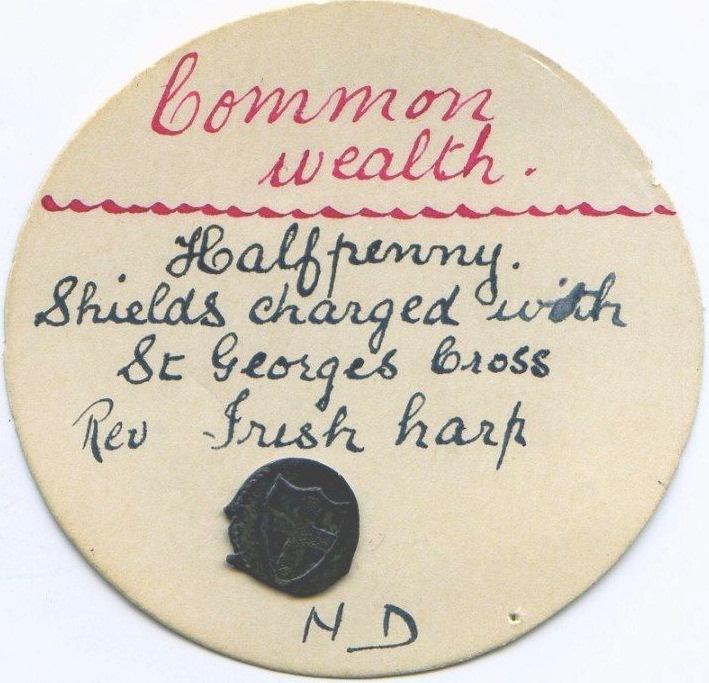
Here's my set. The halfpenny is the weakest of the three, but I only paid £43 for it and it's good enough for me. Weight of the halfpenny is 0.24g.
 2 points
 -
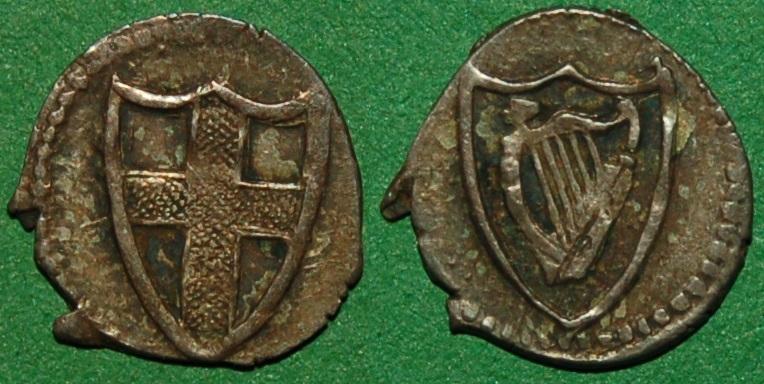
Yup, madness. I bought the Marshall coin in 2004 and I am perfectly happy with it - £87 delivered. I did have a go at the Lockett piece that was sold recently, but that made silly money,, and I like mine for the quirky shape and outrageously large distinctive tickets that came with the Marshall coins (44m dia).
 2 points
 -
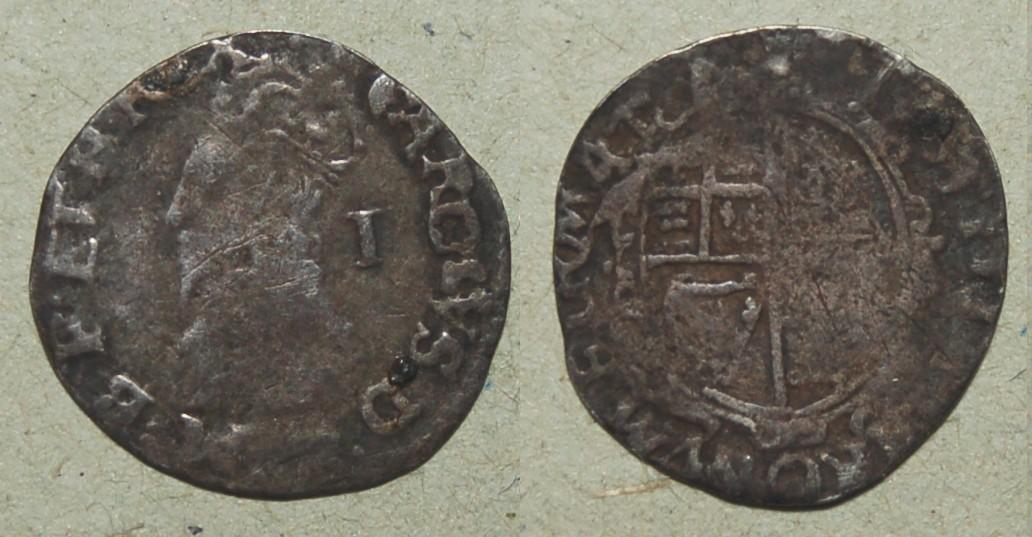
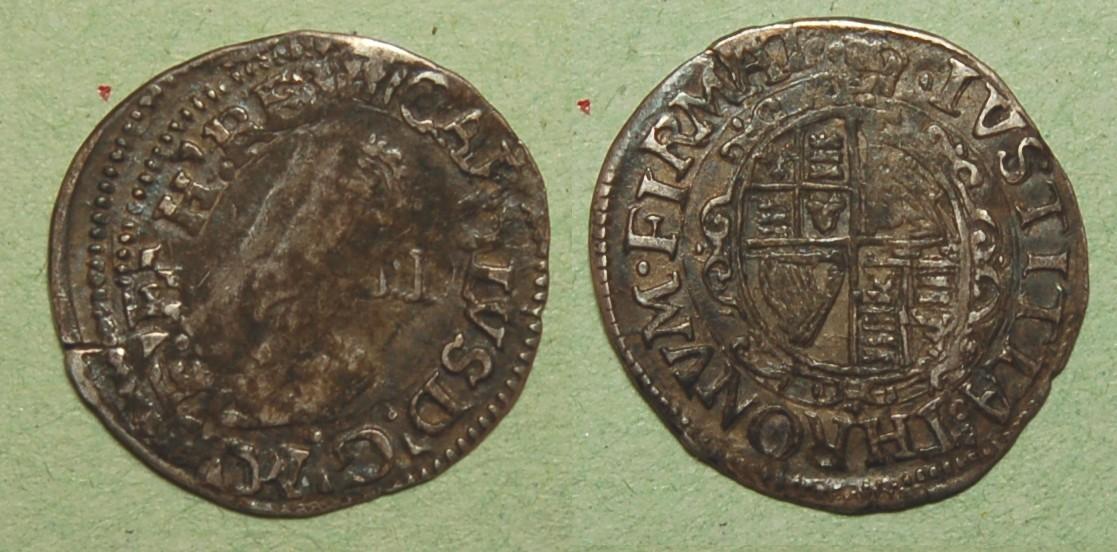
Tower Mint Charles I, 4th bust, Group D 3a1 penny, mm. pellet/2 pellets (assuming no extra pellets off flan), inner circle obverse only, garnished oval shield with no CR, standard legends both sides CAROLVS D G M B F ET H REX / IVSTITIA THRONVM FIRMAT with single pellet stops both sides. S2846. The bust is not directly comparable with the larger denominations, but broadly follows a style which can be dated 1632-1635, with a preference for the last couple years. It is a single arch crown, but the Gp. E bust typically has a double arched crown and is in any case a very cosmopolitan mix of styles given the introduction of the 'Aberystwyth' bust from 1638. Pennies were struck with pellet(s) as initial marks for most of the reign from 1630 onwards, meaning there is much dating conjecture. Stylistic comparisons seem to give the best results. I will do a bit of digging through Dave Greenhalgh's reference collection when I have time and see if I can find a die match. Chas. 1 pennies are a bit of a b**ger to find in high grade, with yours being a typical example. Lots of mucky detail, but not much really clear. Your best bet for a good penny of the reign is the last bust which crops up more frequently in thoroughly acceptable condition. Typical examples shown of a few busts.
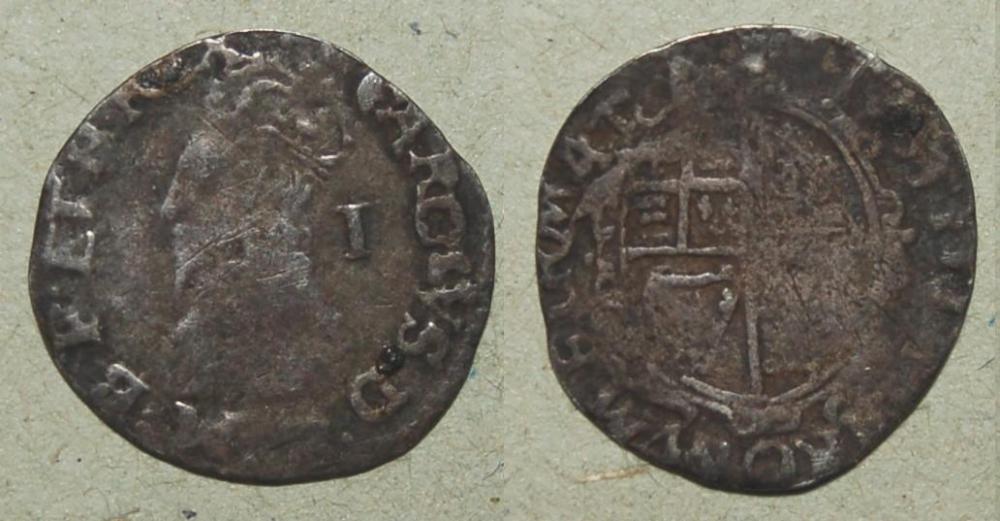
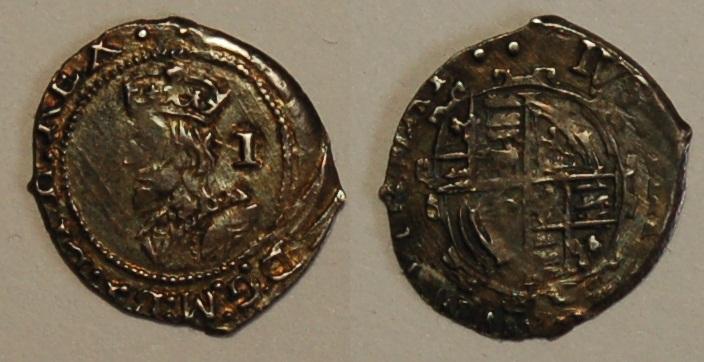
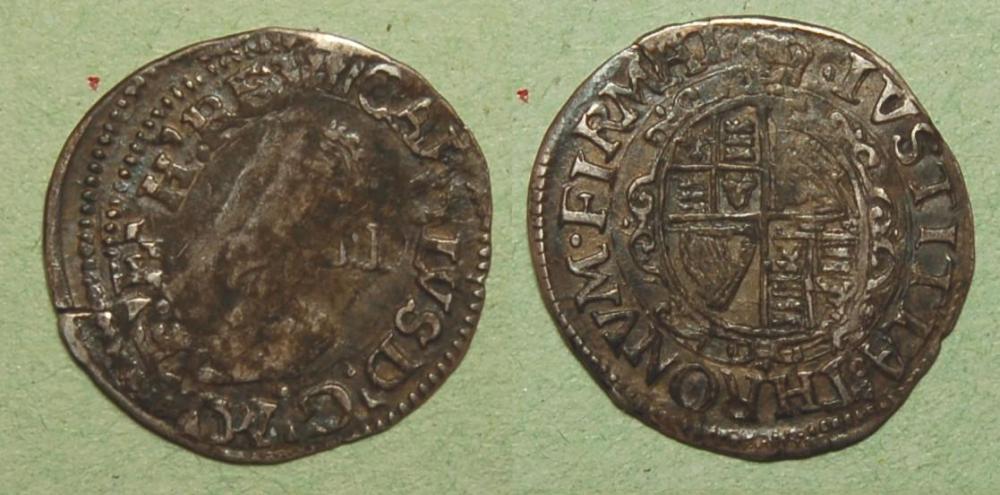 2 points
 -
Hello Ancientart, welcome to the forum. I'm not suggesting your account or website aren't absolutely genuine, but to anyone reading this and visiting the website linked to above, I think caution should be exercised - the very generic looking website was created less than 6 months ago, the address is a PO Box (and has opening hours!) and the links to facebook, x, pintrest etc contain no content (yet). I'm sure Ancientart will build up a reputation in due course. 👀2 points
-
It's not entirely bad, but there is certainly wear on the king's hair/beard/brow/cheek/tash/ear and on the lion's body/tail/feet and also on parts of the crown.2 points
-
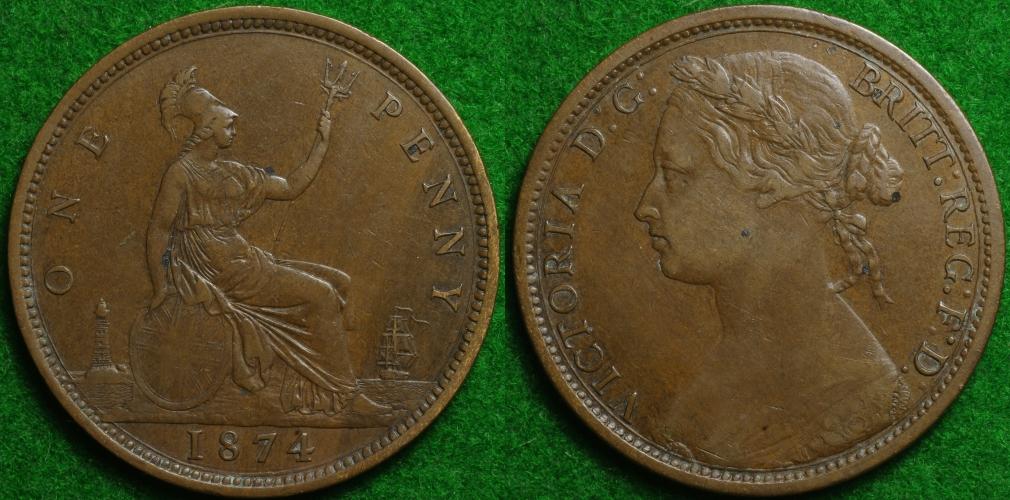
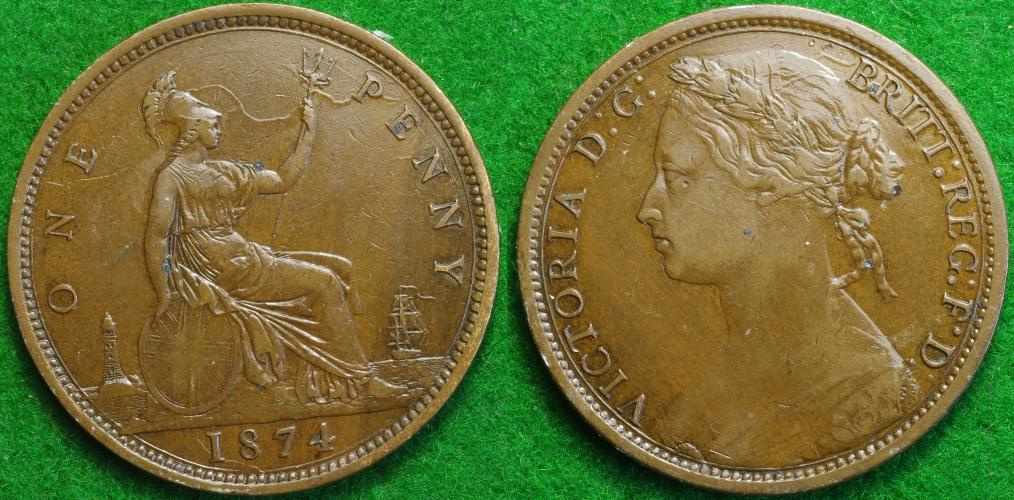
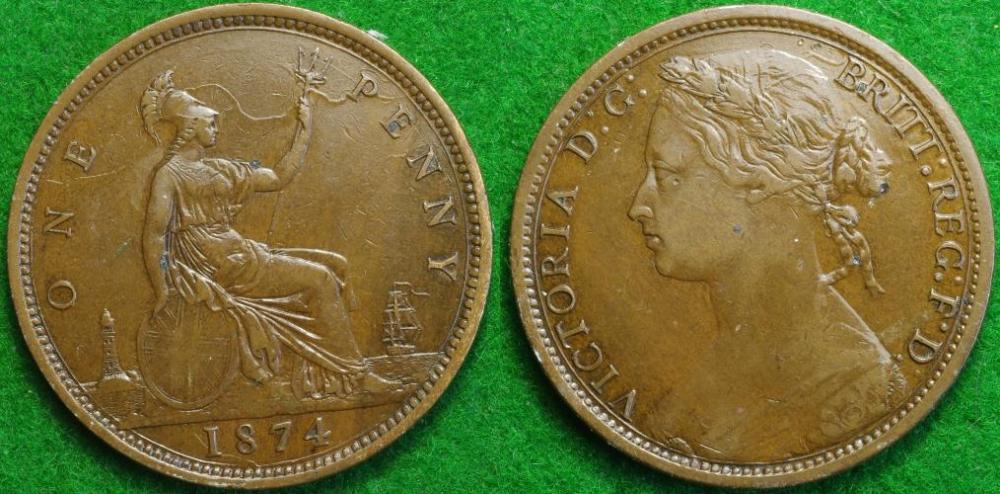
The other pick up today was this 1874 Penny. I think it is 8+G making it F77, but feel free to correct me if I am wrong. The lines in the fields, particularly on the reverse, are confusing. My original thought was die-clash, but I can' make out which parts of the design they could represent. The coin is currently taking an Acetone bath to make sure it is not some glue residue!
 2 points
 -
Retrospectively, only when you win. At the time it is useful to have a spare set of underwear to hand if a coin in demand has to be bought. Not so thrilling trying to explain that one.2 points
-
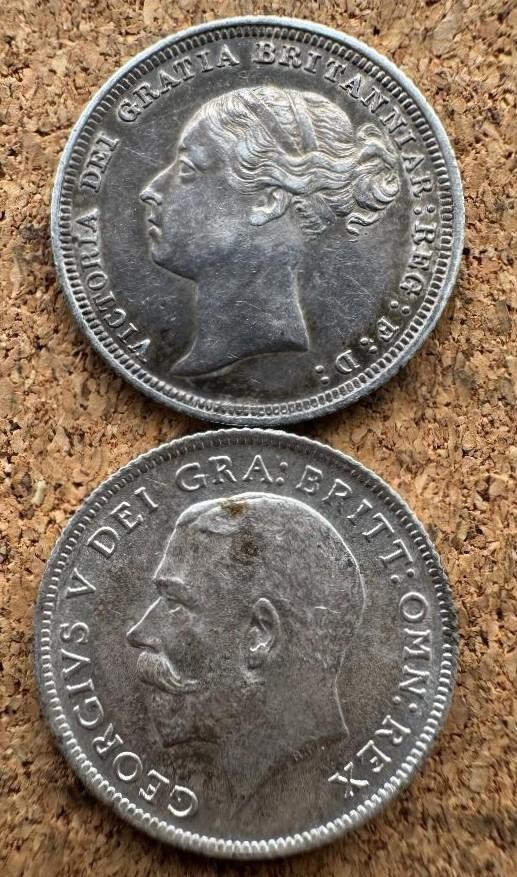
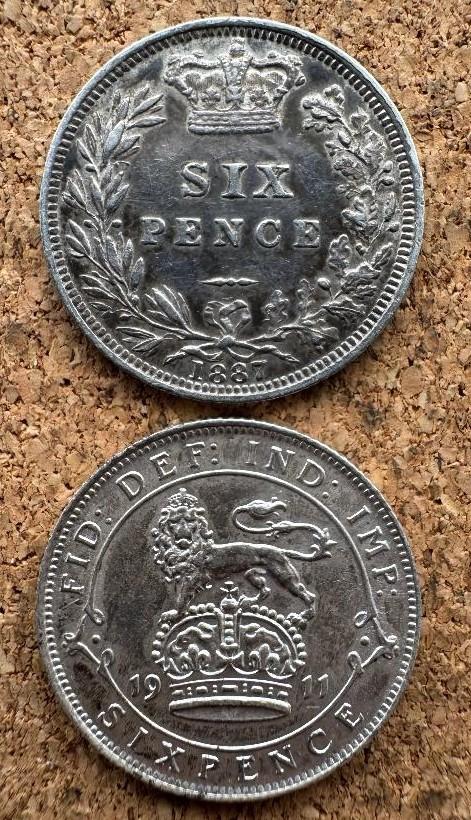
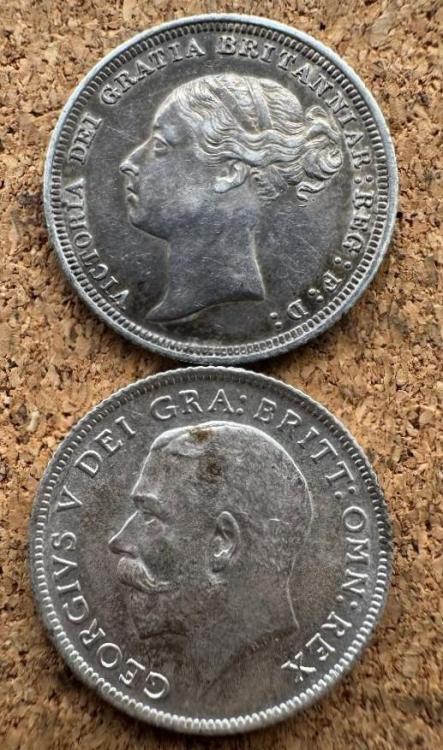
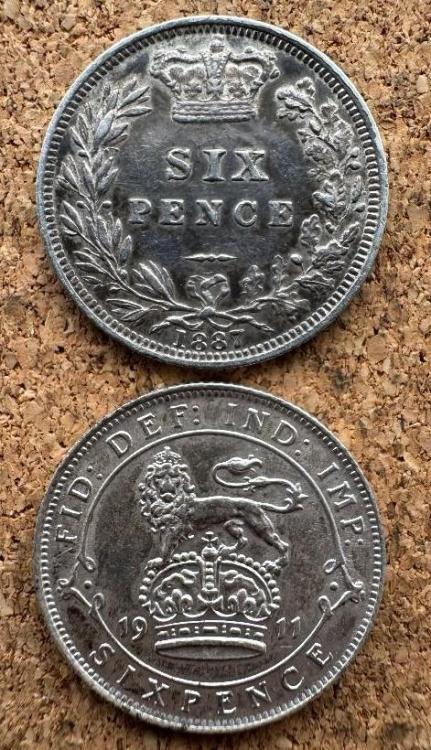
just tacking on to this topic in regards to found in good condition,...... and theses six pence's dated 1911 George V and a young head Victoria 1887 fall into this category, I had these dates already paged however theses are in so much better condition, so need to show and switch them out... 👍
 2 points
 -
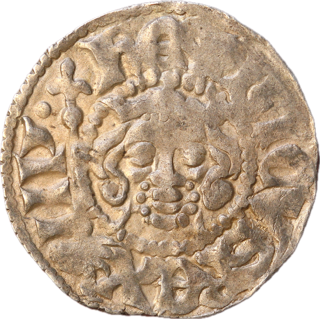
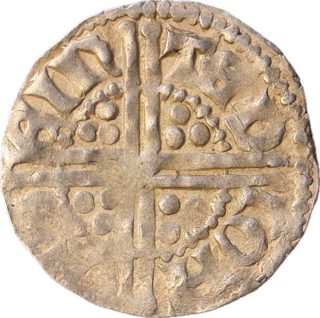
I had the good fortune to pick up a couple of these coins, recently, for a bargain £145 the pair. But when pawing over them, marvelling at how new they looked, in what appeared to be nearly full lustre, I noticed they were from the same pair of dies, and looking suspiciously similar. Further investigations revealed that all the other class VIs I could find out there were also looking lustred and from the same dies…beginning to feel suspicious at this point. UNTIL, that is, I discovered the 1969 Colchester Hoard was linked to a couple of the recent sales, leading me to explore that further. The hoard story is fascinating in that it was added to in at least two distinct lots, spanning at least 12 years, and is also thought to be linked to the 1902 hoard, found in the same street. The Edward I class VI coins, numbering nearly 2000, were ‘fresh from the Bury mint, and from the same pair of dies.’ There was previously only ONE known example of that type, so I can say with confidence that my own two coins will have made up a part of that hoard, explaining their fresh surfaces. The BNS article is well worth a read, as is a google search for the history and speculation surrounding the hoard itself. It has strong links with a Jewish family who were occupying the hoard location during that period. https://www.britnumsoc.org/publications/Digital BNJ/pdfs/1974_BNJ_44_5.pdf
 2 points
 -
Not only the pennies were good. It was an all-round interesting sale given things like the unique 1847 6d and the Henry VI (restored) farthing. I picked up a couple things, so in a good mood today.2 points
-
I don't think 1927 proof coins are unloved, I just think that a mintage of 15k for a proof coin is not low, and comfortably satisfies the demand of people who wants one. In addition the series also has a large number of circulating coins at UNC giving anyone an opportunity to get a type example. The 1887 proof crown on the other hand has a mintage of only about 1k (and there are far fewer circulating UNC examples).2 points
-
the left hand coin - no brainer1 point
-
would be handy for sellers if they didn't bother1 point
-
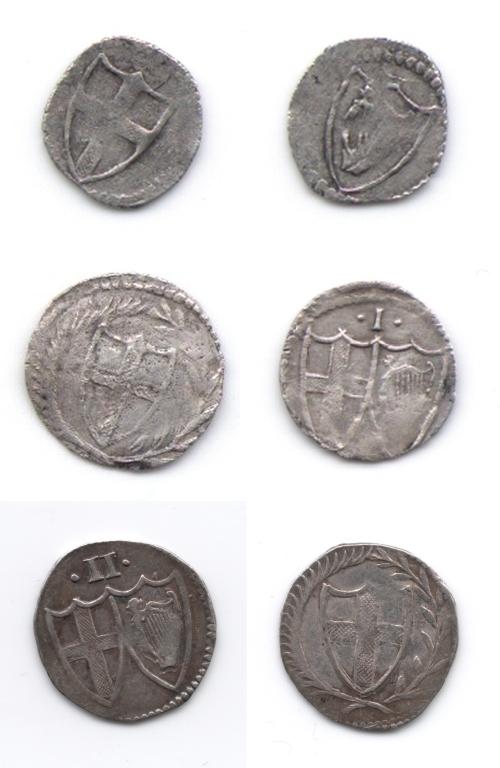
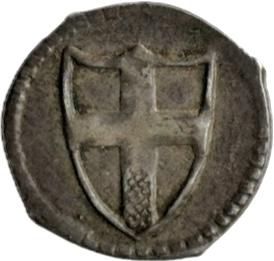
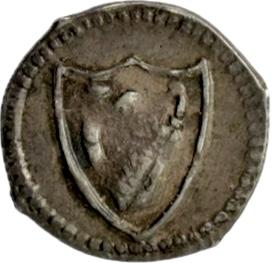
Very nice and a bargain price…interesting to see that some St George’s crosses are single-hatched, and others’ double-hatched, I wonder what the mintages for the commonwealth coins were, and how many dies?1 point
-
Mine was £150…a little blocked/soft on the cross, and not a perfect harp. However, it’s excellent metal, it’s round, central, and a credible example I think…it’ll do! ☺️
 1 point
 -
I hadn't seen the other one! Yes, that's enough website linking for now Ancientart. Join in with some conversations by all means, and add your website to your signature. On a bit of a tangent, I was wondering about offering paid and not obtrusive banners/ads on the website, just as a way to cover the hosting costs etc. Obviously members that are also dealers would have priority, perhaps even a sub forum for each advertisers' offerings or something along those lines - just a rough idea for now.1 point
-
I am also not much into gold coinage, so I can add no expertise. I would say the RPD does not look so obvious to me, but others may have another view. Repairs and adjustments to the dies were very common in smaller denomination Victorian coins, so it doesn't seem unlikely on the Sovereigns.1 point
-
Ah. 🤡1 point
-
Nice one, Terry but why the different backgrounds to the photos ? If anyone else had put these pictures up on Ebay, I'd have smelt a rat !1 point
-
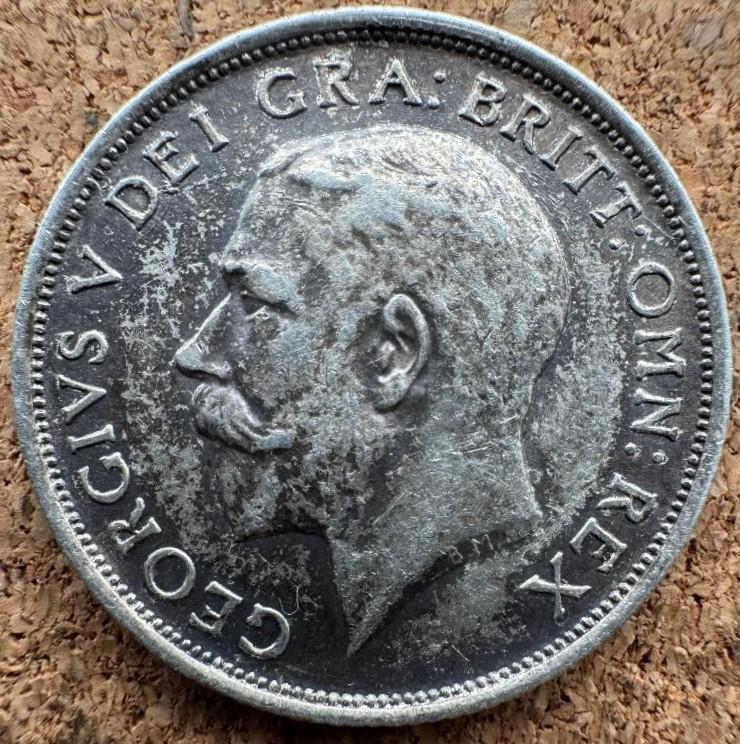
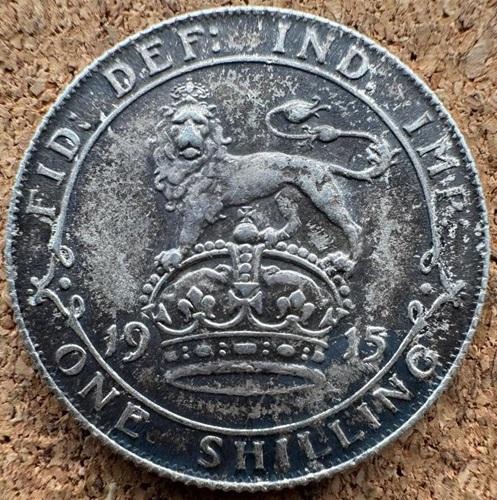
Finding good graded coins has been good of late, another box of coins processed and this 1915 Shilling George V although heavily tarnished its quite a good grade, the lions nose seems a bit rubbed, but the rest seems un touched, vast improvement on the one I already had.... 👍🙏
 1 point
 -
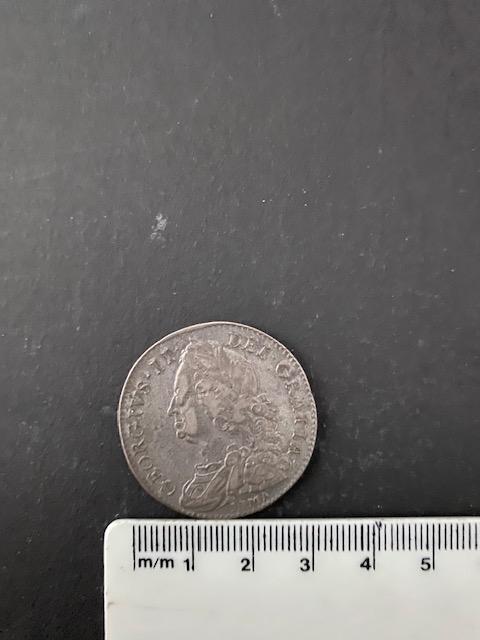
My example of seems to measure about 33 mm.
 1 point
 -
I'm not into stacking but I always thought the Britannia looked good. Just because I think that it’s a nice looking silver coin, I added a 1 oz. .999 fine silver Britannia to my collection. Mostly these are aimed at silver bugs but eh, I like it. By letting them send a random year, it was like $10~15 cheaper but I think I got lucky - Liz’s portrait is better than Charlie’s, IMO. From 2018:1 point
-
I think the 1927 florin (and also threepence?) are a target as these dates are not available in circulation coinage. For the date-run collectors they are appealing once the usual dates have been acquired. The 1927 proof Half crown would be far less appealing as the date can be ticked off with a circulation issue, even though the design is totally different.1 point
-
And Florin.1 point
-
I used the word probably which is a guess that there probably more potential collectors than coins to satisfy the potential demand from that amount of collectors. 15000 is not a huge amount of coins for example a 1905 half crown has a published mintage of 166008 and you would require a lot of money to obtain a good example. It's called supply and demand. Maybe there are more collectors of half crowns than florins and as the 1905 half crown was issued for circulation less of the total would survive in good condition but even a worn example attracts a fairly high price. Recently I saw one for sale in fine condition for GBP 440.1 point
-
I am confident enough that it is a recessed ear, and that is good enough as it is going into my own collection. @Martinminerva also expressed the opinion that it was right in a previous post in this topic. I already have an example with the broken tooth in only slightly worse condition, so I will keep both to cover my bases. Neither will be sold until I pop my clogs, by which time I won't care anyway!1 point