Leaderboard
Popular Content
Showing content with the highest reputation on 01/06/2018 in Posts
-
I know this has been touched on before but have tried to take it a bit further. 1937 2+B Proof Unrecorded. About two years ago i took a penny i had bought off ebay to Colin Cooke coins , as Neil was on the phone i showed it to another dealer who was there. I only mention this as that was when i could not understand why some fantastic collections did not have one. When he had i look he told me it was a laquered normal penny explained why and i threw it in the bin.The dealer when i explained what i thought it was told me not to look as there was no such thing and maybe i was wasting my time.I didnt question him and he shall remain nameless as maybe at the time he was right and other people dont look.I casually looked at the ones on ebay but didnt really hold out much hope untill finding another.After Sharing pictures with a couple of forum members and seeing it in hand , again it started to make me think and just put it away.Just after Neil Paisley was round at the flat and i passed it him asking what it was he then confirmed it was a proof 100%.I then needed for my own piece of mind to try and find find another.John Stevenson had one that he believed was right as he had taken it from a set and i purchased that also. As they are unrecorded the next step was for them to be confirmed as proofs not really for the grade but more the proof label.I sent them both to PCGS and both came back PR65. UIN 34013361 & 3403362 During the course of looking i have also seen PCGS 82203674 & NGC 2720722-095PR64. I have also months ago contacted the Royal Mint although i have had a couple of replies there verdict is pending....... Not a clue how many there are as feel most still in sets and dont think people bother as really a MICRO variety and dealers only occasionally will look at the reverse. Reverse B has the sea line at the top of a tooth and an easy indicator. Sorry if its a Boring thread but anybody who has a set or 1937 Proof Penny please take a quick look. Pete.1 point
-
This excellent topic http://www.predecimal.com/forum/topic/8211-portcullis-varieties-on-decimal-penny/ and its more recent contributions prompted me to complete my 1p varieties survey. Some history. There are only three major articles regarding decimal bronze coinage that include details of 1 pence varieties published in contemporary magazines:- Decimal Bronze 1/2, 1 & 2 pence varieties, Coin, 25 Jan 1980 by Iain WP Dracott, K.B.Wiles and Ron Stafford, Addendum to Decimal Bronze, Coin Monthly, Oct 1984 by Iain WP Dracott, and finally, Coin Varieties: Latest Discoveries, Coin Monthly, Aug 1987, by Ron Stafford. The main points to note about these articles is that they were written by the same three people, who have cooperated on various other articles over the years, so they are aware of each others views and the other point of note is that the first two articles include an additional reverse variety that has be excluded from the third article. The excluded reverse suggests that there are two sizes of pattern on the reverse. Prior to these articles three Letters to the editor, all in Coin Monthly, Decimal Reverses, by E.B.Mackenzie dated July 1978, discusses 1972 Proof set reverses, a further letter, Decimal Reverses, from E.B.Mackenzie adds further information received from the Royal Mint regarding the 1972 proof set reverses and a final letter from E.B.Mackenzie, A Reverse Pattern, dated March 1979 discussing 1971 through 1978 proof set reverses. Data from these letters was included in the three main articles. A final article, The 1990 UK Circulation Coinage, Coin Monthly, April 1991 by P.S.MacKenzie discuses differences between circulating coinage and those in the BU and proof sets. I have looked for the different size reverses and have concluded that they don’t exist. That being the case I have continued the August 1987 series adding new obverses and reverses. An extract of the 1987 article from Coin Monthly follows: “Decimal pennies Obverse 1 (1) 111 beads (2) 1 of date to space (3) I of ELIZABETH to bead Obverse 2 (1) 111 beads (2) I of date to bead (3) I of ELIZABETH to space Obverse 3 (1) 111 beads (2) 1 of date to space (3) I of ELIZABETH to space Obverse 4 (1)112 beads (2) new portrait etc (3)last I of II to bead Obverse 5 (1) 109 beads (2) as obverse 4 (3) last I of II to space Reverse A (I) III beads (2) right leg of N in NEW to bead (3) thin numeral 1 below portcullis Reverse B (1) 111 beads (2) right leg of N in NEW to space (3) thick numeral 1 below portcullis Reverse C (1) 110 beads (2) legend now reads ONE PENNY (3) small 1 below portcullis Summary Circulation 1971 - 1 A 1972 - none minted 1973-1975 - lA 1976 - lA and 1B (rare) 1977 - lA 1978-1981 - 2A 1982-1983 - 2C 1984 - 3C 1985 - 4C 1986 - 5C Unc Sets 1982-1983 - 2C 1984 - 3C 1985-4C 1986 - 5C Proof Sets 1971 - lA 1972-1977 - lA and 1B 1978-1981 - 2B 1982-1983 - 2C 1984 - 3C 1985 - 4C 1986 - 5C? (not seen) NB: the reverse A Proofs are scarcer for 1972-1977, those of 1972, 76 and 77 being very scarce. Notes The rare circulation 1976 reverse B is very hard to find. I know of only six specimens. I found only two out of 3,681 1976 pennies checked during a sortee in 1979. If anyone should stumble upon a 1975 reverse B in change, they would have a very rare coin indeed. No one knows for sure if it even exists but the 'new reverses' first seen in the Proof sets do occur on both 1975 and 1976 2 and 10 pences issued for circulation. The earliest 1976 1 B rarity I know of was found by P S Mackenzie in late 1976/early 1977. The 1985 and 1986 circulation pennies are now extremely common, there does not seem to. be any varieties, all 1985 being type 4C and all 1986 being type 5C. The earliest reported 1985 penny was found on 22 November 1985 by Mr Symes. For the 1986 penny, the first was noticed on 14 August 1986 by Mr D Price.” End of Article. New Obverses Obverse 6 (1) 111 bb. (2) 1 of 19 lt bb. (3) I of ELIZ to sp. (4) Last I of II to sp. (5) R to bb. Obverse 7 (1) 110 bb. (2) I of 19 to sp. (3) I of ELIZ to bb. (4) Last I of II to bb. (5) R to bb. Obverse 8 (1) 110 bb. (2) I of 19 to bb. (3) I of ELIZ rt bb. (4) Last I of II to bb. (5) R rt bb. Obverse 9 (1) 109 bb. (2) 1 of 19 to bb. (3) I of ELIZ to sp. (4) Last I of II to sp. (5) R lt bb. Obverse 10 (1) 115 bb. (2) 1 of 19 sl bb. (3) I of ELIZ rt sp, (4) Last I of II sr bb. (5) R lt bb. (6) 4th Portrait. Obverse 11 (1) 110 bb. (2) New millennium (3) I of ELIZ to sp, (4) Last I of II to sp. (5) R sr bb Old Reverses Reverse A (1) 111 bb. (2) R leg of N in NEW to bb. (3) R leg of 2nd N to bb. (4) P rt bb. (5) Tall thin numeral 1 below portcullis to bb. Reverse B (1) 111 bb. (2) R leg of N in NEW to sp. (3) R leg of 2nd N to sp. (4) P to sp. (5) Tall thick numeral 1 below portcullis. Reverse C (1) 110 bb. (2) R leg of N in ONE to sp. (3) R leg of 2nd N to sp. (4) P rt bb. (5) Small numeral 1 below portcullis to sp. New Reverses Reverse D (1) 113 bb. (2) R leg of N in ONE to sp. (3) R leg of 2nd N to bb. (4) P to sp. (5) Small numeral 1 below portcullis sl bb. Reverse E (1) 111 bb. (2) R leg of N in ONE to bb. (3) R leg of 2nd N to bb. (4) P to bb. (5) Small numeral 1 below portcullis rt bb.. Reverse F (1) 109 bb. (2) R leg of N in ONE rt bb. (3) R leg of 2nd N to sp. (4) P to bb. (5) Small numeral 1 below portcullis sr bb. Notes: Reverses A through C are as original but with some additional detail. Pointings. It can be a bit confusing when discussing pointings. Which direction is one looking from? I always follow the rule of “as you read it”, so on a 1p reverse you read the NEW PENNY from the centre of the coin looking towards the rim. For example, taking the letter N of NEW you would sight from the bottom of the right hand (RH) leg, to the top of the leg and onto the boarder bead (bb) beyond. 1. One would then say the leg points to the centre of a boarder bead (to bb), or 2. slightly left or slightly right of the center of a boarder bead (sl or sr bb), or 3. right or left of a border bead (rt or lt bb), that is to the edge of the bb or very slightly into the space between boarder beads , and finally, 4. points between two boarder beads or in other words to the center of the space (to sp). When looking at the number 1, then the orientation is from the rim to the centre (as that’s “how you read it”). Boarder beads (bb) and teeth. Beads are just teeth that don’t touch an internal or external boarder or rim. Portcullises. The first report of variations in the portcullis were made by Dr R.M.Owens to Coin News in January 2013. These have become known as type 1 and type 2 portcullises. This confuses the situation slightly as the variations refer to the representations of the rivets used on the portcullis and not the actual portcullises themselves. There are two kinds of portcullis, that which was used on circulation coins from 1971 through to 1981 and on proof coins for 1971 which I call type 0 and the second type used on all other circulation, proof and brilliant uncirculated set coins and this is known as types 1 and 2. Type 0. The vertical and horizontal parts of the portcullis do not touch each other and the vertical parts are detached from the horizontal rod above them. The rivets are in relief and the positioning of the rivets is regular and even. Type 1. The vertical and horizontal parts do touch each other and the vertical parts do touch the horizontal rod above them. The rivets are in relief and the positioning of the lower two rivets on the central vertical bar varies slightly. Type 2 The vertical and horizontal parts do touch each other and the vertical parts do touch the horizontal rod above them. The rivets are incuse and and the positioning of the rivets on the central vertical and lower horizontal bar vary. Expanded Summary Obverse and Reverse pairing A note regarding the reverse designations. I have added the portcullis type and rivet position subtype to the familiar reverse designation. Summary Circulation 1971 - 1A0 1972 - none minted 1973-75 - lA0 1976 - lA0 and 1B0 (rare) 1977 - lA0 1978-81 - 2A0 1982-83 - 2C1 1984 - 3C1 1985 - 4C1 1986–88 - 5C1 1989 - 7C1 1990-91 - 5C1 1991-92 - 5D2b and 5C2b 1992 -5F2b 1993 - 9D2b, 9F1 and 9F2b 1994 - 5C1, 5D2b and 5F1 1995-97 - 5D2b 1998-99 - 10Db2 2000 - 11D2c and 11F2b 2001-07 - 11F2b 2007-08 - 11F1 2008 - 11F2b BU Sets 1982-83 - 2C1 1984 - 3C1 1985 - 4C1 1986-87 - 5C2a 1988 - 6C2a 1989 - 7C2a 1990 - 8C2a 1991-92 - 8E1 1993-97 - 8E2b 1998-99 - 10 E2b 2000-08 - 11E2b 2008 - 11F1 Proof Sets 1971 - lA0 1972-76 - lA? and 1B1 1977-81 - 2B1 1982-83 - 2C1 1984 - 3C1 1985 - 4C1 1986-87 - 5C2a 1988 - 6C2a 1989 - 7C2a 1990 - 8C2a 1991-92 - 8E1 1993-97 - 8E2b 1998-99 - 10E2b 2000-07 - 11E2b 2008 - 11E2b and 11F1 I will add pictures of the various obverses, reverses and portcullises tomorrow (with luck!).1 point
-
My latest unofficial farthings, very pleased with the Uxbridge school one, It's been on the wanted list for a very long time! The P & H is an upgrade for obvious reasons. While I'm posting these is there anybody else out there that collects unofficial farthings? I know the site is mainly for coins but it would be nice to hear from your out there

 1 point
 -
OMG I almost melted through screen to grab hold of that beauty lol1 point
-
Morning guys and gals. thought I would just ask if I got this right. Poor penny I know which makes ID very difficult. But I believe this is Freeman F14 Obverse 3 reverse E. Am I correct? Thanking you kindly
 1 point
 -
Trouble is Thazz, even if you set up a website or a page or stickies explaining this, none of these people would believe it and would still come and post silly questions. I mean, if a pretty 50p with a mintage of 8million+ can be rare, and OFFERED for sale at £5k+ why shouldn't every other coin in history.1 point
-
I wouldn't normally advertise on this site, but I'm getting rid of various 'penny collector' related items and I'd rather they went to a good home. I've listed them on eBay today, as two separate lots; books (including Peck, Freeman, Gouby, Bramah etc.) and also catalogues (Freeman, Norweb, Bamford, Adams etc.). I would consider all of these essential for any serious penny collector. Links are here: books & catalogues I also have various penny-related Quadrum capsule items and storage boxes if anyone is interested in these? Steve1 point
-
Penny Acquisition of the year for me , just in time for Christmas. f164a Terry

 1 point
 -
The only information I have on this coin is as follows: "Kings Norton Metal Company Trial piece. Obverse: Bust right within raised inner circle and outer border of linked circles, no legend. Reverse: KINGS NORTON METAL CO L.D around an border of linked circles, this encircling 10 small circles and a further border of linked circles, the cypher KNM within. Weight 10.19 grammes" It is a lovely quirky coin which I bought last year. It is slabbed by CGS at grade 65 which is GEF grade to non Coin Coffin Collectors. The Obverse is worn and could possibly be a weak strike as it certainly won't be a worn die. It is the only one known to CGS and I would appreciate any information upon it for my records

 1 point
 -
Another 1937 couldn't let it go for 75 pence would be sacrilege
 1 point
 -
IMO, that was a planchet flake off another coin that was off the obverse surface and then flipped and struck into this coin with subsequent "freeing" of the fragment. The planchet of this coin ought to weigh close to the 9.4 gm standard.1 point
-
I think its possibly a lamination error showing the coin struck through from the obverse due to the weaker flan........Not my theory just asked someone Although looking again that doesnt make sense as the head is lower1 point
-
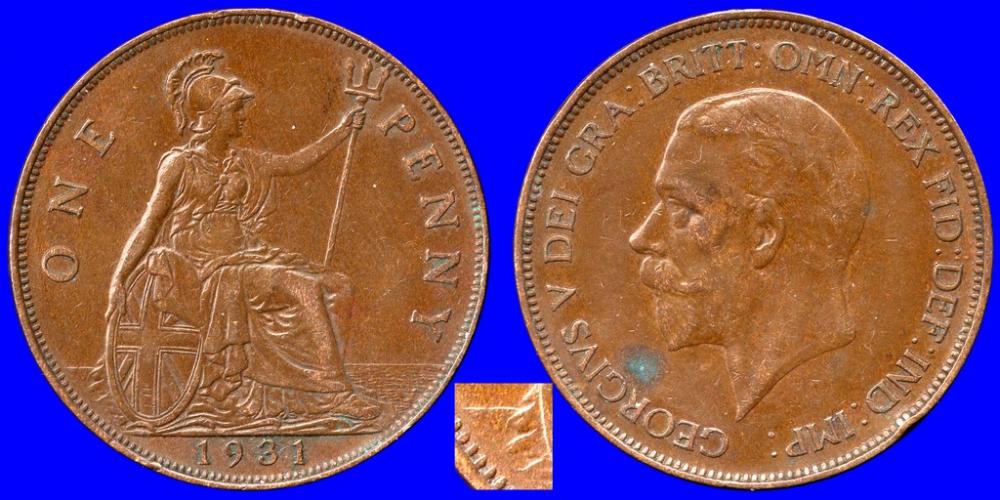
Righto then, who's going to tell me what on earth went on here?
 1 point
 -
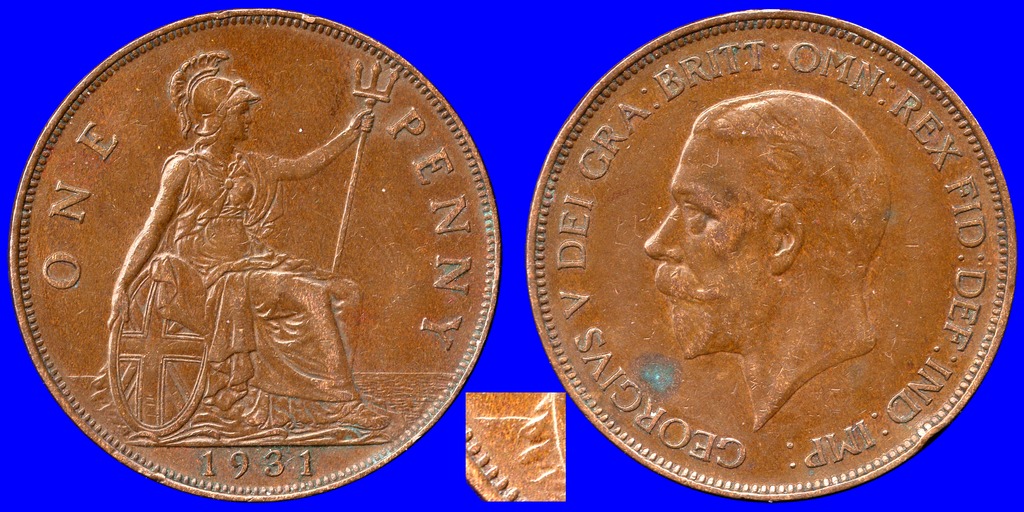
and 1931
 1 point
 -
I am aware of five, including yours. I dare say there are a few more out there, but it remains an excessively rare coin. You might get a better return from a specialist auction than Ebay despite the difference in sellers premium. The LCA coin you reference gives you a rough idea of the value, though the provenance of that coin, being I think the Laurie Bamford example, might have helped. As always, the final price is governed by demand. Jerry1 point
-
Hi , below is my 2+e 1909, as you said the 1 in date should be directly over the tooth, but also the right side down stroke of the N in ONE should point to the gap between the teeth. Terry
 1 point
 -
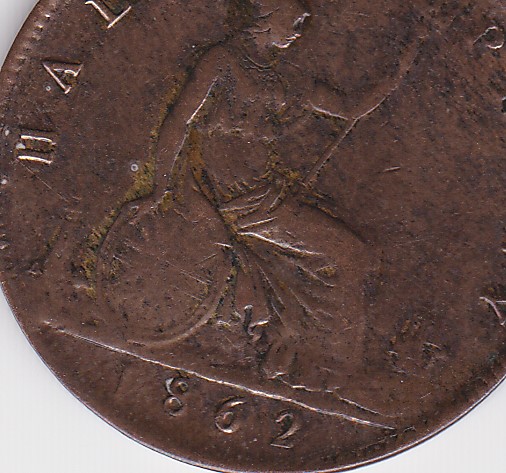
Horible but clear
 1 point
 -
I have a 1937 proof set with a 2+B penny. I bought the set because it had the 1+B variety of florin, but am now doubly pleased.1 point
-
I believe that Michael Gouby helps with the cataloguing of bronze coins for Baldwins, for example.1 point
-
Latest newbie1 point
-
Paul Holland sent me the following comment on the origins of the 1862 over 1 penny: I don't think it occurred from ablundered repair attempt. If I had to guess, I would say that itarose near the end of 1861 or the beginning of 1862 when final datenumerals were being punched into working dies. A Mint worker mayhave placed a numeral 1 punch into position and started to 'set it'with his hammer, then realized that with the date changeover, anumeral 2 punch was called for instead, then completed dating thedie as 1862. To me this makes more sense that the other way round...although we may never know for sure. This would also help to explain the origins of the 1862 2 over 2 that have been spotted, with a mint worker trying to correct a slightly misplaced 2 when entering a 2 on a working die. But, as Paul says, we may never know.........1 point
-
By sound. Put them on a piece of glass and raise one side a couple of mm and let it go. They will make different sounds. Then compare with a pre-1920 threepence to see which is which.1 point
-
This is the one held privately. Clearly has some residual lustre on it:-1 point
-
But this is a currency piece....1 point
-
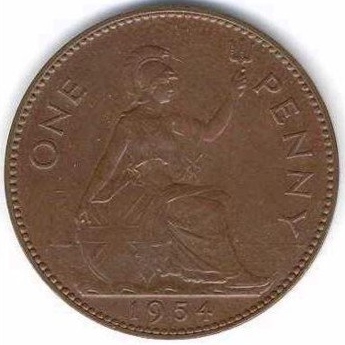
Here she is. I know where it is but I can't tell (it's not me !)
 1 point
 -
Well worth it. I have used mine over and over again.1 point
-
there are some subtle differences between the standard 3 d's and the maundy ones that look alike in Edward VII's reign and before, angle's of the rim etc, a good book to buy is silver pennies and linen towels by Brian Robinson, goes into great detail about issues and dies telling proofs from standard etc, gone up a bit in price now, i got it when it was first issued, great book though isbn 97809076053551 point
-
It was quoted that his were made of nickel or German silver . from the article . The mention of machinery (rather than moulds) points to the likelihood that the method of manufacture was that used in another enterprise of the same James Steele, with Robert Ramsay, from 1927 to 1930—when they were detected through the superabundance of coins bearing the same date. Halfcrowns dated 1920 and 1921 were then made from nickel 'or German silver'; the charge was of having a puncheon, four dies, an electrotyping machine, a rolling machine, an edging machine, a charcoal stove, an annealing box, electro-plating tanks, frames, an hydraulic press, and an ejecting machine . . . 'These misdirected geniuses had perfected what was virtually a miniature Scottish Mint'.7 In the early nineteen-sixties this remained the only successful case in which counterfeiters had struck pressed sheet metal in the same manner as the Royal Mint.1 point
-
Two undoubtedly currency 1853 groats coming up in next DNW sale on 14th June ! Both have the "curly" 5 and the larger 3.1 point
-
I do not post in here often but here are a couple of newbies from @PWA 1967 I am not happy with my pictures, they look far better in hand.1 point
-
1 point
-
Hi, just wanted a few comments on this. I've been studying and collecting silver George V coinage extensively for a few years now and from my observations, it appears that the introduction of the modified effigy was staggered starting with the threepence and finishing with the halfcrown. The 2nd head currency 3p is quite rare (extremely in high grades) with the modified 3rd head much more common. Conversely, the 2nd head halfcrown seems to be more common than the modified head halfcrown of the same year. I've had it on good authority from someone who collects sixpences that he sees several modified heads to every one old head 1926 which seems to fit. Any thoughts? I'm curious why ESC specifically comments and states the old head halfcrown is rarer as I would be surprised if that is the case.1 point
-
This is a much more complex subject than it first appears. As far as official issues are concerned, it's not the 3d but the halfpenny (1925) where the ME begins, and the last denomination to introduce it was the 1927 proof florin. However, the matter is complicated by pennies (as usual!). There is an extremely rare - possibly unique - 1922 penny with the modified effigy and the rare experimental reverse (so-called "1927 type", though it isn't). My own thesis, developed in an article for Coin News, is that this doesn't date from 1922 but is an experimental piece quite possibly struck in 1925 - when no pennies were scheduled - using the new obverse and a leftover experimental 1922 reverse die (which was effectively introduced for each bronze denomination when the ME came in, with the exception of the 1926ME penny, which I suggest was an unplanned emergency issue). The relative rarity of the halfcrown types has long switched back and forth; my opinion is also that the ME is scarcer, but not by a long way.1 point
-
Not anysort of expert on these but looks gen - if its a fake its a really good one1 point
-
It looks absolutely fine to me. Without handling it I would agree that it's a genuine mint issue and grades at VF or a touch better. If it is a fake it is a very old one as it is virtually impossible for the fakers to get the difference in colour into the legend and the bits of dirt into the edge milling in the field. What was the source of the purchase?1 point
-
There isn't anything that screams fake. The obverse looks ok to the extent that the distance from the legend to the linear circle looks ok (i.e. variable) on the obverse compared to the illustration in Marsh. The image of the reverse isn't good enough to pass comment. What does the edge look like as I can't see any trace of the milling?1 point
-
Whilst I'd already got a Freeman 20, the one I've just managed to get is a full grade higher, about NVF. I don't think it's worthy of the title "penny acquisition of the week", it is nonetheless an acquisition, and it is somewhat scarce, so I'm quite pleased.

 1 point
 -
I think it's maybe the first gold victorian sixpence i've seen. It has H35 and 500 scratched in the OBV just to the right of the last A in VICTORIA
 1 point
 -
That's a really weird one. The obverse is not a sixpence. Sleepy has it I think - it's the half sovereign obverse, gold proof error. Davies 1141 indeed.1 point
-
I was told by a predecimal guru that I should move my recent posting to this topic. So here goes: I recently made some Victorian bronze acquisitions to my collection: Victorian pennies of 1867, 1882-H, and 1885.


 1 point
 -
Peck did say that he was in danger of never getting the publication completed if he started to record such varieties, but did not discount them, and I suppose when you think they would have been across several denominations it would have been a further addition to what was already a mammoth task.1 point
-
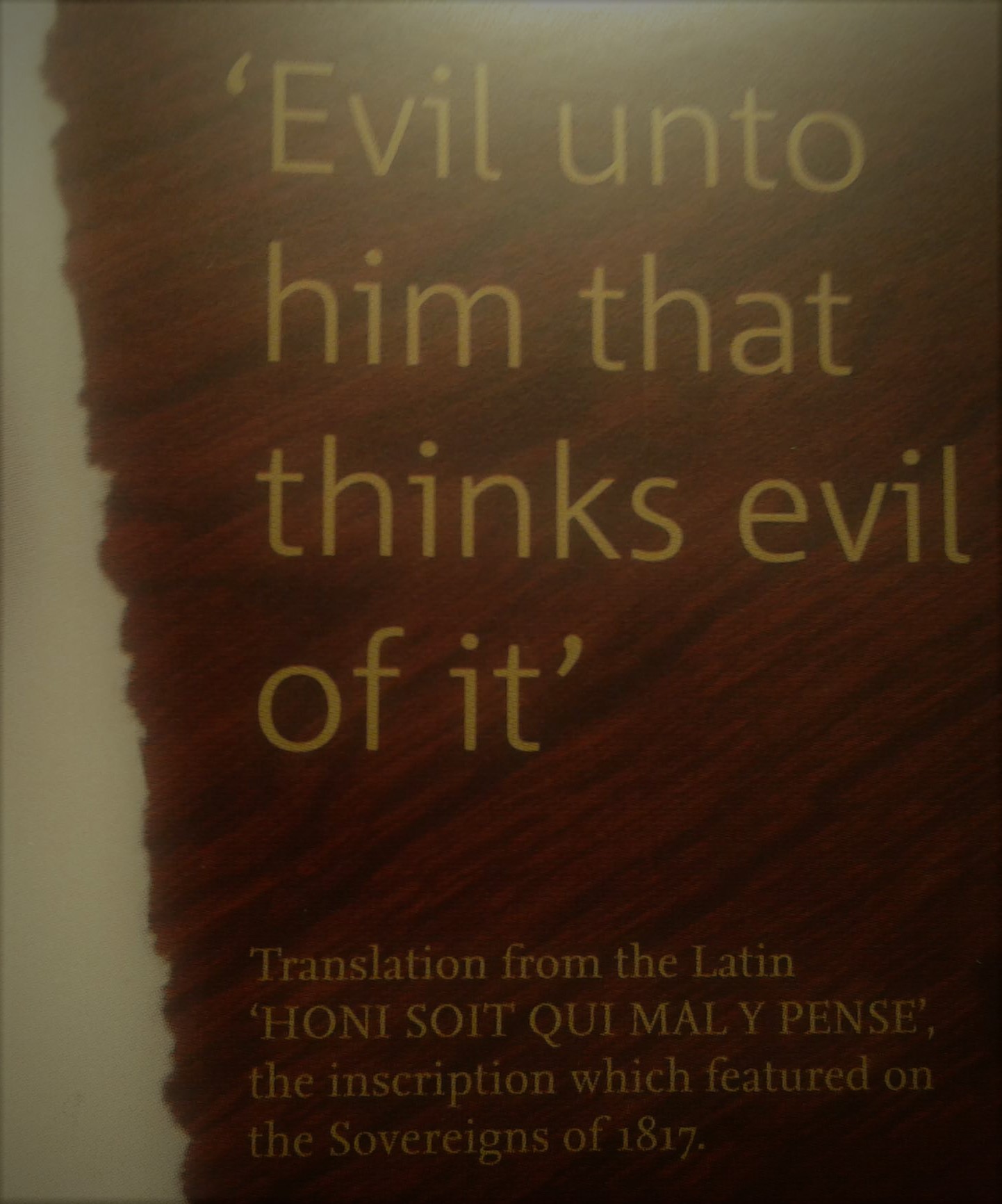
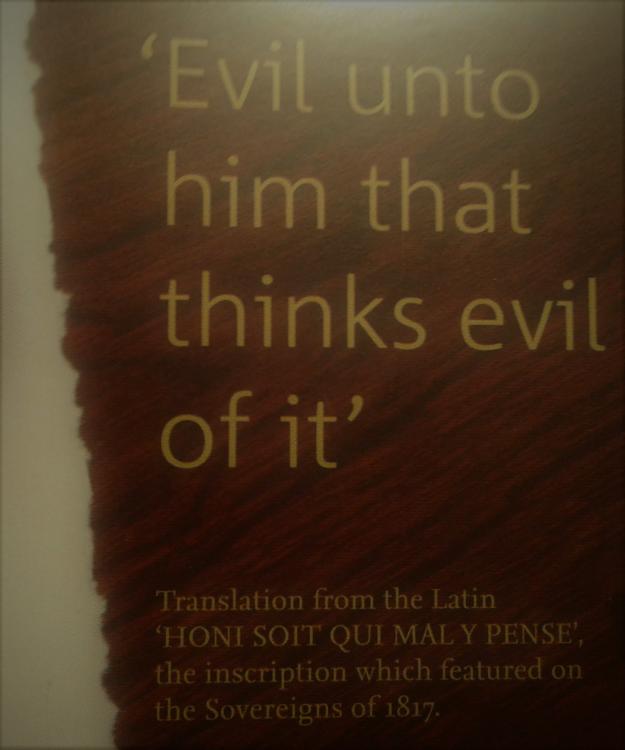
It's French not Latin .....
 1 point
 -
Looks like a case of mismatched photos. The obverse is from the unmistakable 1935 "Rocking Horse" Crown.1 point
-
have emailed the guy as he has excellent feedback and may have just mixed his photos up..1 point
-
Richard , I spoke to you some time ago about my possible 1953 121 tooth matt finish penny, its below. Terry
 1 point
 -
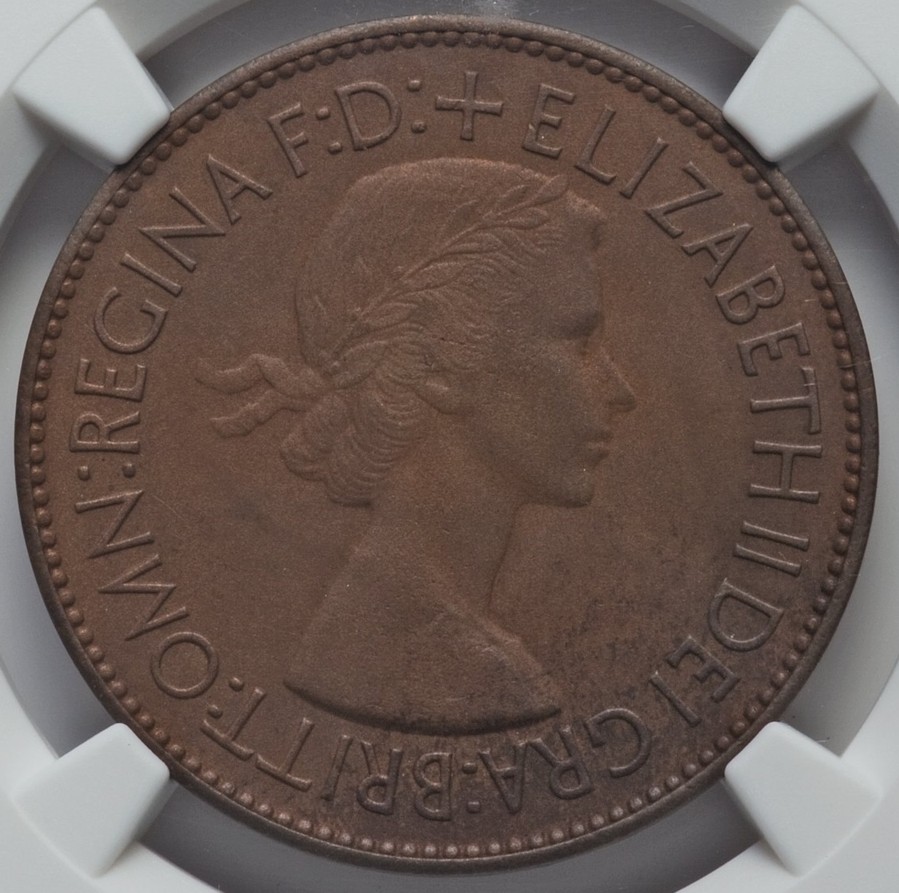
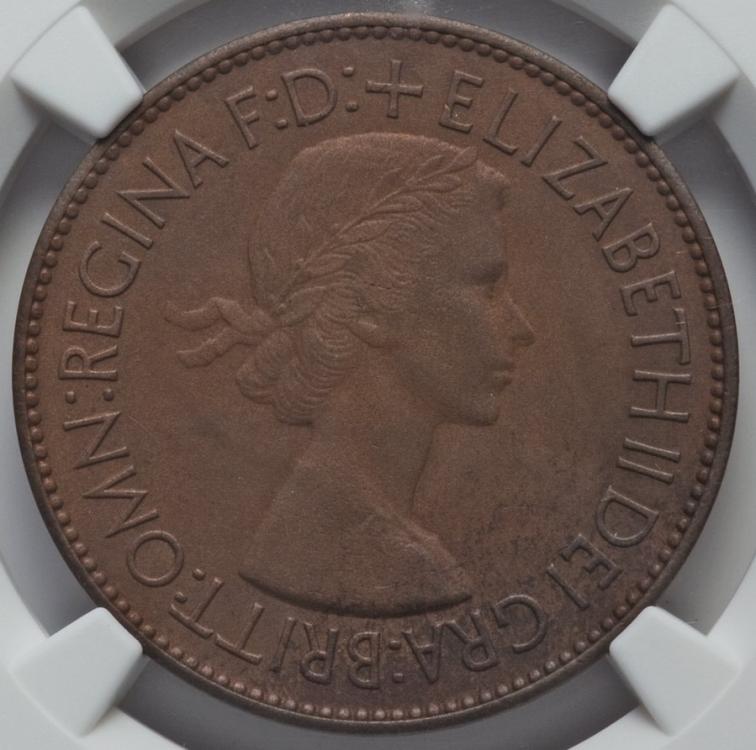
Just bought an interesting coin - matt proof 1953 penny but struck with the circulation obverse die (121 beads; A of ELIZABETH to bead) rather than the proof die (120 beads; A of ELIZABETH to gap). I suppose it's logical that, if they were struck for photographic purposes, they would strike examples of both circulation and proof coins in a matt finish.
 1 point
 -
It wasn't a Coin Monthly. It was Coins, January 1971, previously Coins and Medals.1 point
-
Just me You MUST write this information up. I believe Rob is working on a new ESC and this kind of info would be the icing on the cake.1 point
-
Hi, I have collected die numbers for a number of years now, 6d 1/- and 2/-. I currently have 878 of the possible 1107 die numbers for Shillings (excluding varieties and errors). I know a collector that had just over 1000 of the 1107, so there are less than 100 unknown numbers. I have found very little info on the die number series apart from the books already listed in the above posts, Davies, ESC, Coincraft etc. Tony Claytons site with known die numbers is not very up to date. I e-mailed him a while back with the numbers I had, but he never updated it. There are a couple of errors/updates on Davies, 1868 I believe 51 is the highest number, not 54. 1874 I believe 70 is the highest number not 76. 1877 I have with die 70, Davies lists 69 as highest. As far as varieties go, if you collect all the numbers, you will generally have all the varieties, since this is all the dies that were used. There are only a hand full of exceptions, the main ones worth noting are The 1866 die 63 has the standard obverse and also found with the B/R in BRIT obverse. 1879 die 9 has the standard obverse and also found with the R/B in GRATIA (there was one for sale on eBay http://www.ebay.co.uk/itm/1879-Victoria-Shilling-Unlisted-GBATIA-Error-Variety-die-9-EXTREMELY-RARE-/200974960748?pt=UK_Coins_BritishMilled_RL&hash=item2ecb0a886c ) London coins also sold one a while back. There will be plenty errors in the series too, broken dies, filled dies etc, but not really varieties. Hope this helps1 point