Leaderboard

Popular Content
Showing content with the highest reputation on 05/17/2018 in all areas
-
Some of mine - I don't have many, but I really like the ones I have:4 points
-
It looks OK to me, just checked my Portuguese catalogue. 1819 has round shield as do all 1820 - 1825, but 1821 and 1823 both exist with oval shield. Wouldn’t worry too much about position of lettering, these are all pretty crude strikes, and footnote to this type states “existe legenda junta e seperada” 36mm 38.4g bronze 2013 values for 1819 are F €20 VF €100 EF €2502 points
-
taken form the Royal mint museum facebook page, and what a beauty this coin is, almost certainly unique The coin illustrated here is a piedfort sixpence of 1963. It is the same diameter and carries the same designs as a standard sixpence but at 6.460g it is more than double the normal weight and it is made in sterling silver. For many years it has been in the Mint collection but so far it has not been possible to determine precisely why it was struck. There is no evidence of relevant experiments taking place at that time and in terms of size it cannot be related to any other coin the Mint was making in 1963. For the time being, therefore, the coin remains a mystery but the search will continue for an answer.

 2 points
 -
It's worth pointing out that there are far fewer varieties on small coins, probably because any slight flaws were very hard to see in a casual glance, so the Mint would not have bothered correcting them. Having said that, there are so many more varieties in pennies than - say - halfcrowns or florins. One reason may be that the introduction of bronze was so challenging and that the problems showed up more on pennies. But do note that there are still many early bronze varieties on halfpennies too, but because they're less popular, they're less collected and analysed. There are probably many yet waiting to be studied and catalogued, a fascinating project for someone. I think the humble sixpence is my favourite small coin.2 points
-
1 point
-
1 point
-
1 point
-
1 point
-
1 point
-
1 point
-
I've developed an interest in British coinage if for no other reason than here in the U.S. (or at the very least in my region of the country) U.K.issues are very much something of a collecting backwater, and thus I find some really great material relegated to dealers' "bargain" bins. Case in point - this 1831 ".W.W" variety William IV penny turned up at a local (that being in my largely rural area a relative term, as it was still a sixty mile drive, one way) coin club sponsored show in a tray of "junk" coppers, and therefore cost me virtually nothing.

 1 point
 -
That might be cruel - but I did pick up this one as an upgrade the other day. Not necessarily my favourite - I have posted those elsewhere - but not bad:

 1 point
 -
I bought the One Centum to tick that denomination box. It was conveniently not in copper, as I already have a 2 Cents in this metal, ex Hopetoun House Collection and a super coin. 'scuse the hair on the scanner
 1 point
 -
1811-1815 have no VI in legend and all have oval shield, variations to legend exist - it’s a general rather than a specialised catalogue. D.Joao Principe Regente 1799-1816 = prince regent D.Joao VI O Clemente 1816-1826 = king1 point
-
I think it might be interesting to hear how it goes with images too .. nice to see just how much abuse you can give something in stages before completely killing it AKA when to stop / quit / sling it.1 point
-
It cost me so little that I am using it as practice - trying a range of chemicals in increasing strength to see what happens. If I succeed in stripping it to bare metal I will then experiment with re-toning. If it looks any good at the end, I will post a picture - if not you wont hear from me again on the subject.1 point
-
not the greatest example but only one I could find on the bay but see the difference where the legend sits. There could be other die varieties. Krause will list the most common but sometimes it does leave out some varieties obvious reason page space or the book would be needing a forklift truck to move There is a remote possibility it could be a mule because your bust type with the gap between G. and PORT with the P at the front of the head is from the KM# 370 bust but that obverse didn't start until 1820. So could it be a Mule 370 bust with km#365 date? I would seriously doubt it though
 1 point
 -
I sent a message to the seller and got a very prompt reply back thanking me and saying he had been 'taken in'. He's pulling it.1 point
-
Most definitely!1 point
-
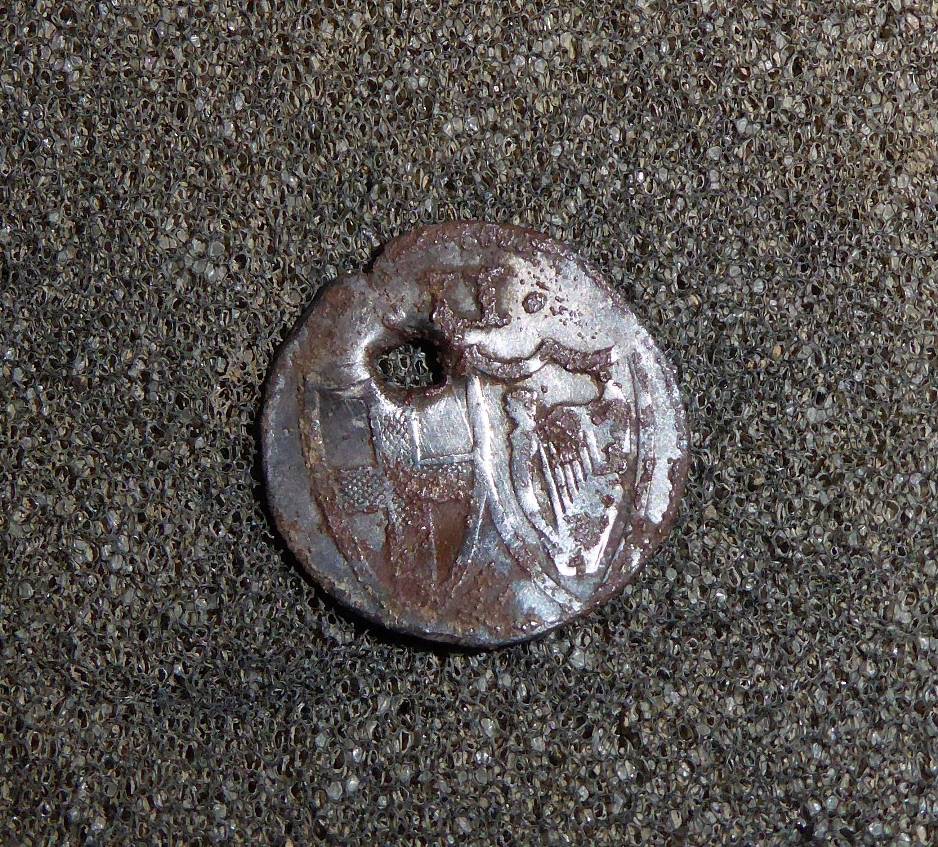
a bit rusty and holed but still nice to find, especially as land is at a premium now we are heading into summer
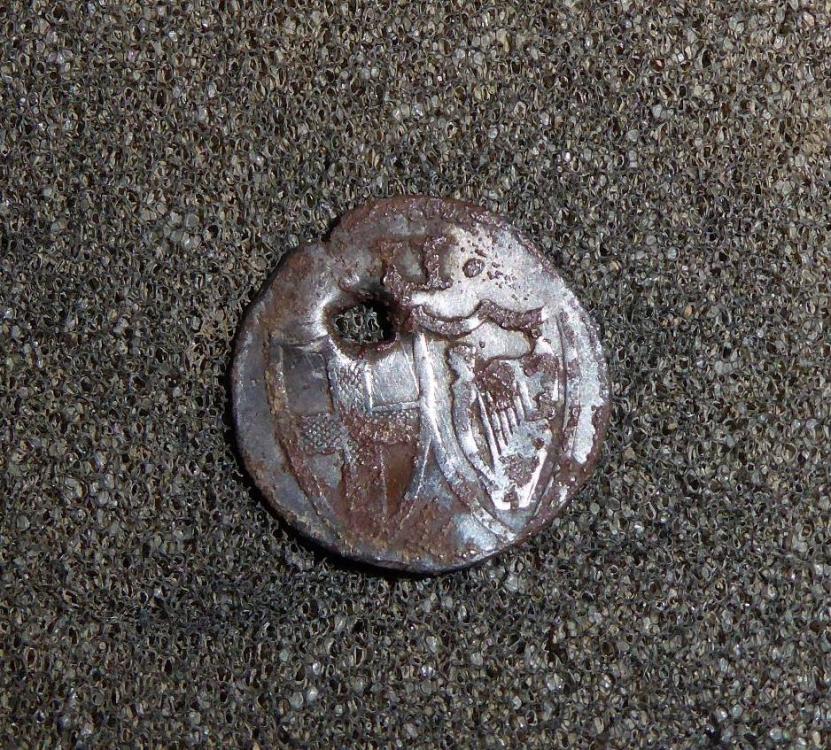
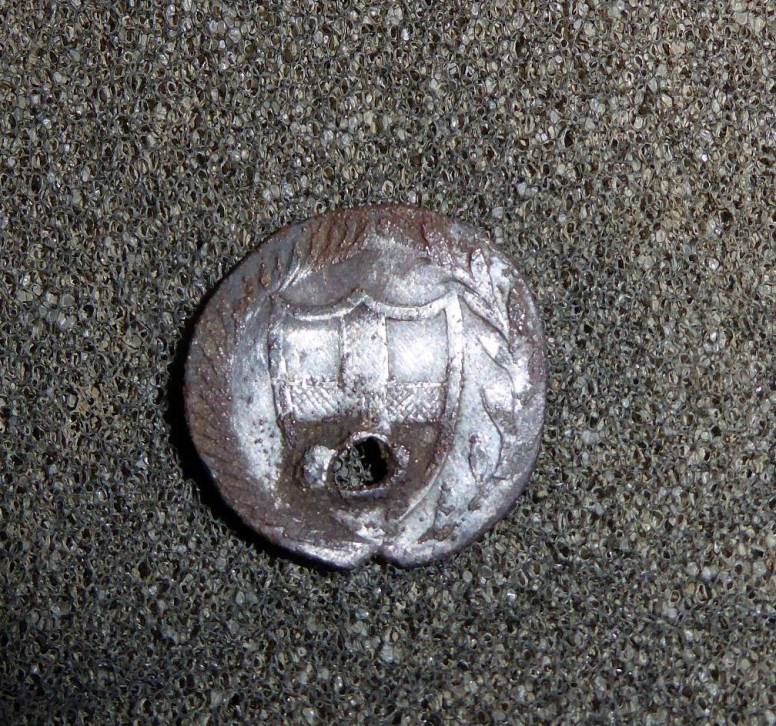 1 point
 -
This looks a wrongun. Seems mushy looking on the obverse and mintmarks not a known mintmark. It looks like RI which i assume is an abbreviation for replica. http://www.ebay.co.uk/itm/Hammered-Henry-V11-Silver-Groat-triple-band-crown-regular-issue/1832300672571 point
-
Noooo work boss....1 point
-
That's what I get for trying to post without the boss seeing me.....1 point
-
Well done. I won the Marrian & Gausby centum pattern. I wanted a few more but got blown out the water. The superb Ormonde crown I had pencilled in at 3500ish, but a hammer of five and a half was a bit much for me. Lot 1203 was a P1205 1798 farthing which I had 1000 on but made 1300. Not too surprised with that as the last one to come around sold for almost £1K hammer 5 or 6 years ago at W&W. It's seriously rare as a variety. Someone had a very nice Moore pattern P2130 which I came second on.1 point
-
Your catching the bug, that's why I collect pennies, there's millions of them.1 point
-
Mike and Richard. Add me to the list also! :-)1 point
-
This is a promising start. Coins are little works of art and, if you find a particular denomination attractive or impressive, you will derive great pleasure in finding out more about it/them. Read about them as people have said, and the fascination will develop. I think you will get greater pleasure from collecting rather than investing and people's love for their particular subject just sings out from contributions on this forum. Half crowns have some of the most beautiful artistic designs seen on British coins.1 point



.jpg.59f7f7c5ad8ff67a70f8db9e7dffd413.thumb.jpg.0826c31400cad2e4de5fe0a6afd6fd8b.jpg)