Leaderboard

Popular Content
Showing content with the highest reputation on 11/14/2017 in all areas
-
Am skint now lol. I've shelled out just shy of £200 this week on short cross coins. Christmas snapping at my heels as well i think am done til January.3 points
-
Oh just in case anyones interested. Sold the 1837 sixpence B/RRITANNIAR error £300. That will get the grand daughter some gifts for xmas3 points
-
The Obverse die or pile ( the one that has more complex design - usually the portrait) is the one that has the locating spike. The reverse die or trussleis the one that takes the hammer blow and is the one that wears way quickly ( usually the die reduces in length by approx. 8 mm every 1000 coins). easy to remember Trussles in the hand , piles on the bottom3 points
-
Hey, i spotted it 1st. I messaged him 5 minutes ago ?.2 points
-
rather battered and bent but i managed to straighten it found a while back

 2 points
 -
It is indeed. Triangle mintmark. That lot was easily worth the £200. Keep an eye out for a relist ?. He might even lower it lol.2 points
-
Its a thistle below the bust. The George III's all look absolutely fine, no idea on the small hammered (not my thing at all - although I love to find them :)) -the big one looks remarkably like a really bad Lizzie 1st. 200 quid? No way.2 points
-
Looks fine. It is a scottish coin (merk). Some have marks below the bust. The profile looks Scottish. Some have a small F for Falconer or a thistle below the bust. I can't make it out fully as i am on my phone.2 points
-
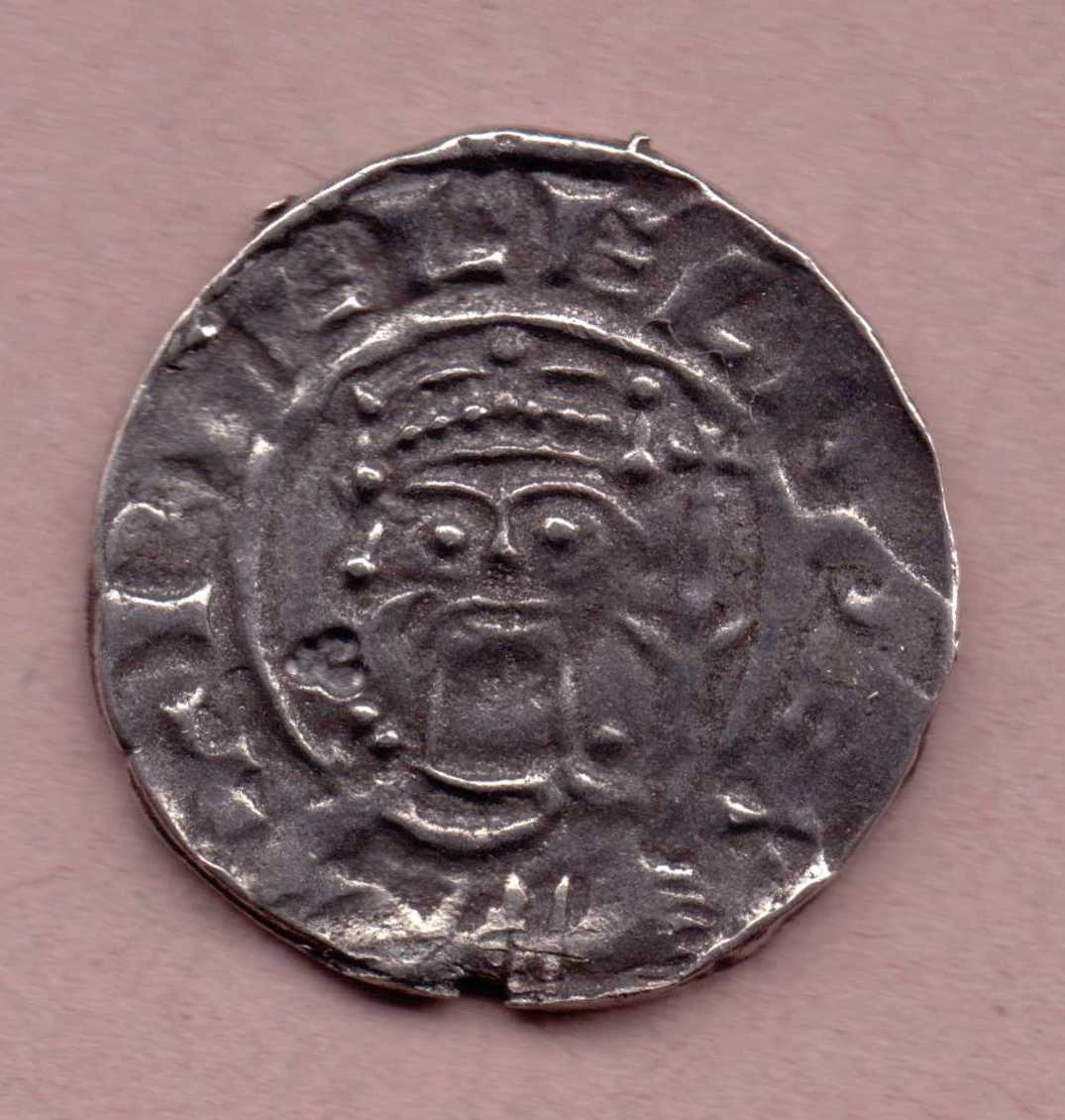
It's a cast replica. It's marked with the little heart shape to the left of the portrait which shows it to be a replica. That's why its mushy looking and lacks detail. Sorry http://trade.ancestors.co.uk/products/timeline/coins/saxon-norman-william-i-penny-2023-62 points
-
Is this a new variant? Sorry, been to the pub lol2 points
-
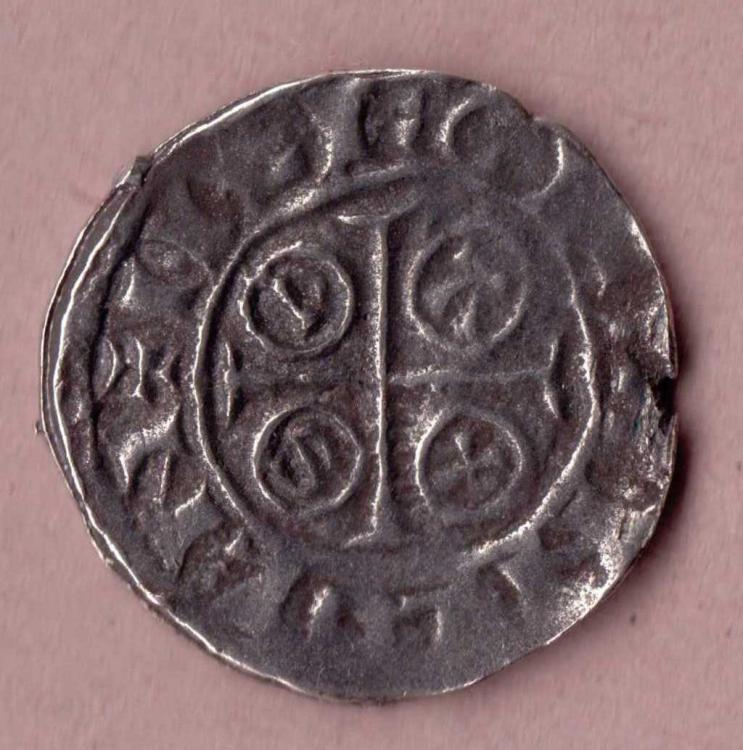
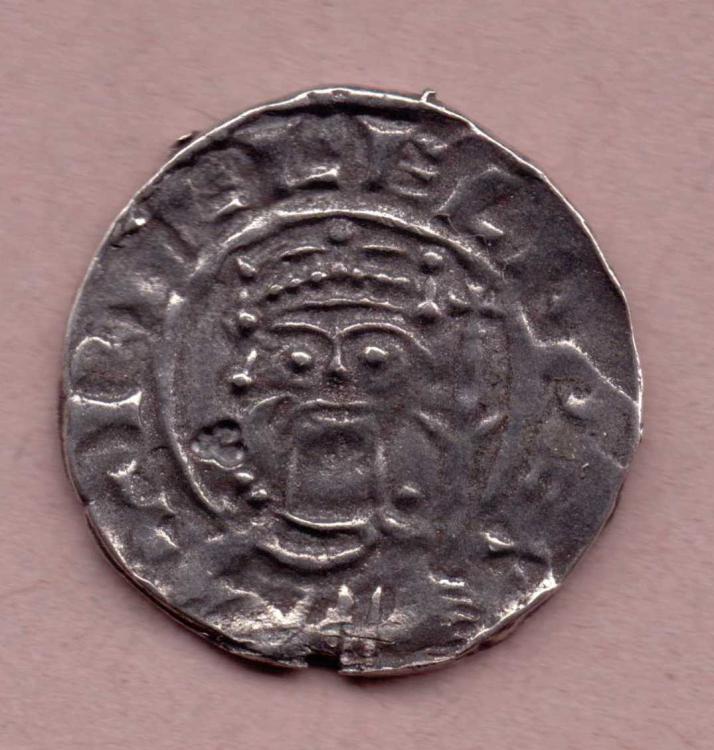
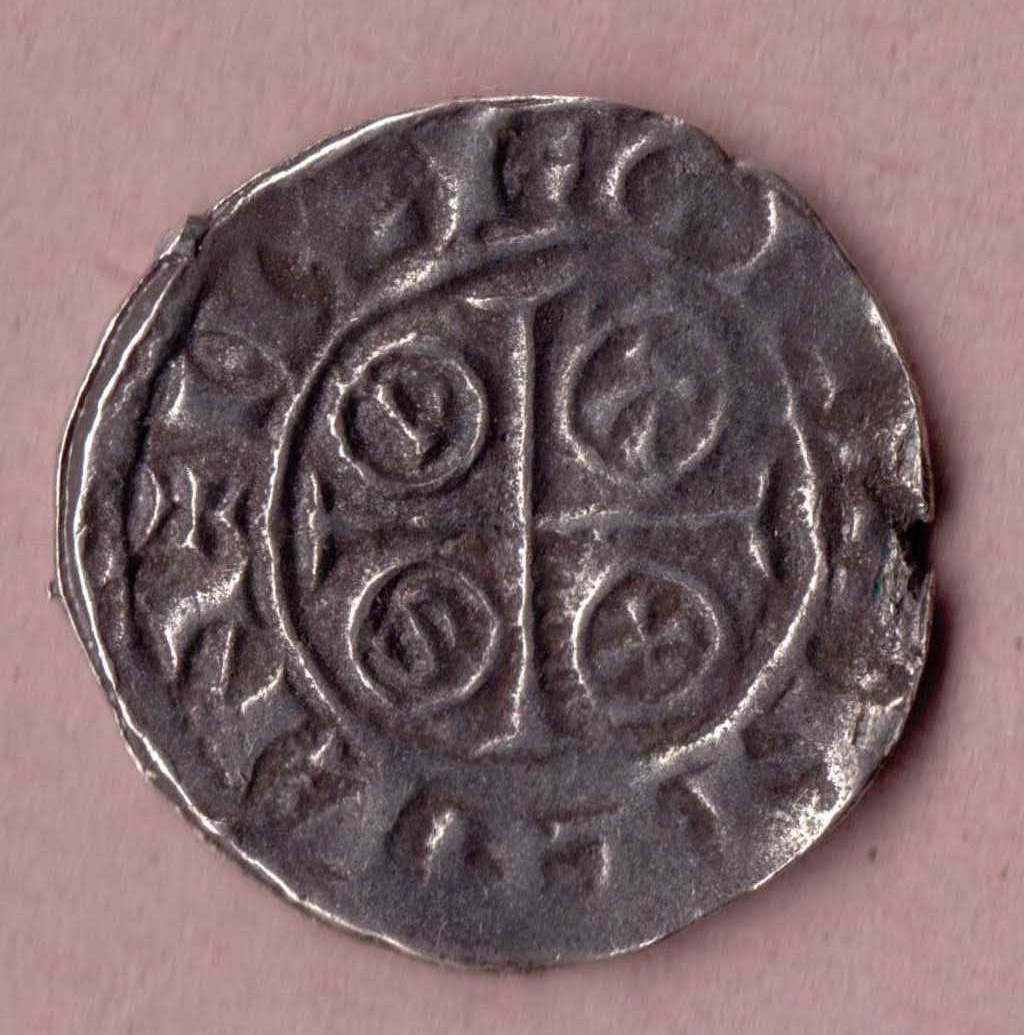
I have a PAXS penny where I've been trying to establish the mint and moneyer but struggling to interpret the lettering. If anybody with familiarity of this coin type can help, that would be great. Thanks in advance...
 1 point
 -
Here goes. first full coin. 1.King John class 5a Ricard.on.nicol Lincoln. full coin 2. Henry III believe I can see EN on CAN Wilen on Can Canterbury. 3.Henry III class 7c Nicole on Can Canterbury 4. Henry III class 6c to 7a Walter on Can Canterbury 5. Henry II class 1a Almer on lunde London
.thumb.jpg.cc90c7144f54faab761d1cb30d42998f.jpg)
.thumb.jpg.cd0491cd484627cb1c5013b817fc5d2e.jpg) 1 point
1 point -
Thanks stu, don't think I did bad ..... but it did take me about three evenings looking at them will post better pics of the other two.1 point
-
Try and haggle him down a bit lol. If you want a rough idea of value on the merk see what there going for in that condition on eBay. Good luck with them. Here's a similar one. There ain't many on there though. Saw another one for £550 https://www.ebay.co.uk/itm/Scotland-Silver-Charles-II-Merk-13s-4d-S5611-1673-First-Coinage/3822786054561 point
-
Here is a link for you hammered folk or detectorists. Very good comprehensive info on monarchs and Mintmarks. Hope it is of some use http://www.psdetecting.com/Mintmarks-CharlesI-&-CharlesII.html Full site is here http://www.psdetecting.com/Paul-Shields-Metal-Detecting-Website.shtml1 point
-
Thanks for the quick responses.......shame it's a replica, would have been a nice coin for collection otherwise. Fortunately was part of a 1000+ coin collection that was inherited, so no direct cost to myself, I suspect the original owner had believed it to be original as was listed as 'fine' £150, probably acquired at least 10 - 15 years ago, potentially several decades thou.1 point
-
Unfortunately yeah we are. I just hope he didn't part with too much cash for it. I'd definitely be chasing a refund for it that's for sure.1 point
-
seeing a lot of these lately1 point
-
I think it would be. The merks the really valuable one out the bunch. The Longcross is a good grade also. I suppose if the Geo III trio was ok it would be a good deal. The Charles 1st is a bit shagged. ?. You might make back what you shelled out if you put the merk back on eBay i suppose.1 point
-
Blimey, I can learn new things (and reassuringly my wife is wrong - I don't know everything ;))1 point
-
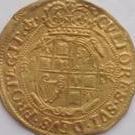
The other 1 is charles I shilling tower mint I believe 1639-40 . I am sure i'll be corrected if I am wrong Although if those are sixpences below it might be a half crown or were shillings massive in 1639?1 point
-
Likewise, and if it isn't I've probbaly flogged them off dirt cheap as "foreign"1 point
-
Cheers guys. 1st time i,ve seen a merk. ?1 point
-
There not cheap. Thats the first I've seen under £300. I bet he didn't have a clue it was a merk/ half merk.1 point
-
Rosette Mascle Henry VI Groat , Calais.1 point
-
Edward IV first reign, light coinage Archbishop Bouchier ( Canterbury mint) no marks by Bust, spur under CAN. do not have my book to hand to give you the Blunt and whitton / DIG reference numbers1 point
-
Very true! New discoveries come to light all the time. There could be a hoard sat buried with a new moneyer or moneyers in it. You never know.1 point
-
Made me look at the thread ZOO i thought you had found a finger penny1 point
-
It's amazing to think that something as massive as a new moneyer could still exist out there!1 point
-
Is this lot above board and what is the small writing about on the obverse of the shilling? https://www.ebay.co.uk/itm/silver-coins-charles1-and-2-george-3-and-old-long-cross-silver-coin/122797190412?ssPageName=STRK%3AMEBIDX%3AIT&_trksid=p2055119.m1438.l26491 point
-
I believe its a Henry VI half groat. Canterbury or Edward IV half groat. But get a second opinion.1 point
-
Yes its called the R over Almost a B in BRITT1 point
-
Yes, Zoo, that is a nice one....The reverse almost has that pickled appearance where the planchets were sometimes acid bathed to increase the surface percentage of silver. Nice!!!1 point
-
Working from right to left Your spot on with the ID of the first full coin. Its a 5a2 of Ricard under John. The other full one i can't make out. Middle one is Henry III Nicole London. Looks to end VN i think. The second to left i cannot say for sure. I'd need a better image so I'll skip that one. Last on left is Henry II Alain London so you were almost right with that. It is class 1a5 or 1b1. Overall you've done very well for a first attempt. You may well be correct on the two i skipped. I'd need better images.1 point
-
No, the detail will have been entered using the individual punch components in the correct place, with a small allowance for position from die to die. What has happened is that it takes a few blows of the hammer to make a coin from the finished dies, particularly in the case of those on a larger flan. If either the dies or the blank move relative to each other between blows, you can get what is termed a double strike. It is quite common for this to occur, in fact a cleanly struck large module hammered coin is a very desirable thing. The attached shows the effects of multiple hammer blows. 5 blows were required to strike the coin - the obvious angled parts top and bottom, together with the centre band which is similarly (but less obviously due to lighting conditions), angled on both left and right. The bit in the middle is flat. It also shows that the blank moved a little between strikes as indicated by the discontinuity in the inner circle by the horse's rump.
 1 point
 -
The first coin Ricard on Nicol looks very much like ficard, but can't find that moneyer. so must be Ricard.1 point
-
Notice alibababa coin they use a C for a G lols1 point
-
Really he only had to look at the B in Britt and see how long the bottom serif is the upward curve would start much later nearly where the right leg of the R starts to curve?1 point
-
They are indeed. If only they could tell stories. I often wonder whose handled them in the past. Fascinating hobby. Best of both worlds detecting and collecting.?1 point
-
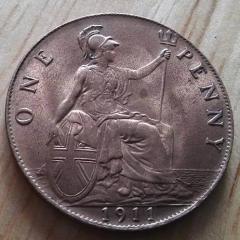
streaky lustre but still attractive ,no wear and only a few marks1 point
-
Interestingly I often wondered why the slower technology of making separate molds and casting when the much faster technique of striking was available Then I tride making a Thurrock style die set and blanks of potin ( high tin bronze) the first blank struck effectively destroyed the dieface as the potin seemingly shattered ( like sticking a glass blob) I then realised that the only way to use potin as a coinage metal was to cast the coin !1 point
-
The reverse is not so nice [Walter on LVN], but nevertheless it's always good to have an ex-Mass in ones collection
reverse.thumb.jpg.12d41c643509510fa38ef1cdc07554c6.jpg) 1 point
1 point -
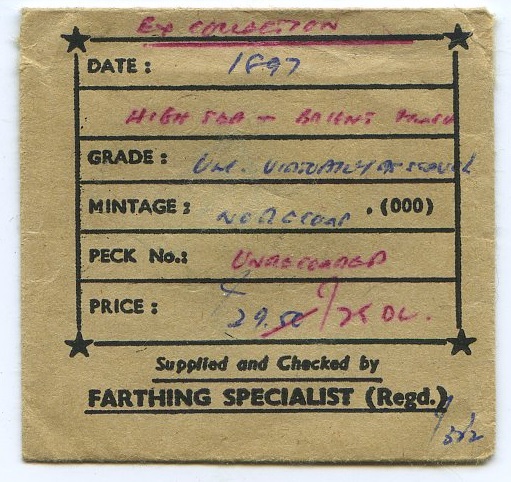
I haven't. I was leaving it for a month to see what interest there was in the thread once no new posts were being made. Between the 25/5 and 21/8 it looks like about 50 visits, so 2/day. Not wonderful as it implies random views as opposed to research, but better than nothing. FARTHING SPECIALIST (John Minshull) Paper envelopes, 57mm square.
 1 point
 -
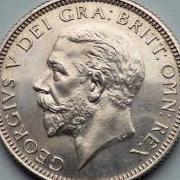
Which is why my lifestyle is much simpler. I only have to worry whether the coin is attractive or ticks a Hobson's Choice box, and if it suitable for either the collection or for resale, is the price right. There is a huge sense of deja vu with these circular arguments. People seem to fall into one of three camps. 1. Those that blindly follow the TPG view. 2. Those that recognise the system has its shortcomings, but accept them for what they are, and 3. Those that recognise the system has its shortcomings and don't accept the TPG view has any validity.1 point


.jpg.e9289c5f1b60299c8e92fd2ed862ee8d.jpg)
.jpg.db809f29f4c043e7eec27e5f6e17e013.jpg)


reverse.jpg.31a69b06846cd65aea581624866cdcbf.jpg)