Peckris
-
Posts
9,800 -
Joined
-
Last visited
-
Days Won
53
Content Type
Profiles
Forums
Events
Downloads
Store
Gallery
Articles
Everything posted by Peckris
-
Modern "bronze" is just copper-plated steel. You have one where the copper plating has not taken, yes. Interesting curio, so hang on to it if you like it. (Don't make retirement plans though )
-
What should I get?
Peckris replied to FiftyPercentSilver's topic in British Coin Related Discussions & Enquiries
This is what a 1696 Crown in VF should look like (or very marginally less) : And you should judge the George I shilling on the same basis.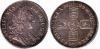
-
Collection of Numismatic Books
Peckris replied to £400 for a Penny ?'s topic in British Coin Related Discussions & Enquiries
When it's up on eBay (hopefully with a FULL list of what's there!) you will give us the link to it? -
coins will not have a tobacco coloured toning Like it matters on coins of that quality
-
What's the relevance of "non-smoking household"?
-
Your first task is to get rid of the verdigris, which is far more of a disaster area. Two options: 1. Soak for months in olive oil (which might help a bit with the toning too?) 2. Soak overnight in a good vinegar - this WILL lighten all but the green which will have been converted into dark patches But don't dip. It only works on silver hence its name!
-
george 3rd silver literature.
Peckris replied to ski's topic in British Coin Related Discussions & Enquiries
The definitive work is still ESC (English Silver Coinage). I'm not sure if it's still in print but I should think a copy is readily available e.g. from eBay. (And of course you have Davies for 1816 onwards - to be honest there isn't a great deal of silver coinage before then, though what there is is a patchwork worthy of a book in itself, from Spanish countermarks to BoE dollars to limited editions of 1787 to those oh-so-rare shillings). -
Thoughts on this 1 in date please
Peckris replied to azda's topic in British Coin Related Discussions & Enquiries
I had to take a screenshot then reduce it in size to see it clearly It's a weird one (pun intended). It seems like neither a Roman nor Arabic 1, in fact it looks quite a lot like a capital L. It doesn't look as though it was cut deliberately as a Roman 1. But it will be interesting to hear others' thoughts. -
1825 3rd Rev Shilling Variety?
Peckris replied to Paulus's topic in British Coin Related Discussions & Enquiries
Not at all, I have little idea about such things! I have bought it as a nice grade 1825, the wonky 5 is just added interest ... Michael says on his web site that others have suggested it may be 5/3 but that seems unlikely/impossible! So I thought I would throw it open for debate Nothing is likely or impossible in coin collecting Jedi Knight wants to be does Dave - enigmatic he is.
-
Good spot, Generic! I've admired ancient coins - especially Greek - for a long time but I've never seen those double inverted portraits before. You live'n'lurn..
-
1825 3rd Rev Shilling Variety?
Peckris replied to Paulus's topic in British Coin Related Discussions & Enquiries
Sorry, but I have to agree with Rob 100% on this. If it could be demonstrated clearly to be a 5/3 then it's of interest. If 5/5 - with all due respect to Michael Gouby - then it's of no interest whatever (to the general coin market, I mean - clearly it's of interest to you and Coinery!). As Rob says, double-struck digits or recut digits in the 19th Century are virtually the norm rather than the exception, and I really don't think Spink have the scope or the will to include such micro-varieties in the Standard Catalogue. Sorry to rain on your parade, but unless you can get confirmation it's 5/3, then I believe it's of personal interest only. Having said that, and forgetting the date issue, it's a very nice coin and I envy you it -
The last item does say ISTRI in Greek letters. The first two, with inverted double portraits, don't seem like either Greek or ancient, in my opinion. But someone may prove me wrong!
-
What is the best way to sell coins?
Peckris replied to Hello17's topic in British Coin Related Discussions & Enquiries
One man's bargain's... -
1722 George I Guinea
Peckris replied to Madkev's topic in British Coin Related Discussions & Enquiries
It looks kind of ok for the 4th Bust, but the legend is a little out of whack with the design. The omission of the B means one of two things : 1. it's a contemporary forgery (the weight should be 8.3 - 8.4 gms, yours is a little out) 2. it's a rare variety I'd incline more to the first, to be honest, but maybe you need the opinion of others more familiar with the gold series. -
1722 George I Guinea
Peckris replied to Madkev's topic in British Coin Related Discussions & Enquiries
Edited to add: the larger picture didn't seem to be there when I started replying, but now it is. It's still a bit on the small size but I can at least see the legend and the bust. Not sure what you've done there Kev! That image is so tiny it is virtually invisible. The way to do it is - 1. When posting, click the "Choose File" button below and select a picture from your computer (make sure it is no greater than 150k). 2. Click "Attach This File" 3. Click "Add to Post" Then when you're done and added any text to your reply, click "Add Reply" -
You MAY be right about a "coin worth many thousands", but actually, in those cases I doubt very much that a slabbing will affect the value much if at all. It's lower value items where a slab - rightly or wrongly - can add so much value. As for constructive criticism: 1. Dave has already pointed out, TPG companies do make mistakes, and fakes have been noted. So much for a cast-iron guarantee. 2. Storage - for those of us who own nice mahogany cabinets with proper 'cut outs', the slab is a disaster area. They cannot be stored in any of the traditional coin storage media, and they take up a hell of a lot of room. 3. Photography - very difficult if not impossible to take a decent picture, which is essential if selling. 4. Insurance - I have my own database which not only has scans of every coin that is worth more than £15-£20, but - unlike a slab - has the date purchased, where from, how much paid, notes on any distinguishing features, etc etc. More use to an insurance assessor than a slab that's ... oh, gone! stolen! 5. Handling - yes, those of us who own nice coins actually DO like to handle them every now and again.. wearing cotton gloves.. holding and tilting to view in just the right light.. examining through a loupe for any unsuspected varieties.. A slab makes all of that difficult. As for preserving its condition, you only have to look at Royal Mint proof sets from the 1970s to see how well sealed coins are 'protected' - true, you can't scratch them, but they can tone UGLY. Those who like slabs will continue to sing their praises no doubt, but there is a majority against them in this forum at least.
-
1860 penny LCW below shield
Peckris replied to chris's topic in British Coin Related Discussions & Enquiries
It looks to me like Freeman 4+D - the one you saw was probably 6+D which is a little scarcer than 4+D. It's always harder to tell on a specimen that worn, but I would say F15 is the likeliest one. Obverse 6 was the first one with a reduced gap between the top of the bust and the teeth - yours is clearly earlier. It really is incredibly difficult to be sure when virtually all the identifying signs are long gone. I might even plump for F13 (3 + D) as the front of QV's bust meets the rim vertically. On the other obverses the bust meets at an angle. Beyond that I'd really not like to say. I plumped for Obverse 4 because it seems to have that 'cutaway' for the signature below the bust that isn't there on Obverse 3? But it's hard to tell with that amount of wear. -
1860 penny LCW below shield
Peckris replied to chris's topic in British Coin Related Discussions & Enquiries
It looks to me like Freeman 4+D - the one you saw was probably 6+D which is a little scarcer than 4+D. It's always harder to tell on a specimen that worn, but I would say F15 is the likeliest one. Obverse 6 was the first one with a reduced gap between the top of the bust and the teeth - yours is clearly earlier. -
Pistrucci didn't get executed for his (probably accurate) portrait! My point was, why bother with a coronation medalet four years after the event, particularly one so crudely designed? And if it actually dates to 1821, how do you equate that particular portrait with that period?
-
Yes, a very interesting presentation. There is my usual problem with the portrait however. If this is really from 1821, why is it not the usual "fatty Georgie Porgie" portrait based on his obese appearance of the time? Instead, it appears to be a crudely engraved version of the 'slimmed down' Chantrey sculpture of 1825 which Wyon based his portrait on. Unless the medalet was redone in the mid-1820s but using George III counterfeit lettering punches - but then, the question arises "why do a new medalet so long after the event, of a monarch who was so wildly unpopular?"
-
What is the best way to sell coins?
Peckris replied to Hello17's topic in British Coin Related Discussions & Enquiries
-
I should know what that means - it was our school motto! "In (by, with) harmony, small things grow". (It's actually RES PARVAE - "small things" - of which I was certainly one )
-
Have a close look at that first penny, the 1897. The reverse isn't half bad -there's a complete shield, and Britannia has most detail apart from some wear to her leg, and those all-important fingers on the trident. I'd say it is between VF and EF (ignoring the artificial lustre). However the obverse isn't so good - an EF or UNC example would show much more detail especially to the veil and lower bust and ear. I'd say it was less than VF. But all in all it isn't too bad, and I certainly wouldn't collect that series in anything less than that (preferably better). The second one 1899 is poor, and if you look at the two side by side you will see how much worse. I hope that gives you an idea of what to look out for.
-
I collect pennies but am not aware of anyone really collecting misalignments, other than as an interesting curio. To be honest, I rarely check alignment so whilst certainly not common, it's hard to accurately estimate rarity. Interesting all the same, and a good spot! I think if it was 180 degrees out it would cause more interest. I have a 1948 penny that is 160-170 degrees so nearly there. Just checked mine, most are 360 degrees out ... I have one that's 359º out - should I retire?
-
I am want to meet a good boy!
Peckris replied to a topic in British Coin Related Discussions & Enquiries
:blink: No thanks. i always hope my death would involve cats or guns.