
Rob
-
Posts
12,930 -
Joined
-
Last visited
-
Days Won
371
Content Type
Profiles
Forums
Events
Downloads
Store
Gallery
Articles
Everything posted by Rob
-
Seems a bit steep, but in the context of prices seen at auction for rare mint examples maybe less than a grand OTT
-
Feels like the damage is already done. Whichever way it goes, there will be a significant number of people who wanted something different. It'll take a skilled set of politicians to deal with the disappointed and hurt 'losers' so we can all move on from this and figure out where we're going now ... anyone know of any? I concur. I thought it was stupid to break up the union in the first place, but now there is so much animosity it would probably be better with a yes vote. If Westminster doesn't hit the ground running on the 19th and start playing hardball from the outset, the real beneficiaries are going to be UKIP as the only people who can justifiably claim to be working for the citizens of what remains of the UK. The financial costs to both sides will be great in the short term, but the recriminations will last a lot longer because there are a lot of Scots (roughly half) who won't be happy with the outcome. What is important in the event of a yes vote is that Scotland gets its proportionately fair share but no more. Westminster must work, and be seen to be working, for the benefit of the approximately 90% of the population that didn't have a say. Golden parachutes are for those you want to get rid of. The rest of the UK has never demanded that.
-
Nicholson 190
-
With hindsight I could concentrate my efforts on a few things meaning that it would not have been necessary in the past week to come second on the pieces I did.
-
No, it's ok. Peck 821 refers. It is also listed in Spink's Coins of England and other references. When the year ended, existing dies had their dates changed (sometimes) because the cost and effort of changing the last digit or two digits was much less than that required to engrave a new die. Overdates exist for many years up to the end of the 19th century.
-
If you had bottomless pockets, it still wouldn't guarantee you could buy anything you wanted. The spectacular prices realised at auction arise because there is only one coin to share between two or more people with competitively deep pockets. Take yesterday's sale at DNW where the Shrewsbury 2/6d sold for £18k hammer - silly money. It isn't even an interesting type, but the catalogue said probably the finest known and so two people waded in with both feet, paying at least 5x more than it was worth to the rest of the world. The 1644 W/SA halfcrowns typically sell for £5K all in, yet are easily as rare as a die combination. It was just hyped up.
-
I like proofs AND currency. Nothing wrong with either of them.
-
Spink and Baldwins next week and St James's the week after
-
As a rule, much better for both buyers and sellers. There is usually less uncertainty as to what will land through the letterbox and the quality offered tends to be better.
-
I didn't get anything today.
-
1862 Penny - small date
Rob replied to Accumulator's topic in British Coin Related Discussions & Enquiries
I don't have an 1862 penny, but this 1860 does 3/4 of the job. Both are as struck, so no wear to consider, just quality of strike or worn dies. This was discussed about 7 or 8 years ago and the results were that the halfpenny numerals are roughly 10-15% smaller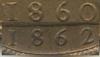
-
y***_ is a shill. l***n is an idiot.
-
Why Don't People Collect Halfpennies ?
Rob replied to sound's topic in British Coin Related Discussions & Enquiries
I don't see what the problem is. Each to their own. Nobody is forced to buy a coin. Nobody is forced to be a member of any forum. Neither Aardhawk nor anyone else has not been told they aren't permitted to have their own view on what is pleasurable to collect. Every era, field or denomination from ancient to current coinage has its adherents irrespective of the costs of pursuing that objective. We are either all sane, or collectively demented - including those who collect from change, thus ensuring that the collection dimishes in purchasing power unless the owner inadvertently happens to acquire a future collectable rarity. Aardhawk is free to leave the forum if he so wants, though I would suggest that at no point has he been required to make a contribution, log in or otherwise participate, so any posts are as a result of a personal desire to reply or make a point. I'm not aware of any area where people feel under pressure to act, contribute or in fact do anything if they don't want to. Given the ability of all members to isolate themselves from the forum is freely allowed and easily implemented, surely the burning desire to leave and more importantly be seen to leave is the medical issue? This is all a non-argument/discussion. Back to halfpennies if we can can folks. -
A nice result for the seller there then What's the cost of a 1st Class stamp nowadays? Sellers are caught between a rock and a hard place. ebay encourage sellers to include postage, but if you start anything at more than 99p a listing is ignored. Ebay also encourage you to start at 99p to get more bidders. Couple that with the need in many cases to get something signed for, the cost of eBay's fees, Paypoo fees etc and the contradictions just don't add up. I would offer free P&P if Royal Mail drop their charges and ditto for eBay. The reality is that a signed for jiffy bag is £1.83 minimum. Put things in an envelope and it will sometimes go as a letter (under 5mm thick). Add in the cost of a jiffy bag and if VAT registered, the VAT on your costs and it is clear that the cost of posting is often greater than the item. In this case the seller was deluded in believing that free P&P would make the item more desirable, or that there was a competitive market for the pieces offered. In other instances the buyers are being unrealistic in expecting sellers to provide shipping at a loss. The whole operation only works if everyone benefits.
-
National trust - anyone else out there members?
Rob replied to copper123's topic in Nothing whatsoever to do with coins area!
The National Trust is a robbing bunch of b*****ds. In the eighties I wanted to take out family life membership, but they said I had to pay to get in and could only pay for life membership once we had finished. So not happy with something of the order of a grand in cash, they still wanted the extra tenner. I paid the £10 entrance fee because it was a long way to go for a wasted journey, but refused on principle to pay over and above what was effectively a voluntary contribution. Since then I have only visited NT properties once or twice, and that was only because I had someone visiting who wanted to go there. I would have thought they would be grateful for a sum that large, but no, it wasn't enough. Someone needs to tell them that a little goodwill can go a long way. It also makes you wonder what would have happened if I had said I didn't want to go in, just buy life membership - would it have been permitted or not?. Those were the days when Mr or Mrs Jobsworth dictated everything (and probably still do). Good job they don't have a monopoly of places to visit. -
Why Don't People Collect Halfpennies ?
Rob replied to sound's topic in British Coin Related Discussions & Enquiries
Yes, it's each to their own. Personally I would sooner have a coin than a flashy car, but for others a car is more desirable. Some people spend thousands on a holiday. The market in used holidays is quite stagnant at present - at least a collection is something you can resell. -
It's a copy of a William I penny. See the little 3 lobed mark to the left of the portrait. Value - pence. It isn't silver.
-
Why Don't People Collect Halfpennies ?
Rob replied to sound's topic in British Coin Related Discussions & Enquiries
I'd still like a 1816 three shillings to complete the set!! A few have gone through auctions in the last 10 years, though none of these appeared to be unc despite the catalogues saying they were. Any genuine unc is likely to be worth the money spent. NGC pop reports suggest they have slabbed 1 at 64 and 2 at 65, though what grade they are or whether still slabbed is anyone's guess. Hope springs eternal. -
Why Don't People Collect Halfpennies ?
Rob replied to sound's topic in British Coin Related Discussions & Enquiries
The ultimate unpopular denomination/series? The BoE tokens? I've always seen these as unattractive to collectors for the same reason that the Channel Islands coins are ignored. The design is very simple and replicated throughout the series leading to an aestheically bland collection. -
Why Don't People Collect Halfpennies ?
Rob replied to sound's topic in British Coin Related Discussions & Enquiries
Proofs and patterns. OK, it isn't a denomination but I think you will struggle to find many people collecting them, yet it isn't as if they are unaffordable for the most part as many can be purchased for a few hundred up to a few thousand which is similar to sovereigns. The penny boys throw a lot more cash than this at their coins. -
Why Don't People Collect Halfpennies ?
Rob replied to sound's topic in British Coin Related Discussions & Enquiries
That's probably because gothic florins are virtually impossible to get in mint state. Bag marks and a low rim don't help. -
Why Don't People Collect Halfpennies ?
Rob replied to sound's topic in British Coin Related Discussions & Enquiries
Shillings or hammeredI'd say halfcrowns, crowns, sovereigns, shillings. In that order.I concur -
Looks like an all round thumbs up
-
Why Don't People Collect Halfpennies ?
Rob replied to sound's topic in British Coin Related Discussions & Enquiries
Halfpennies are a damned sight harder to get in high grade than pennies. Lots of nearly there pieces, but never quite good enough. I wanted the 15*+O* F343A in London Coins last weekend, until I saw it. EF at best and a carbon spot. Keep looking. -
Not a bad example. I'd have it.