Leaderboard



Popular Content
Showing content with the highest reputation on 12/21/2020 in all areas
-
No, definitely a lamb.1 point
-
Presumably it could be of interest to investors too. The Edward VIII went to "a British collector in the room at The Waterbird Collection" in 20191 point
-
There's more than one collector with adequate funds to throw at the hobby, and there's fewer coins than sufficiently liquid collectors to fill the demand. Even half a dozen potential collectors in total would send the price sky high, and I'm sure there's more than that.1 point
-
Only 370 days till Christmas!!!!1 point
-
In a previous post I mentioned that I was researching die numbers that appear on half sovereigns in the period 1863 to 1880 as part of larger study into half sovereigns. I mentioned that 10 die numbers had been recorded in respect of 1879 half sovereigns starting with Michael Mapleton, Malcom Marsh and myself. I will recap the numbers below: Michael Mapleton (in 1974 ) 57, 88, 89, 119, 180. Total 5 Michael Marsh 1st Edition 57, 88, 89, 95, 112, 119, 180. Total 6 Michael Marsh 2nd Edition 57, 58, 88, 89, 95, 112, 119, 161, 180. Total 9 After the appearance of die number 87 at Wawrick & Warwick recently I reached a total of 12, this amount seemed over the top for a extremely small mintage pf 35.201 in the year. Suspicious I consulted the Royal Mint Annual Report for the year which states that there were 14 dies split 8 Obverse dies and 6 Reverse dies. So for anybody remotely interested please find below die numbers that should form the 6 and where to find examples of them. Ashtonian 77, 87, 88, 89, 95, 112 Die Number 77 - DNW Auction Lot 891 Jun 2014 Die Number 87 - Warwick & Warwick 900 Lot 343 Dec 2020 Die Number 88 - Baldwins 43 Lot 106 Mar 2020 can also be seen on the PCGS population report Die number 89 - Baldwins 48 Lot 168 Sep 2020 Die number 95 - PCGS AU58 I will with hold the cert number. Am example also be seen on Worthpoint Die Number 112 - A 1879 half sovereign which is shown in the first edition of Marsh it looks as though the number is 112. If anybody has a 1879 with a die number that is not in the six above I would love to hear from you. Keep safe and keep on collecting1 point
-
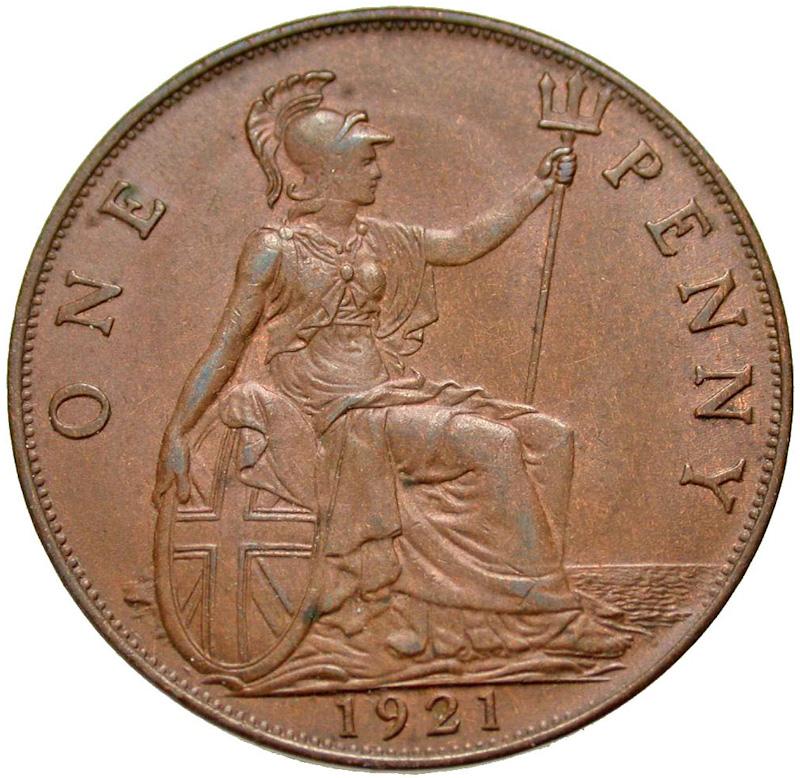
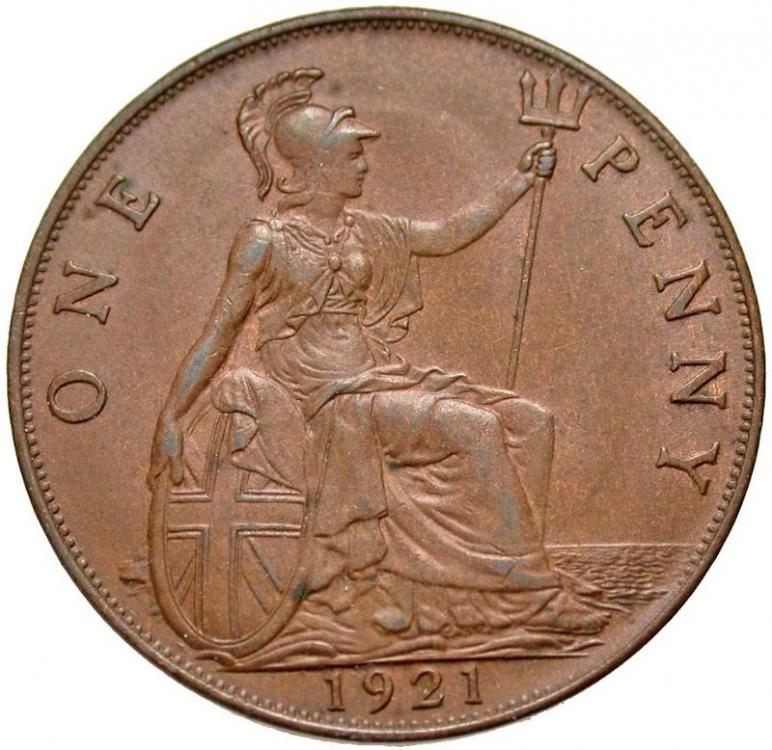
I've just seen a better example of the 1921 missing waves:
 1 point
 -
Hello, I am looking for a good book or information on the minting of milled coins (copper, tin, bronze in particular). I really want to understand how ‘errors’ happened, for example one date, numeral or letter overstruck with another. Any advice or recommendations welcome. Thank you, Bernard1 point
-
Italy Carlo Emanuele III Coinage for the Sardinia Half Reale 1769

 1 point
 -
This is where more research will be needed. I have not rounded up all of the 1951 crowns I own yet. I have one Type I- (the 1899 reverse) and the others are the modified design which I am calling Type II. The coin I posted here is from the PCGS pop report and graded as a PR66- note it was graded as a proof- and not a PL. I am not sure yet if the differences in the type I or II are a sure determining factor as to distinguishing between a Proof and a PL. My gut says both reverse types were used to strike proofs and the dies saw continued use for PL examples. One of the other interesting questions is whether just one reverse type was used for the Festival crown production and if there are records that track that mintage. My initial gut reaction to all of this is that the Type I reverse was used first and it was replaced by the type II. How long the Type I reverse was in production may never be known. I do hope that those collectors that so happen to own a 1951 crown will look at the reverse to see which type they have.1 point
-
I have tried it occasionally, but can't say the results have ever been rewarding. Silver dip will get rid of the marks, but also all the lustre, leaving the coin flat and lifeless. Using a cotton bud dipped in silver dip or Ammonia or lemon juice allows a more selective cleaning of just the spots, but getting to a result that doesn't still look blotchy takes a lot of effort and is rarely successful. I have not tried the aluminium foil and bicarb of soda technique on a modern coin - maybe someone else has? If you have examples that are not too scarce or valuable, experiment and let us know your results. After all, the coin will still be worth its melt value, and that is all most buyers would give you anyway for the common coins.1 point
-
Hi All Did you know that Chris has an App
 1 point