Leaderboard
Popular Content
Showing content with the highest reputation on 11/04/2018 in all areas
-
One I picked up a few years ago. Don't really collect this series, so would sell to a serious buyer, plz PM me if interested.
k7g60_31.jpg.bfc150d8fb1516570c92c167cf1841e1.jpg)
 2 points
 -
Excellent, the instructions are online, the key is time and repeated prodding of the verd with sharpened cocktail stick or similar. I have left a bead of Verdicare on the coin overnight without detriment and it doesn’t affect lustre or colour. The instructions do suggest leaving a protective film over the coin, I don’t do this, just dab the coin with water or acetone when I have finished. It works slowly but is very controllable. Use all the magnification you can for precise prodding. Do not use on proof coins. Jerry1 point
-
Just been looking through the collections on Colin Cooke's site, LCA and elsewhere. I couldn't see a single 1919H with more than a modicum of hair detail. Even on practically BU specimens. The dies Heatons used must have been very worn. Same applies to 1918H.1 point
-
Its a nice coin Peck.The hardest place to remove anything from is between the teeth ,so maybe at some time in its life someone has already tried andI would just leave it as it is. I believe years ago they put some white rubber glue on the teeth untill it set hoping that peeling it off would remove most 😂1 point
-
I have the original backing track (no vocals) to God Only Knows, and it demonstrates what a genius Brian Wilson is; it's almost classical. Not sure what he'd make of the nose flute version!1 point
-
1 point
-
In conversations I have had with him he told me his name was John, but he goes by Stephen. Why I do not know, and never asked him.1 point
-
Thanks. That’s it! It’s a maundy coin.1 point
-
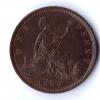
After 8 plus years, i think I've gone as far as I can, for the time being, on the 1860 to 1901 series of pennies. I still have some very obvious gaps, but the rarer pieces are very difficult to come by, so my acquisitions from this series have slowed to a trickle. As a result I've branched out to the pennies of George V. Most of these are relatively easy to obtain in UNC at much lower prices than the bun series, but there are some rare ones, or at any rate, rare in high grade. The KN's are among the few in that era which have an exceptionally steep price/grade differential. I'm therefore very pleased to have obtained this 1918KN, which, unusually for any pennies of that WW1 era, has an exceptionally good strike, with very good hair detail on the King's head. There is a tiny metal flaw between Britannia's arm and the trident, and the tiniest blemish to the right of the trident, neither of which detract. But that apart it's issue free and has noticeable residual lustre and nice even toning.
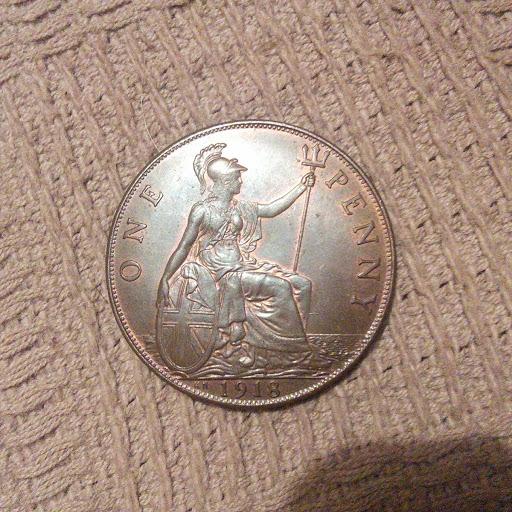
 1 point
 -
Thankfully very inert, at least as far as metals are concerned, I’d even use it in my cars! The copper alloy parts in my 60 year old Landrover carburettor remain pristine, if a little worn. Any worries of even long term coin damage are misplaced, and this applies to most of the easily available organic solvents, though as stated above I always use a precautionary 100% acetone wash as a final step. Olive oil, widely used apparently on coins, is far worse as it oxidises into an acidic compound which does have damage potential. And the waxes and oils that accumulate around the details of handled coins likewise are sources of the salts that initiate and maintain verdigris, letting those deposits remain is itself a long term risk, and the main reason for the development of verd for example on slabbed coins. Jerry1 point
-
Mr T water H2O is a polar molecule. That's what gives its ability to dissolve so many things.1 point


.jpg.59f7f7c5ad8ff67a70f8db9e7dffd413.thumb.jpg.0826c31400cad2e4de5fe0a6afd6fd8b.jpg)

