Leaderboard
Popular Content
Showing content with the highest reputation on 10/04/2017 in all areas
-
30g is too much. Should be 28g or a midges over. 41mm is the correct diameter.1 point
-
Of course there are more advanced methods but are probably not necessary. TBH the reverse looks like silver to me.1 point
-
Throw it into the floor (carpet/ vinyl) and listen for the sound... It has a peculiar resonance that you don't get with CuNi1 point
-
There are at least 4 varieties of 1750 shilling.1 point
-
1750/461 point
-
If it is in mint condition and a 20th century striking it is going to typically sell for £20 give or take a bit, however the early ones would be worth considerably more in this grade. They have been made more or less continually since 1780, so the majority are modern restrikes. There is just over 3/4oz of silver in them, so an intrinsic value of just under a tenner at current silver prices. Paying twice that for a mint state piece is not unreasonable. If it is impaired though, I wouldn't bother full stop. 10 years ago the note in Krause said the mintage was up to about 800 million for all issues. There are sites which go through the variations, but the one I was using now gives a 404 error message.1 point
-
Post good pictures (including the edge) here and you might get your answer.1 point
-
They would suffer wear just like any other raised feature.1 point
-
162689599678 If it is UNC then the RM has a real problem on their hands. They hired Stevie Wonder as the engraver1 point
-
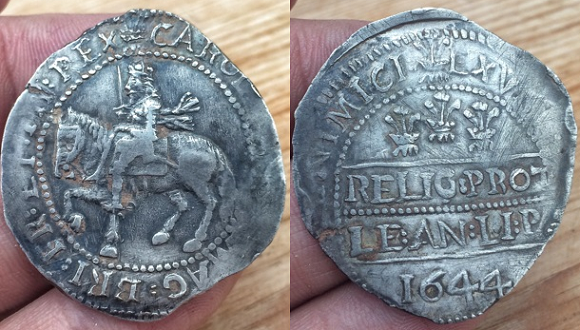
Here is both sides, cleaned up a little. Super portrait of the king.
 1 point
 -
Looks like MARII to me the first A is barred from your picture but the last A is exactly the same as the I unless you can see remnants of the A . Drawing on the conclusion that the right leg would be the same as the first and it isn't its thinner so I assume it's an I . I sit all day doing this lol. It is so very difficult with pics unless they are so clear and that hardly ever is the case. Sometimes what I think i see isn't the case but what I see when I get it in my hand something that never showed on the original pic. So sometimes I'll throw caution to the wind as there is bound to be an error somewhere Just noticed the small S on obverse and irregular font sizes on reverse. A variety?1 point
-
Nice penny........... http://www.ebay.co.uk/itm/one-penny-1898-/222665783839?hash=item33d7ea3a1f:g:3ygAAOSwEkhZvY1C1 point
-
It's certainly a distinctive R, not entirely down to a double strike I think. I believe we'll find it in part on other coins. We'll have to keep an eye out!1 point
-
Lol no offence taken Stuart. Your advice is always appreciated. ?1 point
-
Double the money will get you a mint one.1 point
-
To elaborate on the previous post, the lines on the coin in the image two posts previously will be seen to be incuse under a glass. This is because the abrasive will always remove metal. In the case of polished dies, the lines on the coin will be raised because the metal has been removed from the die leaving a depression which gives a raised feature on the coin. Effectively it is just additional detail. See image below where there are clearly raised lines in front of the face. The light source is from above.
 1 point
 -
Well for ten quid you haven't done bad as that's pretty much bullion price! As long as it's silver of course. As for the coin, it's been cleaned. That strips down a lot of its numismatic value, but regardless of that, all the time you are going to spend finding out when and how and where was it minted, and learning about it, is priceless. BTW I know practically nothing about these coins. I may get one myself1 point
-
I love it that the close-up image of the 'round' beads exists only because of the verd obscuring the rest of the teeth! ?1 point
-
http://www.ebay.co.uk/itm/Victoria-Farthing-1860-Mule-TB-BB-Reverse-DBL-Struck-Extremely-RARE-/332373062679?hash=item4d62fa7417:g:WKwAAOSw0h9ZsljY One for Peter and Colin. Snap it up chaps itttttt's RAAAAAARE!1 point
-
Always a good feeling to get a coin from where you were born or where you live.1 point
-
Welsh Marches is highly likely to be Hereford in my opinion. Cast your mind back to the 5th February 1643/4 when Rupert was made President of Wales. That gave him overall control of all Royalist activities in Wales and the Welsh Marches, i.e. Chester through to Chepstow and all places west thereof. When the 1644 declaration die was made at Chester, the reverse mark used is an abnormally large plume, though the obverse retains the three gerbs and a sword signifying Chester. The same style plume is also seen on the unite. A further use of the large plume is on the Welsh Marches 2/6d, albeit very crudely engraved. I'm sure that Rupert took the Oxford 1643 reverse 23 die to Chester either on his visit following his appointment when he met Lord Byron on 10th March (but left on the 11th to relieve Newark), or on 16th May when he visited before the York March. I favour the former as it is quite conceivable that the die was brought to pay the accompanying troops in March, but as they were ordered to leave the following day there was no time to cut the die. Had that die remained at Oxford until May I feel certain it would have been recycled given the enormous output in conjunction with the Oxford Parliament which sat from the 22nd January 1643/4 until it was proprogued on the 22nd April 1644. They made 3 dozen or more dies in that period to cope with the large influx of personnel. After the York March Rupert returned to Chester, arriving on the 25th July with a view to recruiting further troops from the Welsh Marches to replace those lost at Marston Moor. Enjoying little success, he left on the 20th August for Bristol which he reached a few days later. As commander of the troops now both in Bristol and Wales etc, he would also have responsibility for mint operations. The Welsh Marches halfcrown has a Bristol style declaration, so the engraver was certainly familiar with the peculiarities of the mint. Both Bristol and Hereford came under Rupert's control, so I believe that they were struck at the time noted by Besly who records a lost document detailing how 'Rude the Coyner' struck coins from 277 ounces of plate in October-November 1644. This timing matches exactly the return from Pembrokeshire of Gerard's 3000+ troops following the shutdown of hostilities for the winter. He arrived back in England in early October, eventually wintering over in Monmouth and the surrounding area. The most direct line he could take would have been through Carmarthen, up the Towy valley and around the edge of the Brecon Beacons to Hereford. The presence of a few thousand newly arrived troops and a man making coins cannot be a coincidence. There will have been an unquantifiably larger number of coins struck than the less than 600 halfcrowns possible from the 277 ounces, but its value lies in establishing mint activities at a place and point in time. Prince Rupert ceased to hold the title President of Wales following transfer of the Welsh and Marches troops to Prince Maurice commencing the 1st December 1644 when he set up his headquarters at Worcester. I therefore believe the WM coins to have been struck within the 10 month timeframe available and that location was Hereford. Another point to consider is that the nobles provided and paid for their troops and other staff. It is therefore possible that 'Rude' is in fact 'Ruud'; a foreigner from the Low Countries that was employed by Rupert on his home turf. Punches and other tooling could have been imported with him, meaning a spot of difficulty in matching them to dies made previously.1 point
-
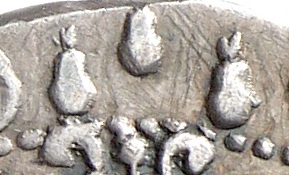
Hawarden is my preferred choice. Hawarden is 5 miles west of Chester and was in Royalist hands for all bar a few days throughout the war. Crucially, it was also on the road from Mostyn to Chester. Mostyn was where the first contingent of Irish troops under Sir Michael Earnley disembarked around 18-20th November 1643, recapturing Hawarden from Myddleton's parliamentary force on the way to Chester. There are two other HC options in the vicinity - Holt and Halton castles, but Hawarden alone has the necessary body of troops required to justify striking a lot of halfcrowns. 2500 Irish troops couldn't be paid from petty cash, though there is no documentary evidence I am aware of to say they were definitely paid prior to the replacement of Lord Capel at Chester on the 6th December 1643 with Lord Byron. The latter did report to Charles that he had ensured that each common soldier was given food and lodgings, a new suit and half a crown. It may also be pertinent that the locals in Chester were unhappy with the arrival of so many Irish troops, so there would have been a reason to keep them outside the city. The Coat of Arms of the Earldom of Cheshire was three gerbs, note the distinction from those of Chester which additionally has a sword as seen on the CHST below and declaration halfcrowns. If you look at a well struck up mark on the HC halfcrowns, they could equally be construed as three gerbs. See pic below. The punches for these appear to be the same as those used for some of the lion claws on the York reverses. The detail of the HC halfcrown is very much in the style of Thomas Rawlins, and there is some indication of a possible TR monogram signature on the York halfcrowns which are after all a 'Briot' style, though as Briot's understudy, this could equally apply to Rawlins. If you consider the rendering of the horse's mane on the type 6 & 7 halfcrowns at York, they are essentially the same as the HC horse's mane, so I would say it is odds on the same engraver. If you compare them with the York 1C halfcrown for examlpe, they are like chalk and cheese. As I think Rawlins was at York until the autumn of 1643, and the troops arrived from Ireland in the November, this planned in advance, there would be ample time for Rawlins to make the journey down to Chester. As I noted in my article, there appears to be the trace of a lion with three holes for the eyes and mouth and a leg under the O of CAROLVS. If this is just a coincidental flaw, it would be unfortunate, but I don't think it is. Additionally, if it was recut from a York die, there is no way it would be unused for over 2 years. What I am absolutely convinced about however, is that Hartlebury is a non-starter, being the Bishop's residence and essentially unfortifiable. And the 'siege' lasted one day.
 1 point
 -
The vendor is Shelly, who has featured on this forum several times before, and I am afraid is prone to misattribute , over grade and overprice, and whose coins often turn out to have been cleaned. Photography is not a strong point either. You can get a lot of spatial distortion when using some lenses, especially fisheye types on mobile cameras, and I suspect we have some of that here. My feeling is that we are looking at normal F10's, showing the results of differing die pressure and wear that Richard alludes to. Jerry1 point
-
obviously sales were slow that day so he picked your change out of a tray!1 point
-
For a chocolate coin! But then someone obviously thinks it's worth a few bob - not my area so I have no idea if it's ok or not. ebay is a real 'curate's egg' - you get some stinkers and some gems. I'm smiling cos I just bought two of the gems but tomorrow I might get my fingers burnt... who knows? caveat ebayor!1 point
-
Ashmore ? I'm no expert on CNUT. How really can you tell ? If Asmore quite collectable in its own right....it will be nice to watch this to see which big guns bid..if any....watch that Geordie chap slip in with a £5 bid after putting us off the scent.1 point
-
Apparently, "The seller ended this listing early because the item was lost or broken." Breaking it must be almost as difficult as finding one, so we must assume it was lost. A great loss to the numismatic community, only a few thousand left. ----------------- Thank god.1 point
-
I know most of these prats can't spell, but can't they read either? Furthermore, you'd think that if someone tried to get away with selling a "1933" penny then they might give the date a higher profile in their listing! I despair... G1 point