All Activity
- Past hour
-

A History of Troy Weight
Paddy replied to EWC's topic in British Coin Related Discussions & Enquiries
I admire all your work and dedication to this subject. I would love to make a more positive contribution, but unfortunately I have little detailed knowledge on these matters, and do not find them interesting enough to invest the time to learn more about the topic. Please don't be put off - I am sure others must be much more interested than me! -
That seems to me a little unfair - but I certainly agree that the nuts and bolts of my position need tightening up So I did it - in the History of Troy Weight thread. Surely someone must now have something to say? Happy New Year! Robert Tye
-
This topic has now accumulated more than 200 views, but got no further comments. Since it is more than 2 weeks since I put my questions to Diaconis, with no reply, I figure it is time say where I stand. The position put by Diaconis is the one put in 2004 in a book issued by the Museum of Scotland “Weights and Measures in Scotland: A European Perspective” Up until 2004 the question had always been: 1) when did England get its weight system? In 2004 the Scottish book confused the situation by changed the question to: 2) when did that system get the name “Troy”? I judge the correct answer to (1) is the one suggested in the official account by Skinner of 1967. In a nutshell, we got the Troy system in 793 AD. This is the sequence of events. In 789 AD Charlemagne announced the creation of a new pan European penny (of 1.7g). Offa refused to to join up with his plan - with what was in effect an early medieval Euro. A hard Brexit broke out. By 790 AD Channel ports on both sides were reported closed. That hard Brexit terminated with what was in effect a new tariff agreement, with a charge of 1/16th by weight on bullion. In Mercian England an imported Troy pennyweight of silver (24 Troy grains) bought foreign merchants a sterling penny (weight 22.5 grains). Notice that in 1344 Powerful Italian Bankers tried the same sort of thing again. This time to push England onto an Italian (Florin) weight standard, using the standard we today call avoirdupois or “Imperial”. That attempt failed by 1351, as far as the coinage goes. However avoirdupois became widely used for other goods in the 14th century, which is the real reason why the name “Troy” arose. It was to distinguish the very old English standard from the newly imported standard of the Italian bankers (often called “Lombards” but in fact being chiefly Florentines) Notice this third matter. The Scottish book went to the press in 2004, so was developed alongside a third failed attempt to push Britain into a continental currency – now the modern Euro. Tying up a loose end, the Scottish book correctly points out that the English Troy system closely resembles a weight system used for silver in the city of Bruges. The resemblance was already well known before 2004. But the only argument given for Bruges having got the standard first is the spurious one, concerning the origin of the word “Troy”. Surely the tail is wagging the dog here? Little Bruges got its standards from mighty England. That sums up my own conclusions. Questions or criticisms are of course welcome. Robert Tye
-
 David Brooke-Smith joined the community
 - Today
-
Wanted items are now in the Members Only area.
-
Items For Sale - now in the Members Only area.
- Yesterday
-
 Thanks, much appreciated!
 -

British Coin Type set.
Peckris 2 replied to Coins Of the UK and US's topic in British Coin Related Discussions & Enquiries
What's not showing is the faint scuffs on the obverse where it was probably rubbed at some time. Probably affected the price? -
How to tell if coins have been cleaned.
Peckris 2 replied to Coins Of the UK and US's topic in Beginners area
I'm not seeing the images in any of your posts. All I get is a large black square with an X top right to close it, and a small broken square in the centre.
-
Interesting posts, though absolutely nothing to do with Brexit!
-
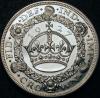
British Coin Type set.
Sword replied to Coins Of the UK and US's topic in British Coin Related Discussions & Enquiries
Nice coin, and I wish I had brought one before it got so expensive. £200 was a good deal even then I think. -
British Coin Type set.
Peckris 2 replied to Coins Of the UK and US's topic in British Coin Related Discussions & Enquiries
I picked this up for about £200 over 20 years ago: I wouldn't rate it as a thousand pound coin but should be well over what I paid!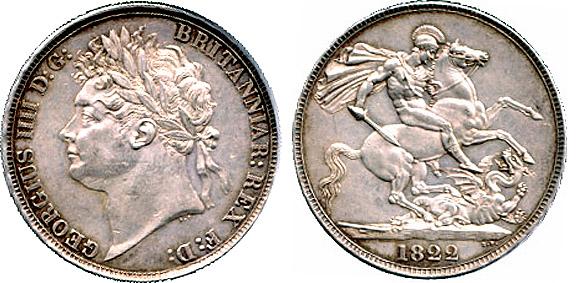
-
Thorburn Collection of 1887 coins
Peckris 2 replied to Mr T's topic in British Coin Related Discussions & Enquiries
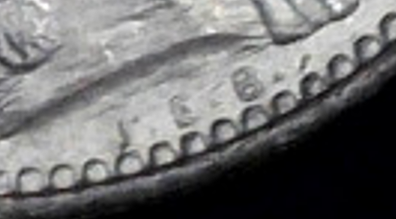
Hi. It's this one, identified by @1887jubilee as one of many (minor) patterns of 1887 silver: It's the 6d on the left - note the far 7, and the first 8 with a higher 8 beneath it referred to as a "horned 8" on one example in an auction lot..thumb.jpg.a0ccb57e1a58da43bd448c766ce47842.jpg)
-
I did message the seller to tell him what it was but he chose not to amend the description and luckily several people recognised it.
-
 wlewisiii changed their profile photo
 -
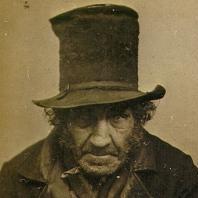
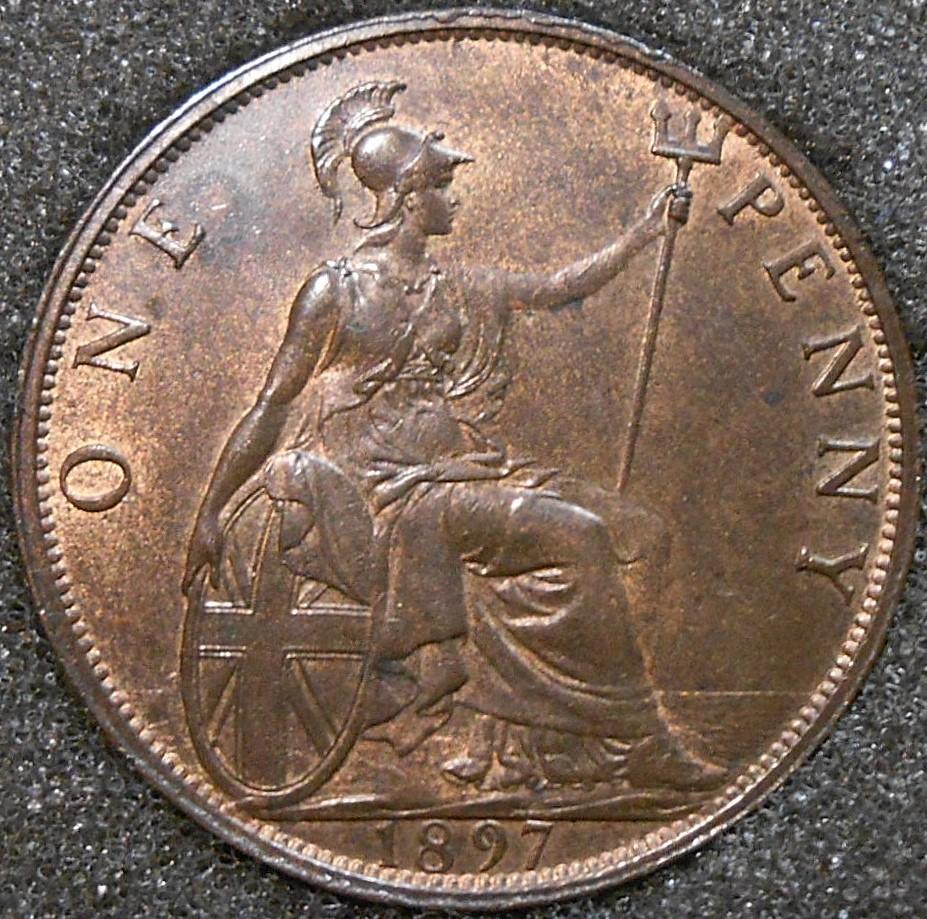
More Pennies
terrysoldpennies replied to Prax's topic in British Coin Related Discussions & Enquiries
I had the luck to pick this one up on ebay , unattributed 😊 An F148 high tide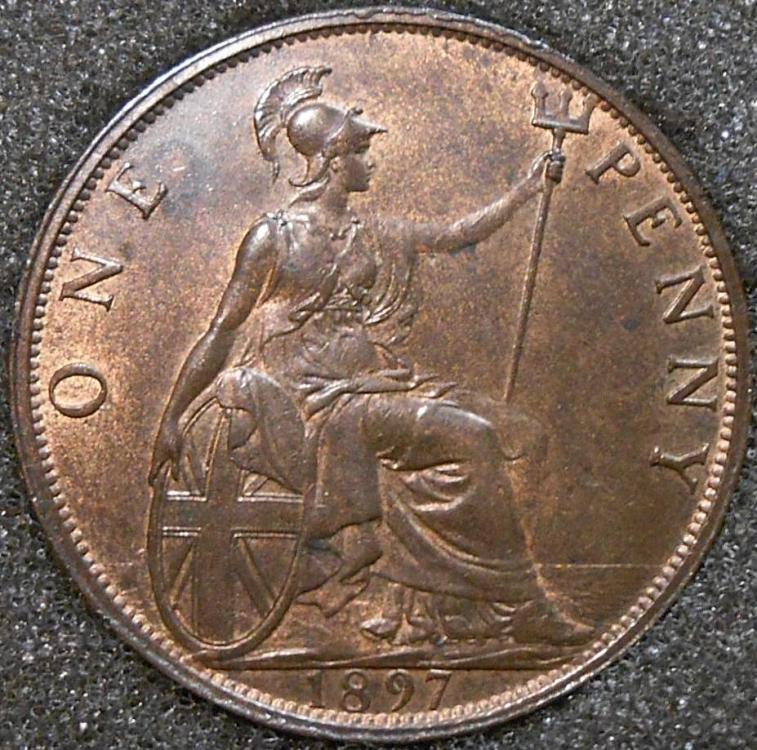
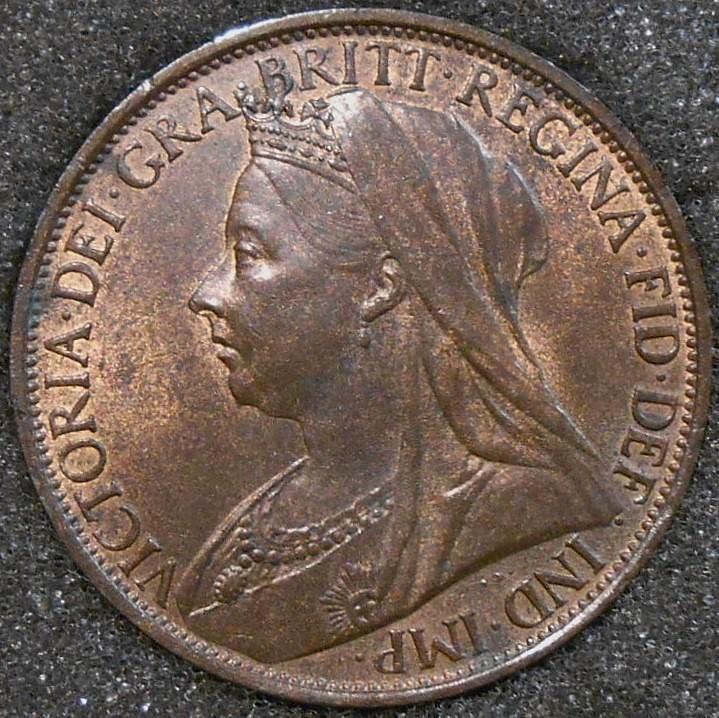
-
Another one of these sold on ebay a couple of days ago for over £260. Perhaps a little better than the one Pete pictured above last year, but not great. Again not attributed, but nevertheless attracted a lot of interest.
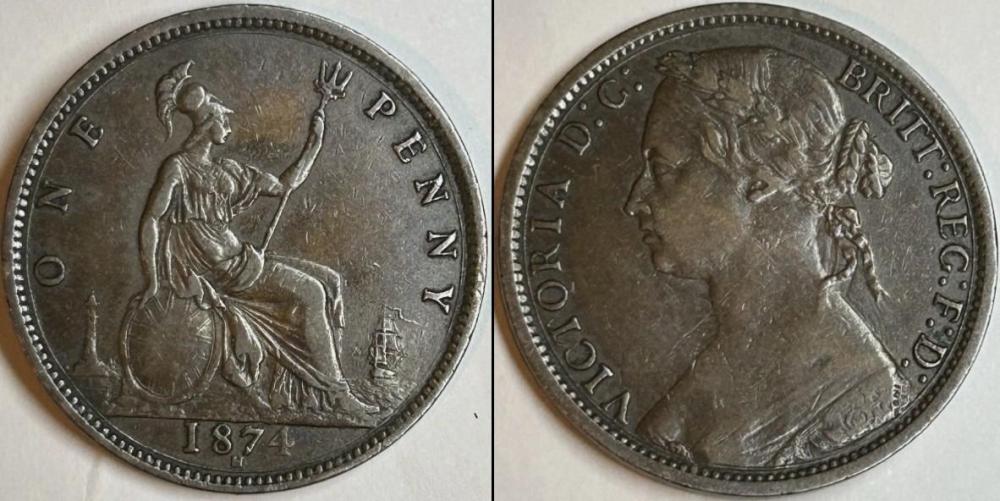
-
I had a bottle of benzene as a child for showing watermarks on stamps.
- Last week
-
Florins, Shillings and Misc .... on going sort out.
Unwilling Numismatist replied to Citizen H's topic in Free for all
One is ON the truncation (Rare), the other is UNDER the truncation (Common)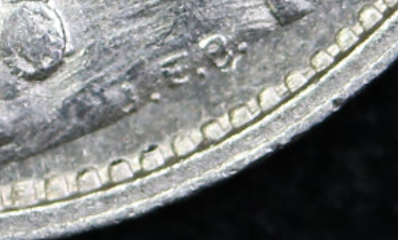
-
Florins, Shillings and Misc .... on going sort out.
Unwilling Numismatist replied to Citizen H's topic in Free for all
7 Million for 3rd (Veiled) portrait, 1300 for 2nd (Jubilee head) portrait. -
Hi Chris, I'm just back catching up and this topic has piqued my interest - can you elaborate on the "rare 1887 6d" please? PS - Hi everyone else!
-
I remember my A level Chemistry teacher telling me that people used to wash their hands with benzene in university labs. Glad that it was banned by my days. But there are of course more "hazardous" substances that are still commonly used in labs because there are no safer alternatives. For example, if I have to choose between dipping my finger into benzene or into concentrated nitric acid, then my choice will of course be benzene.
-
I probably paid too much for my 2025 definitive set, but the simple fact is that they are SO much nicer looking coins than anything the US has made since 1947 when they stopped making the Walking Liberty Half Dollar. Even that was a straight lift from Oscar Roty's La Semeuse but at least they had the good taste to steal from something good . Still, the Salmon, the bees & the four plants are such exquisite designs to my taste...
-
The 2024 Salmon 50p is actually selling for £22 at the moment (ignoring the silly prices people are asking for) and around £50 for a full set. Will be interesting to see what happens in the next six months or so.
-
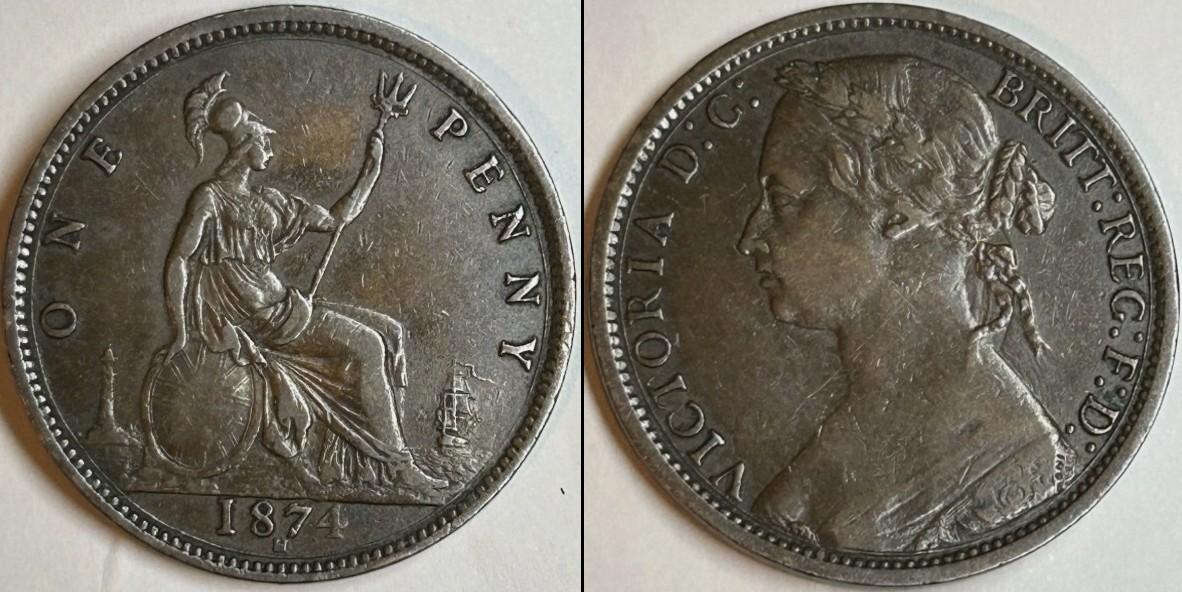
Might be "silvered" i.e. coated in silver or similar-looking metal, a not uncommon practice in Victorian times. I've got a young head penny version. Can you see inside the hole at the metal colour?
-
there was cupro nickel proofs in,1875, 1877, its such a shame the state of it and punched through, but what a find if it is, even in that state🤩
-
Many thanks for the suggestion – I could list a dozen Brexity coin matters, but you immediately came up with one that I never thought of! Three points come to my own mind concerning the BM “Money Gallery”. 1) There is a useful account about how it came into existence here – straight from the horse’s mouth https://icomon.mini.icom.museum/wp-content/uploads/sites/20/2019/11/The_HSBC_Money_Gallery_at_the_British_Museum__Access_to_excellence.pdf “In 1995 HSBC Holdings PLC, the international financial group, with a deliberate focus on the increasingly globalised nature of monetary transactions, agreed to provide a donation worth £2,000,000 for the project” I am not sure when you visited – but the “deliberate focus on the increasingly globalised nature of monetary transactions” definitely lay behind that 1997 plan - to make sure every country got representation - and this seems surely linked to the advertising strategies of HSBC some years back (Just search Youtube for “HSBC” and “culture”). So my feeling is not that Soho matters were deliberately dropped. More like - it just did not fit the HSBC core narrative and was forgotten. I will add, knowing the sort of money that international brands pump into football, at 2 million, the BM rather sold itself short. Or maybe, scholarly interest is just a niche matter these days? 2) From my own side, it was the reorganisation of the gallery under Citi funding around 2012 that troubled. You point out the change of name, from “Coins and Medals” to “Money”. Under Citi only one long wall was left devoted to “Coins”. The other entire wall was now devoted to “Money”. Predictably the “Money” wall culminated in……... credit cards. Citibank made many billions from Credit cards, and was part of the associated anti-cash/coin advertising push back in the day. It seems curiously difficult to find the Citi BM donation on line – but I seem to recall it was 4 million. Personally that seems to me a cheap price for what rather looks like a shot at re-writing history. 3) More fundamentally, my fear is that these international money men are coming to the institution with the mind set of an advertising agent. Grabbing the attention of the general public is the core aim, scholarly accuracy sometimes lagging a long long way behind. Very specifically I can point to a Youtube video of the current curator, appointed post Citi, holding a silver pound coin of Charles I and saying the words: “it is a pound weight in silver” Oh dear. Rob Tye




.jpg.3a54645d7f04e0a1a5c55af9429041c0.jpg)