

jelida
-
Posts
1,899 -
Joined
-
Last visited
-
Days Won
115
Content Type
Profiles
Forums
Events
Downloads
Store
Gallery
Articles
Everything posted by jelida
-
I hope you are in a position to have a good shot at the DNW coin, but don’t forget the 25% or so extra costs on top of the bid price, and postage will be a bummer. The coin may well attract a premium because of the variety. The Davissons coin is beautiful, and they are a good family run auction house with minimal cost to the buyer, I always keep an eye on their site (as do others on this forum, sadly for me 😠🤐🙂). Jerry
-
And the cynic in me wonders if he simply had an offer he felt he couldn’t refuse.........😬 Jerry
-
I think you’ve done some important research here, and if DNW are happy it’s an I over D then I wouldn’t argue and you’ve got one. Nice. Just need some of the commoner versions now. Jerry
-
I’m far from convinced that in Lukasz’s case it is actually a mistake........ Jerry
-
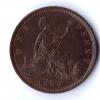
First bust or second. 1691 3 pence
jelida replied to teecee's topic in British Coin Related Discussions & Enquiries
On the other hand if Womble 01 is prepared to make an offer to buy based on a retail value of £690 I would bite his hand off, and use the money to buy a couple of better ones. Jerry -
Yawn......Lukasz.......NO ITS NOT!!! https://www.ebay.co.uk/itm/Victoria-Penny-1860-MULE-TB-BB-Grade-UNC-Extremely-RARE/232908007242?ssPageName=STRK%3AMEBIDX%3AIT&_trksid=p2060353.m1438.l2649 Though it does look like a reasonable F15. Jerry
-
1926 and 1927 pennies again
jelida replied to Mr T's topic in British Coin Related Discussions & Enquiries
Perhaps the intended use of the die at the time of its design and manufacture is what is relevant here, it was not designed to be used with the earlier reverse die, though it was, and presumably intentionally, in the penny in question. That does raise the question, which can never be answered I suspect, of how many of our 1860 and 1861 pennies are in fact mules, to go with the 1862 obv 2 and 3 coins which clearly are ‘intentional mules’? Better not get into semantics or we may all end up asses. Jerry -
1926 and 1927 pennies again
jelida replied to Mr T's topic in British Coin Related Discussions & Enquiries
I rather like this theory, it does have an air of practicality about it, and would as you say suggest that the term ‘mule’ is appropriate for the 1926 ME. Have you had correspondence with the RM museum for their view? I wonder if the appropriate annual report might also give some clues. Jerry -
Oswald has been around for a long time on this forum, so I presume this is a serious enquiry. But I have no knowledge of this site, maybe somebody else might . Jerry
-
The first thing is how do you know it’s copper? Coins that have been in the ground often have a coppery sheen, the tone of yours does look a bit uneven. A very accurate weight measurement with a jewellers scales might help. The Royal Mint or internet could tell you what it should weigh . Don’t expect to get rich on this coin though even if a genuine mint error. EBay is usually the easiest place to sell this sort of thing . Jerry
-
You’re looking at the picture in Gouby, Pete? I see what you mean, but I think the resolution is not great enough to come to a real conclusion, I presume someone has closely examined the original coin and been happy. Jerry
-
We renovated an early Victorian villa some years ago, and when a proportion of the boards were lifted for woodworm prevention spraying I found 36 coins, ranging from farthings to a halfcrown, sadly nothing comparable in rarity. Old houses must be a significant reservoir of out-dated coinage. Jerry
-
Thanks Rob. The corrosion does detract a bit, but could be improved, and I would still rate the coin at £1500 to £2000, perhaps even a little more at auction, I was the underbidder on one about the same condition but with fewer problems at about £2200 last year. When you say you ‘found’ the two pennies, do you mean under the floorboards or something? A good find either way. If you do intend to sell it, you could join the forum so you can receive pm’s! Jerry
-
If that was the EBay one, it is tenuous in the extreme due to wear and from a vendor who frequently sells spurious ‘varieties’, though he has had some superb pennies too over the last year. Jerry
-
And the 2 over 1, and the obverse 3 pairing. I agree that at the current rate of 2 or 3 publicised discoveries a year, the total VIGTORIA could well end up in the teens or low 20’s. I suspect more are found than shown on this forum. And I am still getting used to the ‘reactions’, seem to keep choosing the wrong one and having to correct the error. Sorry Mike. Jerry
-
I think we would need a pic of the reverse to make a reasoned judgement. I am sure several of us would be interested. Jerry
-
I agree, and the marks below the date do suggest that the H was once there, or is very weakly struck. I suspect it would be clearer in the hand. Jerry
-
https://www.ebay.co.uk/itm/1965-Proof-One-Penny-Coin/183360308485?hash=item2ab1204505:g:AjQAAOSwMMFbZW~m Quite easy to make a proof with a bit of brasso it seems. And R20, so it’s the only one! Jerry
-
A couple of things strike me, the most significant being the strip of wood across the front of the trays, similar to Swann. Also Nichols tend towards piano type hinges these days. But of course they could be manufacturing to a specific design. And Taikonaut may be referring to something else. Jerry
-
Silliness of the "Un-researched Purchase" Variety
jelida replied to Madness's topic in Beginners area
Possible, yes, but I think it is probably a die crack, the bar of the ‘inverted A’ seems to be a bit higher than on the actual ‘A’ s on this coin. As regards the Davissons coin, I think the grade is right but as you suggest a slightly worn die. Jerry -
Silliness of the "Un-researched Purchase" Variety
jelida replied to Madness's topic in Beginners area
There is one in the Davissons auction, and plenty of time to ponder. Some adjustment marks, but nice tone and the estimate is fair. https://davcoin.com/lot/e-auction-26-lot-89 Jerry -
Silliness of the "Un-researched Purchase" Variety
jelida replied to Madness's topic in Beginners area
Will happily have a scout around at the fair in two weeks, and pass on details of any suitable vendors .Wouldn't want a fee. Jerry -
Stunning coin. Sorry for my confusion over the new ‘like’ system, got there in the end. Jerry
-
Silliness of the "Un-researched Purchase" Variety
jelida replied to Madness's topic in Beginners area
It is a very pretty coin, and the die crack and fill have little impact, but I would be reluctant to pay over book price for a coin that can be found in this sort of condition without much difficulty. Spink gives this at £150 in EF, I would have thought a reasonable maximum offer should be around £200, with patience you will find the right coin at the right price. Some of us go to the coin fairs here in the UK, one of our members has a stall there, maybe he would accept a commission? Jerry -
What's Your Job in Real Life?
jelida replied to Madness's topic in Nothing whatsoever to do with coins area!
Retired Doctor. Jerry