

jelida
-
Posts
1,899 -
Joined
-
Last visited
-
Days Won
115
Content Type
Profiles
Forums
Events
Downloads
Store
Gallery
Articles
Everything posted by jelida
-
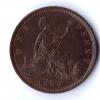 It’s almost unbelievable that the BNS allowed unchallenged publication of this blog which I feel is a mass of A.I. pseudoscience and unproven ‘evidence’ from which unjustifiable conclusions are presented as fact! Will they publish my learned study demonstrating that pixies have set up a mint at the bottom of my garden? A.I. has found lots of photographic evidence, and Donald Trump says it’s the ‘greatest numismatic discovery ever’ apart from when he found his face on a gold dollar! (Obviously Trump didn’t actually use the word ‘numismatic’, I think that was posted by Harp). Jerry
 -
Yes, it’s the hair that caught my eye. I’ve looked at a lot since and not seen one like it. But as Rob says, the Berwick coins are a variable non-conforming bunch so why shouldn’t there be the odd errant die? Jerry
-
They would certainly be very poor attempts at plume repair if intentional, and I agree that die clashes may well be involved though as in so many cases of minor ‘varieties’ there will probably never be an actual proof . And I do of course have a vested interest in ensuring that top end prices remain high! (See your ‘Rarest Pennies’, of course , Richard!) Jerry
-
Hmm, yes the presentation of the photo was somewhat misleading. If it’s a V, then the default position is that it remains a V despite the photographic ambiguity. I did however examine the possibly unique 1860 ‘V over inverted A’ when it came up for sale a few years ago and thought it looked good under the loupe. So maybe worth a closer look under a microscope if it’s an 1860, probably not if later. Jerry
-
I think you’ll find a crossbar there in the hand, under the crud. I have hopefully bought several over the years and they have all had faint crossbars (under the microscope) due to die fill. I doubt that any master die was ever created using an inverted V for the A, it’s simply that some of the many working dies created from each master developed die fill in use causing the crossbar to become very faint or absent. It is possible that some filled dies were re-punched with an inverted V for the A - the use of I, F, L etc for partial letter repairs seems well attested (see Gouby) but this is part of normal die management and should not be regarded as erroneous, though particularly obvious repairs can achieve collectable status. Jerry
-
It could certainly be a die flaw. If a developing crack in a working die has only a surface ‘gape’ then the ridge on the struck coin will be shallow and appear to run under the letters. If the crack is more advanced with a deeper gape, deeper than the incuse letters on the die, then the flaw when struck will appear to run over the letters. Statements on Facebook and other forums are just opinions, not necessarily truths. Perhaps that includes mine? Jerry
-
Even with a single punch the apparent width etc can vary slightly as the edge of the punch is bevelled to prevent it sticking so the heavier the blow the wider the digit will appear. This variability is due to the hand punching of the master dies. Jerry
-
Halfpenny Obverse 5 die flaw
jelida replied to absence of uniformity's topic in British Coin Related Discussions & Enquiries
I wouldn’t put much faith in the AI ‘facts’ and suppositions without reliable references that can be confirmed or are contemporary. We have an issue here in that once published on an academically respected forum such as this search engines and future AI searches will in turn propagate this thread leading to the AI pronouncements gaining traction. While elements of the AI interpretation may be logical, we should make it clear to future readers that it is an opinion (machine generated) and a starting point for careful research rather than being worthy of quote as a matter of fact. Jerry -
You’ve put in some good work there, but sadly the original sellers image is not sharp enough to be confident either way. Can you get it on approval? Most professional sellers would do that. Otherwise it’s a balance of lower likelihood of very significant gain against a higher likelihood of moderate loss. Might be worth trying to get a clearer photo from the vendor. Good luck! Jerry
-
I think it may be worth a punt if not too expensive if you don’t have it in hand. The issue could certainly be clarified by microscope close-ups. It’s worthy of note that you see virtually no letter repair errors after the first three or four years of bronze penny production so the date might be relevant too. A die flaw can certainly flow through a letter but an overstrike is not impossible. Jerry
-
I don’t think it’s T over I either, the ‘serif’ starts far too close to the vertical and there is nothing visible to the right . But it is interesting, even if just a die flaw. I do have an 1860 BRTTT and the overstrike repair error is very much clearer. But do you have a USB microscope for clearer close-ups? A close look at the edge of the flaw/overstrike could be illuminating. Jerry
-
Yes, that coin now resides with me! Jerry
-
1882 NO H Penny
jelida replied to absence of uniformity's topic in British Coin Related Discussions & Enquiries
That is a particularly good example! Jerry -
1896 Penny date width
jelida replied to absence of uniformity's topic in British Coin Related Discussions & Enquiries
Very difficult to say from the photos but to me the non annotated image suggests 11 teeth rather than 11.5. The outlines are rather bunched towards the end, and the tip of tooth 10 in the first photo protrudes above your gap between 10 and 11 in the second photo. However happy to be corrected, let’s see what others think. It just doesn’t stand out like the wider dates should. Jerry -
I’d be very dubious. This is a coin that you should only buy with a good provenance or through a professional dealer or auction house authenticity guaranteed. There are many more fakes than genuine out there I suspect. Jerry
-
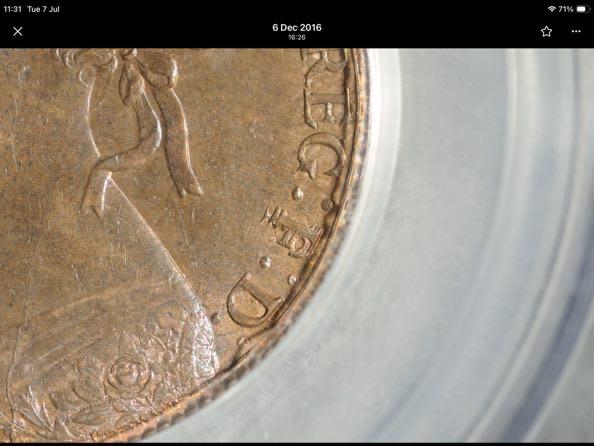
extreme /ɪkˈstriːm/ The word extreme generally describes something that is of the greatest possible degree, intensity, or the farthest from the norm. It can act as either an adjective or a noun, with specific nuances depending on how it is used. [1, 2] Pretty much ‘what it says on the tin’ to quote the old advert. Not easy set a reference point as to what any particular individual would consider extreme as there will be variation of opinion but with experience you will recognise degrees of misalignment of die repairs that are beyond the norm. I would for example consider the F10 ‘triple F’ Penny to be extreme, the side by side 1’s of 1861 and similar.
-
Definitely a die crack. As metal is lost from the sides of the crack the flaw on the coin becomes steadily wider until the die breaks or is withdrawn from use. Jerry
-
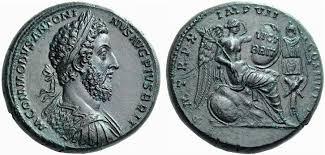
Not my statement, just quoting the vendor’s description, he/AI couldn’t even call her Britannia. Yes, I’m sure ‘Britannia’ has classical origins. Maybe this medallion of Commodus was an influence, it celebrates action in Britain.
-
Rev
-
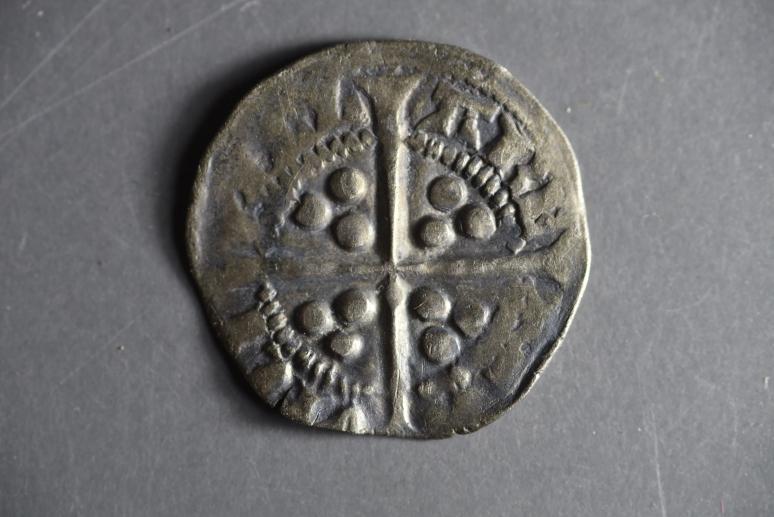
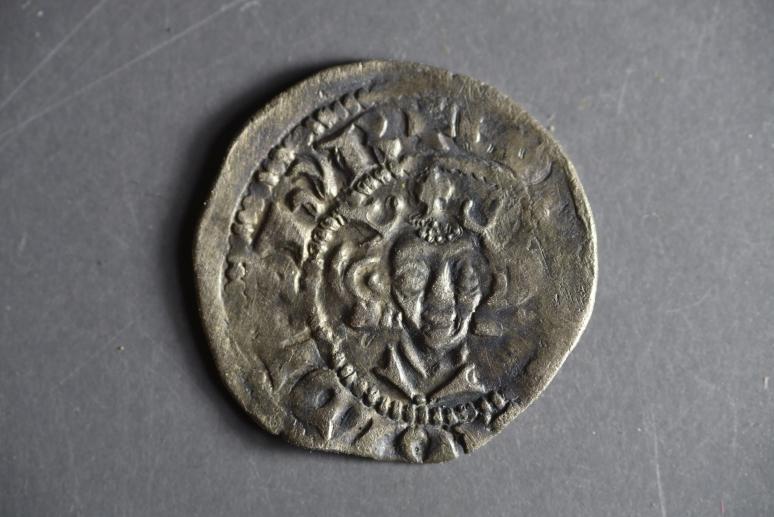
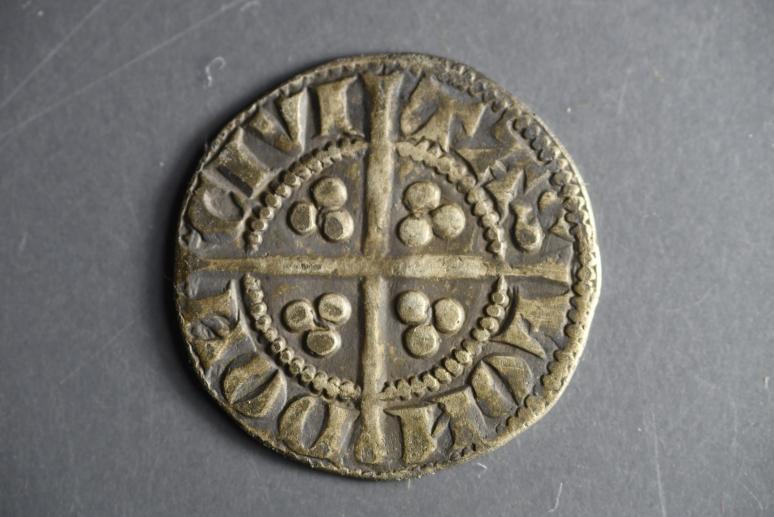
And here a penny of Berwick, class Blunt 4a, Withers 5a, pellet on breast and unusual crescent shaped hair. Slightly unusual portrait, any thoughts? Jerry
-
And the reverse;
-
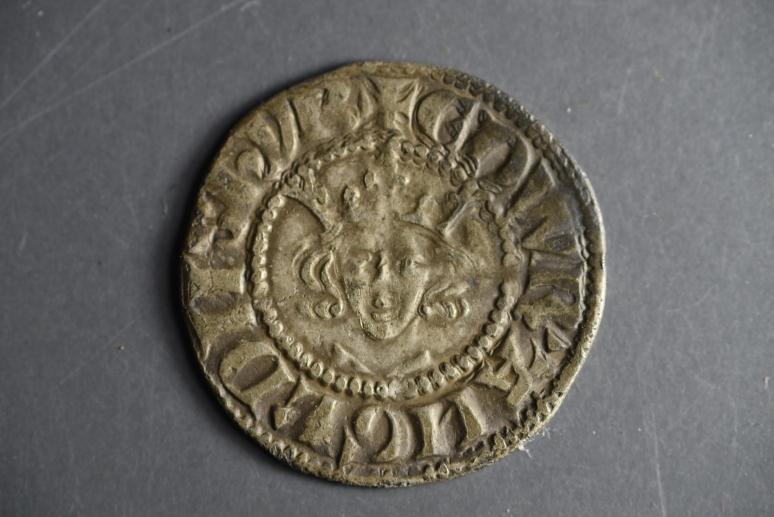
Here are a couple of pennies from the Minster Auction Stu references elsewhere. The first I think is a class 2, though I am unsure which. It has particularly long side fleurs, wedge shaped contraction marks and reversed ‘N’s and I think that the ‘N’ in ‘DNS’ is double barred.
-
Oh, and this penny apparently has “the profile of a British lady “ on the reverse. Don’t you just love A.I. ! Jerry
-
I wasn’t sure where to post this Ebay offering, there are so many choices! Unknown grading company, “Tudor Coingrading Company” being sold by Ebay seller “Tudor Coins”, coin in slab is the wrong date for the label and is allegedly AU58 when it appears to be less than VF with issues. And the text suggests it is ANACS MS60. What on earth is going on here? At what point does this behaviour become criminal? Newcomers risk being massively discouraged from numismatics by this sort of behaviour. Jerry https://www.ebay.co.uk/itm/366523800496?_skw=penny&itmmeta=01KWS90R0MAB465J91RGTC7ZZP&hash=item5556855bb0:g:fIoAAeSwQc1qSmCR&itmprp=enc%3AAQALAAAA4GfYFPkwiKCW4ZNSs2u11xBLz4j3XZU8mu0Cbb350VpikZtwzj2aSPlSW6rXS%2FSfOsy%2BT4Ap8HEAjjQPj2k2UzKpJPM8aWVDGH2ye9B%2BllFbJY%2FOIjKs%2BhMROYbbwpmrVo2%2Fc7TxtZ0O19hf9q%2FRmtSvgwwyHs%2BQUeGWm%2FMNSsaU8oBzY%2BIKGudScPNku484P%2FvgfOqq2A6PRVapzoCzOCan8QTkUiKwDLWemfpSHUo52xJJfB50mxvDPXO7POvj%2BELG0GR2dz%2B71gTZ5p1NvYwwidD71Iyv6g8aTZVZpBME|tkp%3ABk9SR_iAg6nmZw
-
Yes, the groat was nice and very tempting at that price. But the marks were a little more apparent than in the photo and I had my sights elsewhere. The York shilling looked good and was a good buy for someone. If you ever need anything collected I usually go up if there is a significant coin offering. Jerry