secret santa
-
Posts
2,909 -
Joined
-
Last visited
-
Days Won
210
Content Type
Profiles
Forums
Events
Downloads
Store
Gallery
Articles
Everything posted by secret santa
-
All my F91s look like that.

-
Very Old 1912 Penny
secret santa replied to singlemom29's topic in British Coin Related Discussions & Enquiries

-
Our friend Lucasz is selling this penny on Ebay, describing it as unrecorded but every 1877 F91 penny that I've seen (including a proof) has this "bar" inside the right side of the O in ONE. https://www.ebay.co.uk/itm/Victoria-1-Penny-1877-Unrecorded-O-over-Sideway-O-Grade-UNC-RARE/332580037835?_trkparms=aid%3D111001%26algo%3DREC.SEED%26ao%3D1%26asc%3D50925%26meid%3Df2cf0482d69a43c2ba507285cd123e3b%26pid%3D100033%26rk%3D3%26rkt%3D8%26sd%3D222873729028%26itm%3D332580037835&_trksid=p2045573.c100033.m2042
-
Penny Acquisition of the week
secret santa replied to Paulus's topic in British Coin Related Discussions & Enquiries
Maybe it'll turn out to be less rare than it currently appears but, looking at the die cracks on this one, maybe not that many were struck before the die gave out ? -
Victoria Penny 1844 Double date
secret santa replied to interNumi's topic in British Coin Related Discussions & Enquiries
Michael Gouby's website often illustrates the variations in dates, including double strikes, but he doesn't include this particular example. (see http://www.michael-coins.co.uk/1844_penny.htm) Copper penny collectors may find this interesting/collectable. -
Could you please explain how one goes about getting a refund.
-
Penny Acquisition of the week
secret santa replied to Paulus's topic in British Coin Related Discussions & Enquiries
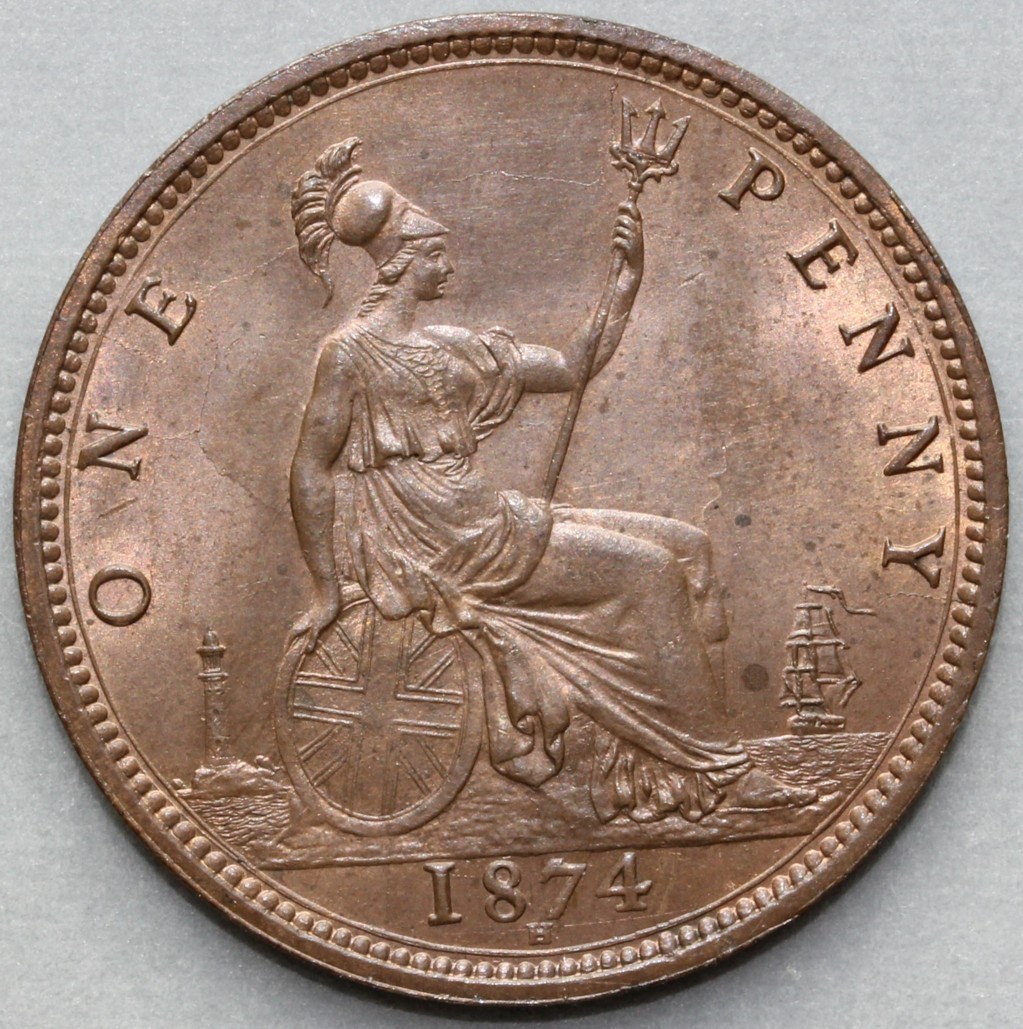
Having picked up the rough old BP1874Nn (1874H 7 over 7) above only a couple of weeks ago, Bernie kindly pointed me to a superb example (not described as such) on Baldwin's For Sale list which I snapped up immediately.
-
VIP Proof Royal Mint reply
secret santa replied to craigy's topic in British Coin Related Discussions & Enquiries
The true 1953 VIP proof set was issued with a very rare mule penny, i.e. beaded obverse and toothed reverse, F244 in highly polished finish. Hence the 5 figure price reached in auction. see http://www.londoncoins.co.uk/img.php?a=150&l=414&f=r&s=l -
Finished at £1900 !!!!! (£2375 inc commission). I wonder if a few more will surface now ?
-
The rare 12 sided £1 in old metal is in this auction. Currently at £1900 !!!!!
-
Penny Acquisition of the week
secret santa replied to Paulus's topic in British Coin Related Discussions & Enquiries
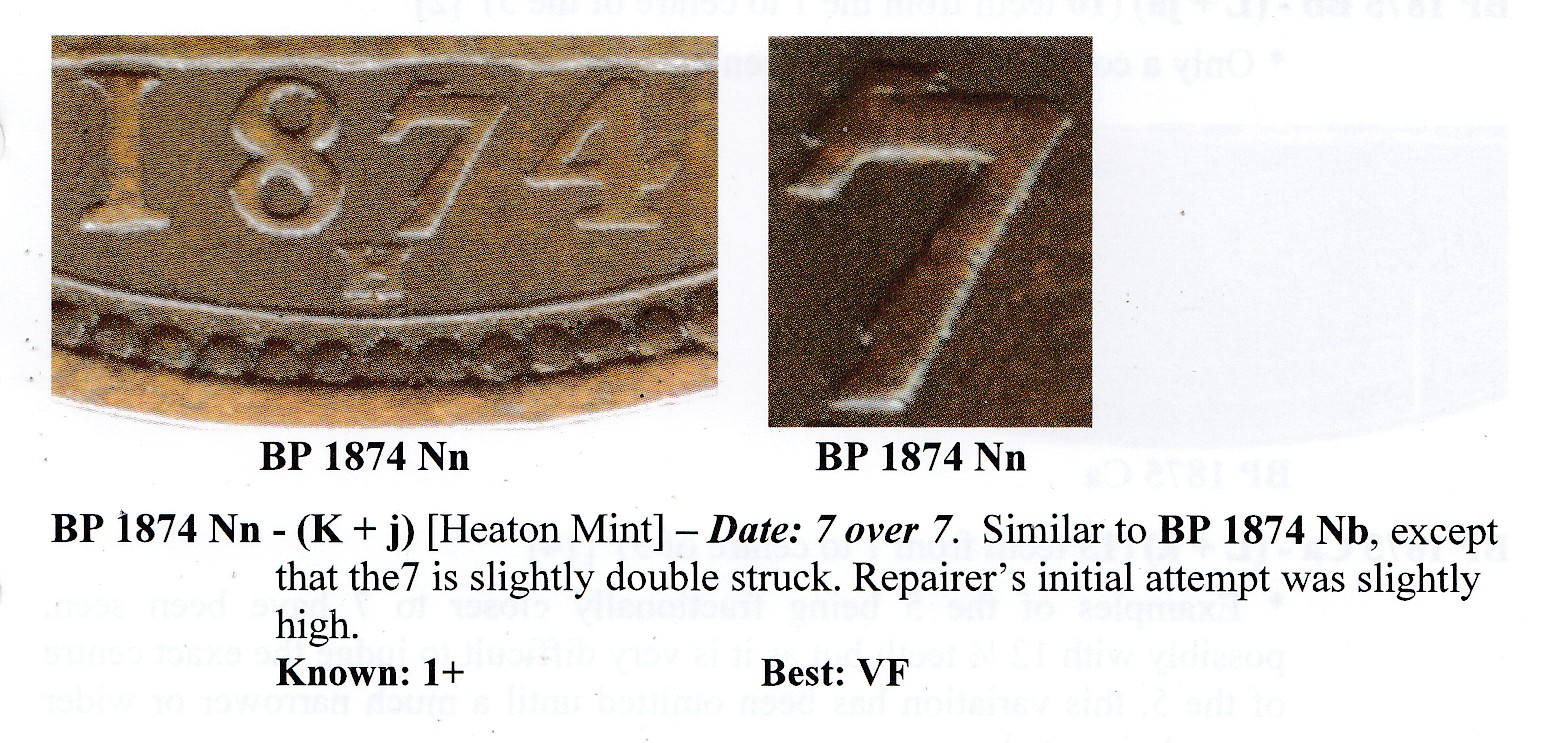
If you look at the picture in Michael's book you can see the underlying 7 higher to the left and protruding from the left of the downstroke and the resulting 7 is slightly lower than the other numerals. Picture courtesy of Michael Gouby.
-
Penny Acquisition of the week
secret santa replied to Paulus's topic in British Coin Related Discussions & Enquiries
Picked up a rare 1874H 7 over 7 from our old friend Lucasz last week for £1.40.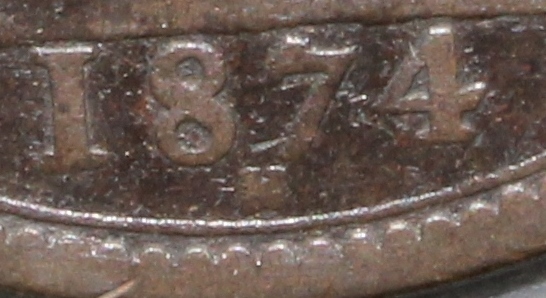
-
Penny reverse ID please.
secret santa replied to mrbadexample's topic in British Coin Related Discussions & Enquiries
Zoo, read about D and D* on my varieties website (Victoria bronze obverses). -
Penny reverse ID please.
secret santa replied to mrbadexample's topic in British Coin Related Discussions & Enquiries
Good point Terry, I've added this info to my varieties website. -
Penny reverse ID please.
secret santa replied to mrbadexample's topic in British Coin Related Discussions & Enquiries
And is invariably present on all obverse D* coins.
-
Penny reverse ID please.
secret santa replied to mrbadexample's topic in British Coin Related Discussions & Enquiries
Take a look at the F28s on my rarestpenny site - most of them have the dropped last 1 in the date like your picture. -
Penny reverse ID please.
secret santa replied to mrbadexample's topic in British Coin Related Discussions & Enquiries
Yes, it's on most of my obverse 6s. -
Penny reverse ID please.
secret santa replied to mrbadexample's topic in British Coin Related Discussions & Enquiries
A bit tenuous in my view......................
-
Penny reverse ID please.
secret santa replied to mrbadexample's topic in British Coin Related Discussions & Enquiries
This one's the dead give-away. Even on the most worn specimen if 1860 or 1861. Look at the big pictures on my varieties website. Easier than looking at Freeman/Gouby books. -
It's very worn but I think it may be Victoria...........
-
March 2018 LCA
secret santa replied to 1949threepence's topic in British Coin Related Discussions & Enquiries
I don't know - I bet Rob will know. -
March 2018 LCA
secret santa replied to 1949threepence's topic in British Coin Related Discussions & Enquiries
When they featured this in the preview I emailed them and suggested they describe it as F762 which it is and, although they thanked me for my email, they ignored me ! But it's rare one and whereas Michael Gouby originally suggested it might be a "late strike for VIPs", presumably because of the inverted reverse, the article by Paul Holland in the 2017 BNJ suggests it was an early strike and from a working die rather than a proof die. Still very rare though. -
Penny Acquisition of the week
secret santa replied to Paulus's topic in British Coin Related Discussions & Enquiries
C'est la vie - it was always a possibility even though a little disappointing. -
Penny Acquisition of the week
secret santa replied to Paulus's topic in British Coin Related Discussions & Enquiries
I'm glad you're pleased with it Mike. Always nice to see a collector add to his/her collection rather than someone buying just to make some easy money ! -
Is a metal detector included ?