Leaderboard

Popular Content
Showing content with the highest reputation on 07/15/2026 in all areas
-
"Your coin will be carefully packaged in protective materials". WHY???1 point
-
Just wondered if I could prick the interest of fellow Charles I halfcrown collectors, or ask for opinions I have been concentrating on Tower Mint types this last year or so, here's a montage of my best so far. Some are Brooker and/or Bull plate coins.1 point
-
Another newbie, apparently a rare die pairing and the illustrated coin for Bull 104a, bt SR Porter 1986 Rose over plume / rose, 14.98g1 point
-
For your delectation, the latest addition to my small collection of Hereford mint coins, an Aethelred II penny, moneyer Leofgar, from a German auction (total £500 appx). Jerry

 1 point
 -
I'm struggling to identify this admittedly very well worn piece, which is clearly a York mint issue of (probably ?) Edward III's florin coinage. The reverse has a quatrefoil in the centre, with a fine cross in its centre. I've only ever seen examples before with a pellet or nothing there. Any help much appreciated !

 1 point
 -
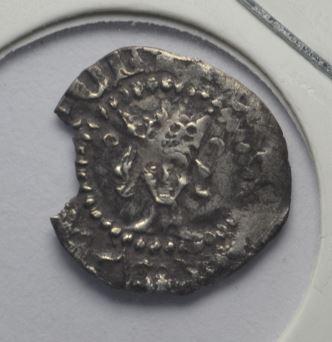
Hello all, Recently picked up this hammered halfpenny. I'm pretty sure it's Henry V due to the annulets on either side of the crown; wrong portrait style for Henry IV. Can't decide if it's class A (emaciated bust, rare) or class C though. I'm leaning towards class A because the annulets don't appear to be broken, and the portrait style seems different to class C coins I've seen photographed online. Anyone know of a photographed class A specimen to confirm ? Thanks, J
 1 point
 -
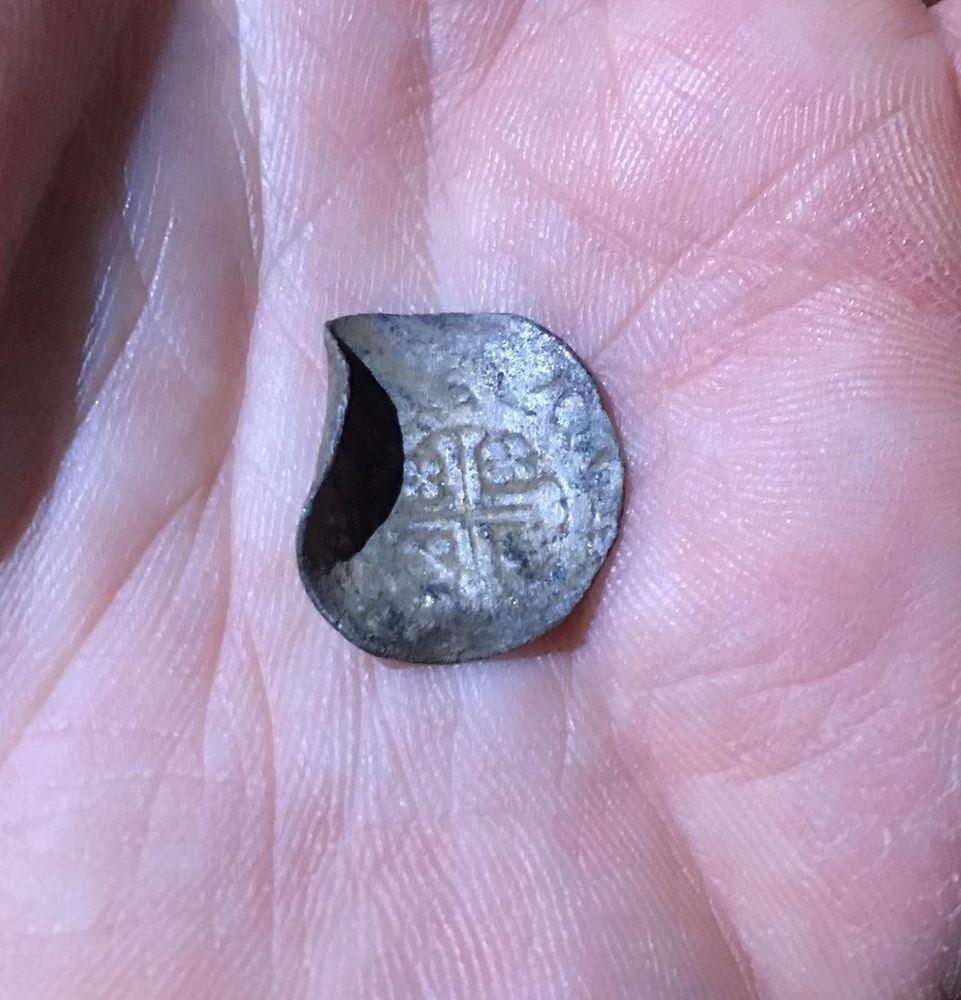
A 9mm across half penny. How on earth were these used as currency. It was a real pain to find in the mud! I can really understand how someone would have lost this.
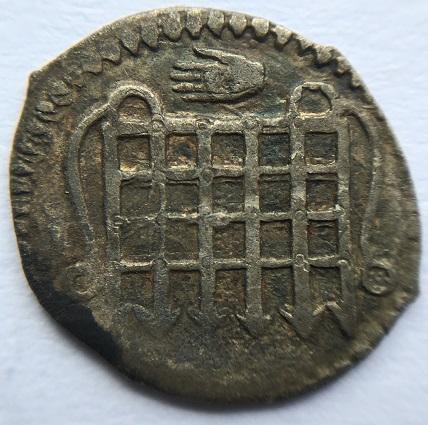
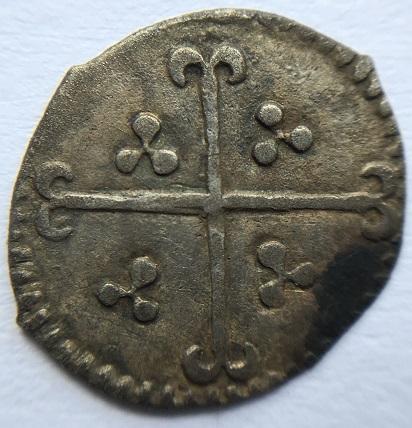 1 point
 -
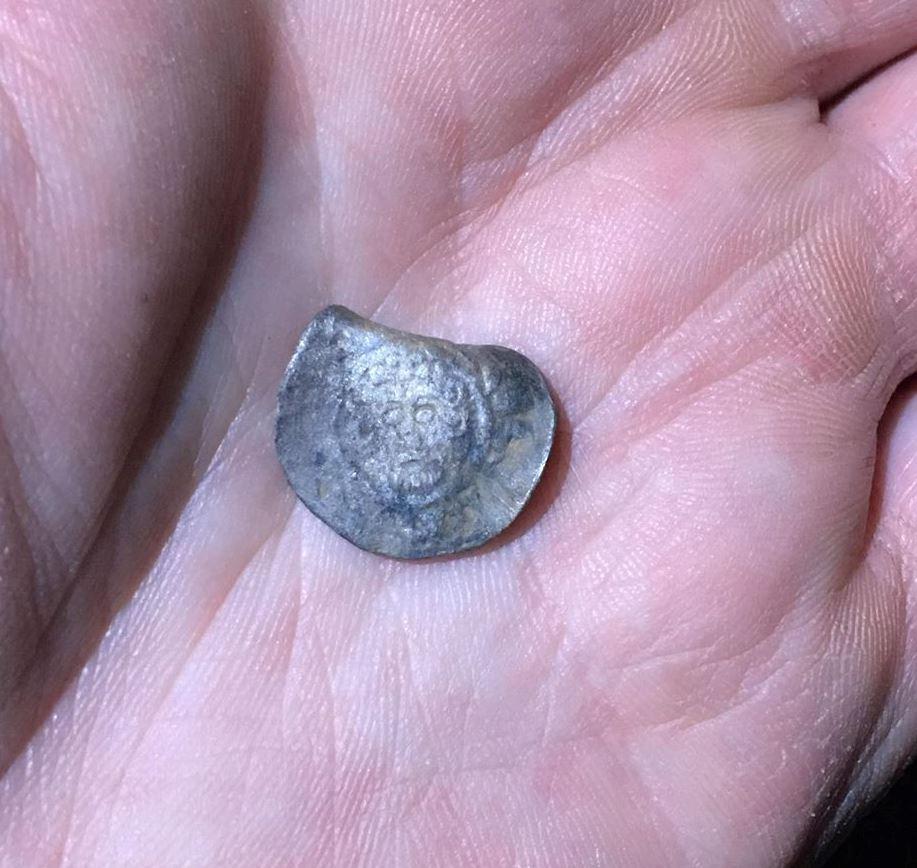
Hello all ! I'm struggling to identify this rather badly struck short cross penny. The mint is obviously London, and I think the moneyer is IOHAN as the final two letters of his name appear to be "AN". The portrait looks like a class 5c (John) to me - but there are no IOHAN ON LUND coins of John, just of Henry II, and the king's hairstyle doesn't look like any of the Henry II types. Anyone got any clues ?
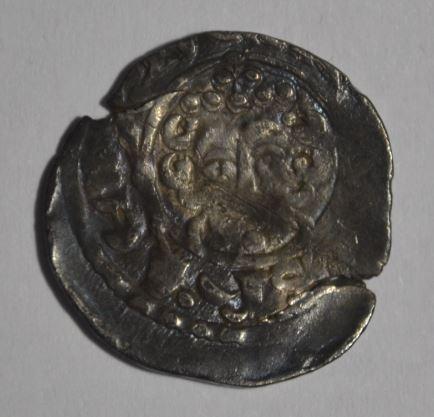
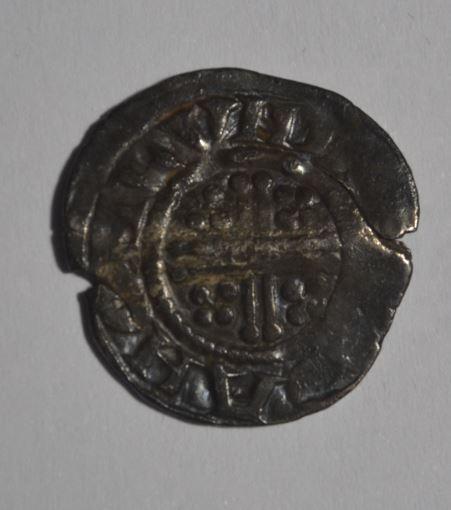 1 point
 -
I had this brought to me in the market today. I think I have it right as Henry III voided Long Cross of Class 5 and by Ion of Canterbury, but I am not sure which sub-class. Can someone please help me?

 1 point
 -
Obverse
 1 point
 -
Hello chaps, Please could I ask one of the experts a question or two about my Edward I pennies I won today on the Spink auction? First question... where it say in the provenance ii) Elmore-Jones, Glendining, 10 April 1984, lot 1582 - £65 does that mean that the second coin in the description is ex Elmore-Jones collection? Edward I (1272-1307), Pennies (6), Berwick, local dies issue, 1.35g (S.1415); also, Durham, class 9b1, 1.46g (cf. N.1037.1 {for type}; S.1421); additionally, Newcastle (4), class 9b1 (2) with star, 1.38g; and without, 1.31g (N.1037.1; S.1408); also, 9b1/10ab mule, 1.48g (N.1037/38; S.1408/9); lastly, class 10ab, 1.25g, reading hb (N.1039; S.1409), generally very fine, all toned (6). provenance ii) Elmore-Jones, Glendining, 10 April 1984, lot 1582 - £65 Secondly, please could I have a more detailed ID on coin number 5. It's listed as a Newcastle 10ab, but I'd like to know which one of the subgroups if possible (i.e. 10ab1-6). Many thanks, Descartes
 1 point
 -
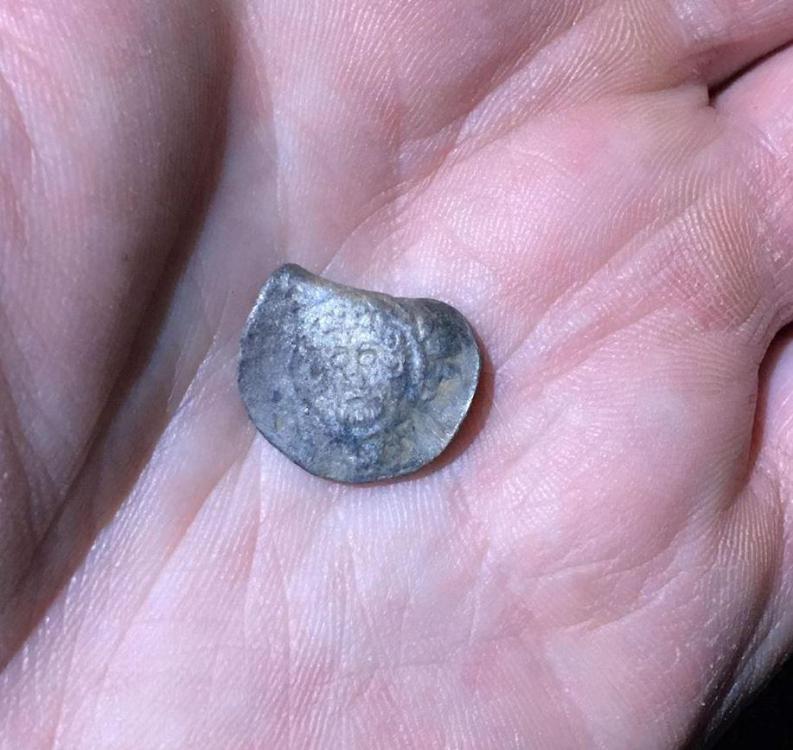
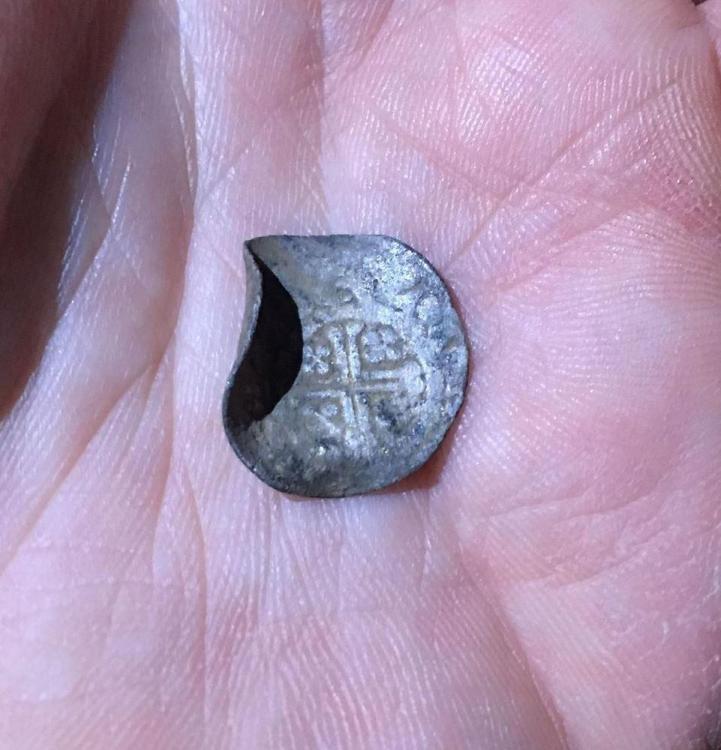
has seen better days but thats 3 whole ones from the same area, along with some cut halfs, and my second hammy this year
 1 point
 -
1 point
-
1 point
-
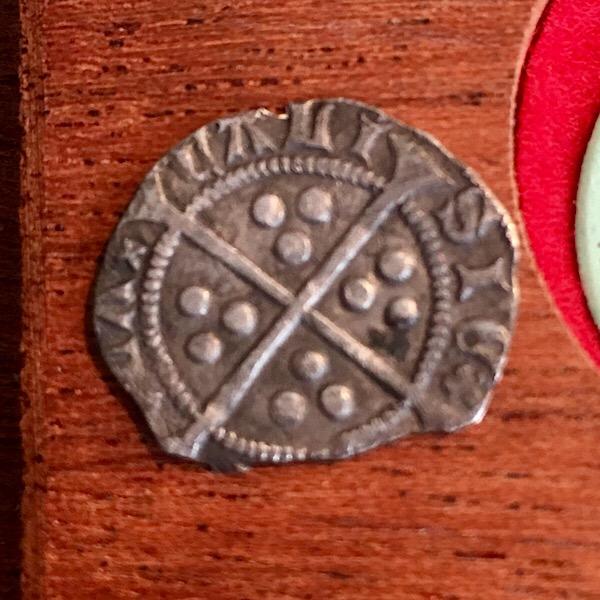
Hi, I found this coin a couple of weeks back but have only just recently spotted that it reads Henrics and not Henricus. So far I haven’t been able to find any parallels and was hoping you guys might be able to help, thanks. Richard

 1 point
 -
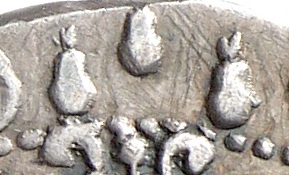
Hawarden is my preferred choice. Hawarden is 5 miles west of Chester and was in Royalist hands for all bar a few days throughout the war. Crucially, it was also on the road from Mostyn to Chester. Mostyn was where the first contingent of Irish troops under Sir Michael Earnley disembarked around 18-20th November 1643, recapturing Hawarden from Myddleton's parliamentary force on the way to Chester. There are two other HC options in the vicinity - Holt and Halton castles, but Hawarden alone has the necessary body of troops required to justify striking a lot of halfcrowns. 2500 Irish troops couldn't be paid from petty cash, though there is no documentary evidence I am aware of to say they were definitely paid prior to the replacement of Lord Capel at Chester on the 6th December 1643 with Lord Byron. The latter did report to Charles that he had ensured that each common soldier was given food and lodgings, a new suit and half a crown. It may also be pertinent that the locals in Chester were unhappy with the arrival of so many Irish troops, so there would have been a reason to keep them outside the city. The Coat of Arms of the Earldom of Cheshire was three gerbs, note the distinction from those of Chester which additionally has a sword as seen on the CHST below and declaration halfcrowns. If you look at a well struck up mark on the HC halfcrowns, they could equally be construed as three gerbs. See pic below. The punches for these appear to be the same as those used for some of the lion claws on the York reverses. The detail of the HC halfcrown is very much in the style of Thomas Rawlins, and there is some indication of a possible TR monogram signature on the York halfcrowns which are after all a 'Briot' style, though as Briot's understudy, this could equally apply to Rawlins. If you consider the rendering of the horse's mane on the type 6 & 7 halfcrowns at York, they are essentially the same as the HC horse's mane, so I would say it is odds on the same engraver. If you compare them with the York 1C halfcrown for examlpe, they are like chalk and cheese. As I think Rawlins was at York until the autumn of 1643, and the troops arrived from Ireland in the November, this planned in advance, there would be ample time for Rawlins to make the journey down to Chester. As I noted in my article, there appears to be the trace of a lion with three holes for the eyes and mouth and a leg under the O of CAROLVS. If this is just a coincidental flaw, it would be unfortunate, but I don't think it is. Additionally, if it was recut from a York die, there is no way it would be unused for over 2 years. What I am absolutely convinced about however, is that Hartlebury is a non-starter, being the Bishop's residence and essentially unfortifiable. And the 'siege' lasted one day.
 1 point