Leaderboard
Popular Content
Showing content with the highest reputation on 02/08/2018 in all areas
-
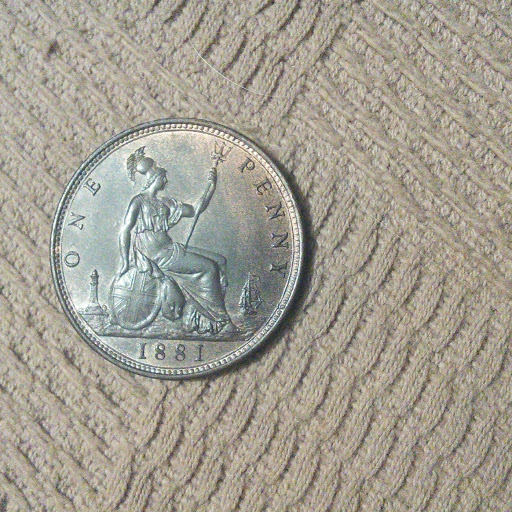
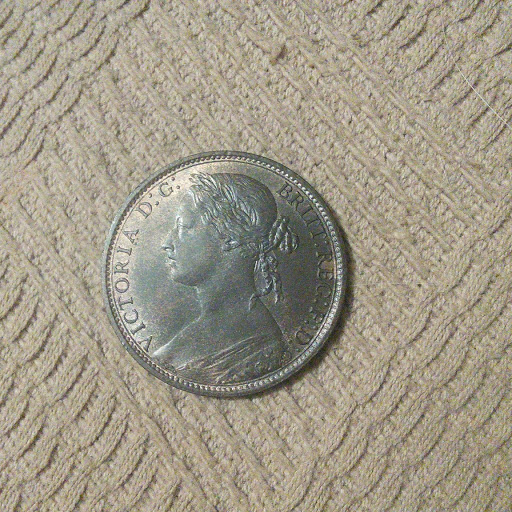
My latest acquistion is courtesy of Richard, and is a Freeman 105. It's the ex Laurie Bamford (DNW auction June 2006, lot No 109). Really nice specimen. Thanks Richard.
 5 points
 -
Likewise a bit non-plussed to see that 1860 penny on LCA already! The prices of your offerings were generous, and I am sure most of us (myself especially) were very grateful for the opportunity to add to our collections. Obviously in time all collections do get dispersed, but the impression here is of simply taking advantage. Jerry4 points
-
Likewise. Think I filled 26 gaps.3 points
-
I'm glad you're pleased with it Mike. Always nice to see a collector add to his/her collection rather than someone buying just to make some easy money !3 points
-
Hear, Hear.2 points
-
I can safely say that all of my purchases are happliy sitting in my collection and won't be for sale any time soon (God willing).2 points
-
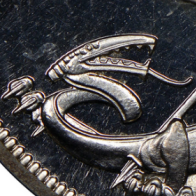
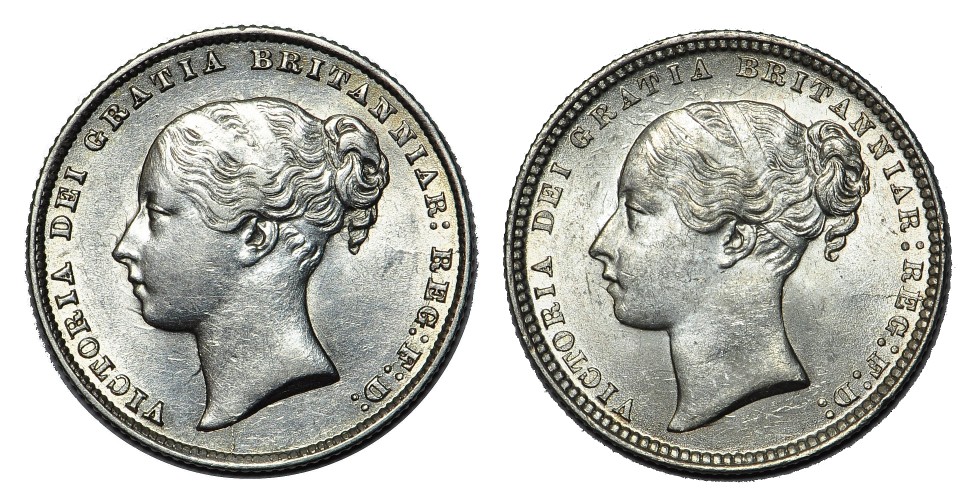
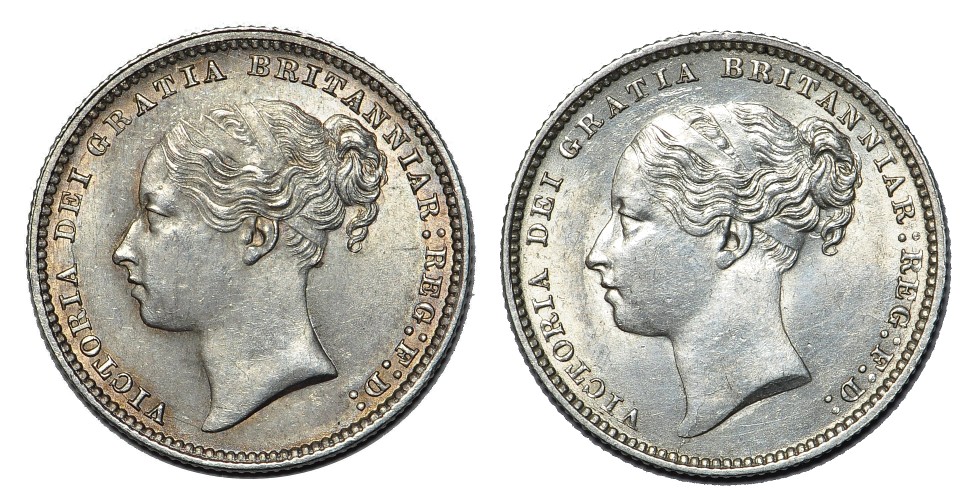
Easiest way to tell Davies obv 4 from Davies obv 5 is the tip of Victoria's bun. Davies obv 4 ends in a closed loop, Davies obv 5 ends in an open hook as per 1st picture. 1867 is the only year for which both obv 4 and obv 5 exist and there are two reverses, so 4 combinations; 4+A, 4+B, 5+A and 5+B. DN 16 & 17 are 5+B, DN 18 is 4+B, DN 23 is 5+A, all the rest are 4+A. The 2nd picture shows Davies obv 6 and obv 7. Both bun tips are closed loops but slightly different shapes. The Spink designations are Davies obv 4 (S.3904 & S.3905), obv 5 (S.3906A), obv 6 (S.3907A), obv 7 (S.3907).
 2 points
 -
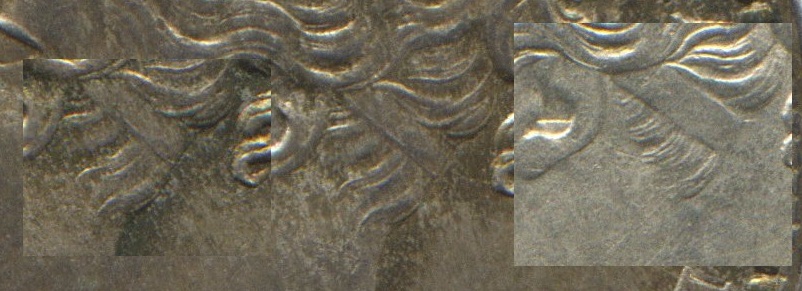
Busts 3 & 4 have the hair by the neck below the fillet treated differently. See below. right hand one is 4th bust. There is a list of die numbers somewhere, but I don't have it to hand. Maybe Nick or someone can help here.
 2 points
 -
And here!1 point
-
Same here too1 point
-
Same here!1 point
-
I have previously seen an 1878 DN 9 and it was a 5+B die pairing. There are about 4 times as many 6+B as there are 5+B 1878 shillings.1 point
-
As far as I'm aware, die numbers started at 1 for each year and increased by one every time a new reverse die was produced (for example, 1869 used 15 reverse dies and 1872 used 155). Therefore the number of dies per year should be the mintage divided by the average mintage per die. However, the Royal Mint struggled to obtain decent steel during the die number period and thus some dies would only manage to strike a few coins before breaking whereas others might manage as many as 100,000. This means that some die numbers will be much rarer than others and some no longer extant. You would need a dedicated die number collector to share their research in order to discover the relative rarity of individual die numbers.1 point
-
there are some lovely british coins for sale in the states, just the import duty is a killer1 point
-
I like this new Britannia design as well, bought the yellow metal version last month1 point
-
Here is one of mine for comparison.

 1 point
 -
For Roman coins, I find the VCRC useful - your mileage may vary, but once you get used to the search it can be fairly quick Austin College VCRC1 point
-
The opening paragraph says it all. It is virtually impossible to find a representative hoard from over 50 years ago. That's why I published on here the results of a few hundred silver sixpences taken over a market stall before they were demonetised. Being culled by a businessman rather than a collector, he was in no way influenced by rare dates, simply wanting to save the silver bits as a hoard of wealth. That was the guarantee of it being a genuinely random selection. The same applies when trying to establish relative rarity using auction data or past records. My personal belief is that for common coins you should only include sales from the general properties section because named collectors will in most instances require just a single example of each type or variety depending on the depth of the collection. Unless they collect every example available to them, the data must be skewed. So for example, when I collected shillings, one would have had to conclude that Charles I Sharp obverse E2/2 & E2/3 coins with im. Tun existed in the ratio 2:1 based on my collection. Clearly this is nonsense when the evidence of random sampling would suggest hundreds of the former and maybe a dozen of the latter. However, one E2/2 had a legend error, so then half would have to be errors. Again, it's a non-starter. There are too many unknowns to accurately revise rarity figures, which is why documenting relevant research is so important. Every little helps is the best you can aim for.1 point
-
The most accurate relative rarity estimates remain Freeman’s, the sheer numbers of unsorted coins from circulation can never be replicated, and will be an accurate reflection of respective rarity of all but the rarest of pennies. But in terms of the coins you list the problem is selective hoarding of coins considered rare, while the rest went to melt. Thus the pool of coins now available to collectors does not reflect original mintage figures. To achieve equivalence you might for example have to look only at coins in the top grades, where survival is unlikely to have been affected much by modern collecting trends. Thus, my own experience is; I agree that F17 seems scarce rather than rare, perhaps overrated. 1867 is more difficult than the preceding 2 years, perhaps underrated. F76 is excessively rare by comparison in any condition, I have no problem with R8. Much rarer than F69. F79 is perhaps on a par with F17, scarce but can be found. 1875H remains difficult, on the same sort of level as F17 and F79 in the top grades, though vastly commoner at low grade for the reason given above. Stick with Freeman estimates. Jerry1 point
-
What a super way to end the year !!!!!!!!!!!!!!!!!!1 point