Leaderboard

Popular Content
Showing content with the highest reputation on 01/22/2016 in all areas
-
It also shows up through the E and N quite a bit as well. Here's some closer shots..


 1 point
 -
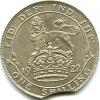
Really nice sixpence @Paulus! And, your photography is really good!1 point
-
There Are some things books can't teach us John. I would also be in The dipped camp, lustre seems to be Strippen from Parts of The coin and possibly legt a Little too long As can be seen from just beging The back legs of The horse. Seems to be high grade though, Leaving it by The window a few months might help it retone quicker.1 point
-
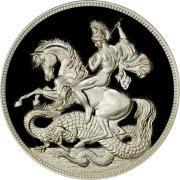
I agree with Vicky. Dipping results in that lifeless tone-free appearance. I would normally expect these coins to show some 'life' like this:1 point
-
Dipped. This coin by photo has actually IMO lost some of its original lustre even though bright. Has a bit of a bleached appearance which overlapping may do - not just remove toning....1 point
-
Re-photographed using new set-up1 point
-
Thanks for the info Rob. As the coin didn't reach the BM until 1915, it had to have pass through a number of other collectors cabinets first. Ian..1 point
-
William Forster, Sotheby 28-30 May 1868, English, 390 lots. Webster was a dealer, so no collection.1 point
-
Here is the newspaper article.
 1 point
 -
I have always skipped 2 or 3 years between buying Spinks. After all it's only a rough guide to value. Anyone taking the prices as gospel deserve to get burned.1 point
-
Thanks to Brian (bhx7) for this added info. Of the two Double Florins recovered from the Tyne in 1857 one was sold to the BM the same year by a Mr Fenwick (presumably the founder of the Fenwick department stores) I know from previous research he was a member of the Antiquaries of Newcastle upon Tyne. The other, according to the Kelso Chronicle of 31 July 1868 "In the recent sale of Mr William Forster's important and valuable cabinet of English coins was a gold florin of Edward III... Brought £113; and was purchased by Mr Webster, the well-known numismatist." The coin was sold to Mr Forster for £100 by a Newcastle jeweller Mr Lister. I would be extremely interested if anybody can fill in any further provenance for this coin which according to the BM was acquired by them in 1915. Is there anything known of the collections of Messrs Forster and Webster? I wanted to post an image of the Kelso Chronicle but the file is too large and I'm at work at the moment so have no way to reduce the size, I'll try to post later when I get home. Thanks. Ian..1 point
-
Here's what it looks like1 point
-
Thanks again Matteo, I think I have misunderstood medieval economics. With further reading Fourteenth Century England Vol 2 by Chris Given-Wilson, I think the English Florin failed not because it was inferior to the already circulating Italian Florins, but due to the disparity in silver & gold prices, so no one was submitting silver to the mint to be turned into gold florins. So there was no demand for them to be minted rather than there was a reluctance to accept them in trade. From Fourteenth Century England Vol 2 " The new coins were overvalued in relation to silver, and the King's profit or seignorage of £1 per lb. wt. was too large." Ian..1 point