All Activity
- Past hour
-
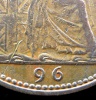
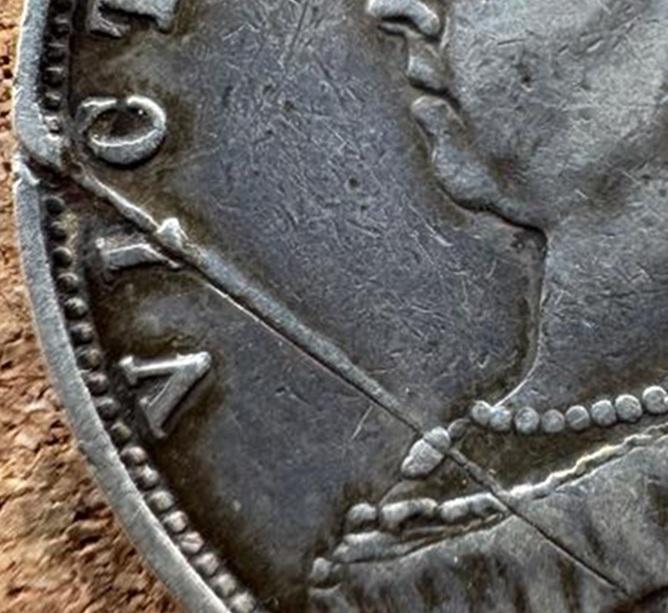
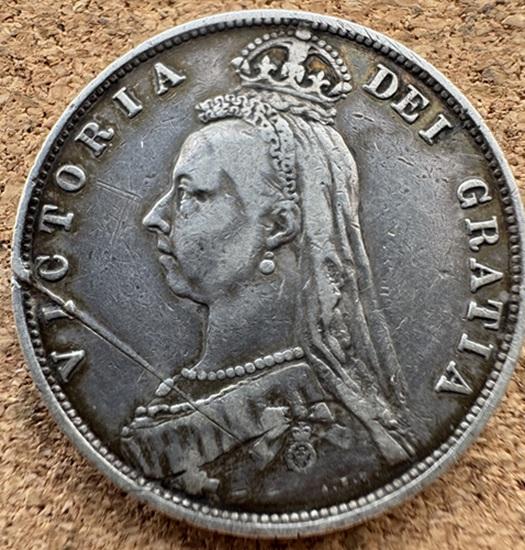
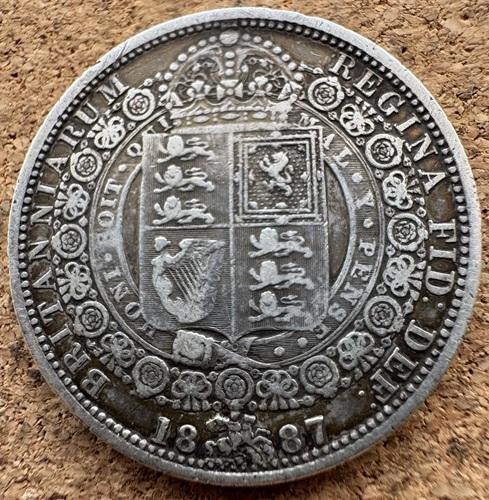
Definitely just post mint damage as Chris says. I think someone back in the late 1800s actually suspected it might have been a forgery (it's not, but many were at the time) and has cut or chopped the flan to test. The metal displacement can be seen along the entire length of the cut on the top side of it (so chopped at an angle upwards from SW to NE) and subsequent circulation wear has smoothed it out a bit including blending it into the beads, and separating off the bottom serif of the I to make a big blob. Not a mint fault, I'm afraid. You're actually not far wrong when you say hit with an axe! More likely a chisel.
- Today
-
its to deep to be just a scratch, the additional silver near the edge is bled into the dots surrounding.. I can see about better photos but for now this is the I can manage. 👍
-

Partial Brockage
Citizen H replied to RChris's topic in British Coin Related Discussions & Enquiries
Awesome find, 👍😀 -
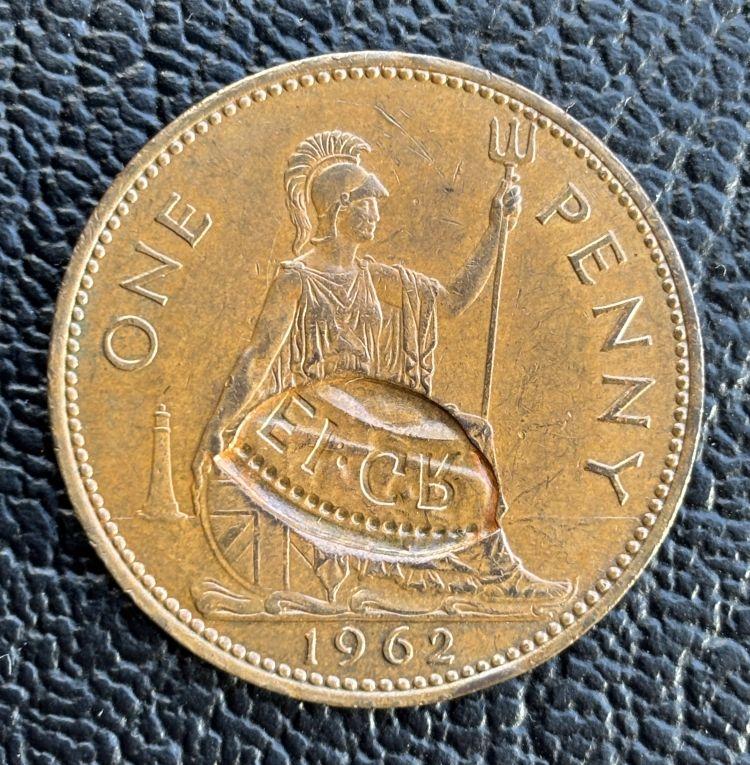
Looks like a (post mint) scratch to me. The blob above the C is displaced metal moved aside from the rim, caused by the scratch.
-
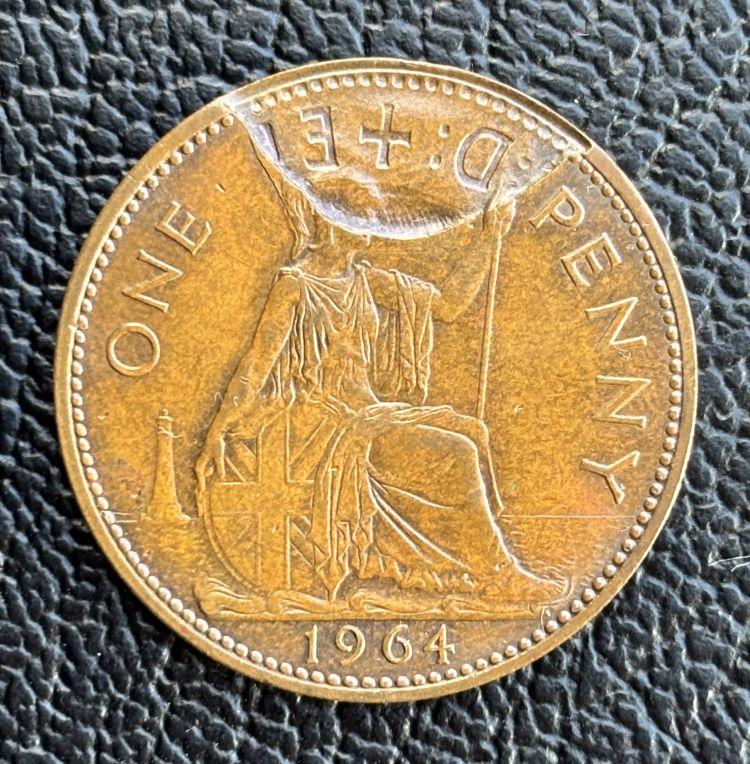
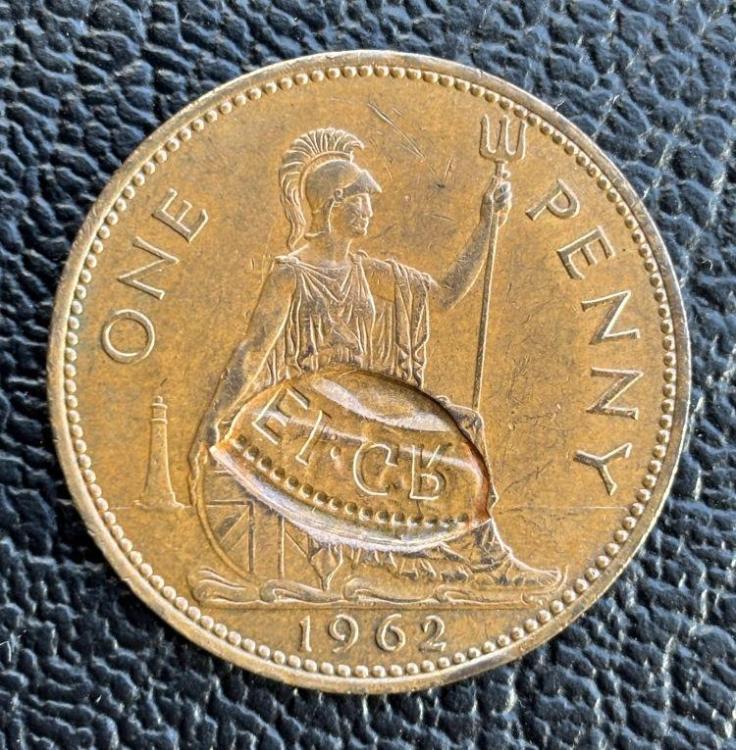
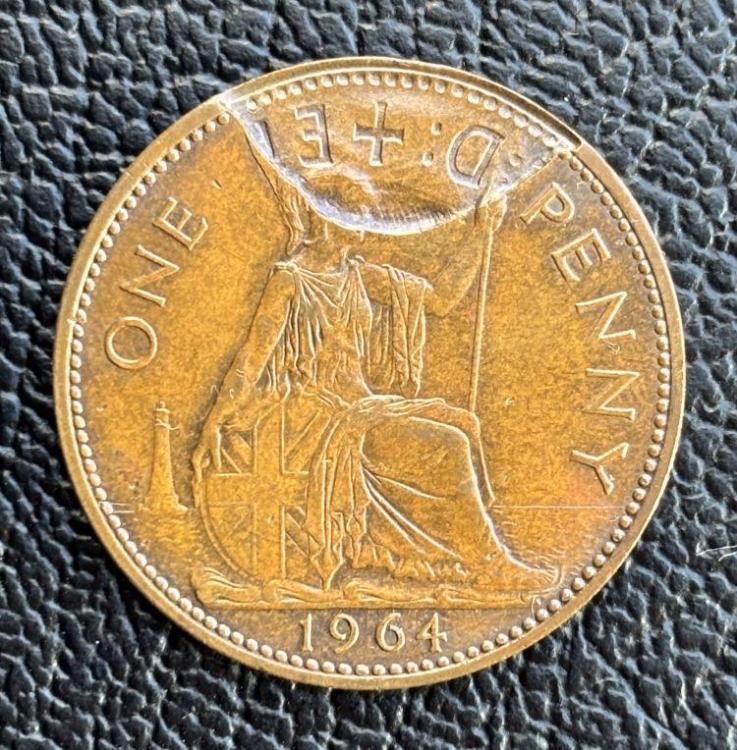
I can only suggest that when a brockage happens, the press is full of unwanted metal which in these cases shattered one of the flans with the remnant causing what is seen. The offending item did not bind to the full flan and fell off. It doesn't look concocted in either case, as the incuse legends are approximately correct for orientation, albeit displaced significantly in the first one.
-
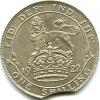
I guess we all come across these... for me its an interest brought on by the unique individuality of damaged to coins that pass through the mint more so than high grade coins .... show me the carnage!!! This 1887 Half Crown (mint casualty )looks like its been hit with an axe.....? above the letter C you can see the blob of silver that happened during the mint process, How ? open to opinions , and Please do show your casualty's
-
I understand how a full brockage happens, but not how a mis-shaped partial occurs. Can someone enlighten me please?
-
Perhaps "shelf" was AI's interpretation of what Arabia was standing on?
- Yesterday
-
 I am in the midst of doing exactly that in fact! I requested it ~5 days ago and got a response this morning saying they can forward a message!!
 -
Jubilee Head Plaster Model & Electro-types
Exbrit replied to SohoMint's topic in British Coin Related Discussions & Enquiries
@SohoMint did you try Jim Noble to see if he would contact the owner on your behalf? - Last week
-
ah...! 🤔 it was a surf of the Google Trajan brought up "Reverse: COS V P P SPQR OPTIMO PRINC. Arabia shelf on the left, carrying branch and cinnamon sticks, at your camel feet" it didn't make much sense to me but hey, who am I to over think these things 🤷🏻♂️, Stuart and Paddy have been of great help to me as always, incorrectly its been referred to as a Denarius almost everywhere, Numista (many thanks Stuart) has been a great help, they have it as a Uncertain Arabian Roman city... Script in Greek....as recognised by Paddy, from the year 112. it seem to be quite high as a rarity and Silver, Its very useful to learn these things and write all this down so I can put this away and rediscover without fear of thinking what the Heck is that?? Greatly indebted to you all, so once again many thanks 🙏🏻
-
It's not actually a denarius as you'd think but a drachm. Here's a similar one...https://en.numista.com/235578 The legends are the giveaway with it.
-
 Bexinthecity05 joined the community
 -
 Thanks for the vote of confidence. I am already in regular contact with SohoMint. I nearly bought the lot but just dipped out at the last.
 -
Yes, I am not sure where AI came up with "Arabia Shelf" - makes no sense from what I know of Ancient history. I think the reverse legend starts "DEM..." so could be the Greek Goddess Demeter? but it may be "DEMNA.." which I can't relate. (The H is the Greek letter Eta - a long ee sound.) The only book I have on these is "Greek Imperial Coins" by Sear, but it has few illustrations and rather assumes you can read most of the inscription!
-
The goddess of Waitrose?
-
I don't believe there was a Roman goddess with 'Shelf' in her name!!
-
a bit of looking around armed with the Trajan name....Ive found it turns out to be a Trajan Denarius, 110 A.D. on the reverse Arabia Shelf waving a branch and carrying cinnamon sticks, Camel to the left. still looking around but 110 A.D. wow! 😲 many thanks all for the imput i'd never been able to found this out with out the help 🙏🏻👍
-
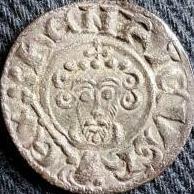
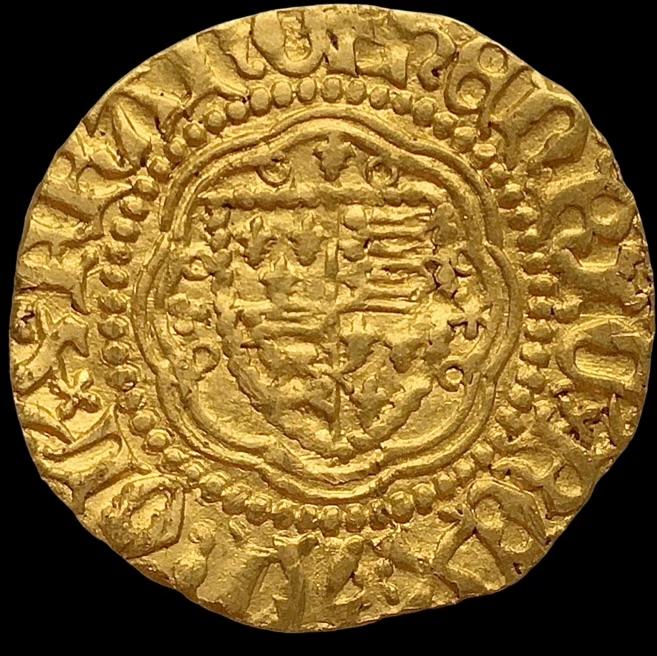
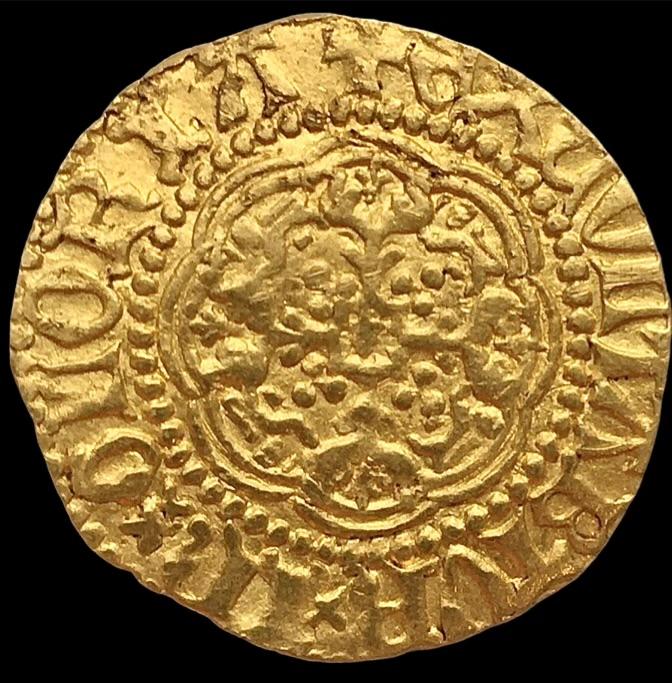
Henry v 1413-22 Quarter Noble Spink 1757Var. 1.71g Obverse: HENRIC REX ANGL FRANC within treasure of arches, stops of various shapes. Trefoil to left and mullet to right. Reverse: EXCVLTABTUR IN GLORIA (“He shall be exalted in glory”). Cross with lions in angles: lis in centre. Mullet to the right was to distinguish the kings new mint master Lewis John. Henry v’s first mint master. Appointed to the role on 14th April 1413. The trefoil was used as a periodic privy mark to identify a specific minting window die variation or administrative shift within the tower mint. The Annulets (small circles) placed around the arches served the exact same high-utility purpose as the ones next to the central shield or to top. They acted as a subtle internal code to identify the exact sub-series, die variation, and specific mint run. The “1757 Var” Designation: in British numismatics “1757” refers to the ID in the Spink standard catalogue of British coins. The “Var” (variety) means it features a distinct die error or sub type -specifically, a spelling variation, in the reverse Latin legend that reads EXCVLTABTVR instead of the standard EXALTABITVR, (“He shall be exalted in glory”).
-
- 6
-

-
I am very well acquainted with him! In fact, I worked with Sovereign Rarities on his auction last year, and have since remained in close contact with him! He did almost purchase the plaster model in 2010, but alas decided against it!
-
If I had to make a semi-educated guess, I'd say it could be a crude provincial imitation of an official Roman denarius.
-
 You want to talk to @1887jubilee who knows more about the 1887 JH coinage than anyone I've ever met.
 -
these 2 that I've found would have been boot fairs ages ago (pre computer's) basic knowledge really and just found old coins an interest which was a side interest as I was really hunting WW1 Cap Badges and Medals... I'm still sifting through boxes bags & Cuboards ..... when will it end? 😟 Ive few more interesting Victorian etc to add to the forum, Paddy once again many thanks for your input I can now continue looking into my Trajan... once again I'm indebted to you.🙏🏻
-
 Ashley, this sounds phenomenal, I reckon there will be members on here that will be able to help you. The very best of luck in your search, please stay in touch with us all, we love things like this…very exciting! 🙏
 -
Hello, I am in the midst of writing a relatively large article on the 1887 Jubilee Coinage - estimated to be about 600pgs in total. In the process of such research, I spent about a week at the Royal Mint studying about ~200 tools relevant to the coinage and a similiar number of coins. Unfortunately, it seems that the Mint did not retain the original plaster models designed by Boehm. It often had seemed to be suggested that the relevant item(s) had been destroyed - a fact that I could not bear to hear! Hopefully, continuing the research into plaster models, with some vague hope of finding something, I did come across a 2010 Baldwin's sale, auction 68, which sure enough had a plaster model of the Jubilee Head! Well, I contacted Steve Hill of Sovereign Rarities, who worked at Baldwin's who confirmed that the piece sold to a bidder in Australia, and was since resold in auction 100 of Noble Numismatics (an Australian based auction house) after failing to sell in auction 99. I am now trying to contact the owner of such a piece, though I am having difficultly identifying who may own it. Should anyone have an idea of who may own it, it would be greatly appreciated for this to be shared with me. To my knowledge, it is likely an Australian collector, perhaps someone with a focus on the Jubilee coinage. Similiarly, if anyone has any high quality images of the copper electrotype described in BNJ 1984 by Graham Dyer, please would you be able to share it with me! Kind regards, -Ashley
-
I always like to see them, and have got better at Identifying them, but I have resisted collecting them. That is one huge rabbit hole to go down!