
Rob
-
Posts
12,934 -
Joined
-
Last visited
-
Days Won
371
Content Type
Profiles
Forums
Events
Downloads
Store
Gallery
Articles
Everything posted by Rob
-
Looking at all the G3s I have pictures of here, there appears to be an issue with the Es from 1817 onwards and that continues through to the 1825 laureate head G4s. Don't have any 1826s on file, but coin archives has an 1826 with fully formed Es, so assume it's intermittent.
-
It could be, but is more likely a shadow as the tail of the R matches the horizontal line at that point.
-
The pound recoinage was obviously a major event drawing resources from elsewhere. But given there was an increase in digital money transactions with a low maximum value, it wouldn't surprise me if there were in fact zero mintages for some denominations due to reduced need for small change. I don't know what percentage of transactions under £30 were cash or not, but I see a significant number of people are using the card before cash. That is change they don't have to hold in their pocket.
-
-
Top one. The bottom one has been cleaned.
-
Not related to the 1877 Silver Jubilee 25p crowns by any chance? Chinese copies can be anything. Definitely need a picture with a close-up of the date.
-
At £27 for a copy, I'm not sure. There's been no shortage of accurately described copies of various types selling for more.
-
A half honest description. Doesn't state a copy, but does say for those who can't afford the £1000 plus. Just needs to dig a bit deeper and come completely clean.
-
Pah, it's only a 'Pontefract'. Probably came up with a few Saxon pennies and the odd triple unite. I'd better get the detector out and see if I can find any of the infinitely rarer ring pulls. Never see any of those listed.
-
Views on the Scarborough sixpence on eBay?
Rob replied to jasonsewell's topic in British Coin Related Discussions & Enquiries
That's more hopeful -
Views on the Scarborough sixpence on eBay?
Rob replied to jasonsewell's topic in British Coin Related Discussions & Enquiries
Bought by Shaw. That isn't a dealer's name I recognise, but doesn't exclude the possibility.. M&R gives the chronologically closest person with this name as W S Shaw in 1858, but that sale was Books, Pictures, Engravings etc with one Napoleon medal noted and 56 years later. He is noted as the late keeper of the Sasines Register for Fifeshire, so being in public office there might be a possibility of confirming or condemning him as a possibility. The next Shaw listed wasn't until 1891. -
Unread Content button playing up.
Rob replied to Peckris's topic in Forum technical help and support
Ok, so the same as me, just displaced by 12 months. -
Unread Content button playing up.
Rob replied to Peckris's topic in Forum technical help and support
Not a clue, but I have noticed on the odd occasion that a previous unread content star doesn't clear initially when returning to the main menu. Not to be confused with having read the content on page x, but not subsequent posts on page x+1 -
Couldn't agree more. 3 years ago or so, I had a call from a person who did house clearances asking if I bought scrap coins. Obviously the answer was yes, but the 135kg of scrap metal took a lot of sorting, to the point where I still have 30 or 40kg left. I found 7 coins that were worth as much as I paid, leaving me with the problem of what to do with the other 25000. The scrap man was rubbing his hands.
-
Newly Acquired Halfpennies
Rob replied to cathrine's topic in British Coin Related Discussions & Enquiries
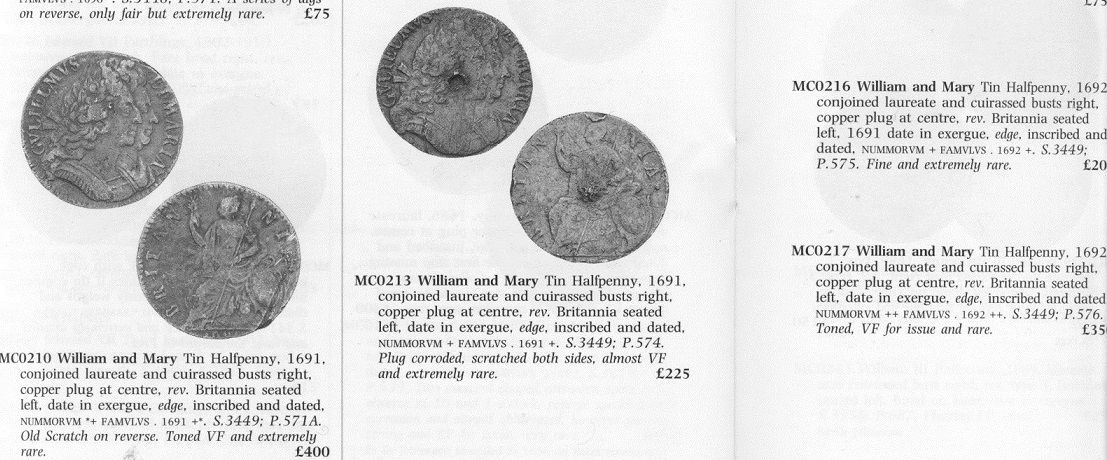
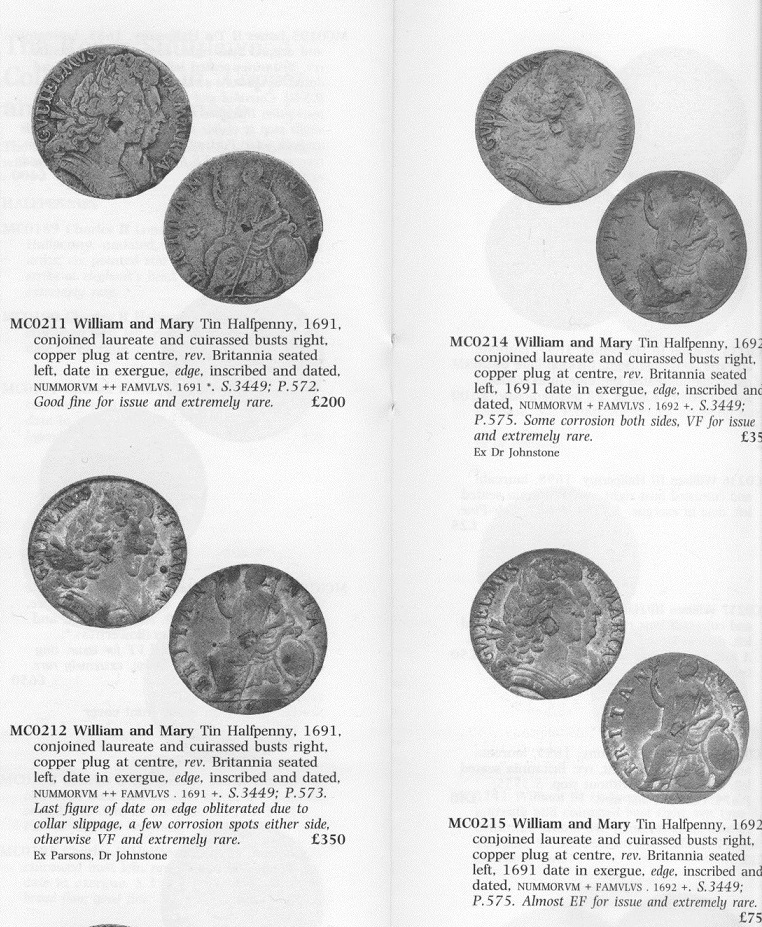
And the rest.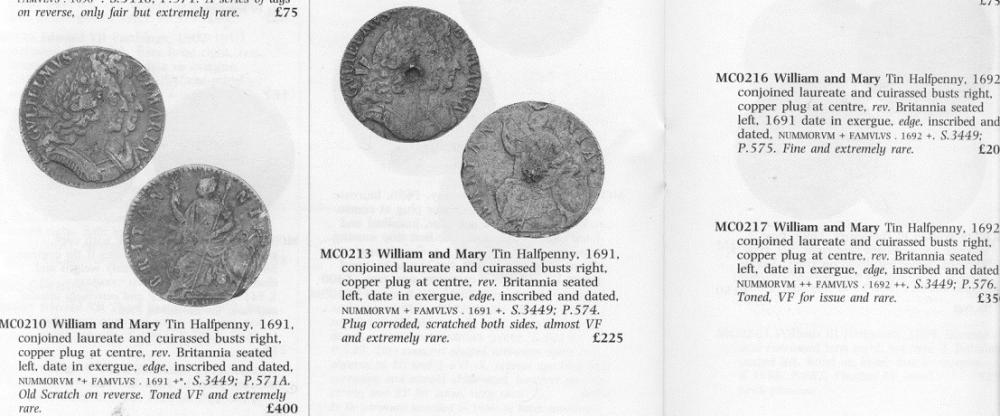
-
Newly Acquired Halfpennies
Rob replied to cathrine's topic in British Coin Related Discussions & Enquiries
OK, I'll go with that. The remainder of his collection including James & Charles' silver was sold through the Circular commencing Feb 2001. His tin, copper and bronze was in the same issue, but there is no mention of a no date in exergue coin unless it was listed at a later date. First bit attached.
-
OK, we appear to have an issue here, so let's debate it. You appear to have a problem with Simon Willis - that's a specific issue between yourself and him. 'Dealers all deal between themselves'. - they do the world over. Every dealer has a list of customers and coins they require. They are hardly going to say I am not going to buy a coin for you that you want because it comes from another dealer! They usually have a good sense of underpriced coins, and also have to buy to offer a broad range of items when stock is short. i.e they have to buy coins, but other dealers are only a small section of the market place. 'set up price fixing between themselves'. Example? If a coin is common there is no way that the market can possibly be rigged. If it is rare or highly desirable, then the number available is unlikely to exceed one or two in any instance. The only instance I can think where there is some attempt to link coin pricing, is where the coins are slabbed, with a given number equating to a certain price. If people will buy coins unseen based on the slab number, that is a form of price fixing because (leaving aside the ability to resubmit to receive a higher grade), the grade is deemed to be set despite only forming one opinion amongst many. The same can not be said for raw grading whereby it is accepted that opinions differ and so the price for a given grade has more flexibility. If a coin comes from another dealer, then the selling price must inevitably be higher than the purchase price for the new owner to make a profit. 'shuffle customers like cattle'. Not sure where we are going here. I can't think of any dealers who consciously try to move their customers on to the next table. They certainly keep their list of customers to themselves, which is normal for any business. A dealer might tell a good customer where he can get a specific coin, but that is doing someone a favour on the back of past sales. 'lie on eBay'. Don't know as I haven't bought on there for well over a year. I haven't the patience to trawl through the more than 100K British coins listed. 'don't really have as much knowledge as they wish they had, but do they HAVE to be so nasty???' Again, a bit of evidence would help would help if you want to throw stones. We all wish we had more knowledge. Every area has someone who knows more than the next person. Judging by your post on my profile I assume you have included me in this section. For those who haven't looked it reads 'Gosh ain't you a fine example of the nasty arseholes I said populate this forum....negative nelly should be your name......you are certainly no expert in anything except bullshit'. If you would care to elucidate with specifics, I can make a reasoned response. If it was in relation to my reference to the NNC slabs. As 'Centisles' on eBay, he acquired a reputation on both sides of the pond for grading things much higher than anyone else. If it was with regard to the 1911 slabbed by a company neither of us have heard from, then the uplift in price from a PCGS or NGC 65 rating should be enough to cover the cost of slabbing. I also note you mentioned trolling on the MP thread. I made the not unreasonable assumption that you too were trolling. Your first 8 or 9 posts promised much, but then on Christmas Eve you managed to populate the entire first page (but no more) of the 'Free for All' forum topics in the space of a few minutes with replies, many comprising a few words with little in the way of punctuation or properly formed sentences. They hinted at sensible replies, but said nothing informative as there was no corroborative evidence or reasoned argument for the statement. A post asking for an Ansell sovereign is ok. You then listed 10 or 11 coins in the 'Items for sale'. For someone with less than 50 posts in total, nearly half of which were the mechanical replies made shortly before followed by listing items for sale, you were following a tried and tested method used by people trying to ingratiate themselves with a view to selling coins via something resembling a pyramid scheme. Overpriced silver slabs are the most popular product in this area. I think our friend Henry was the last person to try this on here. As I also mentioned, Chris is kind enough to provide this forum FOC. Whilst he has included a For Sale section, he is first and foremost a dealer and publisher, so we don't flood his website with adverts for our own wares. Certainly not with what is virtually an introductory message. Reasoned debate is always welcome here.
- 14 replies
-
- 17
-

-
Although not set in stone, the serial numbers of the genuine pieces should be close together if still in a package. The numbers are discussed somewhere in a previous thread about these. Sorry, can't remember the range.
-
Genuine ones have uneven wavy lines in front of the face, the copies have straighter lines of uniform thickness.
-
Lines in front of the face amongst other things
-
Maybe they will replace eBay as the place to go for dodgy coins? One last heave chaps..................
-
............ the seller being one Archibald Spooner, or his descendant.
-
I've certainly had a number of lower grade pennies with spurious dots, including in the same area as this, so quite possibly from the same die. I throw them all in the scrap pennies pot as they have little or no chance of selling, being unlisted and hence uncollected examples of otherwise hopelessly common dates.
-
Not a penny, but if someone wants to be obsessed with random dots, here are few to contemplate while I enjoy myself for the New Year. I've also seen a coin with the sixth dot in from the left, and 14 from the top missing, (Ok, might be telling a little fib there). Happy New Year everyone.

-
This one will be debated for generations to come. It all comes down to how deeply someone delves into the type. Clearly you have people who just require an example of a type. At the other end of the spectrum you have those who study as many individual dies as is feasible. Many collectors fall between the two, taking an interest in some dies because they appear on a list, as in this case. There is nothing wrong with identifying different dies, but an ever increasing number dictates that any premium attached will reduce for the individual die unless it is distinctly different, or particularly important as a variety. Dots, die fill, recut letters etc all have their place in research for the identification of and linking of dies to produce a chronology, but as continuous variables will not make anyone rich. The identification of individual dies requires the undefined generic coins to become progressively scarcer/rarer. Will this increase their value? Unlikely, as the pot of money available to purchase said item is proportionally, reasonably constant. Therefore the price of varieties must fall to suit the spending power available, unless there is a material change in collector habits and focus.