

Rob
-
Posts
12,935 -
Joined
-
Last visited
-
Days Won
371
Content Type
Profiles
Forums
Events
Downloads
Store
Gallery
Articles
Everything posted by Rob
-
It may work in the US, but ultimately the local content is too high to appeal to a wider audience and most collectors of coins tend to restrict themselves to official offerings from the state mints. These previously respectable institutions are now hell-bent on raising revenue by selling commemoratives to the wider public rather than restricting themselves to providing liquidity to the nation(s)which is the reason for their existence. This diarrhoeic output turns off most collectors and as a result most commemorative output from both mint and private enterprises (which are on the same level) are lumped together as novelty items. I'm sure there will be people who are temporarily interested in such items, but would be amazed if there were many long term collectors. A large part of the problem is the need for volume sales which immediately diminishes the desirability for the items as if supplies run out, more can be made. If you want to collect these items, feel free to do so. Do not expect to make sales though. Collectors collect, but rarely as a result of marketing. I forecast you will join a lengthy list of vendors where the typical response is one of complete anathema.
-
Most VIP proofs wouldn't cost any more than a common uncirculated larger silver Victorian coin - say £500 to a couple £K, so we aren't talking megabucks here. In fact a lot of people are prepared to spend far more on currency coins than they would have to lay out for a VIP proof, particularly in the penny department.
-
 Its value is about 36k Plus juice
 -
Scarce 1964 sixpence
Rob replied to Gary1000's topic in British Coin Related Discussions & Enquiries
If someone can find 4 examples in a casual search albeit at a specific location, a little patience should be rewarded with a decent example. The biggest obstacle may well be that it typically isn't worth listing a 1964 or 1965 sixpence. -
Did this not sell yesterday? English was yesterday. £36K + prem.
-
dos is an old Microsoft operating system.
-
Uh, more than one. It's the second this year, hence the reduced coin activity of late. I'm a bloke and thus can't multitask which is probably a good thing given the prices at Spink today. I was informed today during the course of the sale thatby working on the house I was in the right place, as attending the sale or bidding online would have been very depressing and/or impoverishing. £165K for the Mary ryal, £36K each for the R3 angel and Briot unite, £6K for the Harold 2 Chichester penny, £18K for the Alfred penny with legend around the bust. Big numbers for the special pieces, though the average bits were eminently affordable.
-
He's got the grade about right though, wonder why the rest of it is ALL overgraded People who buy hammered know that BU/UNC would be impossible to justify, but milled comes up in those grades regularly. People see what they want to believe in the case of the latter.
-
Don't look at me, I'm skint and haven't put any bids in this time round. Doing a house up at the moment, so too busy.
-
Good god!!! Has he just sold that cos its ended? The description looks like he's using the mk.2 Ayephone (specific to Dundonians). Completely incomprehensible. One gap you could fill is "Charles II was ruled from 1660-1685 by Catherine of Braganza"
-
The crown is really quite a large denomination for 100 years ago and few everyday transactions for ordinary folk could have required them. Bread was a few pence a loaf, cigarettes a penny each at best, similarly a penny or two for a pint of beer. The last point also brings into question the double florin. Allegedly dropped on account of the difficulty barmaids had in discriminating between these and crowns, the average person spending a double florin on beer was probably incapable of recognising one either. Crowns probably only had limited circulation as it was just as easy to use two halfcrowns which were far more abundant. A bit like the £50 note today - legal tender, but quite esoteric for everyday transactions when everybody has £10s and £20s.
-
I did that, and for a split second I saw the incuse effect. Unfortunately, having seen the image first in the correct way, my brain quickly adjusted and the incuse effect vanished again. I usually need to see this effect right at the start, before I've seen it the correct way. That's right. It is a question of your brain recognising "normality" and treating subsequent images in the same manner. When the light direction changes, your brain adjusts after a period ot time, but if you return to the "wrong" image later it again sees it as incuse until it readjusts.
-
I only ever see it when the incident light is from the opposite direction to normal. So as I normally scan a coin in the correct orientation with light from above, when I scan it inverted, my brain takes a while to adjust. It's initial reaction is that the bright areas are reflecting light which by default comes from above the coin. The detail at this point becomes incuse. It works best with simple designs though. This is one that always causes the effect to my eyes. If you can somehow copy the image and invert it you will see what I mean.
-
Unless the source of the information was the original manufacturer of the item in question, I would treat any rarity value with a pinch of salt. That applies in both directions, but doesn't mean that you average them out to believe the info is on balance correct.
-
Phew, thank God. He's only willing to mail it within the US. That's as good as a minor lottery win for the UK.
-
because dipping on ebay can double your money Sad but true. I've bought some really attractively toned examples on the cheap over the years, yet seen bright, lifeless, cleaned etc sell for far more. That is a plus on ebay for people who like antique toned original surfaces, but a bit of a bugger for those who want full lustre.
-
My favourite coins (many of which aren't among my best, by some way) I would never want to part with, for all kinds of reasons including the sentimental. But I have others, which I wouldn't bat an eyelid about parting with. I kind of feel about them, "Ok, got that, seen the film, worn the T Shirt - what next?" Anyone else feel they could divide their collection in two : one lot that they'd never part with, the other that they could part with without too many qualms? And that the first lot doesn't necessarily include their finest specimens? I think that applies to most people. Some pieces are just too nice to sell, whilst with others you are ambivalent.
-
Midnight oil? Nonsense, it's nearly 2am.
-
I must be missing something!
Rob replied to Paulus's topic in British Coin Related Discussions & Enquiries
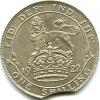
Oh, come on now. Didn't you see that it is "A Splendid Highly Collectable Example "!? ... that and the fact that this is eBay, not the real world of course. It's not that bad an example as they come, with the question being whether you want one or do you want the gap. You would pay into 4 figures for any shilling around the EF mark with E or E* below. High grade examples are seriously rare. -
Huge (1-5Mb) photographs of any York halfcrowns required if anyone can help. All types would be useful, but especially those with the groundline (1A, 1B & 1C). Thanks in advance.
-
Comments on the 1746 Halfcrown Arrival
Rob replied to azda's topic in British Coin Related Discussions & Enquiries
Being a proof only issue, most examples turn up at around the EF mark. At not even VF with tooling and rim marks I think you would struggle to get much more than the fine price for it - say a couple hundred. -
Comments on the 1746 Halfcrown Arrival
Rob replied to azda's topic in British Coin Related Discussions & Enquiries
The rim marks hit you in the face the minute you saw the coin. I didn't look very closely at the fields as the marks on the rim would have been enough to put anybody off on their own. Although not the commonest piece, it certainly isn't rare with a few examples passing through every year, virtually all of which are ok. -
It depends on what the coin was in contact with. Looks like rust, and the world isn't short of objects made of mild steel.
-
Comments on the 1746 Halfcrown Arrival
Rob replied to azda's topic in British Coin Related Discussions & Enquiries
Edge marks and polished fields are described, so you might have a job saying not as described, but will probably get away with it as it doesn't say tooled. The tooling scratches are the worst problem, but I wonder why you bought it in the first place with these. I hope you didn't pay too much. Basically, someone has taken an electric polisher with a fine point and attempted to buff up the fields giving the damage seen. -
Comments on the 1746 Halfcrown Arrival
Rob replied to azda's topic in British Coin Related Discussions & Enquiries
Where did it come from and what was the lot description? Any auction house with a sense of decency would have said tooled at least. With all due respect to Scott, this one is in his territory and budget.