

Rob
-
Posts
12,935 -
Joined
-
Last visited
-
Days Won
371
Content Type
Profiles
Forums
Events
Downloads
Store
Gallery
Articles
Everything posted by Rob
-
HENRY IV & V PENNY IMAGES WANTED
Rob replied to Rob's topic in British Coin Related Discussions & Enquiries
Double post
-
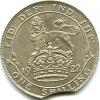
Something a bit more mundane for you chaps, if you can help. If anyone has examples of Henry IV & V pennies, I would appreciate any images available. I picked up this better than average example of a York local dies Henry V (S1791)on the bay this weekend. A few questions occur to me. First, do all the examples of this type have an annulet in the reverse legend? Second, do any other non-local dies York pennies attributed to these reigns have an annulet in the reverse legend, irrespective of whether there is an annulet in the CIVI quarter between the pellets which is supposedly restricted to the type G? Third, the marks beside the crown are given as mullet to the left and lis to the right. I can see the lis is correct, but the mullet is a bit odd. Although double struck, there is no way I can reconstruct a normal 5 armed mullet. The best I can do is a cross with a central pellet, but not in a void. This may be an overstrike. Thoughts anyone. Thanks. Obverse:

-
In terms of wear there isn't much so about the EF mark is ok, but it has been cleaned given the number of hairlines and the obv. edge nick doesn't help.
-
A few months ago I listed some dross plus a couple of £30 coins starting at £1 and no bids. Thankfully, the pieces I put on to save the embarassment of having them in the trays at fairs for a fiver max all made double figures. I won on both counts. And before anyone says I've converted to using eBay, no. They were listed by someone else. I still find the results too unpredictable to risk putting quality on. BINs on eBay are a reflection of the number of buyers who will happily spend for England on a dodgy photo or two, but won't buy from dealer's sites because they perceive they are being ripped off.
-
I've bought BINs on ebay many times. Sometimes people get into eBay final price mode which is frequently under on quality or rarity, but overpriced on the commoner pieces. Know what you are looking for and at and make an educated purchase.
-
English Hammered Copper
Rob replied to Coinery's topic in British Coin Related Discussions & Enquiries
Not a clue unless it's a deformed bell. -
The sad thing is that you can put on a £30 or £40 coin starting at 99p and nobody bids, yet list a piece of s**t that would be rejected by most scrap merchants and it sells for pounds. As a seller, the logical thing to do is list it at the price you want plus expenses and forget the auction side of things. In the case of crap you are just happy to shift it. Alternatively, get collectors to buy from dealers at fair value as used to be the case rather than buying exclusively on ebay because there you can pick things up cheaply and have the chance to view in the flesh, or return if not happy. I was going to bid on a coin this weekend. Described as the rarest it was needless to say the commonest, so I informed the seller who was apparently deaf and unable to amend the description. Needless to say it sold based on the inaccuarate description. Funnily enough, the other item listed by the same seller was also described inaccurately and coincidentally as the rarer of the two varieties.
-
That's because there are probably four realistic options for selling on eBay. Wanting to make money is hardly a heinous crime. 1. BIN at the market rate or BIN with best offer. Accurately and fully described, you would accept the going market rate but take anything in excess of that in the case of the latter. 2. Set a reserve at or about the market rate. Again accurately and fully described. 3. Start rubbish at 99p as seen and let punters make of it what they will. 4. Start at 99p even if way below market value, add a description, cross fingers and hope it makes a realistic price. Emphasis being on the word hope. Of the four, number three is probably the best return on capital. Best offers attracts the speculative bargain hunters. BIN without offer is probably the worst from a seller's perspective whilst number 4 leaves you in the lap of the gods.
-
How do you make a collage or overlay images?
Rob replied to Rob's topic in Nothing whatsoever to do with coins area!
Thanks chaps. Coinery to the rescue. -
Wonderful magazine even though I haven't bought one for 25 years. My favourite was Buster Gonads and his unfeasibly large testicles. Brilliant.
-
That's silly. It's in keeping with the mentality of the person who paid many hundreds of dollars for a 1901 penny on the basis it was in the slab with the best number so far. £400 for an unc 1901 is equally stupid, double Spink prices less so, but still OTT.
-
Any ideas on rarity (or otherwise) ?...
Rob replied to Nick's topic in British Coin Related Discussions & Enquiries
I would say the straight 1888 is at least x10 rarer. Pricewise though maybe only 3 or 4 times the normal. Many people don't realise it exists, and not being in the books means you are fighting an uphill battle to get a lot of buyers to appreciate or accept it. As for the second, I haven't a clue. -
Help & Thoughts 'Elizabeth I BCW Die-Study'!
Rob replied to Coinery's topic in British Coin Related Discussions & Enquiries
Here is where the crescent and fingertips show. The tun is sat on top of the mess which is presumably due to too much reworking of this area. A die link to a crescent marked obverse would be good, but you can never exclude a partially, but seriously recut die such as is found in the case of the Charles I Worcester shilling obverses C & D, and also the Rose and Lis marked Worcester groat obverse.
-
Help & Thoughts 'Elizabeth I BCW Die-Study'!
Rob replied to Coinery's topic in British Coin Related Discussions & Enquiries
There isn't one. I'm afraid it's a Captain Oates moment. I've just embarked on cataloguing the imaged hammered gold and Saxon/Norman pennies in the library. I am going to restrict it though, to VF or better unless it is rare for the mint/type etc. On the subject of the above coin, I had listed it on the site, but nobody bought it because it was too messy and not particularly attractive despite the nice tone. That's why I made the effort to decipher the mess. Initially I had thought it was just a tun over hand, but to the left of the finger tips is the left horn of a crescent. First one I've seen, but it meant another line in the collection criteria database. -
Help & Thoughts 'Elizabeth I BCW Die-Study'!
Rob replied to Coinery's topic in British Coin Related Discussions & Enquiries
Here's an interesting obverse die. Never going to win a beauty contest, but the obverse mark is tun over hand over crescent and the reverse is dated 1592. This die must therefore have been in intermittent use for at least 3 years. -
Somebody give me a clue please. I'm trying to make a collage of coin images which are superimposed so as to resemble a pile of coins. I am unwilling to physically pile them on top of each other for obvious reasons. I don't seem able to draw a freehand outline in paint to crop, copy and paste, which seems to be about the only suitable program you get with Microsoft. I also can't work out how to cut out a circle and save it as such without taking the basic square or rectangle and manually filling in the bits I don't want with white, but it always keeps the original dimensions even after saving. Not a good day. Yours, frustrated, confused and completely in the dark. Thanks.
-
How do they get away with it. Because people (like yourself) buy what's on offer. If nobody bought, the problem might just go away or at least reduce in volume. If 75% out of a bag of 100 pieces of crap sells for even £3-4 each, the chances are that represents a profit of a couple hundred quid. As a seller, that's a no brainer.
-
No missing colon. It looks like there is a faint pimple where the lower stop should be. Given the low grade of the coin it is almost inevitable that what was probably a weak feature in the first place can only degenerate further.
-
1876 H farthing large 6
Rob replied to copper123's topic in British Coin Related Discussions & Enquiries
Midnight oil is the best lubricant. Available from all good and understanding wives. -
British Coins 2013/2014
Rob replied to petitioncrown's topic in British Coin Related Discussions & Enquiries
Is this reply in the right thread should it be in a parallel universe? What has wine, steak, a couple pints and the Midland got to do with a forecast for 2013? Sorry, confused. -
There is nothing to stop you getting a £30K coin. If your collection is worth £50K, then sell it and buy the £30K coin with the proceeds. The problem most people have when they say they can't afford a large value coin is that they factor in the existing collection as having no realisable value. The problem in reality is one of attachment to what they already have or a fear of selling out too cheaply. If times get hard, I would say a £30K coin will be easier to shift than £30Ks worth of me too coins. A £30K coin isn't going to become a £30 coin the minute you buy it. You just have to take the plunge.
-
I used to see one in my change every time I visited Thatchers.
-
I always liked the basic concept of the business. Drive up, reverse back through the gate on the right for 20 yards past the lean-to that acted as a cash point to the building overhang where the barrels were kept outside. Staff and yourself both pouring if the quantity required was large with a pint or two while you were waiting. Dry, medium or sweet as the options, gallon or 5 litre containers when they changed over to metric and no marketing crap. Although I prefer dry, I always bought some sweet and let them sit to ferment further. A dangerous situation ensued if you didn't release the pressure. I had two footballs that exploded over the years.
-
It's over 10 years ago since I last went in. Turned up once and they were shut - disaster. Not to worry though, I just used emergency services and went to the farm on the other side of the road and down a bit.
-
Lucky b****r. I had to drive to Thatchers. I always used to go and fill the van up on trips home before it became too commercial - 60 or 70 5 litre containers on every run at less than a couple quid each. Much easier to fit in the van than the 144 gallon barrels they had there in the barn. Taste as much as you wanted. Wonderful. It's all gone to pot now they've gone national and exported it outside the local area. The little family business is no more.