Leaderboard


Popular Content
Showing content with the highest reputation on 04/06/2020 in Posts
-
There are 10 sorts of people in the world: those that understand Binary numbers, and those that don't.3 points
-
Paddy, i heard that there were only three types, those that can count and those that can’t.2 points
-
From ESC, 1853 dot after date (dad) is R3 and no dot is common. 1856 there is only a no dot. 1858 ditto 1859 dad is normal, and no dot R 1865 has both no stop 2 varieties one R4 and the other S and colon which is R2 and no dad. 1866 no dot is R, colon is R3, no dad. and Davies appears to agrees. The Gothic Florins have got to be the most difficult and varied of all the milled silver issues.2 points
-
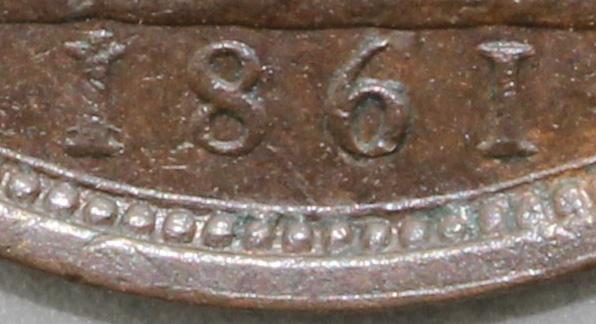
Here's an example of the first 1 over 1. Also 6+G.
 2 points
 -
I've bought coins via live bidding and only realised when I woke up the next morning...2 points
-
Met brian blessid a couple of times, 😊1 point
-
Got it (?) A=1 B=2 C=5 D=10 A with B (A returns) = 3mins A remains and sends C with D (B returns)= 12mins A with B = 2mins The 'singly' was a red herring then, you little devil😈1 point
-
Not like a slabbing company to get the basics wrong is it ?1 point
-
Also known as 'stop over numeral' (son)?1 point
-
That's the key post - many thanks Mike.1 point
-
Hi Paddy. There is no reference to a different die or dot on the 1856 florins in ESC. And i have never heard or seen anything about this, as i would have made a note. I will check my 1856 florin when i get home, just to see.1 point
-
Sleep bidding, i guess that is a new saying💤1 point
-
Agreed. There are so many numeral variations and overstrikes of varying type, that it would be virtually impossible to catalogue them all. Moreover, any one "type" that you findmight be unique in the sense that it's the only one known. This renders them relatively unattractive to most collectors. Obviously the well known overstrikes such as the F30 & F33A and the 1865 5/3 are a different matter. There is a definite market for them. I can't see any evidence of a 6/G either - although I can see a 6 + G1 point
-
In my opinion - no. The final date numeral of 1861 is so variable, virtually every die seems to be different, with variable heights, overstrikes, spacing, slants etc. I'd say no-one except a rare specialist collects all these minuitiae. Oh, and I just can't see any evidence of a 6/G?1 point
-
I like the fact that the sixpence is "defiantly silver", which the George IV crown certainly isn't!1 point