All Activity
- Today
-
I’m intrigued by the 2024 mintage figures of sets (25,000) vs circulation (0). Does this mean that the 2024 definitive coins will be highly collectible because of such low mintages or that they will be considered alongside commemorative issues such as Star Wars 50p’s, etc, so of little interest? And how would anyone differentiate them from the set coins (maybe apart from condition) if the mintage of, say the 2024 20p, was 1,000 for circulation rather than 0? I accept that 2023 was an exception given that the set coins had the privy mark on the obverse, which I believe would clearly define them as not intended for circulation and akin to commemorative issues. If the 2024 coins are considered non-circulating then surely the same logic should have been applied to coins such as the 1950 and 1951 pennies (which I’m pretty sure all penny collectors will have in their collections, but were only struck for circulation in Bermuda and the Bahamas) which were not meant to circulate in the UK, and even more so to the 1933, which was obviously never struck for circulation? I’m just curious as to what would make a circulation vs non-circulation strike of an otherwise identical coin (obviously I’m discounting proofs and/or precious metal versions).
-
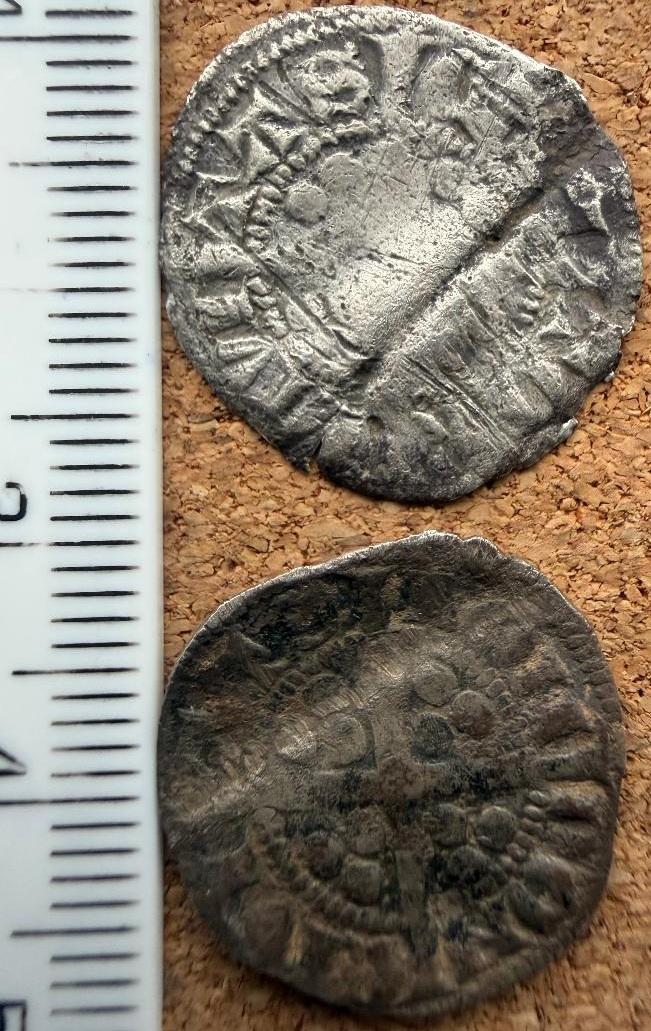
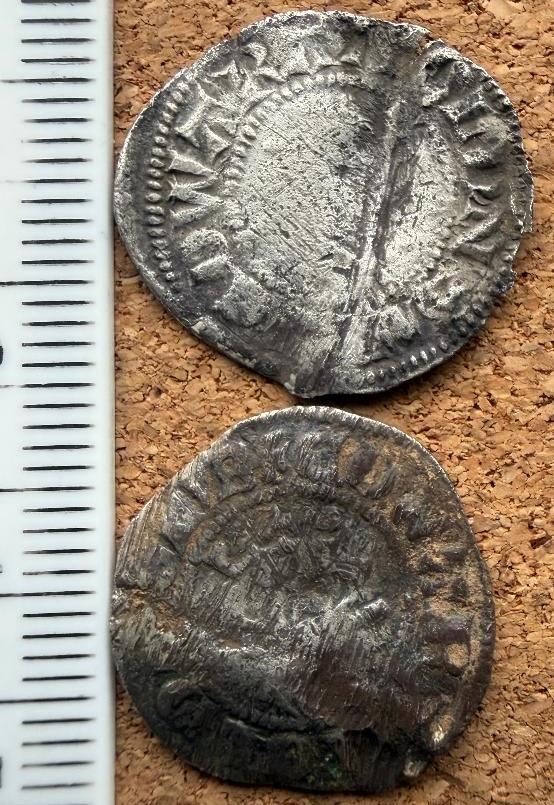
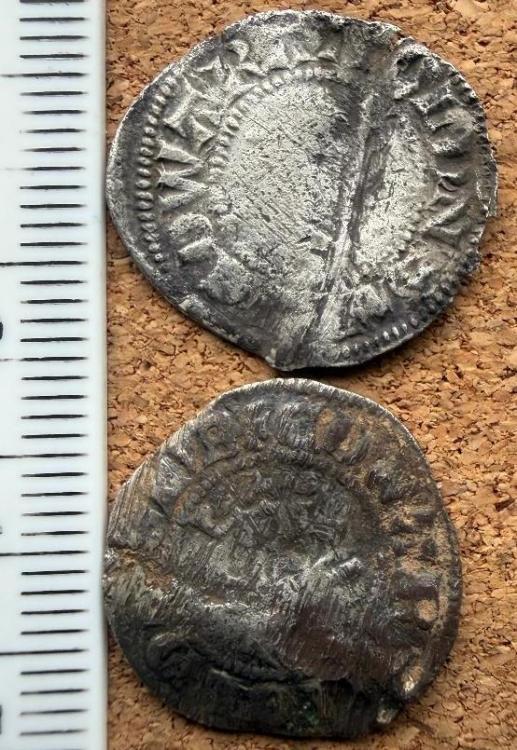
Are you sure that the second isn't TAS/CIVI/LON/DON? That's a known class 9b pernny error reverse legend. The diameter would help of course
-
H, Obviously I don't know what type of scales you have but "1 gram each" sounds a bit rounded to me and could mean anything from 0.50 to 1.49g. . Do your scales not display 100ths of a gram? BTW, diameters are also important for aiding ID, preferably in tenths of a mm. For reference my Edward pennies weigh between 1.24 and 1.43g each and have diameters of 17.8 to 20.4 mm. With Short cross pennies a cut half could weigh 0.53g (so 1 gram) and a full coin 1.43g (also 1 gram). You'd be surpised what we could come up with given as much infomation as possible, some of which cannot be gleaned from a photo. Steve
-

Spring in Queensland
copper123 replied to ozjohn's topic in Nothing whatsoever to do with coins area!
Not gloating on the cricket as well as the weather Bahh humbug - Yesterday
-
PS sorry about the rant, H, I love your enthusiasm, you’ve woken the forum up a bit…but PLEASE buy some scales, they cost pennies and halve the effort required in identifying your coins.
-
Yes, both are pennies given the weights. For a complete coin, weight is usually a good starting point. You really need to use the information and guidance available to you and become your own ‘expert’ rather than relying on others who clearly don’t care what they tell you. Jerry
-
I meant printings, not editions. I know about the 1985 edition, but I imagine there may well have been more than one printing of the 1970 edition?
-
Hey, H, I personally think both the coins are pennies tbh! You have been majorly misled by the idea that one is a farthing, it’s ridiculous! As for myself I feel really uncomfortable with you setting ‘expert’ against ‘expert’ to attain provenance/identity, etc.…it all sits very uncomfortably with me, personally, especially when you can’t even provide a basic weight, at nothing beyond the cost of around £15. Speaking only for myself…I’m looking for your personal, and financially minimal commitment of weight in the future!
-
-
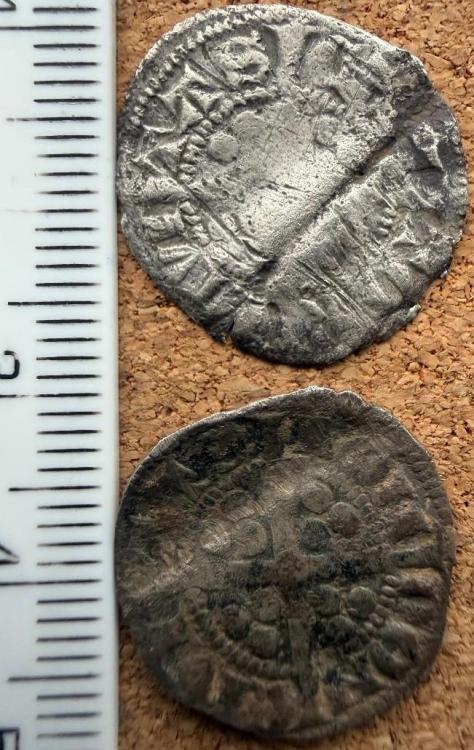
Hello Jerry, I have the scales that show they weigh 1 gram each, I took additional photos using a more up to date technology.... both coins are in a truly worn out condition so I was surprised that anything could be discovered....
-
A History of Troy Weight
secret santa replied to EWC's topic in British Coin Related Discussions & Enquiries
All Greek to me, I'm afraid. -
A History of Troy Weight
Diaconis replied to EWC's topic in British Coin Related Discussions & Enquiries
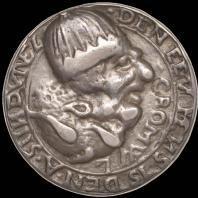
I hope that everyone had a most enjoyable Christmas, I certainly did with the concomitant lashings of Christmas comestibles for which I paid for in a regrettable surfeit of calories and post-festive penitence😂..... Haven't "been on" for a while and noticed this interesting post by Mr. Tye, so I thought I'd have a stab at it... You are quite right to point out that the observed weights of surviving 1351 nobles cluster very closely around what we would now express as c. 120 Troy grains, and that the variation you cite (for example, 7.75 g) is entirely consistent with normal medieval tolerances, including the remedy at the shear. On purely numerical grounds, the metrology is remarkably stable. Where I would differ is not on the arithmetic, but on the historical inference drawn from it. There is no evidence¹ that the Troy weight system as such—that is, explicitly named, formally defined, or administratively adopted—existed in England in 1351 or was used as “Troy” to regulate coin weight. At that date the Tower mint, producing the noble, was still operating explicitly in Tower weight, and continued to do so until its formal replacement by Troy weight in 1527 under Henry VIII. Expressed in Tower-weight terms, a nominal 120 Troy-grain noble corresponds to 112½ Tower grains (120 × 450⁄480), which fits comfortably within contemporary Tower-weight reckoning. What your figures do demonstrate, however, is that the grain employed in England in 1351 is effectively identical to the later Troy grain, and that the regulation of the noble’s weight is entirely consistent with what we would now describe as Troy-grain-based measurement. In that limited, practical sense, the Tower system behaves exactly as Troy would later behave. In this respect, Tower and Troy weights did not derive from one another but descend from a shared metrological ancestry, which is precisely why the English transition from Tower to Troy in 1527 was arithmetically seamless. The difficulty, then, is one of nomenclature rather than metrology. To describe the 1351 standard as “Troy” risks importing a sixteenth-century administrative label into a fourteenth-century context. In short, the numbers are sound; what is at issue is whether it is historically accurate to call them “Troy” before the name, the system, and the administrative framework had yet been adopted in England. ¹Should anyone be aware of a fourteenth-century English mint ordinance that actually uses the word “Troy,” I would be delighted to see it; until then, the numbers seem stubbornly unimpressed by nomenclature. With that, may I wish everyone a very happy New Year. May your grains be stable, your scales honest, your tolerances forgiving, and your anachronisms few — and may 2026 finally deliver that elusive coin we all hope to find. 🥳 - Last week
-
The second coin reads ‘CIVI TAS LON DON’ not ‘ LONDONIENSIS’ and judging by its size is probably a halfpenny not a farthing. Have you bought a suitable scales yet? Jerry
-
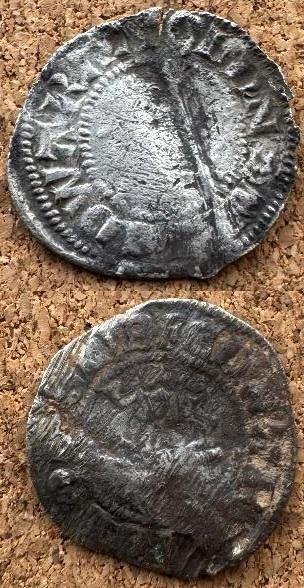
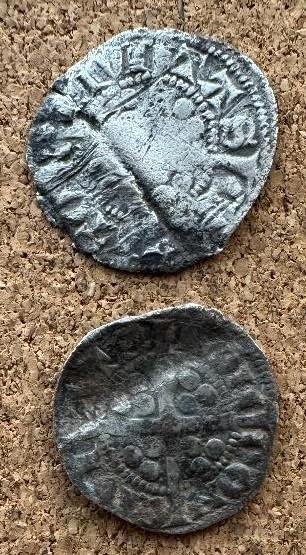
I shared these photos with another expert. to my surprise they both have been identified in this condition. 😲 Edward I, penny, Canterbury. CIVI TAS CAN TOR Edward I, base silver, large flan, farthing. London LON DON IEN SIS crikey I nearly put them in with the others that are rubbed beyond recognition. This has been a great end to the year for me. 👍🍻
-
1868 Penny possibly with the Bar Missing in A in "Victoria" I have a better 1868 Penny but not one potentially missing the bar (presumably grease or wear)


-
In recent years it has been on the 1st of January. I think there may have been some preventative technicality concerning making circulation coins available with a date in the future.
- 1 reply
-
- 1
-

-
Does any reader know when the Royal Mint will be selling 2026 coin sets etc. If my memory serves me correctly they were usually available in December of the previous year.
-
yummy one of the few dates of farthing i want i even have a 1686
-
 Kenlex78 joined the community
 -
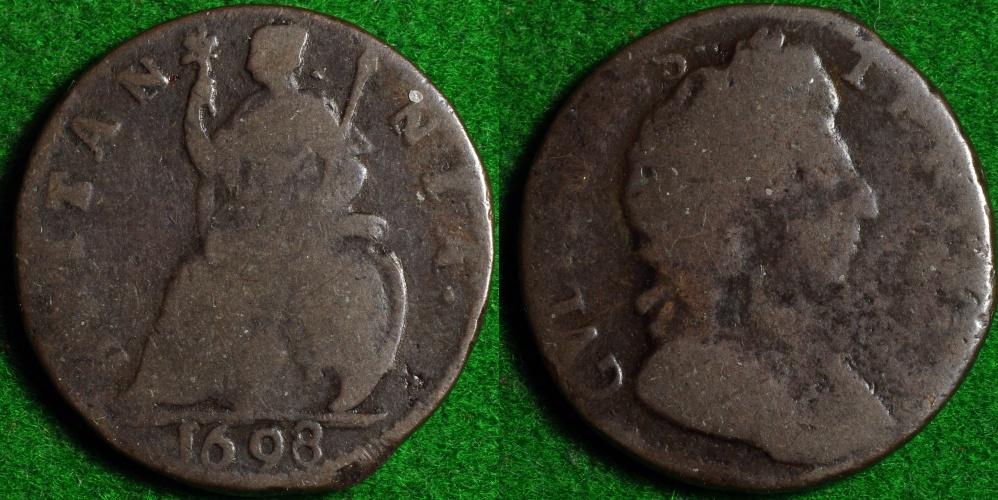
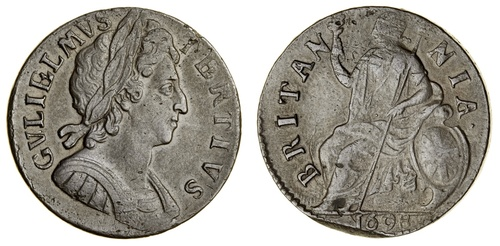
I am pleased to discover how scarce the Farthing is too! I have this one in my collection. No idea when or where I picked it up.
-
This is the Nicholson example, was later in the Pywell-Phillips Spink sale Oct 2018.
-
Both types of farthing are pretty rare as well , your coin above is just superb , suitable for basil nicholsons collection
-
These two have had me wondering for months, both being rubbed I cant even make out who the crown is.... any suggestion? Many thanks "H"
-
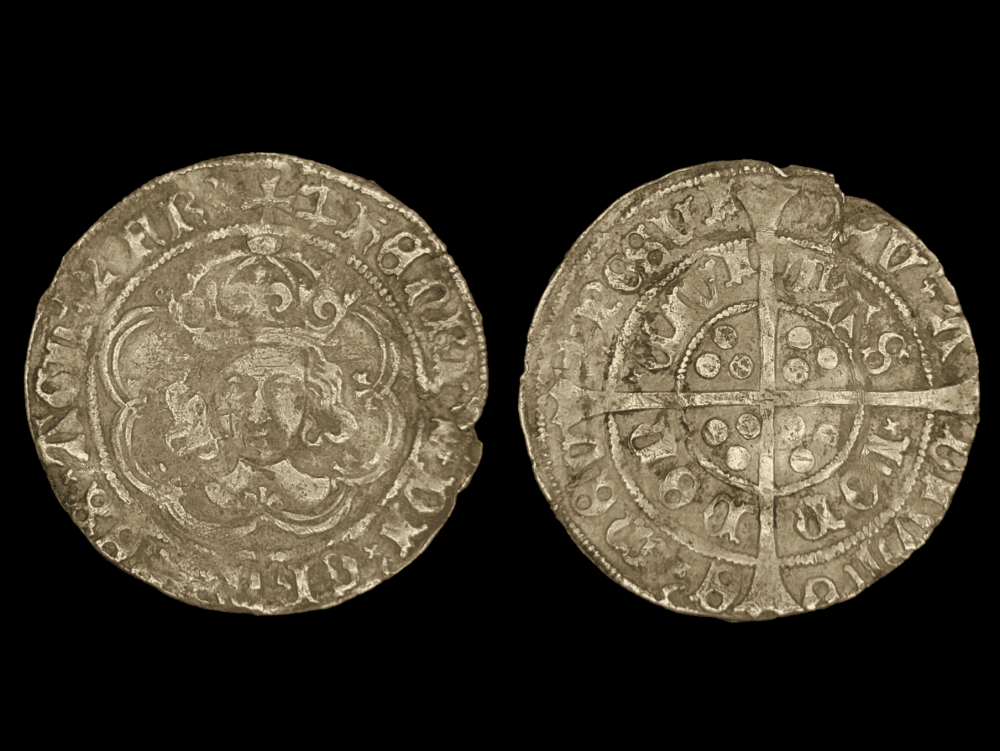
Agreed. It is the Anchor mm which is class IIId in the Spink guide. Auction houses are not always correct with their identifications. When i was researching my type IIIa groat i was looking at old sales. I was frequently finding type IIa coins listed as type IIIa & IIIb , the Pansy mintmark was also frequently mistaken for the Cinquefoil mintmark. Edit added information. On the older documents on groats of Henry VII type IIId did not exist. It jumped from IIIc to IV. Its possible the auction has just used the old classification where type IIId was included as IIIc. I am not sure when they created the type IIId class but on older 1960s documents it was not present. That could also be the reason it was listed as IIIc.
-
Hello all. I recently purchased this Henry VII groat very cheaply in auction. It was listed as class IIIc, which I believe to be incorrect. The mintmark is quite clearly an anchor (inverted on obv., upright on rev.) which could only mean then that it is a class IIId (S.2199A). This difference is very slight so I wanted to get a second opinion to make sure I didn't miss or overlook anything. Thanks for any help. Merry Christmas.
-
As I wrote in an earlier post - Regarding pennies, an addition not incorporated into the 1985 edition: Page 31, number 80A (1875 8+H with H below date) - can we assume that this coin does not exist ? Some of the changes/additions were incorporated in the 1985 edition but at least one (the one above) was not. I have only checked the comments on pennies.