Jump to content
The British Coin Forum - Predecimal.com
  1. British Coin forums

    1. British Coin Related Discussions & Enquiries

      This forum contains general discussion on all elements of British coinage throughout the ages. Enquiries and questions are also welcome. Note the separate sub-forums for Unlisted Varieties, Hammered (pre 1663) and Third Party Grading.

      103.7k
      posts
    2. Coin Publications Forum

      Discussions on Coin Publications/Rotographic. Past, present and future. See also www.coinpublications.com for more info.

      1.7k
      posts
  2. Other Coin related forums

    1. Beginners area

      Start topics and discuss all the pros and cons about your experiences as a new coin collector.

      13.8k
      posts
    2. Free for all

      Start topics/discussions on anything. Popular topics may lead to their own catagories being set up. Please keep the subject coin or at least money related!

      26.4k
      posts
    3. Decimal Coins

      A forum to start topics on any decimal coins. Please feel free to answer and questions or help where you can.

      4.1k
      posts
    4. Ancient Coins

      All about ancient coins. Buying them, selling them. Studying them. Ancient Greek, Celtic, Roman Imperial/Republic, Byzantine and other issues pre c.500 AD.

      1.6k
      posts
    5. Enquiries about Non British coins

      Post any enquiries about coins that are not British or that you think are not British, here. The experienced collectors usually deal with questions quite quickly.

      4k
      posts
  3. Nothing whatsoever to do with coins area!

    1. Forum technical help and support

      Post forum related queries here, and please feel free to answer to people or add your own advice/help on a particular aspect of using this forum.

      2.5k
      posts
    2. Nothing whatsoever to do with coins area!

      Everybody needs a break sometimes, even me.

      15.6k
      posts


  • Member Statistics

    • Total Members
      3,317
    • Most Online
      1,962

    Newest Member
    CM17
    Joined
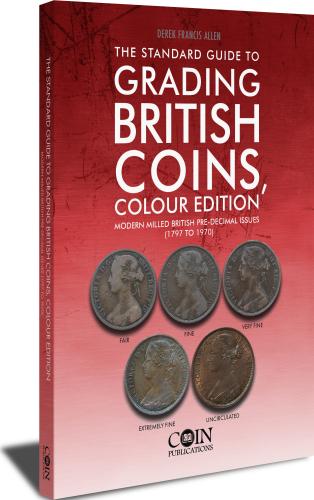
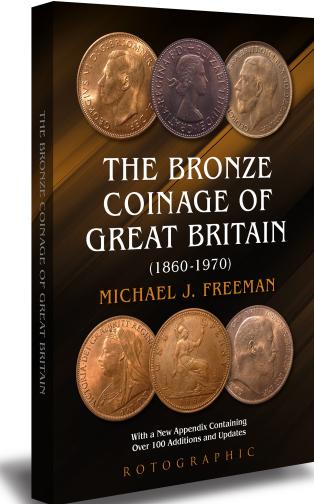
  • Purchase The Bronze Coinage of Great Britain (1860 - 1970) directly from sister-site Coin Publications:

    Follow this text.

    9780948964848.jpg

  • Current Donation Goals

  • Recent Posts

    • I'm not sure, but I believe Coinkat is referring to the Bookshelf Albums that had precut openings that were covered by plastic slides so both obverse and reverse could be viewed. Some responses are referring to the ubiquitous BLUE Whitman FOLDERS, 3 cardboard pages with cutout openings for the coins. It was not uncommon to see coins taped in to hold them, or in the case of worn coins, to use an additional piece of paper to tighten the opening.
    • I had them in the 60's and filled them with pennies and halfpennies collected from bank bags, but everything older than about George VI fell out every time I opened the things. They were basically useless. I never considered using sticking tape though! As King Kenny said, I would have bought them from WH Smith in Basildon town centre when it used to sell useful stuff. The rebranded TG Jones, which no longer sells anything anyone wants or can't buy cheaper elsewhere, is about to close, taking the town centre's Post Office with it. End of an era...
    • How accurate is the following likely to be ? The exact reason so few 1861 5+G halfpennies were struck comes down to a strict "mismatch timeline" in the Royal Mint's production logs. To understand why this specific pairing is an anomaly, you have to look at the overlap—or lack thereof—between the active lifespans of Obverse 5 and Reverse G in 1861. The Royal Mint did not deliberately manufacture a single "5+G" layout. Instead, they were rapidly testing minor design variations to see which steel dies could withstand the brutal physical pressure required to stamp hard bronze. Obverse 5 was an extremely brief experimental design featuring 15 leaves in Queen Victoria's wreath. It was phased out almost immediately in early 1861 in favor of the much more durable, standardized Obverse 6 (which features 16 leaves). Reverse G was an intermediate, short-lived design choice where the mint engraver, Leonard Charles Wyon, experimented with completely omitting his "LCW" initials from the base of the rock.   Because the Mint was facing a massive backlog to replace millions of old copper coins, press operators on the factory floor did not stop production to wait for matching dies when a fracture occurred. They paired whatever functional dies were sitting in the spare inventory racks. [1] The 5+G pairing was a complete accident. It happened during a tiny micro-window of time when an obsolete, left-over Obverse 5 die was pulled from a bin and matched with a newly prepared, short-lived Reverse G die.   The definitive reason the numbers are so low is catastrophic die failure. When these two specific pieces of steel met on the factory line, one or both of them cracked or shattered almost immediately under the pressure of the coining press. [] Rather than a sustained minting run, the 5+G is essentially a record of a production run that lasted mere minutes before the machinery was halted to replace the broken components.   The technical crisis regarding "die shattering" is well-documented in Royal Mint archives from the Great Bronze Recoinage of 1860. [] Mint Master records from the time note that switching from soft, pure copper to the harder, durable French bronze alloy (95% copper, 4% tin, 1% zinc) caused an unprecedented spike in broken equipment. [] The steel dies of the era frequently developed catastrophic stress fractures. This confirms why the Mint was constantly tweaking the thickness, borders, and leaf counts (like the move from Obverse 5 to Obverse 6) to find a design that wouldn't shatter the steel. [1]   During the Victorian era, coining presses were entirely mechanical. Operating logs indicate that when a die fractured, the priority was minimizing down-time to meet massive production quotas. [] Because the obverse and reverse dies are entirely separate pieces of steel fitted into a mechanical press, operators regularly substituted any working spare die that would physically fit the machine to keep it running. The absolute lack of a uniform "5+G production log" coupled with the tiny handful of surviving physical examples proves that this pairing was an unintended transition—an emergency factory-floor substitution rather than an intentional batch design
    • Interesting information thank you. Other than tonnes of coins being lost at sea what other possible explantion could explain very little remaining examples left today?  
    • They were certainly popular in the UK and still turn up at auctions here occasionally. I have seen all the way from farthings to Half Crowns, with the earliest catering for coins back to 1860 I believe. I can't say they were a great way to store coins, frequently losing their grip, and I have seen many coins sticky taped into place! I don't believe they ever went decimal, so I guess they ceased in the early 1970s.  
  • Most Contributions

    1. Rob
      Rob
      12910
    2. azda
      azda
      11264
    3. Peckris
      Peckris
      9800
    4. Coinery
      Coinery
      8166
  • Tell a friend

    Love The British Coin Forum - Predecimal.com? Tell a friend!
×
×
  • Create New...