mrbadexample Posted August 21, 2018 Posted August 21, 2018 Hi all, As I struggle to get to grips with bronze halfpennies, I'd be grateful if someone could check my guesses please. F282? Thanks, Jon Quote
Paddy Posted August 21, 2018 Posted August 21, 2018 As you know I am relatively new to this variety business, but for what it's worth I think I agree on both those. F282 is Dies 7+G. Obverse 7 has the fourth leaf in the third lot down, which yours has. Reverse G has the door on the lighthouse, which yours does. F321 is dies 11+J. Reverse - it can only be J or L and L has the H of Halfpenny much closer to the lighthouse. With reverse J it can only be obverse 11 or 13, and the rose is too indistinct (I think) to be 13. Most of the other distinguishing features are worn away so only a best guess. ... but feel free to correct me! 1 Quote
mrbadexample Posted August 21, 2018 Author Posted August 21, 2018 2 hours ago, Paddy said: As you know I am relatively new to this variety business, but for what it's worth I think I agree on both those. F282 is Dies 7+G. Obverse 7 has the fourth leaf in the third lot down, which yours has. Reverse G has the door on the lighthouse, which yours does. F321 is dies 11+J. Reverse - it can only be J or L and L has the H of Halfpenny much closer to the lighthouse. With reverse J it can only be obverse 11 or 13, and the rose is too indistinct (I think) to be 13. Most of the other distinguishing features are worn away so only a best guess. ... but feel free to correct me! Pretty much the same way I approached it Paddy. The 1875 was easier as much less choice, obviously. I eliminated reverse L as you did, and obverse 11 has the kink in the forehead from the hairline, level with the lower colon dot after D: The 1861 is a bit of a nightmare, especially with a worn coin. The one pictured is from ebay which I chose as a mid grade starting point. Again, the fourth leaf and lighthouse were the keys for me too. How about this one? Think obverse 7 again, but struggling with the reverse. F, for F279? Quote
Paddy Posted August 21, 2018 Posted August 21, 2018 I can't see it as reverse F - the hair on Britannia's neck is too small and not forming a line towards the shoulder. The ship is too well struck for a D, so we are left with E or G. Either the LCW is worn off and it is E (can I see a ghost of the W over the 6?) or it is a G and the door is what has worn off... Quote
Bronze & Copper Collector Posted August 21, 2018 Posted August 21, 2018 28 minutes ago, Bernie said: Another obverse 7 with reverse G I concur... f-282 Quote
mrbadexample Posted August 21, 2018 Author Posted August 21, 2018 Thanks all. I've been using Richard's site (https://headsntails14.wordpress.com) for pennies, and one thing I notice is that he makes good use of letter and colon pointings to gaps / teeth etc. This can be really helpful with worn specimens. Freeman doesn't seem to note these very often. I am frequently impressed by our penny collectors' ability to identify washers. Somehow I suspect halfpennies are a lot more difficult. Quote
Bronze & Copper Collector Posted August 21, 2018 Posted August 21, 2018 1 hour ago, mrbadexample said: Thanks all. I've been using Richard's site (https://headsntails14.wordpress.com) for pennies, and one thing I notice is that he makes good use of letter and colon pointings to gaps / teeth etc. This can be really helpful with worn specimens. Freeman doesn't seem to note these very often. I am frequently impressed by our penny collectors' ability to identify washers. Somehow I suspect halfpennies are a lot more difficult. An excellent reference for halfpennies is Iain Dracott's article on Victorian bronze halfpennies as well as Malcolm Lewendon's cd with images based upon the Dracott article.... 1 Quote
mrbadexample Posted August 21, 2018 Author Posted August 21, 2018 3 minutes ago, Bronze & Copper Collector said: An excellent reference for halfpennies is Iain Dracott's article on Victorian bronze halfpennies as well as Malcolm Lewendon's cd with images based upon the Dracott article.... ...which you could obtain from... Please. Quote
Mr T Posted August 22, 2018 Posted August 22, 2018 12 hours ago, mrbadexample said: ...which you could obtain from... Please. A .pdf of Iain Dracott's articles was posted somewhere on this forum a little while ago I think. 1 Quote
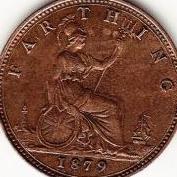
mrbadexample Posted August 22, 2018 Author Posted August 22, 2018 Ok....Gary has kindly provided me with a copy of the applicable articles. Working my way through, I'm not 100% convinced that the first and last images are both F282. Looking at the differences in the rocks by the lighthouse, I think these may be different reverses: Any thoughts? Quote
Bronze & Copper Collector Posted August 22, 2018 Posted August 22, 2018 (edited) 1 hour ago, mrbadexample said: Ok....Gary has kindly provided me with a copy of the applicable articles. Working my way through, I'm not 100% convinced that the first and last images are both F282. Looking at the differences in the rocks by the lighthouse, I think these may be different reverses: Any thoughts? Can't tell for sure, but depending upon the date, I would suspect that they are 2 variants of the same reverse. .. G Read note 4 regarding reverse G in the article. . Some reverse G's are missing rocks to the left of the lighthouse, mainly from 1861 to 1863. Edited August 23, 2018 by Bronze & Copper Collector Quote
mrbadexample Posted August 23, 2018 Author Posted August 23, 2018 Sorry, should have made myself more clear - these are the two F282s posted on this thread. I'll have another look at the article when I've a bit more time. Quote
Paddy Posted August 23, 2018 Posted August 23, 2018 Any chance I could have a copy of the Dracott article too? I have tried searching through old posts on the forum and Dracott is mentioned all over the place but the downloads seem to have been tidied away. Cheers Quote
Peckris 2 Posted September 24, 2018 Posted September 24, 2018 Nevertheless a picture of your putative C over G would be essential for us to comment. Quote
jelida Posted September 25, 2018 Posted September 25, 2018 15 hours ago, DrLarry said: relatively speaking how rare is the round lighthouse type of 1861 without the LCW. It is just I have an awful lot of them but rarely have I come across it, 2 I think out of the maybe 100-150 I must have. Why is it that we assume that the LCW is the "touched up version of the round lighthouse type? In my collection of 1861 I find that I have maybe 8 LCW's REV's. The lettering on the reverse with the LCW seems to be larger and the inner circle is further away from the teeth on a couple of non LCW's rounded Highthouse the 1 is overstamped on a much smaller number with the serif well into the inner circle. The rounded top lighthouse coins are rare, I think you have done well to find 1-2 per cent of your 1861’s with this reverse. It is possible that a new master die was made up rather than an existing die modified, though at what stage in the process the Britannia/lighthouse/rock were changed I have no idea, whether an existing punch was altered or a new punch made from scratch. As there are no 1860 reverse F we can I think safely assume that the reverse D came first and if an existing die was modified this would seem the most likely candidate. Jerry Quote
Peckris 2 Posted September 25, 2018 Posted September 25, 2018 7 hours ago, DrLarry said: yes I note the putative nature of the error and will try get something for you I just suggest something might be happening with it and wondered if anyone may have seen the error or repunch too. Why do you say C over G ? I'm more inclined to say a repunched C as it appears to be an underlying C. 1 Quote
Rob Posted September 26, 2018 Posted September 26, 2018 1 minute ago, DrLarry said: So the question was is it possible that a C over a G might exist? I seem to have got the wrong end of the stick with the forum. I thought it was a place that one could find anomalies and ask members to search around through their own examples to see if we can piece together some history (lost to us ) on the die types and use , alterations and errors . i feel that repunched letters or alterations i looked at systematically might help us understand a little more about each die used. When someone posts something I enjoy going to my own collection and looking at what others have noticed in their own studies I suppose I imagine others do the same. You can have anything over anything. An error is just that - something wrong. In this case I think it is a C over a C. There is nothing anomalous about a slightly different shaped letter, as this will vary from punch to punch, after all, they weren't made using a CNC machine. Yes, I do think that specific engravers made the same mistake on different occasions because humans are creatures of habit. You also have to bear in mind that when repairing dies, it will have been hardened, so the metal becomes brittle leading to the likelihood of flaws extending from the immediate area of the repair. That is what I think you have in this case. Most people will not have examples to compare unless they hoard piles of low grade material, which leads to the inevitable feeling of ploughing a lone furrow. We've all been there and are there. Quote
Rob Posted September 26, 2018 Posted September 26, 2018 The coin I posted in the copper thread is a good example of this. In hand in the slab, it was clearly a 1675/3, but I only discovered it was also over 2 when I had removed it and looked carefully in high resolution. In that instance it was only possible because the coin was high grade, as the trace of the 2 would have easily been hidden from dirt or the slightest wear. However, by comparison, a correction such as the 1738 halfpenny with V/S in GEORGIVS is clear to the naked eye in all grades, but I still don't know of more than 7 examples despite the clarity, and the A/R in CAROLVS on the 1673 I have listed on my site remains the only one I know of, again despite regularly checking for it. Quote
Rob Posted September 26, 2018 Posted September 26, 2018 Most of these have been added in the new varieties section. In the case of the 1675/3/2, I was looking at the incidence of the 5/3, which appears to have been made on a number of dies. I posted a drawing elsewhere showing the various forms of 5 over 3. See attached. Quote
Rob Posted September 26, 2018 Posted September 26, 2018 The answer to your question is that they are all varieties. The moot point is where an individual draws the line in his interests. Barring unlimited time, there is a finite level to which someone can dig. Funds are not the issue as money is potentially unlimited for all practical purposes. Time is not. So you either collect as widely as possible, or you specialise to ever more concentrated areas. It's a pyramid, with the ultra-specialists sitting at the top, but mostly talking to themselves. Quote
1949threepence Posted September 26, 2018 Posted September 26, 2018 (edited) On 8/23/2018 at 10:05 AM, Paddy said: Any chance I could have a copy of the Dracott article too? I have tried searching through old posts on the forum and Dracott is mentioned all over the place but the downloads seem to have been tidied away. Cheers Paddy - you can get them in back copies of Coin News. I believe the articles concerned are in the April, May and July 2004 editions. £3.50 each. link (assuming you haven't already got them in the meantime) Edited September 26, 2018 by 1949threepence Quote
Paddy Posted September 26, 2018 Posted September 26, 2018 1 hour ago, 1949threepence said: Paddy - you can get them in back copies of Coin News. I believe the articles concerned are in the April, May and July 2004 editions. £3.50 each. link (assuming you haven't already got them in the meantime) Thanks very much for that - I have bookmarked the link for now and will return to read the articles later. Quote
Rob Posted September 26, 2018 Posted September 26, 2018 It's quite likely the mint retained a range of letter punch styles, irrespective of what was adopted. Check out the decimal patterns of the late 1850s and you will see a range of styles. It is also apparent that at least some of the legend was cut and inserted as a block. e.g. the F710 (P2002) undated decimal pattern halfpenny and the F689 (P-) share the same HALF DECIMAL PENNY in three lines punch. The undulations and relative positions of the letters are indentical on the two reverses, but the inner circles are not the same. With such a large device, it is logical to keep a set of punches for the occasional repair. Quote
Recommended Posts
Join the conversation
You can post now and register later. If you have an account, sign in now to post with your account.