terrysoldpennies
-
Posts
832 -
Joined
-
Last visited
-
Days Won
59
Content Type
Profiles
Forums
Events
Downloads
Store
Gallery
Articles
Everything posted by terrysoldpennies
-
https://www.ebay.co.uk/itm/1974-1p-British-new-penny-VERY-COMMON-Mintage-330-892-000-Circulated/283165649142?hash=item41edfce8f6:g:zOEAAOSwlUhblpkN
-
Rare Half Pennies ?
terrysoldpennies replied to a topic in British Coin Related Discussions & Enquiries
Sorry both are type 3+c , the most common type , value, it would be 1-480th of a pound if you could get a bank to take them, which im afraid they won't , they are though solid bronze, not steel dipped in bronze as with todays 1p & 2p -
Don't you mean a Lukaszative sale
-
It is an F15 Jerry you can clearly see the signature under the bust making it an obverse 4 and the reverse D has the longer teeth which do have a similar look to beads in some photographs.
-
1926 and 1927 pennies again
terrysoldpennies replied to Mr T's topic in British Coin Related Discussions & Enquiries
By Experimental I mean different image designs on the coin to perhaps eliminate the ghosting which had been a problem on pennies back to Edward vii, and can still be seen on pennies in 1922. Elements of the different designs my be totally indistinguishable to the naked eye, such as the portrait being cut deeper into the die , slight changes may have been put into the visual appearance so as to be able to track the coins progress during circulation. The M E may well have been a trial die , and the fact that they moved to the small head portrait from 1927 on, and which as far as I can tell never had any problems at all with ghosting. The same may be the case for the other Reverse dies used on the 1926 types , but perhaps only a few escaped the meltdown after the small test runs carried out at the mint. We will never know for sure, so its all just conjecture . -
1926 and 1927 pennies again
terrysoldpennies replied to Mr T's topic in British Coin Related Discussions & Enquiries
I suspect that we are looking far to much into this, and that practical day to day working was more the norm, and also that it was just a case of using the dies at hand to complete the intended numbers of coins demanded by the bank of England at that time, also that many of these dies were in fact experimental, and that they had no intention of using the dies on future mass production runs. i Personally i would have thought that using up the remaining working life left on the dies after the experimental test runs were complete would be economically sensible , saving manufacturing time and cost by doing so. Terry -
Penny reverse ID please.
terrysoldpennies replied to mrbadexample's topic in British Coin Related Discussions & Enquiries
I would agree with Pete on the 1881H being an F108 But the 1879, its difficult to be sure as it is so worn with most indicators unclear , but the F in F:D: is slightly rotated clockwise and looks to me more like the Obv. 8 so looks more likely to be the F96 . -
The coin below is the most extreme example of this type that I have managed to find, It has a doubled line at the bottom of the O in ONE, and this is the aspect that is most evident on all the examples that I have so far come across, but this particular coin also shows a partly doubled line at the top of the O. The design of O in this font type is slightly elongated from top to bottom, with fatter slightly less curved sides than are to be found at the top and bottom of the O. Its clear that the inner extra line at the bottom is straighter than the curvy bottom of the O itself , and this suggests to me that the inner line is the side of a 90 deg. rotated O showing below the over stamped correctly positioned O, its not a rare variety as I have found it on Rev. Freeman J pennies from 1875 to 1880, though It does seem a little scarcer on the 1878s than the other years, but you can only find it on Royal Mint coins, and not at all on Heaton Js. Its missing on the 1876, as this is a Heaton only year, and I haven't found any so far on the 1881s that I have looked at ??. As its found covering so many years, and indeed even can be found on proofs, it suggests that it was present on one of the master dies, with many working dies being made from it all carrying the same error. Your thoughts .


- 1 reply
-
- 3
-

-
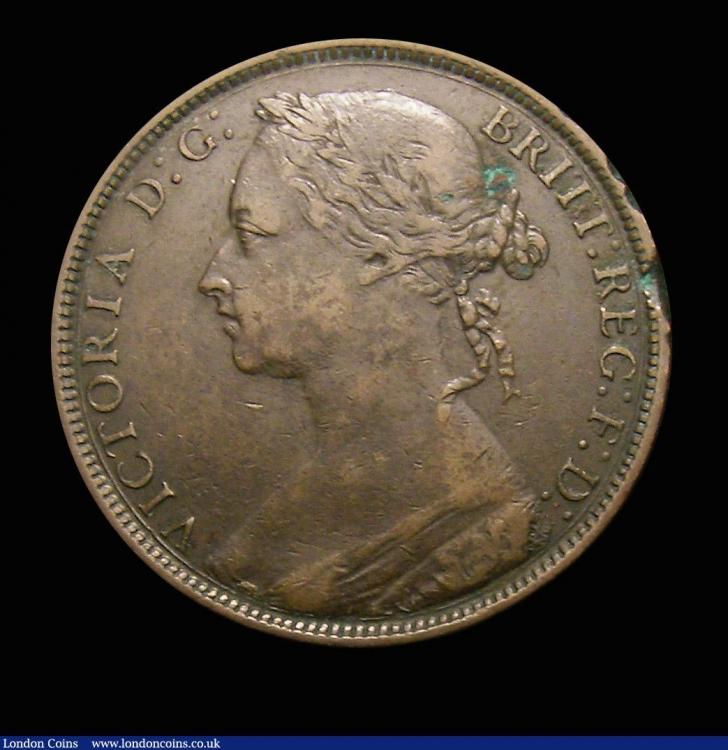
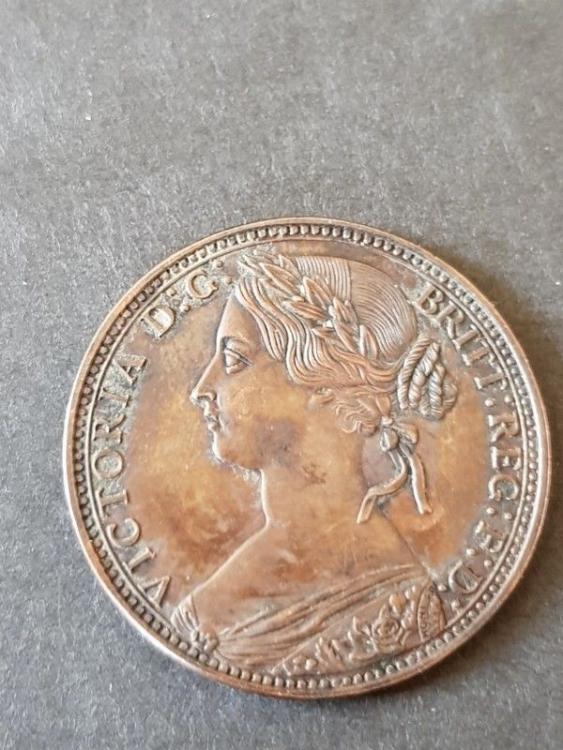
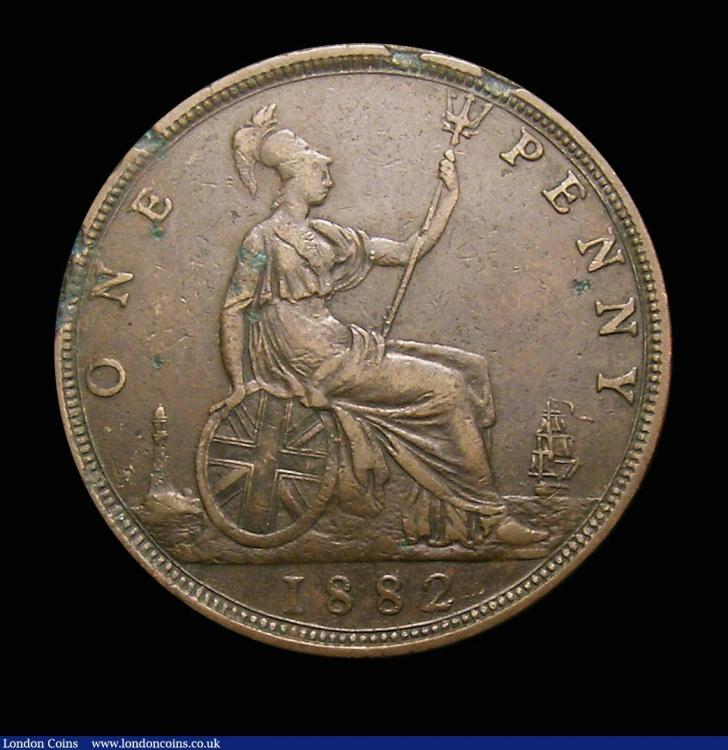
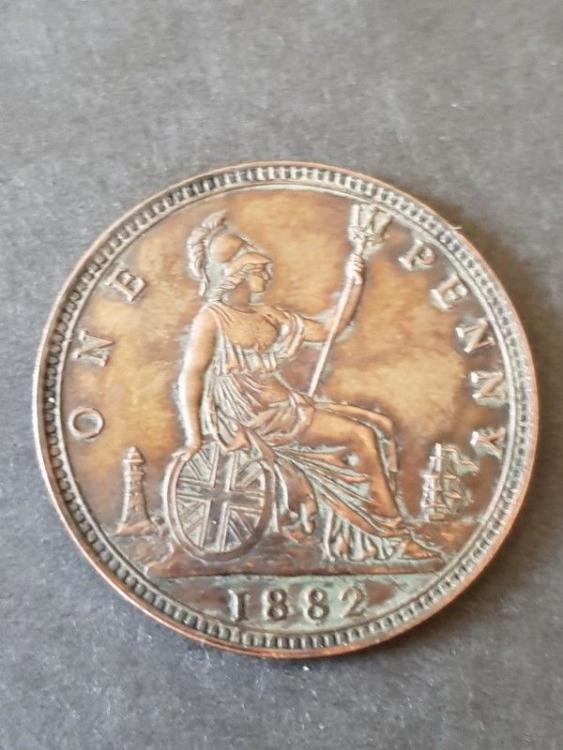
As Tom says experience is what counts, you need to look at lots of known genuine examples, and compare them side by side , In this case the 1882 without the little H below the date, is extremely rare . There are a thousand and one differences in this case , but maybe in the future it may become a lot harder to tell the difference. ??? Genuine coin on the left .
-
I watch the program Paddy, and as it happens have just returned from a Holiday last week in Wales, and while there made a visited to the Royal Mint. One of the coins on show in the museum was the 1933 penny, and one thing that was very noticeable on the penny was a small round mark to the left of Britanniar's head which was also evident on the 33 shown on the TV. I would think it has to be genuine , though they could of course make one any time they wanted, and it would be genuine , But not from 1933 !!!!! Terry
-
Its likely that there were more than one master die, and batches of working dies were made and stored, only then to coming back out of the cupboard, as and when required in a hap-hazard order over a long period .
-
I just found that the die flaw which can be found on many obverse 6 s is also present on the VIGTORIA penny, so I reason that it must have been present on the master die, and also must then have been passed on to the working die that subsequently found itself having a G re-stamped over a filled or possible damaged C.

-
Its a funny thin but I have bought two, and seen two other 1860 4+d pennies with the Gouby variation Type T. I.e the wide/narrow/ rotated colons after F:D:, all coming from Australia. Its thought that they all originated from the missing colon type . Well I wonder if a batch of colon less 4+d dies were sent to Australia and there having the colons re-entered onto the dies, hence me now seeing so many reappearing back from Aussi. It could also be that this was an error batch of pennies that were sent to Aussi. to cover up the Mints Error ???
-
Gouby suggests that the working dies when damaged sometimes had letters/ numbers filled, and then recut or re-stamped , this would account for the doubling/tripling of letters, also rotating and re-entering of out of positing colons, and if part of the fill subsequently gave way and fell out ,would account for some of digits on the dates being over stamped in a different position, as the punch used was probably placed in a position away from the original cut so as to not weaken the repair.
-
Hi Larry , Though I don't know for sure, the most logical explanation is that a master die number 6 was first made, and the working dies were made from this , now it seem likely the die flaw was on that master so would then have appear on all subsequent dies, and that these working dies would have sometimes been themselves retooled giving further modifications now to be seen on coins from 1861 to 74.
-
Here's a picture of the rare 2p

-
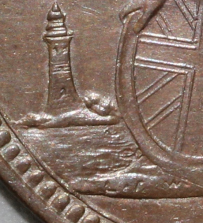
Hi Zoo, There are two sub types of F17 6+D and the 6+D* this may be another slight variation. Below D* has a curved rock up under the shield . D has just sea. See Richards Site Site. https://englishpennies.wordpress.com/victoria-bronze/

-
The quality control on modern coins is absolutely appalling , its seems to be the same with all circulation coins , but you would think they could make an effort on a celebration issue. When you consider the detail and astounding quality of the coinage a hundred years ago in Edwardian times such as this 1903 penny , just a circulation issue, but so fine that it could be a proof. The flecks are just remaining lustre .

-
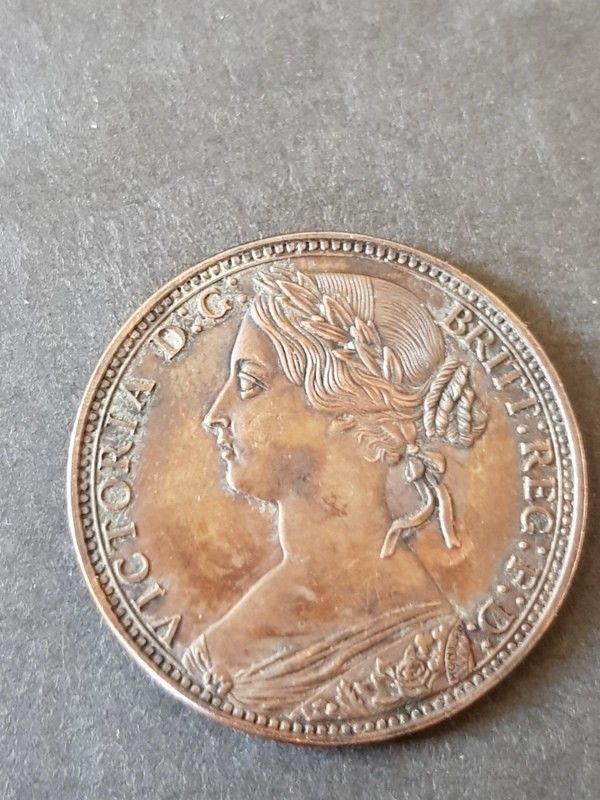
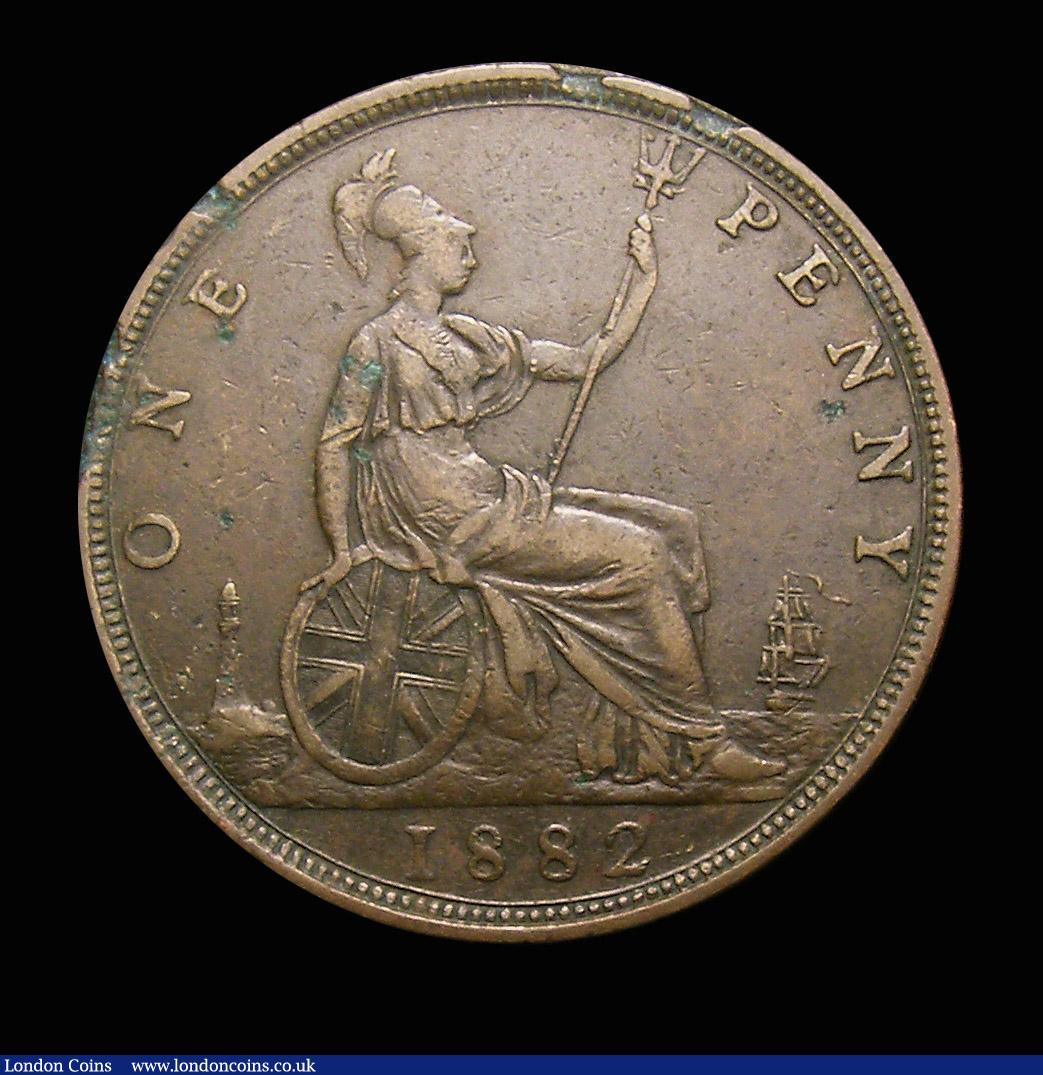
Its just an 1882 penny that's been hand engraved, but I must say quite professionally done.
-
Your catching the bug, that's why I collect pennies, there's millions of them.
-
Hi. You might find Declan's site interesting . http://www.declanmageecoins.co.uk/E23.html
-
1861 BUNHEAD ID'S
terrysoldpennies replied to mick1271's topic in British Coin Related Discussions & Enquiries
Your right Richard Iv listed the Satin numbers they should be F22 F29 and F33 sorry Mick -
more FAKES
terrysoldpennies replied to numismatist's topic in British Coin Related Discussions & Enquiries
Its a funny thing Jerry, but if the copies were to be absolutely perfect , we would not now them to be copies at all, and except them as genuine, we would of course all be wondering where all of the new examples were coming from. This would have the effect of lowering the average price of all the coins, genuine and fake. -
1861 BUNHEAD ID'S
terrysoldpennies replied to mick1271's topic in British Coin Related Discussions & Enquiries
Hi Mick. The one you have as F24 looks to me like an F27 4+d The F32 looks like an F33 6+d And the F28 is really bad but I would guess an F36 6+g. Terry -
Iv just found this rare penny from the until now undiscovered '' HINTON '' Mint https://www.ebay.co.uk/itm/One-penny-1912-The-rare-Hinton-Mint/153021969159?hash=item23a0d1f307:g:07MAAOSwDkta-bzR
-
- 3
-