

jelida
-
Posts
1,817 -
Joined
-
Last visited
-
Days Won
111
Content Type
Profiles
Forums
Events
Downloads
Store
Gallery
Articles
Everything posted by jelida
-
F-10 penny Repunched R & I in Victoria?
jelida replied to Bronze & Copper Collector's topic in Confirmed unlisted Varieties.
The problem is that there is no sure way to differentiate between an inverted V and die fill of the crossbar of the ‘A’. We often see impaired bars to the letters E, F for example and accept them for what they are, but if the same happens to the bar of the ‘A’ we see it as an overstrike. There is no way of knowing, excepting that perhaps in a very high grade coin a microscope might show an undeniably formed edge where the bar should be. Otherwise it’s wishful thinking. I know, I do it too. Jerry -
I hope you live on a hill. J
-
At least two reasonably discrete true varieties have turned up since the 2* obverse, both overstrikes, the F33 ‘N over inverted N’ that I described on this forum, and the F15 ‘R over A in Victoria’. New varieties still seem to turn up every few years and I am sure more will be found though progressively fewer in this intensely studied series. But you do certainly have to watch out for mistakes in EBay listings, they are not infrequent though usually obvious. Jerry
-
Close-up of the flaw. Both have the sturdy '5'. Any different die flaws out there? Jerry

-
They are both from the same dies, with a flaw from the rim into the lower ship rigging.


-
Here are mine.


-
“It looks very iffy” I’m afraid I would agree. This series is rife with forgeries, I think they were pressure cast, and poor mould fill could give this appearance. Also the absent tooth above the T of BRITT. Yes, what is the weight? Jerry
-
Exciting new penny variety OR clumsy Patina-like fake?
jelida replied to oldcopper's topic in Confirmed unlisted Varieties.
Yes, I sent Finch a link to the Chinese one, he replied promptly thanking me for my help. And not for the first time, I should add. Jerry -
Exciting new penny variety OR clumsy Patina-like fake?
jelida replied to oldcopper's topic in Confirmed unlisted Varieties.
They are much cheaper direct from China. https://www.aliexpress.com/item/33037661091.html?spm=a2g0o.productlist.0.0.74f4359e6fBpvU&algo_pvid=51167541-c1e6-4da6-95ee-01fb214ad011&algo_exp_id=51167541-c1e6-4da6-95ee-01fb214ad011-47&pdp_ext_f={"sku_id"%3A"67398536291"}&pdp_pi=-1%3B1.18%3B-1%3B-1%40salePrice%3BGBP%3Bsearch-mainSearch Jerry -
Exciting new penny variety OR clumsy Patina-like fake?
jelida replied to oldcopper's topic in Confirmed unlisted Varieties.
I have had a reply from Chris Finch, it was apparently ‘squeezed in late doors’ and he will make sure it is properly examined. I hope this means it will be excluded. I don’t know who deals with their copper and bronze, but it is certainly worrying that the expertise seems lacking. The Hiram Brown auctions were an example in this respect, with great rarities un-described in bulk lots. Jerry -
Exciting new penny variety OR clumsy Patina-like fake?
jelida replied to oldcopper's topic in Confirmed unlisted Varieties.
I agree with all the comments above, and have emailed Chris Finch at DNW expressing our concerns. Jerry -
You’re confusing me now too, Pete! But the EBay link you give above seems to me to be D of DEI to a tooth, and a thick rim which is right for the common variety. The cropped image you first gave does show the D to a gap, and the rim does seem thick too, though it is difficult to compare on a partial coin image. Jerry
-
Halfpenny ID check
jelida replied to mrbadexample's topic in British Coin Related Discussions & Enquiries
This would be true if the letter punch were held truly vertically, but not if the strike was made at a slight angle. Many of the overstruck letters and digits we see are partial. Jerry -
Halfpenny ID check
jelida replied to mrbadexample's topic in British Coin Related Discussions & Enquiries
I have actually said much the same previously on this forum - many of this “variety “ look a lot like a die flaw - but I have subsequently also seen a number that appear quite crisp and very acceptable as an overstrike, this is one, and I am now reasonably happy that it is a true variety. It is definitely more than a serif issue. Jerry -
Halfpenny ID check
jelida replied to mrbadexample's topic in British Coin Related Discussions & Enquiries
Just been looking at the die letter halfpennies in LCA archives, the best ‘C’ is CGS45 so about VF, and has the same weakness of Britannia and lower shield, as does a CGS35. The A’s and B’s seem much crisper. The CGS 45 went for £2000 plus juice in 2013. I have no idea of the top grade out there. But value is not an issue for me, I very rarely dispose of anything. Jerry -
Halfpenny ID check
jelida replied to mrbadexample's topic in British Coin Related Discussions & Enquiries
A worn die is not the same as a worn coin, and I do agree the reverse die had lost detail, a bit like some ‘F’ reverses in the penny series. I pondered this previously, why the need to mark the engraved face of the die to monitor longevity, when the die could be marked elsewhere in greater detail ; they would have to have counted the number of actual coins struck per studied die either way. And the die marked coins seem to have been too few to be practically monitored for ‘in circulation’ studies. Could partially worn regular dies be lettered or numbered to in some way monitor a later stage of their lives, or to be brought back into use? Perhaps with such a tiny mark the die would not even need annealing. Is there evidence out there? Jerry -
Halfpenny ID check
jelida replied to mrbadexample's topic in British Coin Related Discussions & Enquiries
My 1861 B over R in BRITT, 7 + G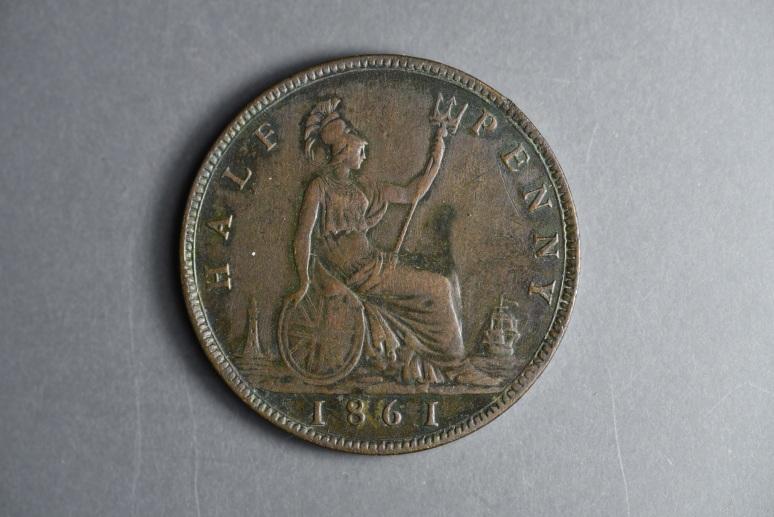

-
Halfpenny ID check
jelida replied to mrbadexample's topic in British Coin Related Discussions & Enquiries
a HALP halfpenny, 7 + G from Ebay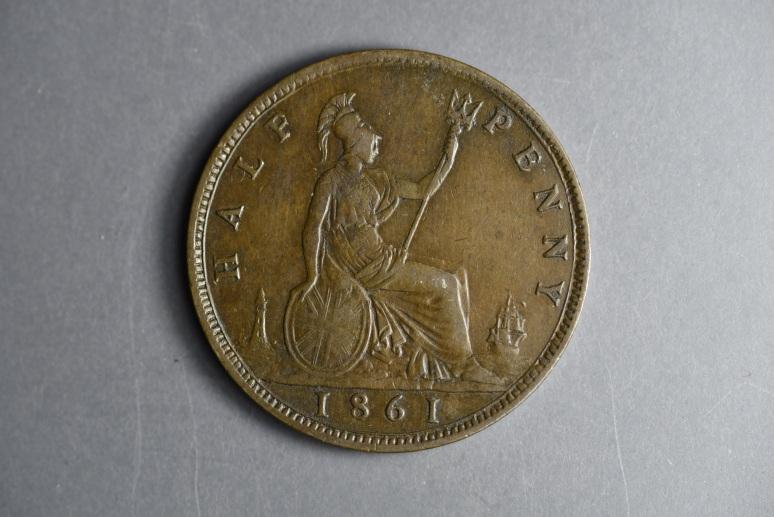

-
Halfpenny ID check
jelida replied to mrbadexample's topic in British Coin Related Discussions & Enquiries
A decent 1871.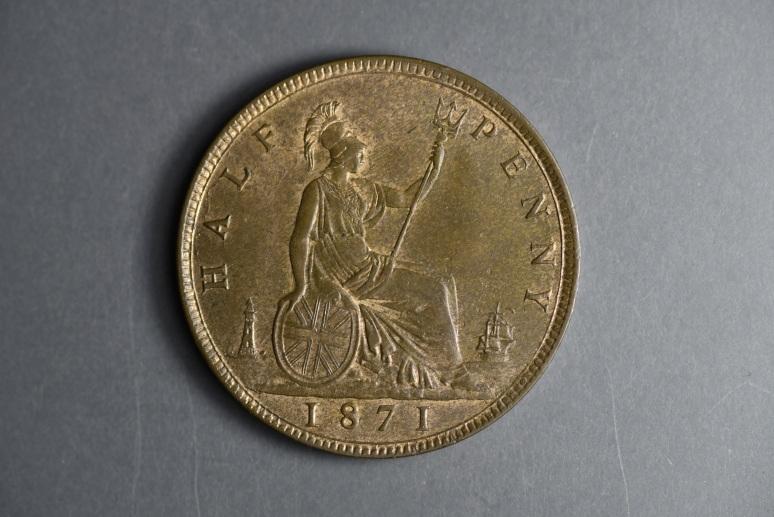
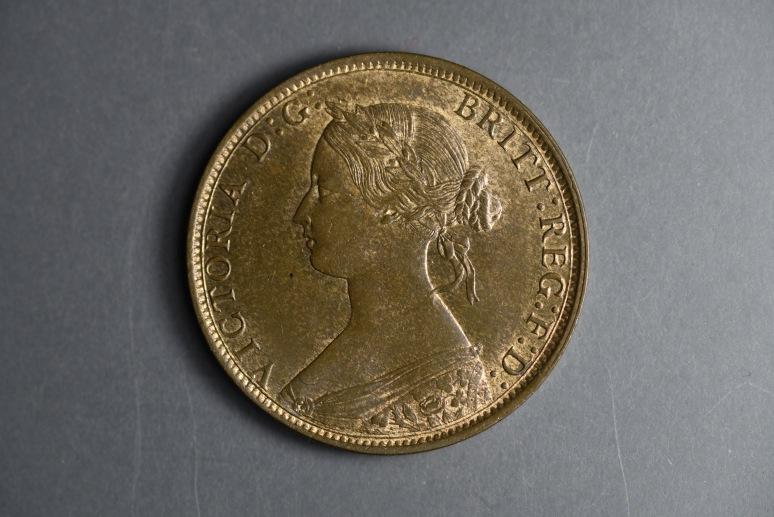
-
Halfpenny ID check
jelida replied to mrbadexample's topic in British Coin Related Discussions & Enquiries
Here are a few of my recent halfpenny acquisitions, firstly the 1862 Die letter C previously mentioned.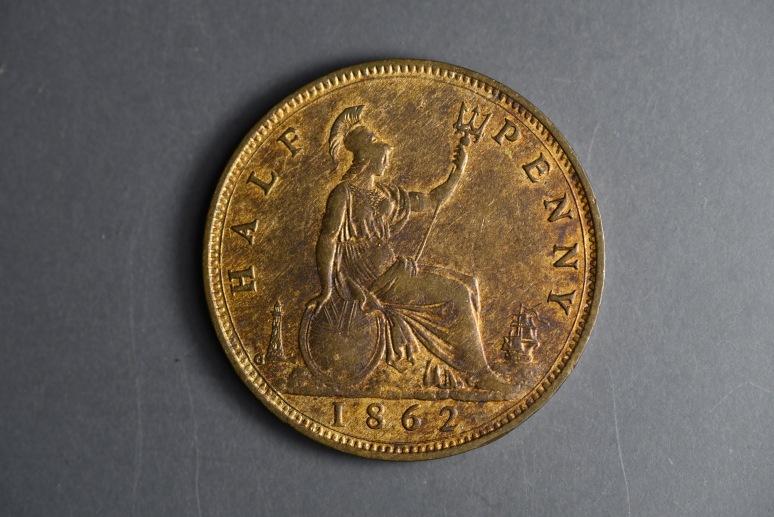
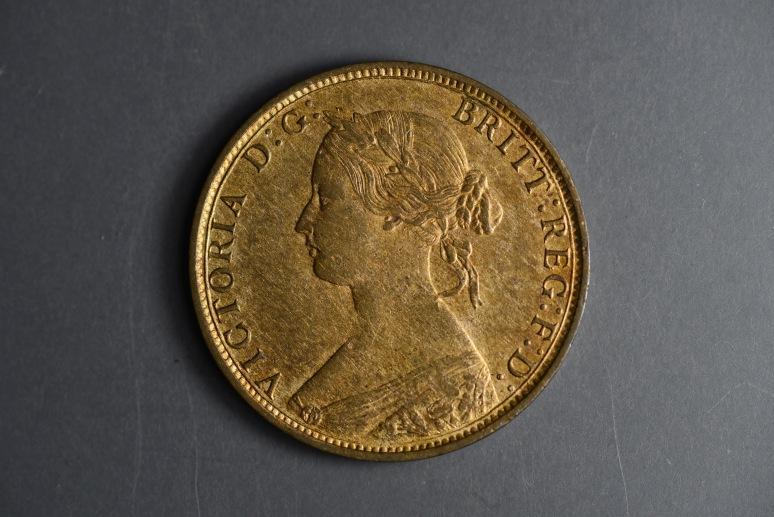
-
Halfpenny ID check
jelida replied to mrbadexample's topic in British Coin Related Discussions & Enquiries
Oops, silly me, it’s the R over B in BRITT halfpenny that I have, which you have pics of. It’s my three 1862 B/R pennies that look identical to this B/R halfpenny overstrike. The abnormal shape of the inner loop of the B is a clear giveaway, even on worn coins. The halfpenny collection is coming along nicely, thanks to LCA and EBay. My best so far is the (pricey) 1862 die letter C with good lustre, from a continental auction a few months ago. I must take pics. Jerry -
Halfpenny ID check
jelida replied to mrbadexample's topic in British Coin Related Discussions & Enquiries
From the photo, I would be happy with the B/R, the leg of the R shows both within and outside the lower loop of the B. I have the 1861 version (F282 variety). Well done! Jerry -
New Years Revolutions?
jelida replied to blakeyboy's topic in Nothing whatsoever to do with coins area!
Revolutions? Well, I’ve just had five pints with my bell-ringing buddies, so spinning a bit. Now home for cauliflower cheese and chips with the wife. Fantastic! Happy New Year to you all, Jerry -
I bought this one, as you say a reasonable price for a better than average example. Sorry, Blake. The other is nice, too. I think they may be from the same seller under different EBay guises - Barrie Clack of Ross on Wye. I have met him at a local car boot sale, seems a decent chap. Certainly sells a lot of pennies. Jerry
-
Yes, we’ll done Pete, I had spotted that and had put a bid on it in case it was missed by others ; the only other nice one I have seen is mine which featured in these pages some years ago. But I have seen a fair number of more worn specimens. The other 1880 botched repair that Gouby features in his revised text seems rarer again, does anybody here have an example? Jerry