
secret santa
-
Posts
2,909 -
Joined
-
Last visited
-
Days Won
210
Content Type
Profiles
Forums
Events
Downloads
Store
Gallery
Articles
Everything posted by secret santa
-
Well done boys, this gives me another variety to look out for and another to list on my varieties website if you're OK with me using your photos ? Richard
-
1876 penny no H?
secret santa replied to Greaves's topic in British Coin Related Discussions & Enquiries
Yes, it's a pity that Freeman decided to recognise the 1897 dot as a standalone variety, especially as he didn't uniquely categorise the notorious 1922 "reverse of 1927" or the 1946 "dot" (which he mentioned but did not categorise). Had he left the 1897 dot as a footnote, we'd have more consistency over these random blemishes, recognising them as accidents but still leaving people to collect them if they wish. -
1876 penny no H?
secret santa replied to Greaves's topic in British Coin Related Discussions & Enquiries
The debate on this continues - Gouby believes (as did Laurie Bamford) that specimens without the H are either from a filled die or a very worn die. What we need is a high grade specimen to add to the subject. Anyone got one ? -
May I add my own thanks too, Prax. I find it fascinating to know some of the history of the great coins that come to market. It just adds to the joy of collecting. I remember the slender 3 going way beyond my budget and I never knew that an Unc open 3 was lurking behind the scenes. There are always more wonderful specimens to emerge and excite us all. Thanks again.
-
It's F762 because the reverse is upside down - if it's a normal reverse, it's F761 (both A+a).
-
Nice coin Prax - only 4 specimens I believe. Has it got upside down reverse ?
-
Rare but how actually rare is it?????
secret santa replied to bhx7's topic in British Coin Related Discussions & Enquiries
Is this waves thing documented anywhere ? -
Rare but how actually rare is it?????
secret santa replied to bhx7's topic in British Coin Related Discussions & Enquiries
I thought that they only occurred in a very few of the "Martini" or "Heinz" sets but now it seems that they are in some of the standard RM sets as well - but very very rare. -
Interesting - another obverse G + partial ONF. I've yet to see an obverse G with full ONF or an obverse H with partial ONF. By the time obverse H (Freeman 5) was introduced, the bottom leg must have completely worn away or been filled.
-
You won't regret buying this 1926 ME Pete - collectors need the odd beautiful coin to treasure, look at, show off etc. Much better than lying on a beach in the sun for 2 weeks and then coming back to a cold winter and diet a few thousand pounds poorer with nothing to show for it.
-
Penny Acquisition of the week
secret santa replied to Paulus's topic in British Coin Related Discussions & Enquiries
Nice one - that should satisfy the non-penny boys. -
Yes, I saw them - lovely coins but top dollar.........
-
I'm sure you can opt to bid by telephone on the day. I've been to many of their auctions and you can see Semra and others ringing bidders shortly before their lot comes up. You just run the risk that you might be in the loo when the key coin comes up. I've just checked their catalogues and while they don't explicitly describe an online telephone bidding process (perhaps they don't want to encourage people to do this as it would require extra staff), as I've said above, I have seen it happen on many occasions.
-
Rob
You appear to be one of the most knowledgeable forum users so I wonder whether you can steer me to a simply explained description of the milled coin production process from initial design and engraving to production of a master die and working dies, including the production and use of punches (puncheons) through to full production. I'm not sure that I fully understand the details and sequence of the various stages in taking a coin design through to production. I'm particularly interested in this as it applies to Victorian pennies as that's what interests me most and might help me understand how errors and overstrikes occur. I'm trying to work out how the various micro-varieties of F15 pennies (Gouby obverse G types) might have been produced and I need a better understanding of the process before I can develop theories.
Thanks
Richard
-
Hi Richard.
You might be better directing a question to the RM museum and ask them if Graham Dyer would have a look at it when he next visits. Although he is retired he does still come in from time to time, and more importantly he was passionate about the Victorian milled coinage. He will give you a full sequential answer if he can. This is likely to be a very long winded answer!! I guess you could try to be diplomatic, as not addressing the question to the current curator might imply the wrong thing - so maybe a joint address would be preferable.
Because of technological advances, I'm not sure what was introduced at what point in time. There are things I don't know such as when pantographic reduction came into play (I suspect after the mint was refurbished in 1882). It appears from the date spacing that there was a 186 master to which the final (irregularly spaced) digit was added on the die, but that might be a 18 master because I have a 1/2d with 1862 over 26.
I have no idea whether the punches were all made for the new bronze coinage or if they used a combination of existing and new punches. It may also be that the different punches were the products of a number of people. (This is seen on the earlier hammered coins from the Civill War where it is possible to identify individual idiosyncracies from one issue to the next, and their movement around the country can be deduced from this). People being creatures of habit and having different artistic styles would lend itself to a number of small but observable differences. Given the large output, it is possible that more than one master was used due to failure/wear. Again, we would expect small differences. It may be that the drapery differences were due to wear on the master being recut at the matrix stage, or even reinforced on the die. Certainly some of them are rare enough to say that probably only one die was involved.
If we assume that the mint was essentially operating in the same manner as it was at the 1816 recoinage, then there is evidence from some of Pistrucci's trials to say that in the beginning there would be a drawing from which the engraver would start to cut dies and take a periodic impression, which due to the dies being unhardened would usually be done in lead or lead/tin alloy. There is a series of 4 crowns for example in the Paget sale (lot 432) showing the rough outline head with just an ear, laurel added, hair added and finally something approximately complete with legend. I assume that something similar would be done for most issues, but evidence is thin on the ground as any lead impressions would probably be recycled. This would be a prelude to actual production activities and would likely have been repeated many times prior to approval so that a commitee cold make their decision. Therefore, any, some or none of these engravings may survive to the production stage. So you have the initial die as the trial followed by punches following acceptance. As you would expect, letter punches seem to be continually available whereas busts and Britannias would hae to be made. Any master punches could only be made after a decision on the design had been made.
You can find out some background info for the mint in Challis' book. https://books.google.co.uk/books?id=Zz89AAAAIAAJ&pg=PP2&lpg=PP2&dq=History+of+the+Royal+Mint+Challis&source=bl&ots=bGTfOkC8QJ&sig=w7IHcFsrWwToXQCq2AYOs7i5qPg&hl=en&sa=X&ved=0ahUKEwjhx5Lnx6TKAhUHXBQKHQFGCj4Q6AEIPDAE#v=onepage&q=History of the Royal Mint Challis&f=false
This link has an index which will help you decide if it is useful.
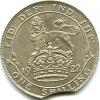
The attached shows the basic procedure for making a coin. Although it is pre-recoinage, the basic technique hasn't changed much since the 1600s. As for the punches, it is obvious that several exist for the same object given the different shields, helmets, goundlines etc seen. I assume that these would be made in a similar manner, but I'm not certain.
W Wyon died in 1851, but his copper penny bust punch with WW on the truncation was used until 1858 when the initials disappeared, so that gives an idea of master punch longevity. Things didn't have to be custom made for the new issue.
You also have an 1857 pattern with J(ohn) W(yon) initials, who almost certainly made punches and dies alongside LCW. His shield rim on the signed reverse was like the solid one seen on say 1864 pennies, so there is a distinct difference.
I'm not sure if this helps a great deal, but it's a start. Think laterally and you will get there. Keep all the options open.
Regards
Rob

-
-
-
Hi Prax
If it was my penny site you complimented - many thanks. If it wasn't, then hush my mouth.
You mention you've had lots of messages from forum members - If I've missed some bad news in your life, then please accept my best wishes. If I've got the wrong end of the stick twice, then I'll mind my own business.
Best wishes anyway !
-
Hi Rich, Yes your site indeed, some quality eye candy.
The messages from the members were about my sudden disappearance. I generally withdraw (call it sever ties) from stuff when I am making a major move. It allows me to focus on the job. Not that it was dark phase or anything just that my plans to emigrate backfired. So back on the job-market, house-market not to forget had to sort my boy's school, buy a car, sort the utilities ..... All the usual things that you have to do when you come back to the UK.
-
-
-
NOOOO not another Penny post!!!!
secret santa replied to bhx7's topic in British Coin Related Discussions & Enquiries
Freeman 147 R -
NOOOO not another Penny post!!!!
secret santa replied to bhx7's topic in British Coin Related Discussions & Enquiries
Definitely spurious damage during circulation. I blame Freeman and Gouby for recording the 1897 dot and 1946 splodge as varieties ! Still, it keeps us all on our toes. -
Hi Matt
Re the obv G/ONF - I was offered it as just an ONF (tho strictly speaking not a proper example). I then saw that it was obv G with, as you say, loads of die cracks. I've added it to my collection website with the comment that it suggests that the Mint must have been desperate to use any old dies to produce pennies at that stage.
Cheers, Richard
-
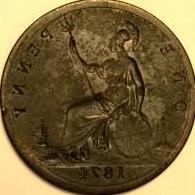
What a find in that case, and a very nice suprise on an already nice coin!! Who knows what the mint was doing during those 3 years, and at the rate that new pairings are being found nowadays anything could happen..
Will be interesting to see if this only exists with the flaw on the E, it would certainly add to your conclusion.
-
-
-
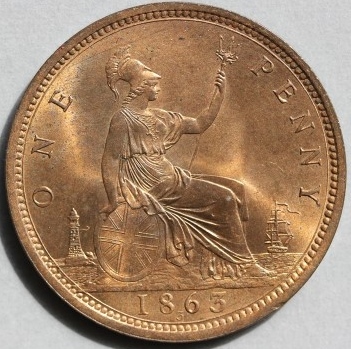
One of these please
-
the pennies of 1922 and 1926
secret santa replied to Mr T's topic in British Coin Related Discussions & Enquiries
Hi Just.me I've checked out the pattern reverse under a 10X magnifier and the border teeth look just as if they've been stuck onto the coin - the line you see on the photo is a very slightly raised edge as if a ring of teeth has been stuck onto a coin with no teeth. I'm hoping to get one of these digital microscope things in the new year and if I can master the technology, the pictures should be very interesting. Happy New Year to all penny collectors and to those of other denominations........ -
The signature function seems to have disappeared ? I have added my website URL to my personal settings but it doesn't appear whenever I add a post and the old way of adding it to my signature isn't there unless I've missed it.
-
Nice penny Matt - the Edward pennies seem to be some of the fastest increasing coins, value-wise. R
-
Aaaahh, the eyes of a young man !!!!!
-
Odd 1862 penny obverse ?
secret santa replied to MACKSILKY.'s topic in British Coin Related Discussions & Enquiries
Yes, die clash but quite attractive ! -
Testing myself on Freeman Varieties
secret santa replied to loose54's topic in British Coin Related Discussions & Enquiries
Jerry, Thanks for pointing these typos out - I will add F72 with ja. Rarity on F115 was an error. Rarity on the obverse G varieties is based on my own observations in auction listings etc. The proof rarities that 1949threepence pointed out were also errors. There will be lots more so please tell me when you spot them. Thanks R