Sword
-
Posts
2,464 -
Joined
-
Last visited
-
Days Won
127
Content Type
Profiles
Forums
Events
Downloads
Store
Gallery
Articles
Everything posted by Sword
-
At the moment that is not really an option, I wont be getting any more coins for a while. Hence the question. I'm leaning towards the 2nd one for now I would choose the second one over the first without a doubt. That spot is really off putting.
-
There will be one for sale in the next London Coins Auction. Description "Fifty Pence 2012 Olympics velodrome cyclists Gold Piedfort 31 grams S 4961 one of only 2 minted the other in the Royal Mint Museum so this the only example available to commerce, proof or prooflke Unc with some contact marks. Seldom does an opportunity arise to aquire a coin of such low mintage, and thus must have a fantastic investment potential." Estimate £1.5k to £3k.
-
I have had coins rotate in the holder from shipping alone. NGC images every coin it holders before it is shipped (a simple scan). So, it was easy to tell that it rotated after they put it in the mail, and it was fine before that. But, my earlier statement still holds -- I'm not sure what it really matters if the coin rotates a little in the holder. It's still the same coin, and it's protected in the plastic (which is the point of the slab). I will agree with you that a much bigger issue is when foreign materials are encased in the slab with the coin. Even scratched holders, while annoying, are just doing their job -- protecting the coin...and it's usually not the TPGs that scratch holders, it's the irresponsible dealers and collectors. The CGS holder uses a plastic washer which grips the coin tight. Hence I don't think a coin can rotate in that type of holder. The last coin I got back diretly from CGS was also in a scatched holder with a small crack. My point is that sloppiness in the slabbing process doesn't inspire confidence in grading or on the handling of coins by a TPG. How can one be certain that a prized coin sent for slabbing will not result in a fingerprint or a carbon spot appearing a year or two in the future?
-
The UIN number shows that the coin was only encapsulated recently and it won't even have the time to rotate. I think the CGS slabbing process can be sloppy and they need to be more careful with regard to slabbing in dust, foreign objects, scratching holders ...
-
Effigy Of Victoria
Sword replied to Andriulis's topic in British Coin Related Discussions & Enquiries
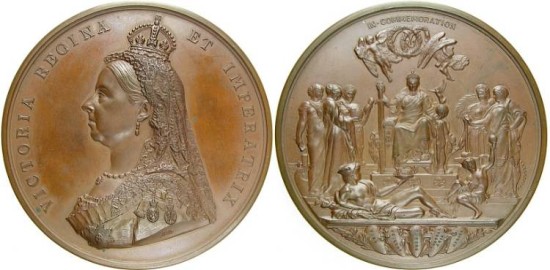
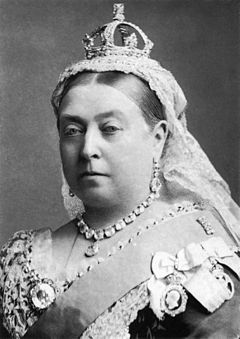
Thanks for pointing that out Shagreen. My mistake. I now remember the golden jubliee medals of the queen shows her wearing two such badges on ribbons. One must be the order of the Crown of India and the other is the Royal Family Order. The single badge she is wearing on the jubliee coin shows the letters VRI and is therefore the India Order.

-
Matthew Boulton On The £50 Note
Sword replied to Accumulator's topic in British Coin Related Discussions & Enquiries
It's strange, but for some reason coin and banknote collectors seem to be entirely different species. Not sure why, but I've never considered collecting notes. Yet Coin News features them. I don't think it's right to say none of us is ever tempted to have a few notes? I've got the 'lion and key / Britannia' fiver (very handsome), plus a ten bob, a few one pounds, and a few blue fivers including a replacement note - and I'd sooner have those than medieval hammered!! I actually do have a couple of old ten bob and pound notes too, though I've never really considered them part of any collection. They certainly bring back memories of the 'good old days'! I don't collect notes but brought an error £20 a few years back out of curiosity. The front design (queen) is also printed over the reverse. I have it framed up and it is a nice talking point with visitors. The said £50 has got a very nice design. Is it the first time that 2 people are commenorated on the same note? £50 note is a strange denomination and I don't believe I have spent one in the last 10 years. The denomination is a bit too big for everyday transactions and we all use plastics for big purchases. However, with the impact of inflation, it might be in common use before long! -
A thought has just come to me. The 1936 coinage Offenses act prohibited the defacement of "current" coins. I have read somewhere that the defacement of any coin has been legal since 1981 when a new act came into force (Forgery and Counterfeiting Act). Hence you see notices next to machines which allow you to press pennies into souvenirs saying that the practice is legal. The guidelines issued by the HM Treasury merely says that it is not legal to "melt" or "break up" coins that were legal tender after 1969. How about if you were to hammer them into "tokens" first? Then they would be coins no longer, and hence would they then be legal to melt?
-
Effigy Of Victoria
Sword replied to Andriulis's topic in British Coin Related Discussions & Enquiries
Had a quick look on the web. The medal on the silk bow is the badge of the Royal Family Order and is only worn by female members of the royal family. She is wearing the sovereign badge of the order. -
London Coins used to offer the option of slabbing coins assigned to their auctions for £10 each. Not certain if they still give this special rate to sellers.
-
4 Points Difference Is Valued At £350
Sword replied to azda's topic in British Coin Related Discussions & Enquiries
This matt proof sold last year for £480 + juice. It is the variety with the bright edge and was talked about on the forum at the time. (The auction photo was poor with a lot of reflection and so there was little interest here then). Someone slabbed it after purchase. Personally, I am not too excited because of the contact marks and hairline that Paulus highlighted. -
4 Points Difference Is Valued At £350
Sword replied to azda's topic in British Coin Related Discussions & Enquiries
It seems clear to me that the coin on the right is the sharper, better strike. The one on the left has lovelier tone certainly, but less detail. Am I alone in thinking that the coin on the right is acutally a matt proof and not a currency coin? The strike looks to me to be too good for normal currency (esp. in the area of St George's chest and strap). The grading would make more sense if that's the case. -
I think NGC is claiming that they have now graded more coins in total than PGCS. I wonder how profitable is their Paris branch compared to their US operations.
-
Plastic Fever? Am I Missing Something?
Sword replied to brg5658's topic in British Coin Related Discussions & Enquiries
There is a Proof 66 PCGS 1927 crown in the next W&W auction. Estimate of £800!! -
Yes, the old 50p is thicker than the new ones. The old ones are 2.5mm, the new ones are 1.78mm. What is thickness of your coin?
-
I assume you have checked that it is not two coins joined together (i.e. no joining line at the edge)? There is no reason why a fake should have a thick flan.
-
The Britannia Designs
Sword replied to damian1986's topic in British Coin Related Discussions & Enquiries
Thanks for the info Rob. A nude Britannia must have been controversial at the time and the artist was very brave. Since it is probably very rare and sex sells, I guess it must be exceedingly expensive today. (Just guessing as I don't collect bronze) -
Always Buy The Highest Graded Coin That You Can Afford
Sword replied to damian1986's topic in Beginners area
I like to collect high grade coins. A F or VF coin doesn't do the original design / engraving enough justice as much of the details are misssing. However, with a modest budget, my collection will always be very small and there will be many interesting coins missing. I am a type collector and have no interest in owing different dates of the same coin let alone a date run. The logic is on the line of, if you own a UNC1894 halfcrown then why bother spending more money on the other more common Old Head halfcrowns? I also only buy coins I like the look of and try not to buy a coin just to tick a box. Buying high grade coins have the advantage of a) being better investment not needing to upgrade later on. But I do admit that one learns alot more about all aspects of coins by handling a large number and this will not be possible (without deep pockets) if one insists on owing high grades. But be sure you know how to handle coins properly before getting high grades. Wouldn't want to turn an UNC into EF by friction! -
The Britannia Designs
Sword replied to damian1986's topic in British Coin Related Discussions & Enquiries
I have zero knowledge with copper coins. Is this a token of some kind or an official pattern? -
The Britannia Designs
Sword replied to damian1986's topic in British Coin Related Discussions & Enquiries
This is my favourite Britannia so far! You'd have to have it in UNC, though, it wouldn't be the same otherwise!This is indeed a beautiful design with a graceful Britannia. -
It is certainly a fantastic looking coin. Shame that the seller was difficult.
-
I'm not sure about the predecimal position, but anything post-1971 can't be melted; that IS illegal. This is from the guidelines issued by the HM Treasury. "(1) No person shall, except under the authority of a licence granted by the Treasury, melt down or break up any metal coin which is for the time being current in the United Kingdom or which, having been current there, has at any time after 16th May 1969 ceased to be so." https://www.gov.uk/government/uploads/system/uploads/attachment_data/file/194220/guidance_coinage_banknotes.pdf This statment suggests that it is fine prior to that date. People melt pre 1947 silver coins, and I can't see why bronze coins should be any different. Unfortunately, that quote was the very one that caused the earlier uproar! If you examine its logic, it is saying that even if a coin WAS legal tender in the UK, but has been declared no longer legal tender after 16/5/69, it's still illegal to melt. That little word "or", you see. Thanks for pointing that out Peck. So one can't melt pre decimal pennies as they were demonitzed after 5/69. But by that logic, one can't melt silver shillings or florins or come to think of it, even sovereigns? Doesn't make any sense now.
-
I'm not sure about the predecimal position, but anything post-1971 can't be melted; that IS illegal. This is from the guidelines issued by the HM Treasury. "(1) No person shall, except under the authority of a licence granted by the Treasury, melt down or break up any metal coin which is for the time being current in the United Kingdom or which, having been current there, has at any time after 16th May 1969 ceased to be so." https://www.gov.uk/government/uploads/system/uploads/attachment_data/file/194220/guidance_coinage_banknotes.pdf This statment suggests that it is fine prior to that date. People melt pre 1947 silver coins, and I can't see why bronze coins should be any different.
-
I would also support TPG discussions to be moved elsewhere. Debating this topic every couple of months doesn't do any good to the harmony of the forum. It is just about the only discussion topic that can make people fall out.
-
Blimey, TPGC's what? Yes, what's happened Stuart? Or have you, like me, just finished reading all the posts in this thread?! On the head, Paulus! Right on the head! Edit: it really needs its own dedicated forum page, it's such a popular debate! It would would probably get the google number 1 slot for search terms 'CGS' NGC' PCGS' ahead of the slabbing companies themselves, such is the volume of material in this area! Just sayin'! I am mostly finished with the subject myself, I have to say! I did suggest that a while back. We have surely generated over 100 pages of discussion by now. Just for fun, I have just search "CGS NGC PCGS" on google. Predecimal Forum only comes up on top of page 2
-
I am simply speechless!