Test Jump to content
The British Coin Forum - Predecimal.com

Coinery

Expert Grader
  • Posts

    8,005
  • Joined

  • Last visited

  • Days Won

    133

Everything posted by Coinery

  1. So it looks like the only defining difference, according to Withers, between type 1 and 2 is the pellet in annulet at the centre of the reverse cross hence, I’m guessing, the migration of the lombardic H into type 2? Obviously Lis pm is Type 1 only, but these can also be pm none. Type 2 is none. They’ve grouped the third and the posthumous coins together, they say, because of a lack of clarity, with separations previously being uncertainly made by the Lombardic/Roman H. Whitton says punctuation with saltire/trefoil being third issue, and pellet/lozenge representing the posthumous issue. You’ll obviously know a lot of the above, it’s only added to the question for easy assimilation of the new details. All interesting stuff. Oh, and the red dots represent illustrated coins (not always matching ob/rev, though, so worth bearing that in mind). Edit: this is of course for Tower coinage, I didn’t look at anything else. Interestingly, I was just looking at North and he separates the 3rd/posthumous tower coins by Roman/lombardic lettering, whereas the SCBC goes with the Withers’ distinction (or vice versa).
  2. In bed, post nights…will come back at this tomorrow. Speak soon
  3. Just collected my book from the mother-in-laws… So, assuming that’s a Roman H, we’re talking Type 2 (no IM) with only one documented ’standard’ reverse (rev a) with no errors mentioned. I did look through the earlier reverse dies of Henry’s reign, just in case it was an earlier die, but no mention of inverted G for D throughout his reign. There are 11 obverses recorded for Type 2…easier to attach than quote (credit the Galata Guide to Small Change, P & B Withers 2023)
  4. Here’s another example of a no-contraction class 8 (this one’s 8a)! I only took a closer look because I wondered whether it was a die-match for yours…sadly it’s not, so the 8a 8b saga continues.
  5. It’s definitely not a class 9, different bust and eyes entirely, plus the legend is much less ‘chunky’ on the 9a1 - you only have to decide which S you have, and then you can decide whether it’s an 8a or 8b I have to be honest and say I’m not exposed to enough of these coins to make a call either way on what S you have, you’ll probably need to find an identical coin/die, with hopefully the S undamaged. I’m reliably informed that class 8 is a rarer class and a difficult group to collect in better grades, so you might have some searching to do!
  6. Here are the notches on my 8a and 8c with clear contraction marks but, as I mentioned, it’s well documented that they don’t all have them.
  7. It’s an 8a or 8b with the S being the deciding factor, whether it’s a top-tilted S or not? If it were mine I’d be looking for a die-match to decide, once and for all, which S’s they are, though there may be some here with sharper/more honed eyes than mine, who can say which S that is? re the apostrophes, they don’t all have them.
  8. Yes I was referring to the bead you mentioned…it sits pretty well protected in a channel between deep devices and looks to be present, even on Jerry’s low-grade example? Of course, if it’s common across other obverses, it’s nothing but a moot point.
  9. Would that eclipse on the middle bead also be a tell tale, it’s a well-protected bead for ID, and is also on both coins? Or is this present on other dies?
  10. I’ve got a copy in transit, so can let you know later this week. The inverted G is clear, unlike the N…is it not a clogged left leg and a broken right, with the fragment eastward either a scud, or maybe even the broken leg itself?
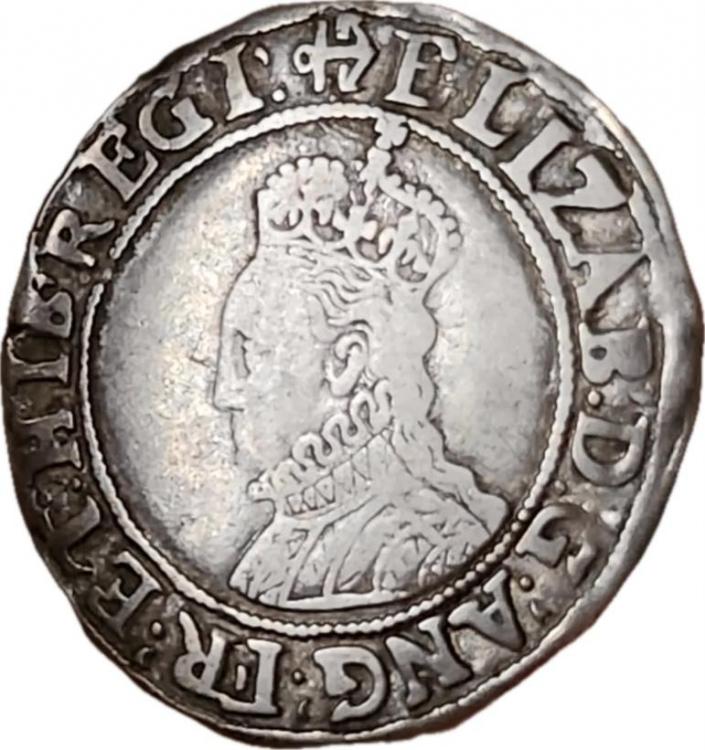
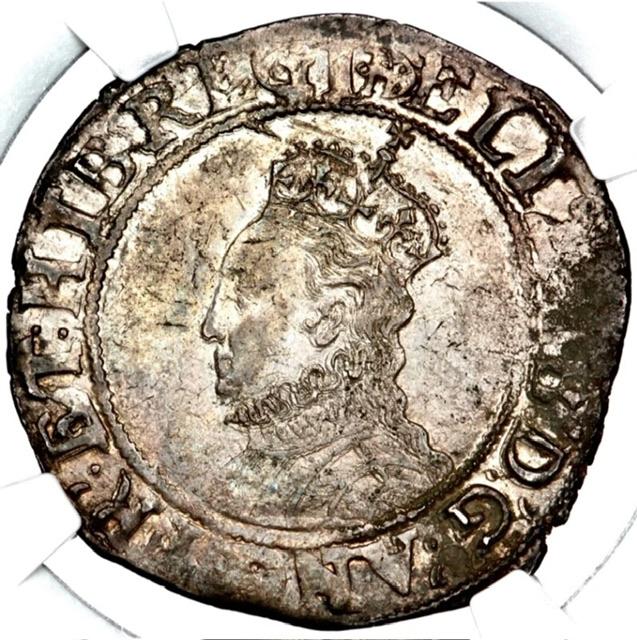
  11. Hi there! The James I shilling is indeed S2654 with the mint mark actually being a worn Lis. The Charles I shilling is correct 👍
  12. Nothing wrong with a bit of lippy
  13. Really? Is that all it means?
  14. It’s an absolutely beautiful thing, though, gorgeous photography.
  15. Further complicated by this ?6a (6a1) from the Harris sale. Definitely not the crude workmanship of the other examples?
  16. And Descartes old coin that is thought to be a 6a2, the only example I’ve been able to look at!
  17. Pellet eyes of 6b
  18. Withers’ plate coin…almond eyes or not? What class would you call it?
  19. Spink coin, likely the same die as the North plate coin for 6a with the B of hYB over the initial mark.
  20. My thoughts: Essentially we have the Class 5 crown (image here from Withers’ Galata Guide to The Pennies of Edward I and II, 2006), common to Classes 5, 6 and the early 7s. Simply put (I think?), if a coin has crown 5 with a pellet on the breast it’s Class 5, and if it has crown 5 with a rose on the breast, then it’s Class 7…all other coins are Class 6 (as I best understand it). So onto Class 6 and some of the things I’m trying to reconcile? Firstly, Withers haven’t divided Class 6a into 6a1 and 6a2, unlike Blunt and North (North in his interpretation simply suggests there is a variety of 6a), which does make some sense given the following. Withers’ Class 6a (or Blunt’s 6a1) is primarily identified by the plain/greek cross and obvious crude workmanship and bust which has almond eyes - the Withers and Blunt images appear to be exactly the same coin for this type (believed to be a best known example, though I’ve yet to see the reverse), with my own (newly acquired) coin from the same die, the only other example I can uncover (so other known coins or images greatly appreciated). There is just one possible anomaly with 6a which I haven’t yet cleared up? The North 6a plate coin looks to be what Withers’ might be calling (at least in their text) a 6b? Essentially they are saying there exists ‘a London [6b] die with B of hYB punched over the initial cross,’ unless of course this also happened in another die they’ve seen? I managed to find a clearer online image of this error on a different coin (highly likely from the same die as North’s plate coin?), appearing to have been sold by Spink, who themselves attribute it as 6a. Maybe it’s a typo in the Withers book, with the line intended to go under the 6a text, or that there is indeed another die with a similar error but on a 6b coin? The North plate coin, and the Spink error-coin image, certainly appear to be 6a coins? Other than this the 6a (or 6a1) looks to be relatively straight forward. However, the difference between the other class 6 coins becomes slightly more tricky, with 6a2 and 6b both sharing a cross pattee initial mark. Withers and North go nowhere near the eyes for 6b, but Blunt states clearly that the two faces used on 6b coins now have pellet pupils, leaving (as far as Blunt is concerned at least) all the almond-eyed cross pattee coins to the rank of 6a2, or not belonging to 6b at any rate. Blunt also marries 6b with long, sloping shoulders and a better bust styling (I agree). However, where does this leave Withers’ 6b plate coin (rounded chin)? This would surely be a 6a2 under Blunt’s assertion? Unless of course these are pellet eyes, and where it gets complicated for me, in view of the example that follows? I’ve seen our own @descartes old 6a2 coin (changed hands again quite recently), which was validated by DG as such, but this appears to me to have something more transitional than almond eyes, certainly less almond than the Withers’ plate 6b coin? All very unclear, and maybe the reason Withers stayed well clear of it? I think the 6b (and the 6a under Withers) is a clear class with its new, stylish bust, long sloping shoulders and pellet eyes, but 6a2, where that one slots in is not so clear for me, even when taking the lettering into account? Anyone want to chuck something in the mix? I’d really like to wrap my head around this one, once and for all!
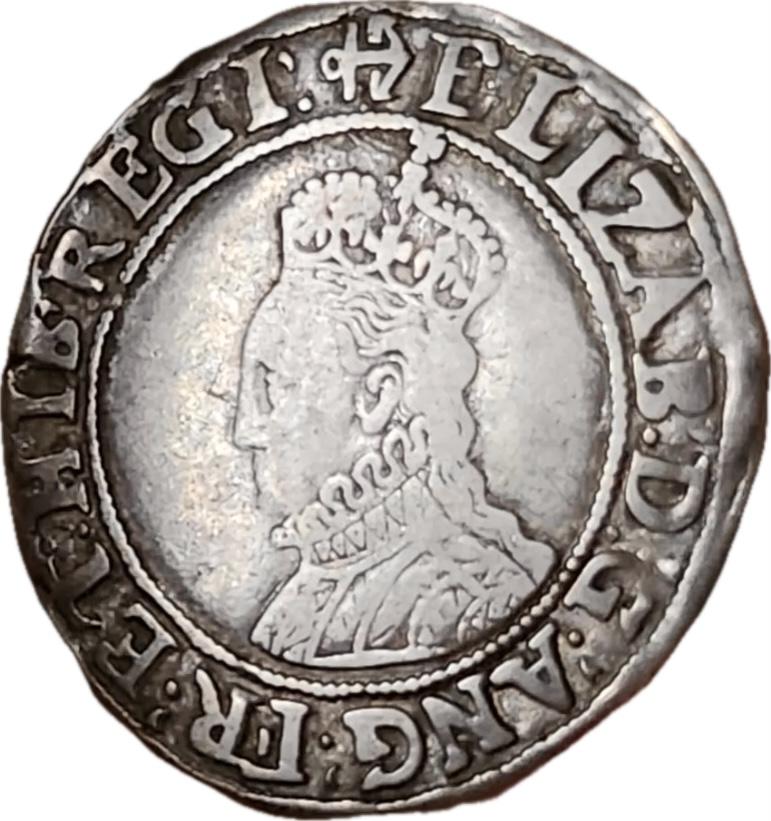
  21. - Henry viii is a groat - All the coins marked XII are shillings - The Elizabeth I coin is also a shilling - The William and Mary (Maria) coin is a half crown. - William IV also a half crown I’d be very happy to be left that lot edit to add: these are all eBay coins, really, that’s if you were looking to sell? Provided you title them correctly, you will likely reach their true market value on that platform. Of course if they were top grade, you’d want to approach things very differently. Good luck, whether you sell or start to collect.
  22. Ah, OK, thanks Rob, thought we were getting somewhere then…a big ask I guess when considering the sheer volume of the series. Nice coin though
  23. So, just had a better look and only just put it all together…all the class 3 Newcastle coins are Es, and all the features of the obverse in combination with the full reverse legend corroborates this. So are we thinking then that this is the 3E from the ‘63 sale? Does it say anything else or suggest a collection? Much appreciated, Rob, as always
×
×
  • Create New...
Test