
Rob
-
Posts
12,799 -
Joined
-
Last visited
-
Days Won
347
Content Type
Profiles
Forums
Events
Downloads
Store
Gallery
Articles
Everything posted by Rob
-
The world has always been a global economy. Silver coins were always worth their intrinsic value and traded at weight/face value, until the last couple hundred years when we moved to a token coinage.
-
And so you have found a nice example that saw little circulation, but a lot of time up to the eyeballs in sh*t Farthings at the end were worse
-
Indian?
-
I think the biggest problem with ebay is that it has become unwieldy. 15 years ago there was approximately 2000-3000 listings in the British coins section at any one time, i.e. you could quite literally search through the entire list if you had a few hours to spare. This resulted in multiple bids on most items, but equally, bargains could be had meaning that there was always a chance that sellers could get a good price and conversely buyers a bargain. That is manifestly not the case today other than for a very few sales in the case of sellers, and buyers have so much choice that I genuinely doubt they are able to fully peruse the lists. Just now, searching Victoria penny finds over 10K listings in the UK, or over 14K if the search includes worldwide. This is a huge number to search properly unless you are only looking at specific dates such as 1860, 1861, 1862, 1863, 1877, 1909, 1903 etc. Most people have a life beyond ebay. There is already a large number of outlets for selling the higher grade pieces, i.e. the established auction houses, though another online auction site could easily be accommodated as eBay is hardly over-endowed with quality coins for sale. For me, the biggest issue is that eBay is flooded with things that have little chance of selling, whether due to price, condition or just sheer quantities available. A rhetorical question, but how many 'rare' Peter Rabbit 50ps does the world need. The established houses are not interested in low grade things unless as part of a bulk lot, or if extremely rare, then exceptions will be made. The problem and the solution for me is not to exclude low grade listings, but to charge everyone who lists something for the provision of the facility. It wouldn't have to be prohibitively expensive, but would need to be a number greater than zero in order to make the consignor question the viability of listing. Cut out free listings and suddenly the attraction of posting a flat disc for a million quid becomes unattractive. A dedicated coin auction site would, as you say, potentially have the advantage of experts to police the listings, but there is nothing to stop anyone creating a new site, whether they have the knowledge or not. People collect coins of all grade/prices, so it would be wrong to exclude things that were of inferior grades. The problem is not one of elitism or snobbery, but rather one of time wasting. Sure there are many deluded people offering crap at inflated prices courtesy of the tabloid media, but there is and always has been a genuine market for coins in all grades at the right price and this market must continue to be nurtured for the good of the hobby. A balance needs to be struck whereby you have a manageable list of things available, but also sufficient buyers' eyeballs to make selling worthwhile. This is the perennial problem of startups, but with perseverance is a possibility. Hus tried it 8 or 10 years ago, before eventually folding it, but today, this might be a project worth resurrecting given the number of ebay listings, and the extent to which they p*ss people off. Their buyer good, seller bad policy doesn't exactly endear them to vendors either. It isn't beyond the realms of possibility that you would be pushing on an open door.
-
A general question here with input from all welcome. Having listed a few things recently on the wife's ebay account, I have to say that the results were decidedly underwhelming. A total of 25 auction style listing results gave 6 with multiple bids (best result an EF 1952 6d for £6.50 starting at a quid) and 19 sold at opening bid (mostly for £1 and including a W&M farthing with full legend and portraits). The unappealing results were compounded by a total of 4 lots not even being paid for and those sales cancelled a couple weeks down the line. TBH that's s**t, that says to me that ebay sees very little competitive bidding these days other than in a limited number of 'hot' areas such as bronze pennies or continental sterlings/medieval pennies etc, probably due to the vast number of items for sale which encourages people not to bid in the hope that another will be along shortly, and as a seller is a near complete waste of time. The question I have is whether ebay's near total monopoly of online auctions is healthy and what would constitute a healthy alternative? Selling for opening bids discourages listing as an auction, but the alternative of fixed pricing is treated by many buyers as overpriced goods at taking the p**s prices. This to me seems like a crap deal for buyers and sellers alike, where the market could probably be returned to better health if there was a good chance of competitive bidding actually taking place. Bearing in mind that many of the items for sale on ebay or similar would only be sold by regular auctioneers as part of a bulk lot, it is clear that ebay does have a role to play, but it has to work for both sides. Even a fledgling online auction site that could produce a modicum of competitive bidding would have already caught up with the leader. Thoughts please. .
-
The first side is self explanatory, the second if it is a Baldwin ticket would list the people the coin had been offered to and may include the person from who it was acquired. I suspect FM43023 is the source from which it was acquired, but can't think of anyone or any sale it could refer to. 762 would then be the number of the Baldwin client to whom the coin was offered. But it's possible it was 762 the coin was acquired from and FM..... was something else like a stock number?
-
I think they are the same dies. Same number of inner circle beads on the RHS from the top right point of the shield to the D (this section not double struck on either coin), same distance of the lettering relative to the inner circle where not double struck), additional small flaw RHS of the St. George's cross horizontal bar and the same sharply cut off point on the centre of the top of the Irish shield.
-
Add £1.20 for a signature.
-
Rather disturbingly, he has only listed it as 'Scarce', so God knows how many are out there.
-
 Peck 730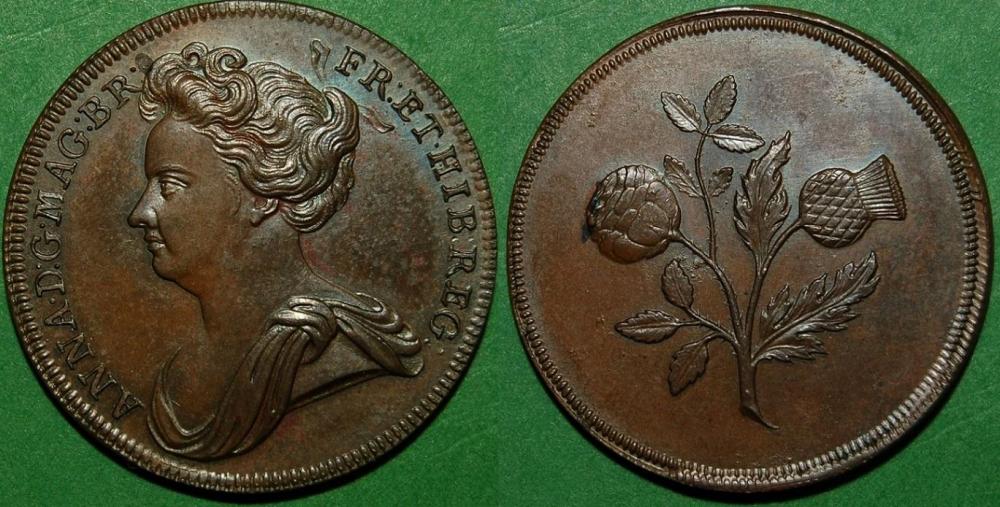
-
thanks
-
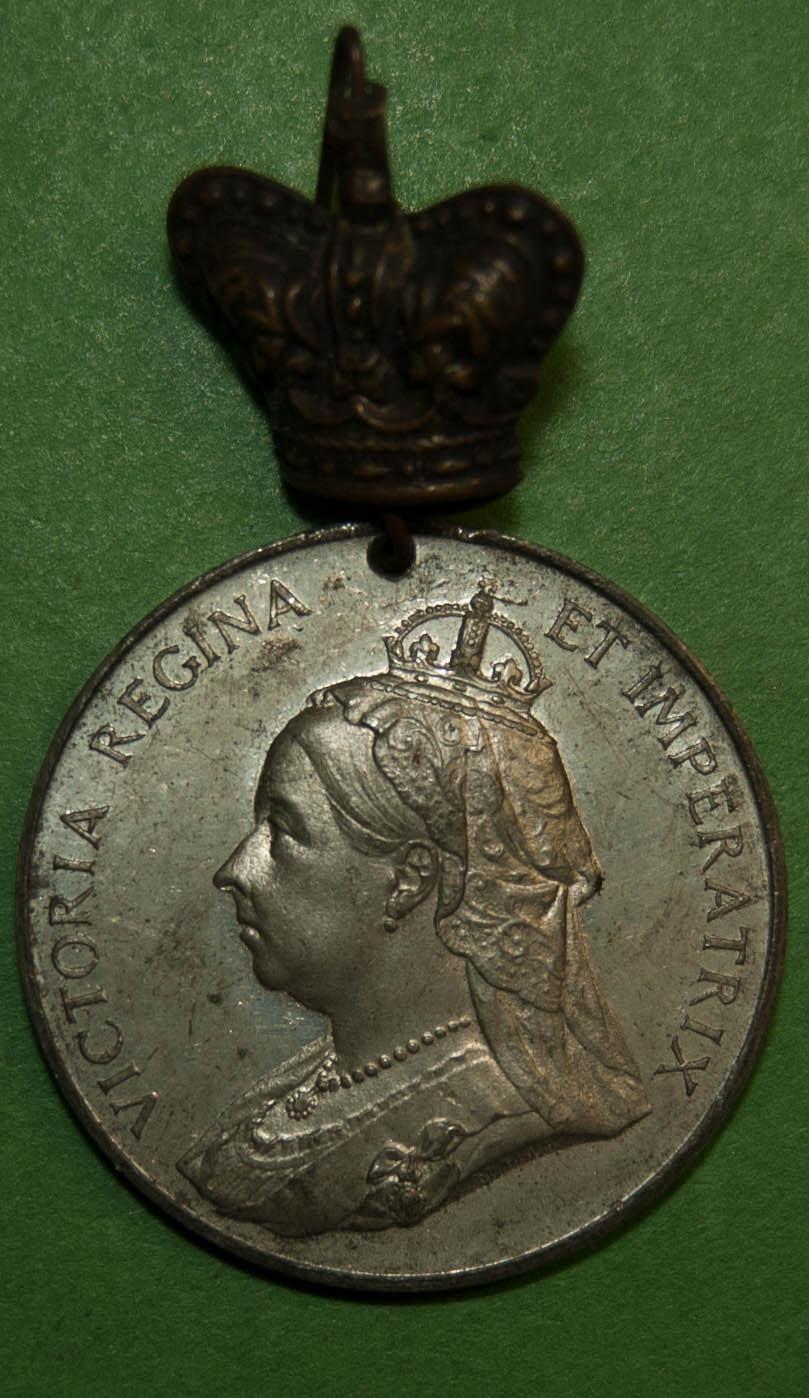
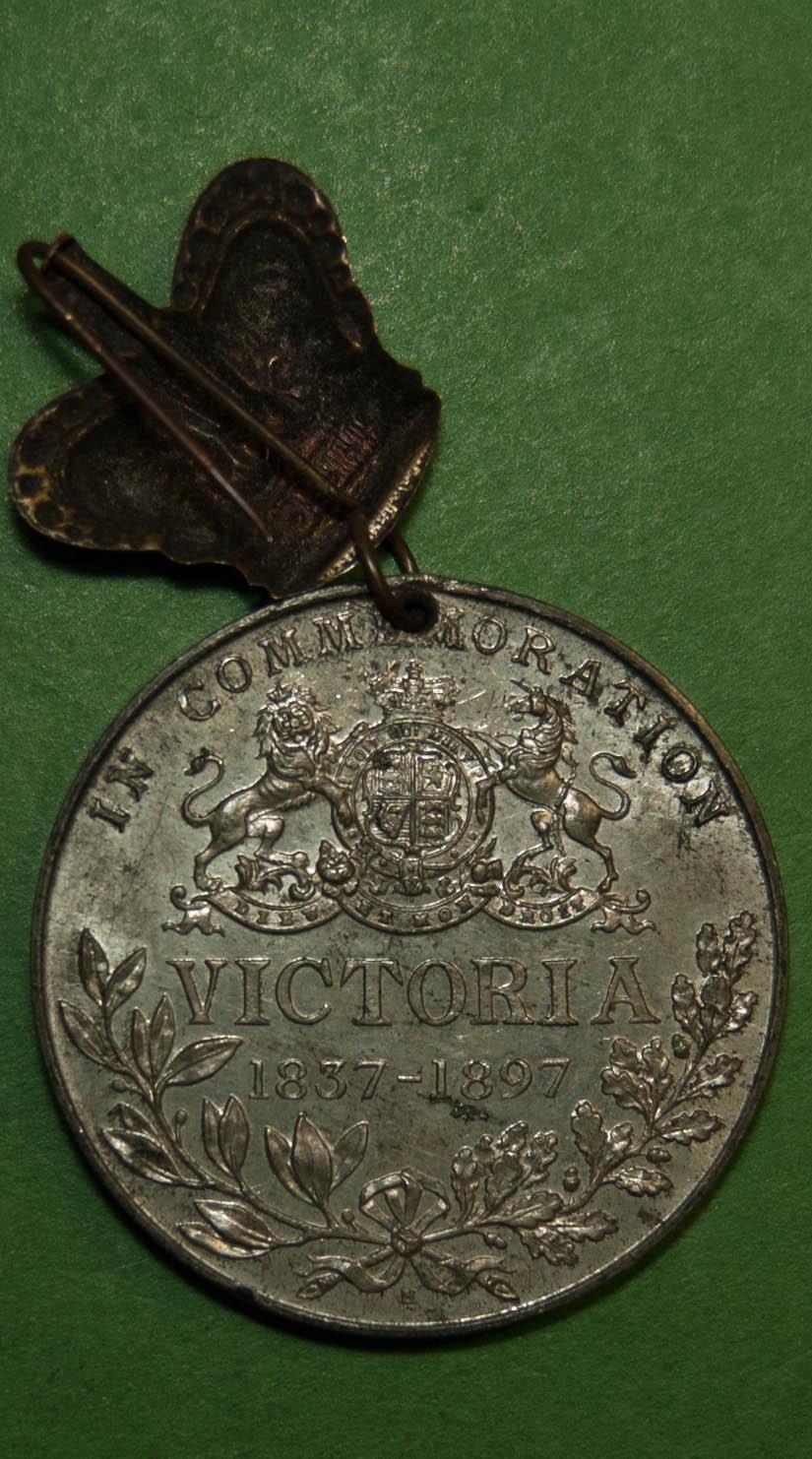
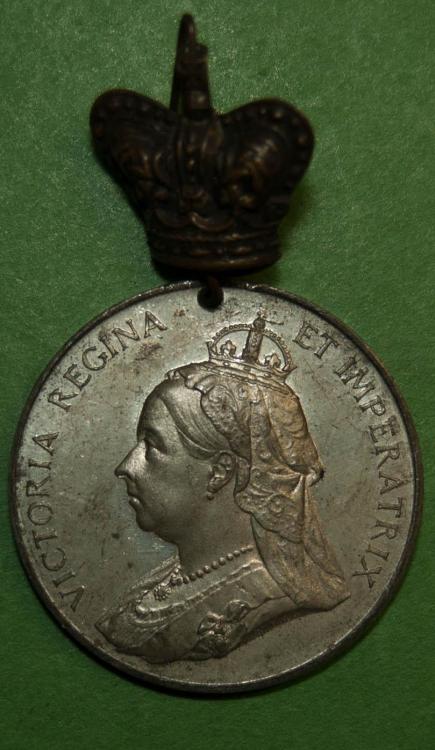
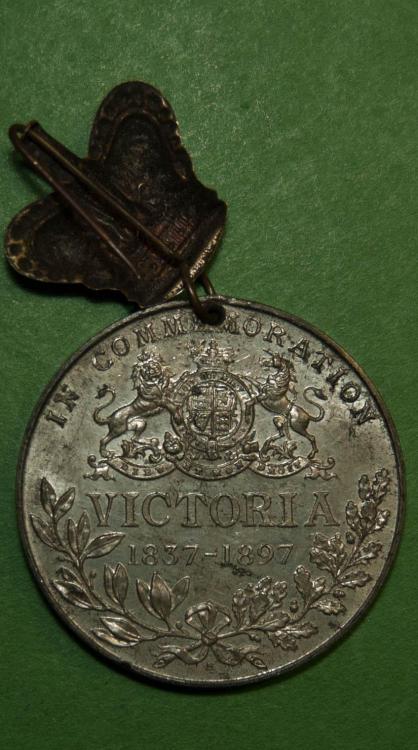
Hi. Anyone have a copy of BHM for the reference number? 38mm dia, weight including clip 22.28g. Struck in Tin. Thanks.
-
Can it be genuinely described as a mule? There is nothing wrong with using a proof die for currency once the proof run has finished as you would expect to have a perfectly good die that could be used again. You certainly wouldn't deface the fields to produce a 'current' die.
-
End of the war and surplus capacity? Presumably Heaton and KN diverted resources to war work from 1914-18. But a universal shortage of labour as men were either conscripted or volunteered might also be a reason. Did both Birmingham mints have presses that had been temporarily sitting idle, but could be used while the RM equipment was repaired, given the large output and reduced servicing during the war years. Did H & KN strike coins incognito during the war years using RM dies? I don't know the answers, but if anyone can shed light on the wartime operations at the various locations it would help.
-
Coin Monthly Magazine
Rob replied to DaveG38's topic in British Coin Related Discussions & Enquiries
What does companies house say about the company's business and trading figures for say 1990-1995, assuming that the company name is mentioned somewhere in the magazine. Annual returns on file might shed some light on their financial situation. Any director resignations leading up to the time in question? -
Customs Charges - how random are they?
Rob replied to 1949threepence's topic in British Coin Related Discussions & Enquiries
It also looks as if they are using a common shipping/tracking system with automatic flagging up to the receiving country once entered into the system rather than examining packets individually because it says they will notify you when it arrives in the uk. It's only possible because you have an account which you can settle via email. Phoning card details wouldn't work. -
Baldwins Auction Register Workaround
Rob replied to Rob's topic in British Coin Related Discussions & Enquiries
Forget that. Suddenly seems to work, but no idea why. -
Can anyone remember what the sequence is to get the registration pending removed so you can bid? It's still f*ing useless
-
Looks like someone made a hole and then plugged it.
-
1937 Edward VIII Penny in Auction
Rob replied to Colin88's topic in British Coin Related Discussions & Enquiries
Drop my what a line? -
I'm surprised at the low number of 1918Hs. Even allowing for the large number of H & KNs extracted by this time, the presence of a large number of 1919s makes the data seem a little skewed.
-
1965 Double Obverse Crown
Rob replied to VickySilver's topic in British Coin Related Discussions & Enquiries
Something that doesn't seem to have been mentioned previously is that the 1960s decade was a period of flux in this country and the Empire/Commonwealth countries. Although India parted in 1947, it was Ghana in 1957 that really set the ball rolling, with most countries gaining independence in the next 10-15 years, which coincided with new currencies and therefore issues. As many countries used the Royal Mint to supply their new coinage, blanks for these issues could be a possible source of many off-metal strikes. A lot of currencies are nominally similar in diameter and weight to our own currency, so as long as we are talking about regular metals - bronze, Cu-Ni etc, there is a distinct possibility that they were genuine mint errors. -
1965 Double Obverse Crown
Rob replied to VickySilver's topic in British Coin Related Discussions & Enquiries
Yes, or as trials. -
1965 Double Obverse Crown
Rob replied to VickySilver's topic in British Coin Related Discussions & Enquiries
There are a few double obvs and revs before this. e.g. The Anne halfpennies for both sides, the W3 third iss. dbl obv. 1/2d and the Chas.1 1676 dbl rev P490 -
Are the oldies the goldies?
Rob replied to copper123's topic in Nothing whatsoever to do with coins area!
It's easier just to look up