Leaderboard
.jpg.59f7f7c5ad8ff67a70f8db9e7dffd413.thumb.jpg.0826c31400cad2e4de5fe0a6afd6fd8b.jpg)
Popular Content
Showing content with the highest reputation on 10/03/2018 in all areas
-
Now, now, I don't go around casting disparaging remarks about your coins.3 points
-
Here it is Mike... http://wybrit.com/info/Myths.html2 points
-
thats why i like the George VI cameo proofs, seems to be the first time they were made with any chance of the average collector getting their mits on one,2 points
-
Hi madness, Thanks for that . I'm feeling inspired and will take a look in our local Bunnings. Regards, Ozjohn1 point
-
I really like the design on this one and its a nice example, near unc on the reverse the obverse about ef
.JPG.b044194781ecffd4c90f6620e3b97e30.JPG)
.JPG.97929622691415cfbbb1ff4deb82d532.JPG) 1 point
1 point -
Lol, I think they have the cost of silver rather confused with Gold.1 point
-
What? Tobacco?1 point
-
All metals are common only in that they are metals. Apart from that they have different melting points which means that a particular element may or may not be molten in what appears to be all liquid. Of Copper, Gold and Silver, the latter has the lowest melting point of the three at 960C, with the other two over a hundred degrees higher. Bronze melts around the same temperature as silver or a bit lower, depending on the ratio of the constituent metals. Tin by contrast melts at only 231 degrees. They don't just dissolve, as they are not the same as organic compounds, the metal being a crystal lattice and hence much more tightly bound to adjacent atom. Think covalent and ionic bonding.1 point
-
No, it's a mule of a Henry VII type III halfpenny obverse (single arched crown) with a type II penny reverse. I conveyed the information last night.1 point
-
just doesnt make sense to me when people will pay £80 plus for a kew gardens 50p with around a quarter of a million goin into circulation and only 15,000 of some of these £1 , i dont get it1 point
-
Peck, You are more articulate than me and have just presented the rub of it. However views do change, George VI and Elizabeth II pre-decimal were not popular in their time but are certainly increasingly viewed as collectable now. Your point about proofs is particularly apt. Surely a proof should be exciting, something to get the blood boiling, an unusual event. Not just the mint churning out thousands of coins because marketing has thought of a new angle. Take the 1927 proof set or if broken down individual coins, I still enjoy looking at them, checking how close to FDC they are, just knowing that relatively low numbers in production make them more interesting. The point about cost is a fair one. Think if that is a factor I might look at something else but perhaps that's just me. M1 point
-
Rob's "hot and cold" is relative. In one sense the decimal market has always been flat, for the simple reason that no dealer will ever come close to the over inflated prices that the Mint charges for new issues. To anyone contemplating collecting in that field I have one thing to say: "Buy only in the secondary market and never from the RM".1 point
-
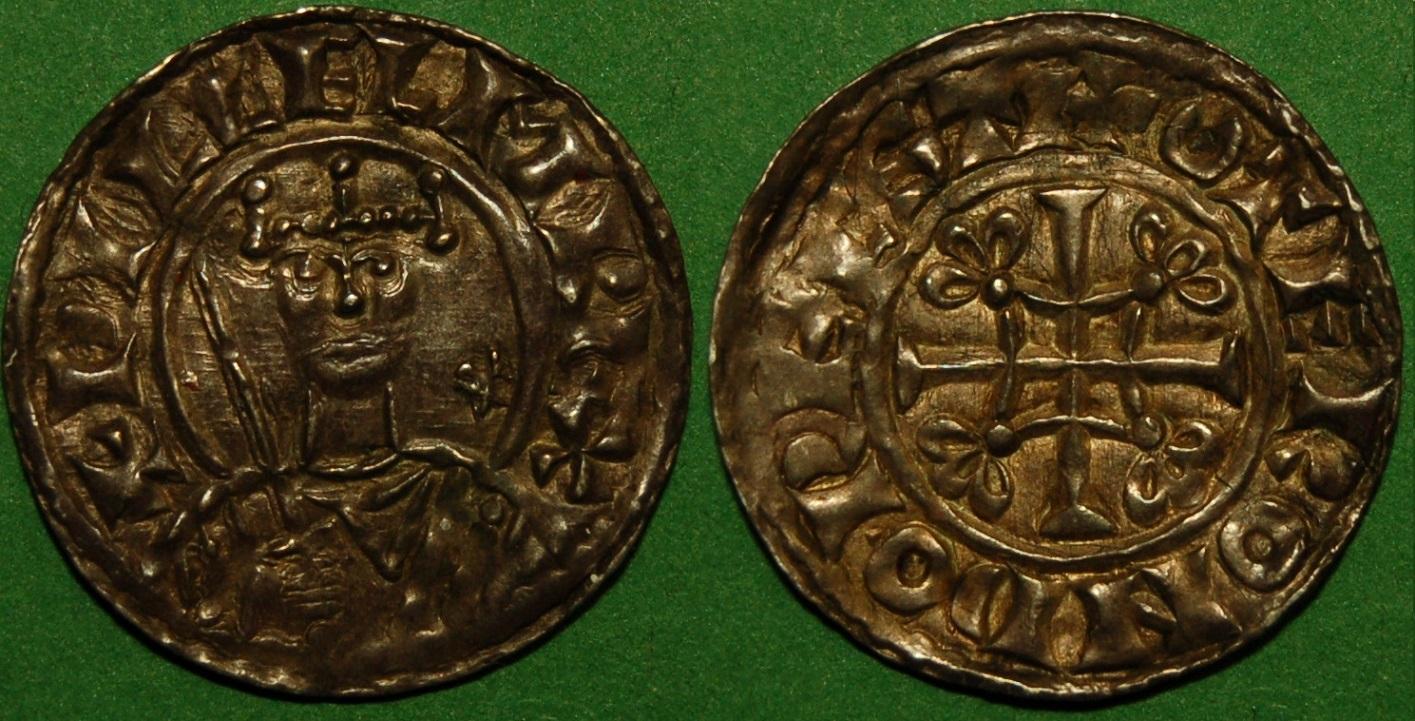
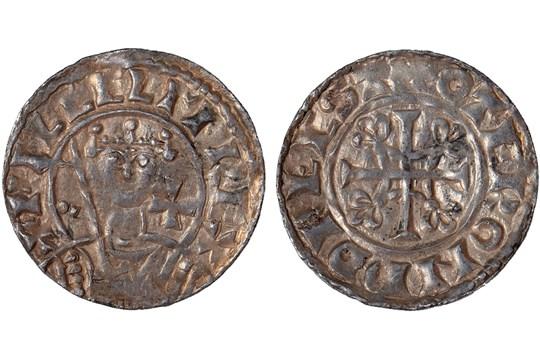
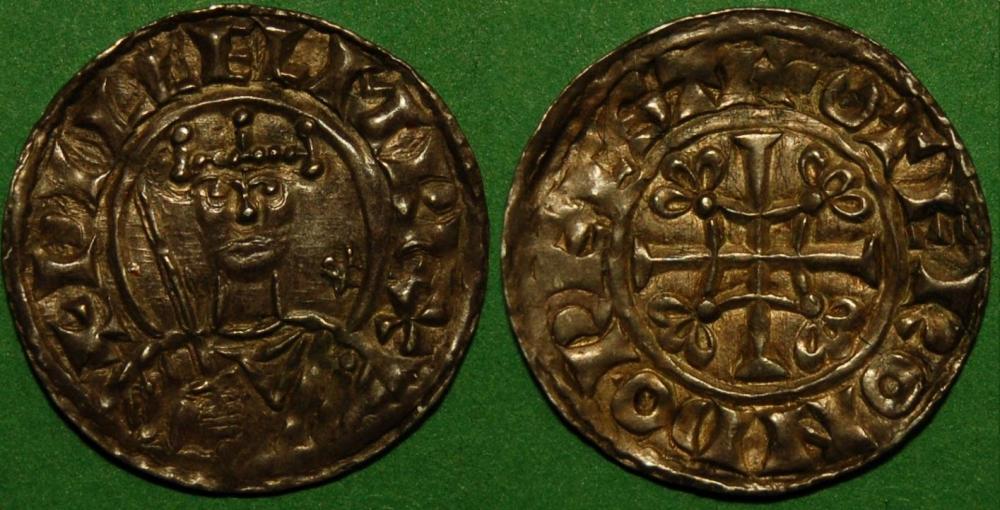
Ok, I don't expect to get caught in the stampede given it has only had 57 views in a week and no replies. The appearance of this https://www.the-saleroom.com/en-gb/auction-catalogues/baldwins-of-st-jamess/catalogue-id-srstja10031/lot-3b393123-8bdd-4927-9e94-a94c00d6b2d5 in tomorrow's BSJ sale prompted me to revisit the reason for the large cross to the right of the bust, which is something I have long had on the list of things to do. In his article on the coins of Williams I & II, P W P Carlyon-Britton noted the following varieties for the sword type. Var. A - a modified reverse at Ilchester; B - two pellets one side, and a large cross the other i.e. the above; C - two small crosses to the left of the King's neck - these two at Dorchester; D - annulet by face; E - cross by face - these two at Wareham; F - a variety of crown seen at London. I am sure it is no coincidence that of the above locations, Dorchester and Wareham are adjacent mints separated by only a dozen miles. The question therefore is why do coins from these two mints have the symbols by the bust when no other mints striking in type 6 have them? Despite their proximity, North only gives one moneyer common to both mints (Godwine), but Oter is unquestionably the resident engraver at Dorchester for a considerable period including this issue. This would indicate the marks are not the work of an idiosyncratic moneyer. The fact that more than one moneyer is involved says it is done for more than a whimsical reason. The next nearest mint locations striking in Sword are Chichester, Shaftesbury and Ilchester, with Ilchester the closest - again a location for a variety. What happened in that area to warrant unusual die features? There must be a link somewhere. Sword type is thought to have been struck in the period Michaelmas 1080-1083. My initial thoughts were directed towards a connection with Abbotsbury Abbey, which is reasonably close to Dorchester. The case for a connection was stengthened when I discovered that it was founded by one of Cnut's thegns, Orc, in the early years of Edward the Confessor. Orc and his wife lived at Portesham which is between Abbotsbury and Dorchester, however, it is not close to Wareham. It would be appropriate to celebrate their largesse, and with a timing that is about 30 years after the abbey was founded, could be related to the passing of a major benefactor. William was in France for much of this period and before, leaving his half-brother (Bishop of Bayeux & Earl of Kent) in charge of the kingdom. The latter outstripped his authority by hoping to succeed the Pope, which wasn't in William plan, causing him to return whereupon he intercepted him on the Isle of Wight. Again, geographically separated from the two mints. Thoughts anybody? Fortuitously, I have ticked the Dorchester box with a coin of the same type, but as you can see, mine has the much smaller crosses to the right (var.C) and is a completely different die pair. So we have different moneyers at separate, but relatively close locations adding features only seen at the two locations, with more than one die with additional features cut at both locations. Sword is the second rarest type for William I after Profile Right. The search for plausible reasons goes on.................
 1 point
 -
Growing up in the 1950s and 1960s, it was quite common to find well worn Victoria OH pennies and halfpennies in our change. It was equally not unusual to find Edward VII silver and especially florins and halfcrowns in change. I worked in Woolworths in 1970 during my summer holidays and handled a lot of change. Knowing what I know today, perhaps I should have looked at it more closely.1 point
-
https://www.royalmint.com/gifts/christmas-crackers/silver-christmas-cracker-gift-set/0 points