All Activity
- Today
-
1945 Penny - Thin flan
Rob replied to Accumulator's topic in British Coin Related Discussions & Enquiries
If you consider what a flan is, there is an underlying crystalline structure based on the metal in question. At the atomic level, the atoms are connected by well defined structural links via shared outer electron pairs. In a perfect piece of metal with no inclusions, this would be consistent across the entire surface. However, at the next level up, the surface is disrupted by metal flow when struck leaving small sub-micron cracks. A crack is a crack and therefore will allow a greater surface area to be exposed to any reactant. One thing I have noticed with seriously corroded coins at the date for example is a 'moat' around the digit where the metal has been more rapidly removed than one might otherwise expect. I acquired and sold one 20 years ago, but can't find the image. This I would explain by the cracks allowing the reactant to penetrate the metal and so lead to increased metal loss at these points. To compare with toning, which is only another form of altered metal surface, not involving metal loss, you regularly see more toning around the relief detail. Again, I would put this down to the stress cracks allowing greater reactivity with the atmosphere. eg. see below. It is posted elsewhere, so apologies, but does demonstrate my theory very well. If metal is going to react, it doesn't matter much whether the fluid is a liquid or a gas, as both will cause some effect if chemically possible, just the rate and effect will vary.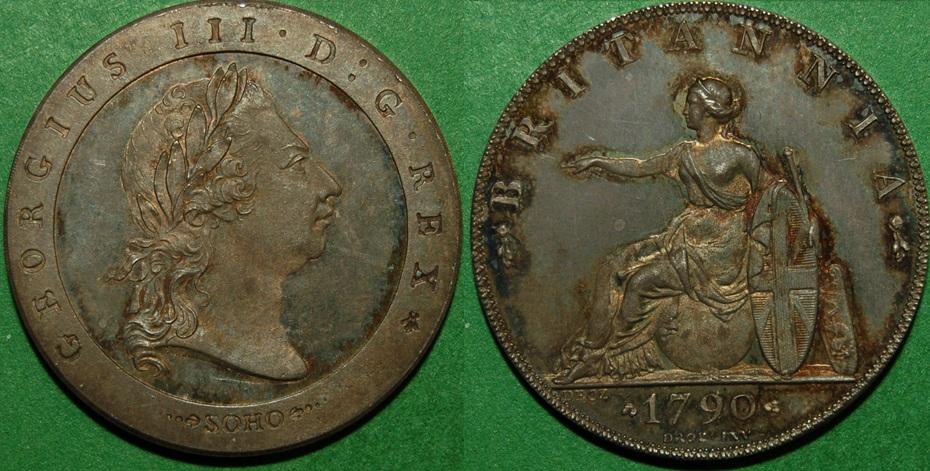
-
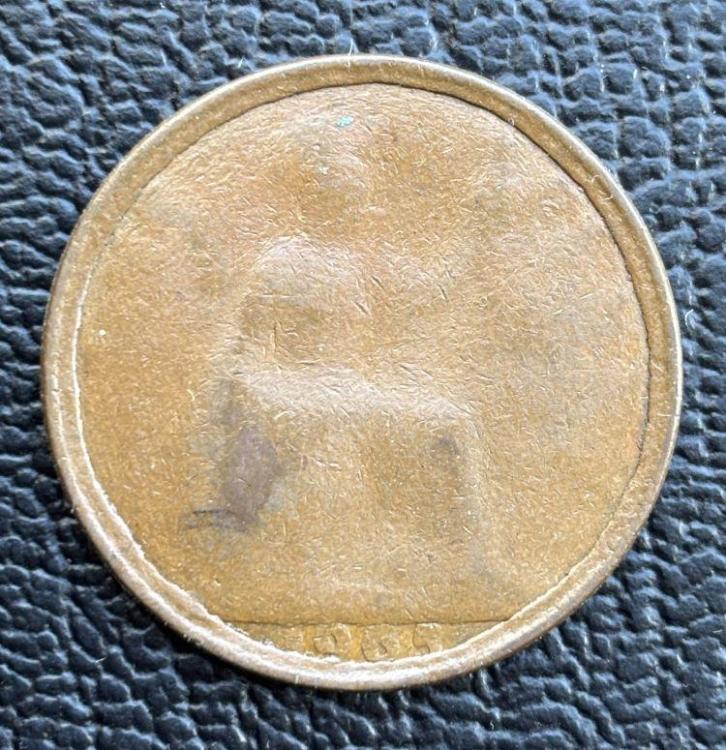
Theories as to what's happened with this penny?
Rob replied to RChris's topic in British Coin Related Discussions & Enquiries
The visible lettering is too crude and close to the rim IMO. It looks more like an abused attempt at a cast copy to me. Any attempts at acid cleaning will thin the letters and reduce dimensions on all 3 axes if there is total immersion. The weight of a cast would obviously depend on the amount of metal poured into the mould, so I think not relevant in this instance.- 1 reply
-
- 1
-

-
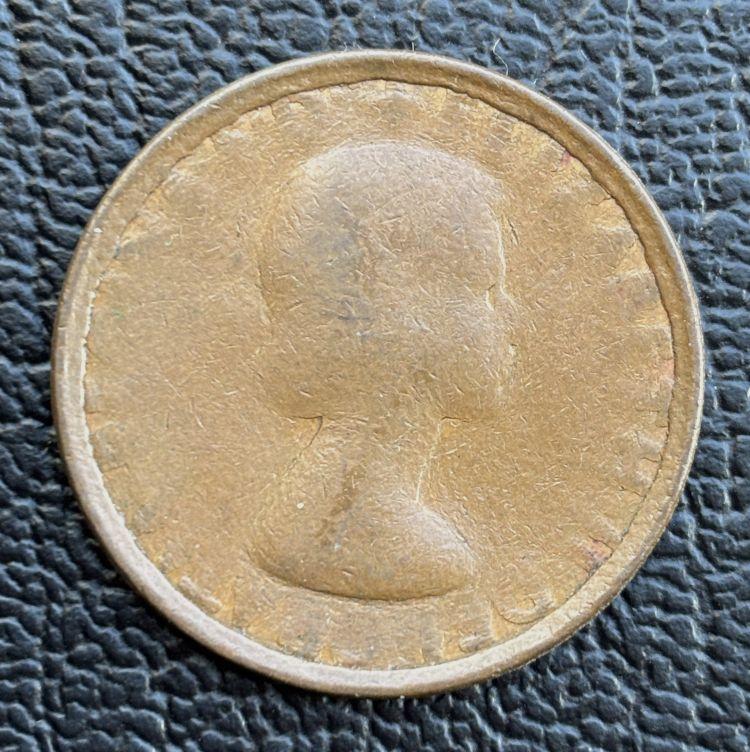
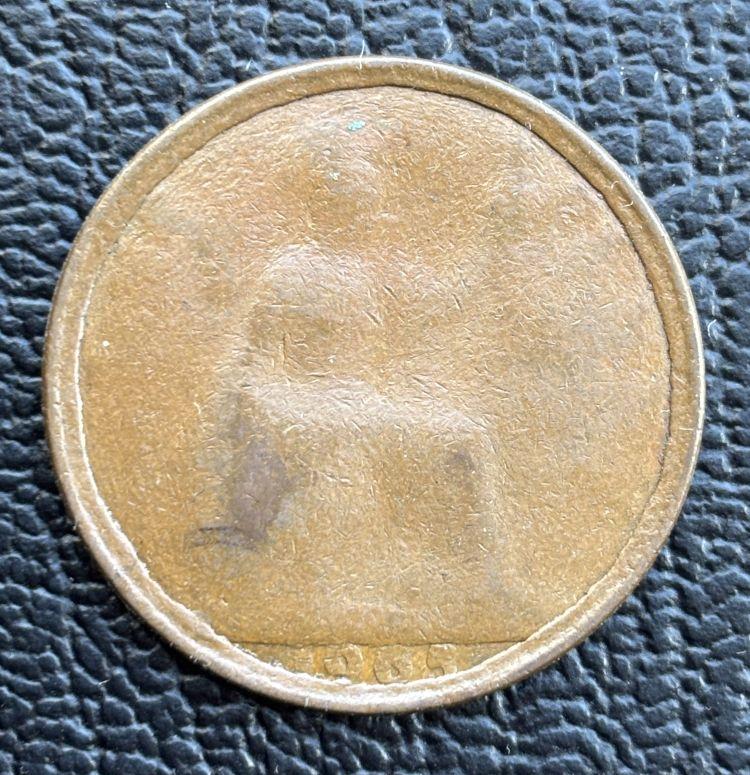
 Another acid bath victim perhaps? Any other theories? It weighs 9.1g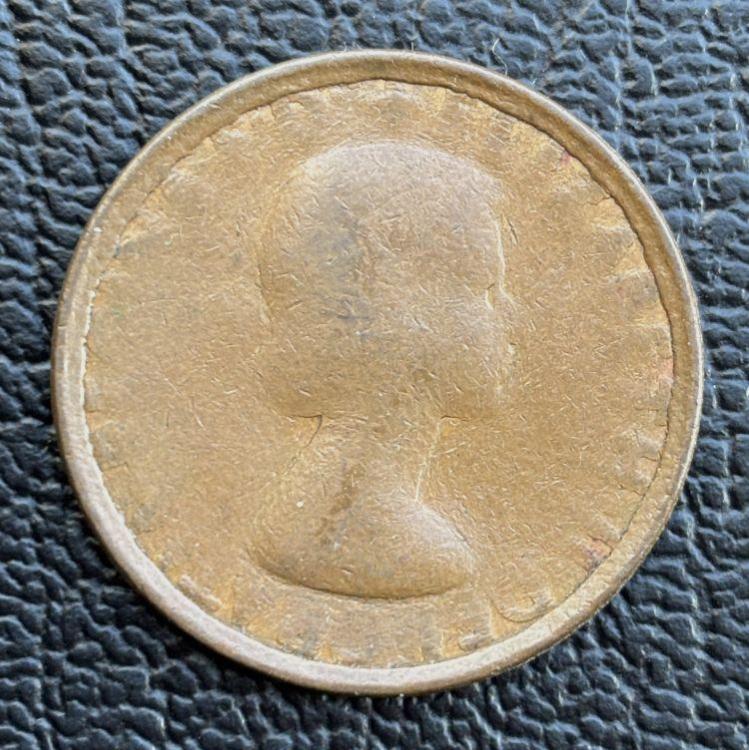
- Yesterday
-
Because they know no better and want to believe what they see. Unfortunately, knowledge requires some input from the prospective purchaser in the form of reading up the subject before buying. To me and you it is simple, but that's because we are interested in the subject matter. For the uninitiated just randomly looking for things that appeal visually, it's not a great step to hit the buy button. Sad but true. Ebay can't police the content sufficiently to make a difference, so once again, it relies on the moral compass of the seller. There should be a useful statistic in there somewhere for a number for Mr. Average's honesty coefficient, not to mention the gullibility coefficient of the typical buyer.
-
Oh boy, here's another fun POS. "Great Britain 1885 Coin Victoria Britanniarum" How can people fall for this? https://www.ebay.com/itm/188825441303
- Last week
-
I’m hoping your packaging will deliver something slightly more round, Clive 🙏
-
Buttttt, it does have a 20% off coupon! Please don't blame the postie if this turns up on your door mat this week, Stuart... 😬
-
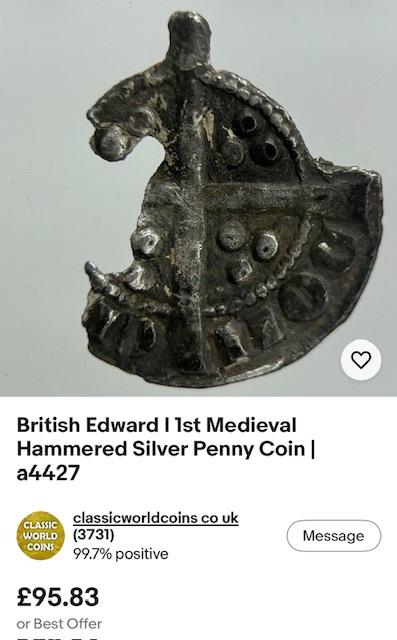
I absolutely LOVE this one, and you only get to see the reverse, too…maybe they’re just being kind! Kind of Knight-like in shape, quite the piece of art https://ebay.io/m/Mck7Te
-
 That proof 1840 shilling sold at HA in 2015 for $11K all in. A fantastic looking coin.
 -
Have to confess that I was only interested in a couple of milled patterns, so wasn't paying much attention other than to note they were expensive. However, I did get both Martlet/CLH 1550 shillings though (lots 13 & 14) at some cost. Both typical Ed.VI dogs in terms of quality, but happy with the pair.
-
a Bullion Dealer uk based forward this to me. in case its of interest to someone... not my cup of Tea... 👍 recent book release may be worth a gander.... wait until they arrive at the Charity shop.... 😀
-
Ink printing on a silver coin ? Victorian 1883 3 Pence
Rob replied to Citizen H's topic in Free for all
In the case of written text, I suspect it may have been underneath a piece of blotting paper or at least something as adsorbant as bog-roll. That was the only way I could rationalise my 1773 halfpenny on a spread flan with Basing House plus some indecipherables written in the hand of H Webb. The above could equally be due to someone making a poster. Anything written or pressed onto newsprint with excess ink is likely to pass through quite easily given the paper quality. -

Ink printing on a silver coin ? Victorian 1883 3 Pence
Zo Arms replied to Citizen H's topic in Free for all
Would it not be reversed? -

Ink printing on a silver coin ? Victorian 1883 3 Pence
Paddy replied to Citizen H's topic in Free for all
Certainly looks like transfer of newsprint to me. -
The George IIII 1837 Groats I have come in vgc however they seem to have faults, cracked dies, date number not in line....the Victorian Groats seem to be worn but with no faults... was this just the way of George IIII coins being minted?
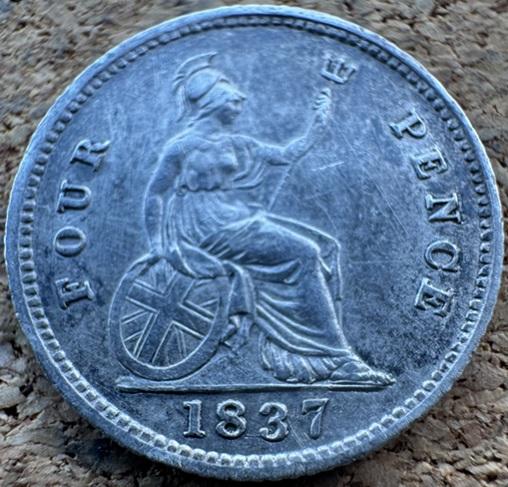
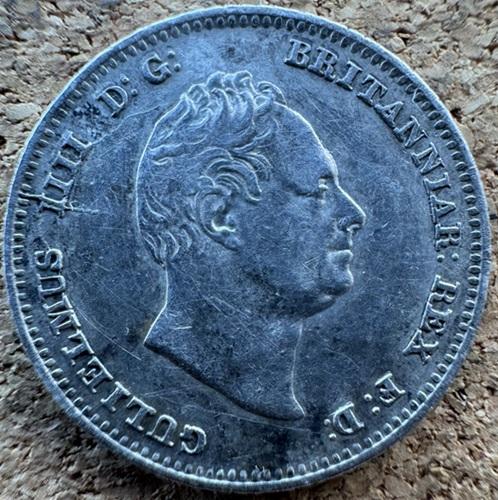
-
Whilst still sorting out......Ive never come across this before........., the coin looks like it has letters printed on to it. has this happened as a chemical reaction by being stored flat against a printed document? I can see CTE CLE and what looks like part of A intriguing find for me 🤔
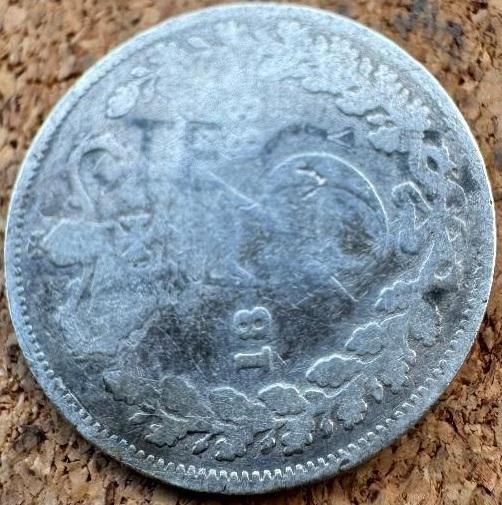
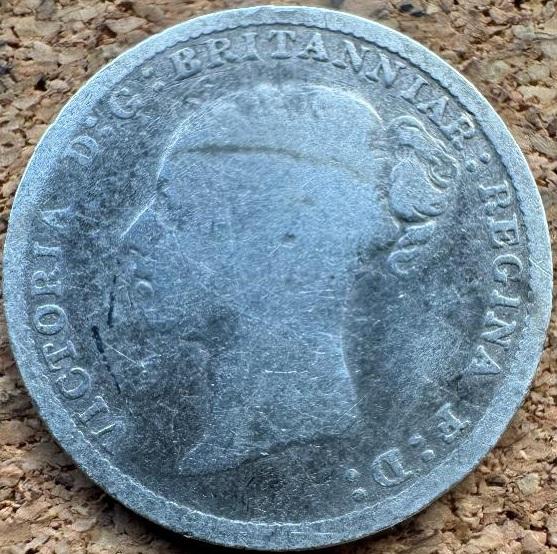
-
 This auction just now completed a couple of days ago really did have some surprised. Some coins, and I did not have the privilege of viewing them seemed to go rather low with some dogfights over lesser coins (IMHO of course). One example of the former were the 1848/6, 1850, 1851, 1863/1, 1882 and 1889 small head shilling, and the latter by the 1850/46 and the proofs of 1840 and 1867. I realize that the former are currency and the latter including two Record Proofs, but even so not sure that the prices fetched would align with my estimates - if those be of value. Perhaps the proof values are reflective of the "new" market for what might be referred to as "Marquee" pieces. Anyway, there are many more examples but was a bit surprised. Even though these coins are all up my alley I did not bid on any as I only needed a mild upgrade for one currency date. I also missed some of the QE II proof record coins as they came up as I was driving my commute to work. Well, I am saving my powder for a couple of upcoming coins that I may share somewhat later on. Meanwhile, what is the take of readers?
 -
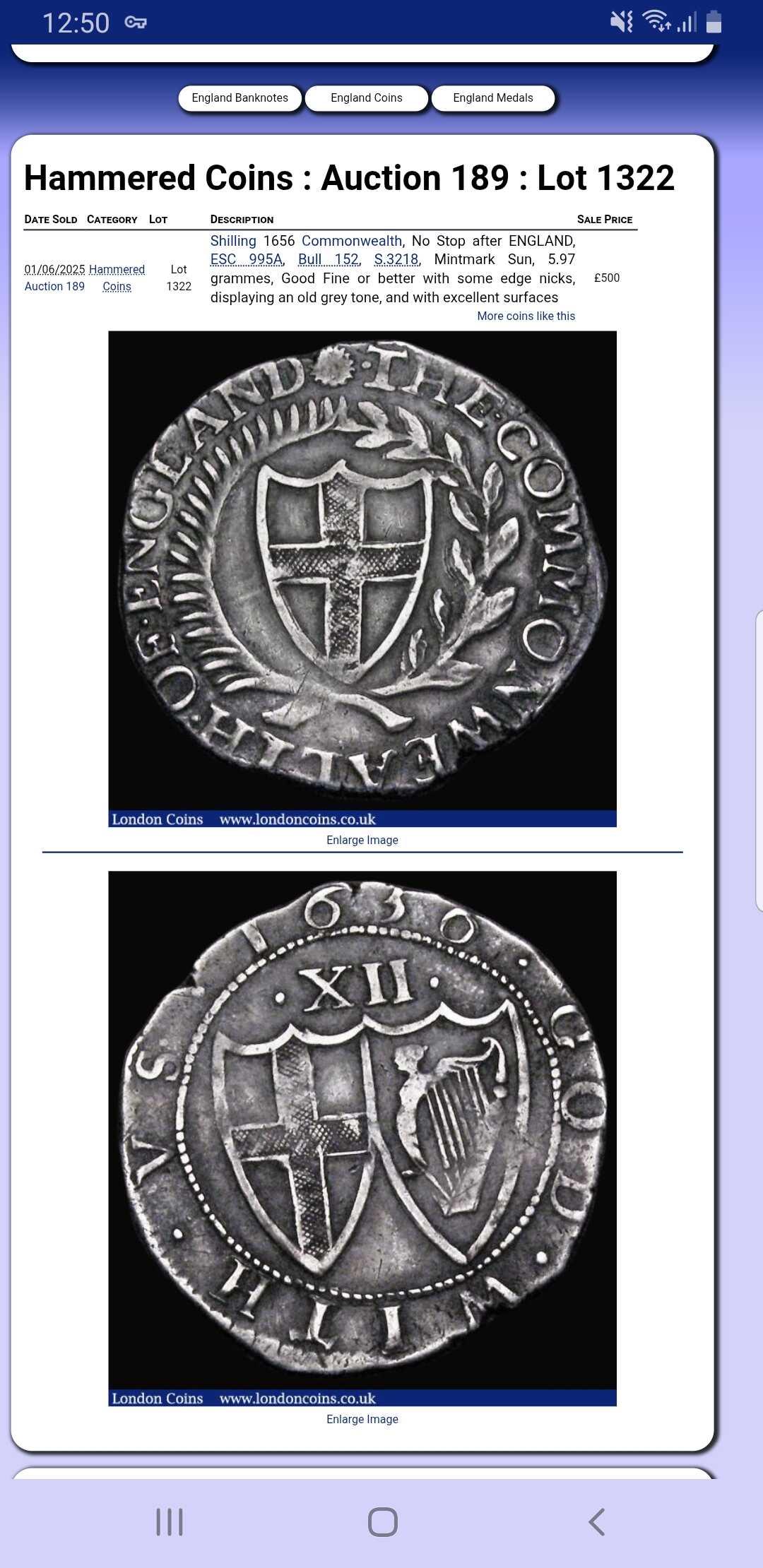
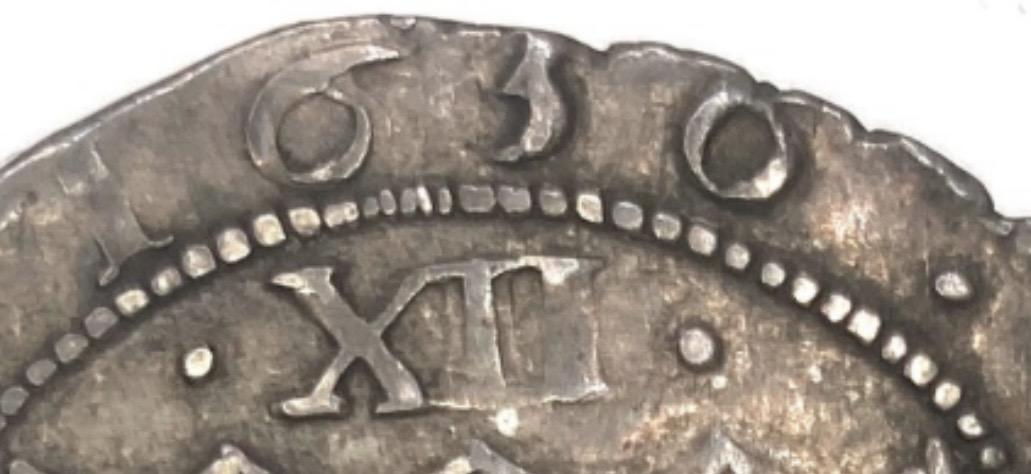
1656, right? Were there definitely no 1650 Shillings?
Coinery replied to Coinery's topic in British Hammered
Interesting and educational read, here, on the counterfeiting of these shillings by Gary Oddie, just in case anyone’s interested! https://britnumsoc.blog/wp-content/uploads/2021/08/188-cft-commonwealth-oddie.pdf -
1656, right? Were there definitely no 1650 Shillings?
Coinery replied to Coinery's topic in British Hammered
Nice one, Stu, thank you 🙏 -
1656, right? Were there definitely no 1650 Shillings?
Ukstu replied to Coinery's topic in British Hammered
Yes 1656. Like you say drifted off the flan. They occasionally pop up. Stu.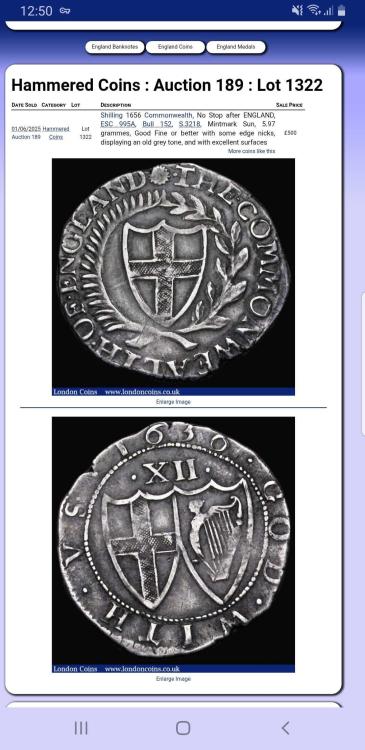
-
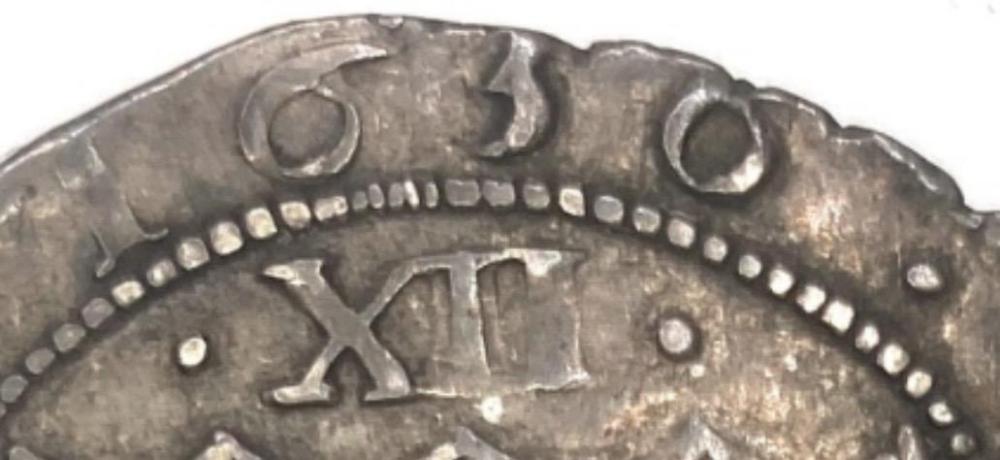
I know the mint was closed for relocation and reworking of the dies to improve quality in 1650, but there were coins minted for other denominations…were there definitely no shillings? I’m 99% certain this is a 6 that’s drifted off flan, but thought I’d ask, just in case someone had heard of a random die that may have been used as part of a trial?
-

1945 Penny - Thin flan
King Kenny replied to Accumulator's topic in British Coin Related Discussions & Enquiries
My Grandad had this penny in his draw since the 1960's. Because of the date, 1945, he thought it was an attempted German forgery. We always know it as Fred's tin penny.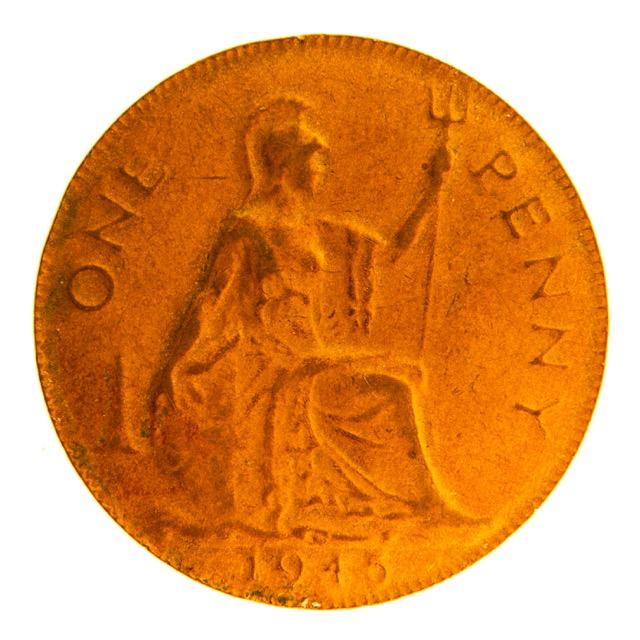
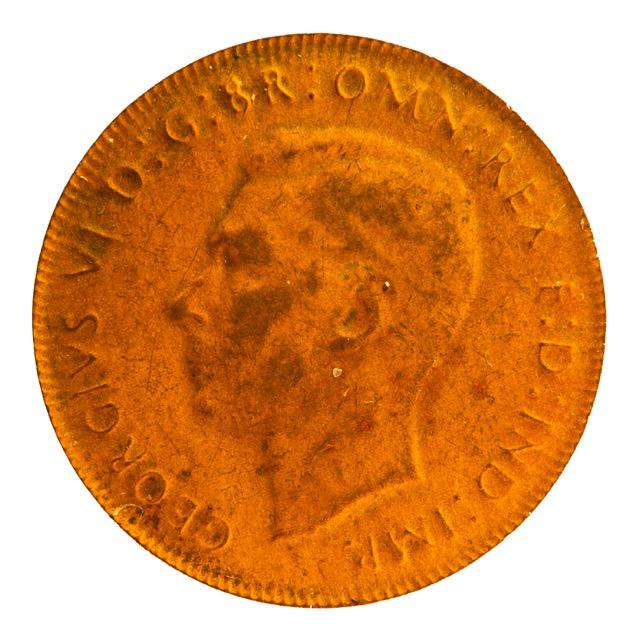
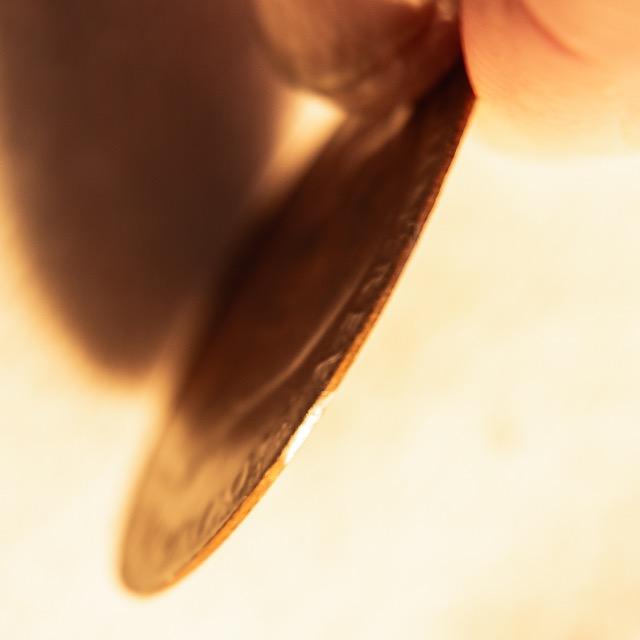
-

1945 Penny - Thin flan
absence of uniformity replied to Accumulator's topic in British Coin Related Discussions & Enquiries
If there is no clear indication why acid would treat the metal around the rim differently, would this not suggest a thin planchet would convert vertical detail into harsh outward horizontal metal flow? -
1945 Penny - Thin flan
absence of uniformity replied to Accumulator's topic in British Coin Related Discussions & Enquiries
If the above is correct and the surface of the coin did dissolve at an equal rate the stress lines? would not become visible, because the metal above the stress lines is flat and the erosion would simply eat through the thickness and the lines around the rim would not appear, I cant see a reason why acid would treat metal differently. Who knows about chemistry and can explain why acid would dissolve metal faster with different characteristics in the underlying metal? -
1945 Penny - Thin flan
absence of uniformity replied to Accumulator's topic in British Coin Related Discussions & Enquiries
Im not saying it is or isnt an acid bath coin but assuming the acid disolves all exposed metal surfaces at an equal rate the relative distance between the high spots and the low spots remains the same, maybe the coin shrinks proportionally making a thin version of itself before the details flaten out.