All Activity
- Today
-

Edward I Class VI (Posthumous Henry III) Bury St Edmunds Pennies
docbaker replied to Coinery's topic in British Hammered
Thank you very much Stuart, very kind. That coin is pretty rare to see on the market too, in any decent condition, yours are the best that I have seen. And certainly I will share the files here as well as with PAS, and anyone with a use for them. New examples have slowed but still occasionally come out of the woodwork. I am also creating sheets for early and late Medieval English, and Scottish medieval coins. I will be sharing those too. All a work in progress, perhaps another month or so .. With kind regards David -
Edward I Class VI (Posthumous Henry III) Bury St Edmunds Pennies
Coinery replied to Coinery's topic in British Hammered
Good evening, and welcome to the forum. Of course you can use the images in any way you wish, no credit necessary. As I’m sure you’re already aware, this is currently understood to be a single die, though many examples exist of it, courtesy of the Colchester hoard. Only one single specimen was known before the find, so there are likely not too many detector examples remaining out there? Good luck with all your research, please share it with us when it’s completed. Very best regards, Stuart -
Edward I Newcastle Pennies, relative scarcity of Class 10?
Coinery replied to Coinery's topic in British Hammered
That’s really kind of you, Rob, such a generous invite. I can’t for a minute imagine I’d be able to make it, but when is your next meeting? -
1945 Penny - Thin flan
RChris replied to Accumulator's topic in British Coin Related Discussions & Enquiries
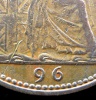
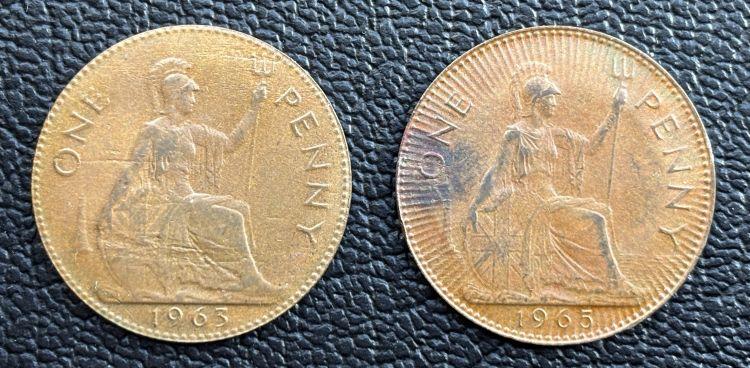
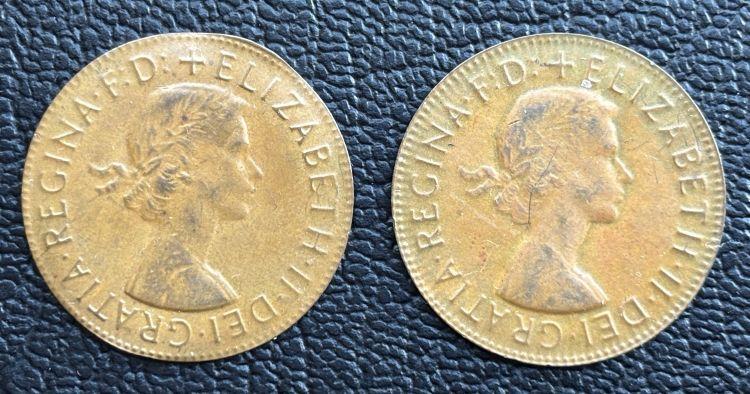
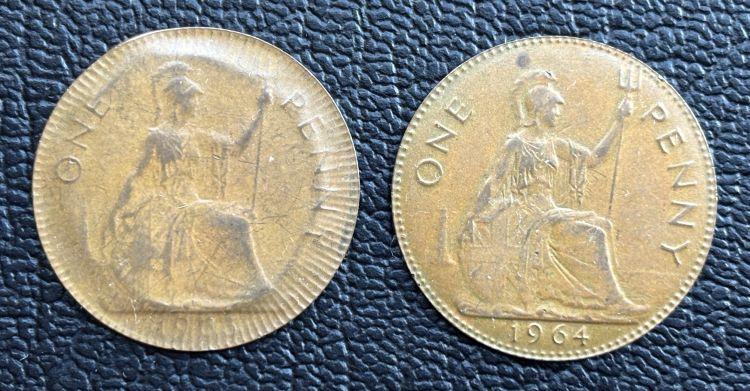
Going through my penny collection and picking out coins to sell.......I have four more of these thin flan examples. I can't offer any opinion on the acid bath theory so will simply defer to those who know better than I. But surely there can be genuine mint struck thin flan ones, due to an incorrect blank or a metal sheet rolled too thin? Reason I'm wondering is that one pair has the ghosting effect said to be caused by acid (if I understand the previous explanations correctly) but the other pair don't.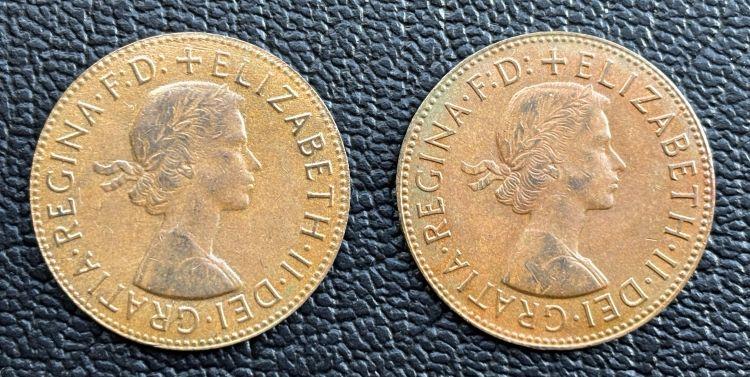
-

Halfpenny ID check
Zo Arms replied to mrbadexample's topic in British Coin Related Discussions & Enquiries
Of course it is. Listed as a half penny but I was to busy looking at the finer detail to notice the elephant. I'm back home tonight but yes. Definitely a penny. Thanks. -

Halfpenny ID check
Martinminerva replied to mrbadexample's topic in British Coin Related Discussions & Enquiries
Think it's a penny, Bob - bust of Victoria too big and too near linear circle at top to be a halfpenny. D'oh !! - Yesterday
-
Halfpenny ID check
Zo Arms replied to mrbadexample's topic in British Coin Related Discussions & Enquiries
And a screenshot of Bernie's 13#, to show the relationship between the I and the T's.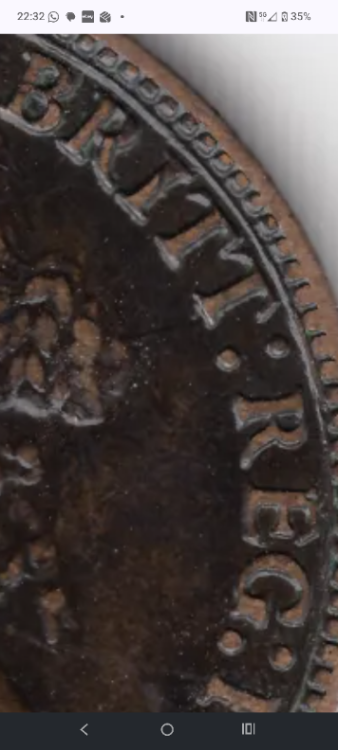
-
Halfpenny ID check
Zo Arms replied to mrbadexample's topic in British Coin Related Discussions & Enquiries
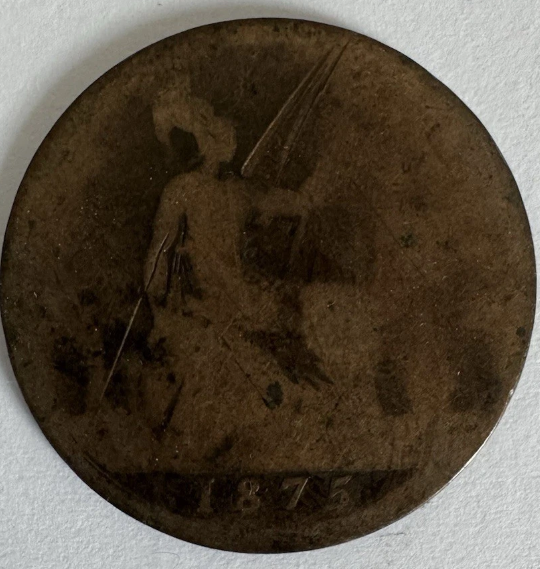
-
Halfpenny ID check
Zo Arms replied to mrbadexample's topic in British Coin Related Discussions & Enquiries
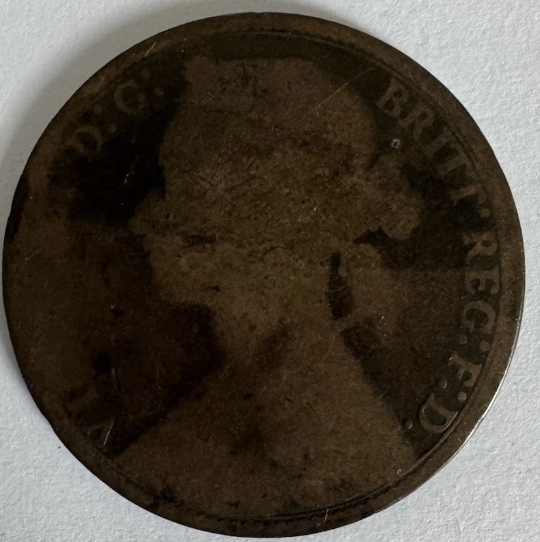
-
Halfpenny ID check
Zo Arms replied to mrbadexample's topic in British Coin Related Discussions & Enquiries
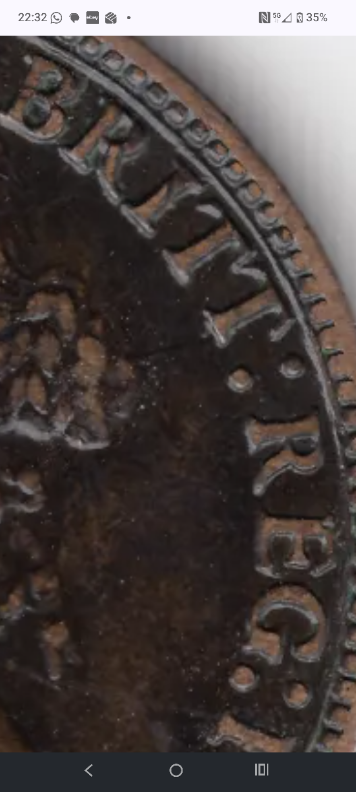
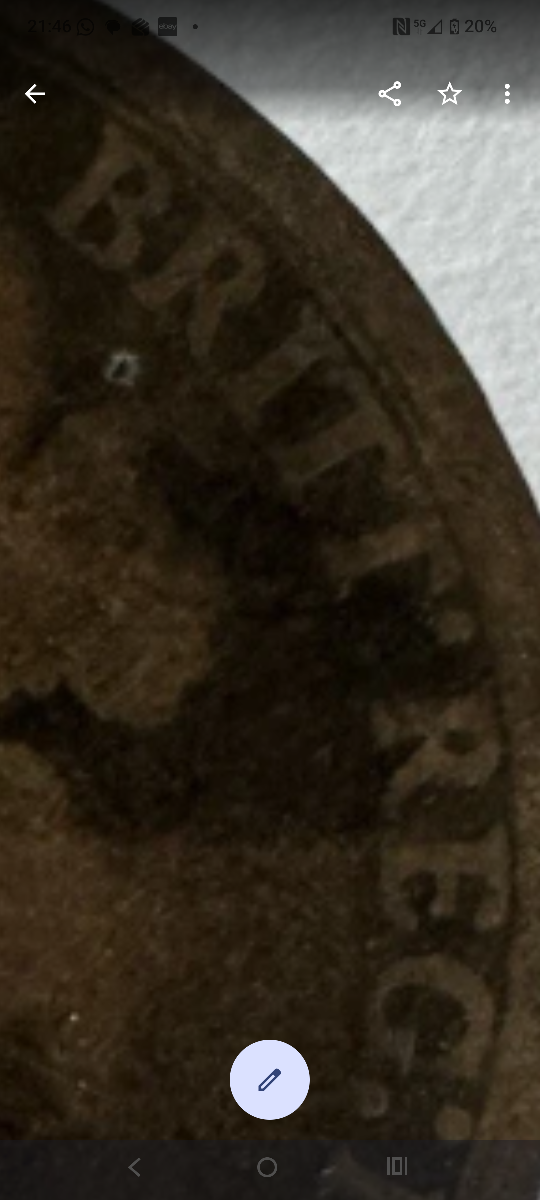
Evening all. I'm still alive. Silly question time. Picked this up on eBay the other day. 1875. The wide spacing of the colon, in relation to the G of REG, would suggest obverse 13. Thoughts on whether the T's of BRITT are sufficiently touching, to make it a 13#, sought. Desperate coin I know. Been delivered but working away from home at mo, so sellers photos.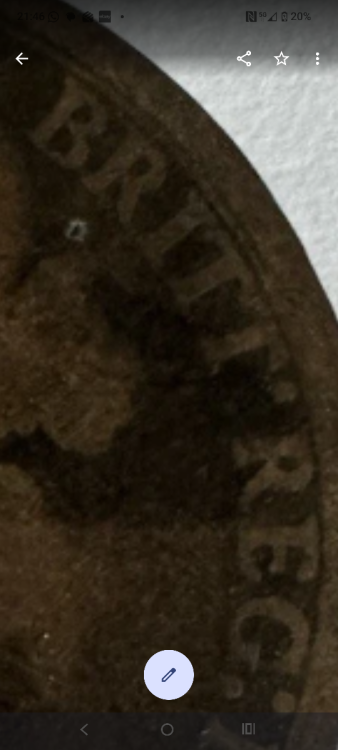
-
docbaker joined the community
-
Edward I Class VI (Posthumous Henry III) Bury St Edmunds Pennies
docbaker replied to Coinery's topic in British Hammered
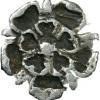
Good day I am compiling a sheet or two or medieval ligations, mostly from Henry III pennies, and have been helped immensely by Silbury Coins, however I see that your two coins seem to have an SR ligation henricvSRex, one I have not come across. The reason I am doing this started off as an aid for me - I am a self-recording detectorist and volunteer image editing time with the Portable Antiquities Scheme. My intention is to make the complete pages, or as complete as I can make it, available in the public domain, to help others identify poorly preserved coinage. I wonder if I might extract the SR ligation from one or both of your coin images? Happy to acknowledge contributions to the work. Kind regards Dr David BAKER (retired) -
Edward I Newcastle Pennies, relative scarcity of Class 10?
Rob replied to Coinery's topic in British Hammered
Drop him a line. Better still, come up to the next SMNS meeting as he will be giving the talk, so definitely there. You can then speak face to face over some Hyde's beer in the pub where we meet. His knowledge on all things Edwardian (Plantagenet) is considerable, but is always willing to learn. Happy to put you up if a bed is needed. -
Edward I Newcastle Pennies, relative scarcity of Class 10?
Coinery replied to Coinery's topic in British Hammered
Hi Rob, I’m not sure that I’ve moved any further forward with this Newcastle conundrum, hopefully time will provide more evidence and some experiential statistics? However, in the meantime, some great learning has come from stumbling across Denis’ article on the class 6 coins, which I raised a query about on here a while back. I’ve got some new information, I think, on the 6a2 he wrote about, and a new obverse example hiding in plain sight. I look forward to adding it here during the upcoming 2 weeks I have off after tonight. I think he’ll/you’ll find it interesting 🙂 - Last week
-
Edward I Newcastle Pennies, relative scarcity of Class 10?
Coinery replied to Coinery's topic in British Hammered
Thanks so much, Rob, really generous of you, I’ll digest that later, I’m currently in between nights. It’s interesting because I was reading a few of Denis’ articles on the BNS blog last night, that’s a rabbit hole of info. in itself. -
Edward I Newcastle Pennies, relative scarcity of Class 10?
Rob replied to Coinery's topic in British Hammered
I called Denis last night to disturb his break and he could only offer the following from memory. I think he misunderstood the question - but it was near the end of the evening. His reply as follows. 3e Northern mints. York (Royal), York (Episcopal), Newcastle, Durham. In my opinion not much to choose between them for relative rarity. York most common , then Newcastle and Durham about the same. 9b. Relatively common. Exeter, Chester and Kingston upon Hull the less common ones. Newcastle in early class 10 are very common even the 10X mules between class 9 and 10 which for other mints are rarer. Newcastle stops minting early in 10ab. I know of no data to confirm my thoughts or otherwise since data for amounts of silver coined is only available for London and Canterbury. All other rarity values are empirical. So to answer your question with my thoughts. It looks like the earlier pieces were lower mintage, but circulated less if typically found in higher grades. If the Newcastle 10s are more common, how does that tie in with larger production and troop movements given we did spend a lot of time fighting the Scots at this time. Sorry, I have too much to do, to do the spadework here. Just a thought. -
 Thanks, I'll try to work it into my next paycheck.
 -
 It should calculate it as £2 flat-rate for all deliveries to international addresses. I send the international ones from Germany as it's much, much cheaper than from the UK.
 -
I was just re-reading this old post, and I still can’t get my head around the scale of these numbers!
-
I really need to buy a copy of this. Do you remember the postage to the US so I can budget it in?
-
Edward I Newcastle Pennies, relative scarcity of Class 10?
Coinery replied to Coinery's topic in British Hammered
Many thanks TG I’ll message him. ☺️ I’ve been trying to glean a bit more information from the SCBI 39 about the closure date of the Newcastle mint, and of the date signatures of class 10, to see if I can work out how long the Newcastle mint operated into that class. The date of the mint closure appears to be September 1302 but, depending on who you listen to, the commencement of Class 10 is either September that same year (Fox brothers), or nearly 18 months earlier if you go with North? The Fox brothers’ date would suggest a minuscule mintage of class 10 coins under Newcastle, whereas North’s dates would allow a production window of 18 months. Given the number of Newcastle Class 10 coins available, it makes me wonder who’s got the commencement of the class right? I’d love to acquire every mint in every class someday! I’m currently this far down the rabbit hole, so fingers crossed: Class VI Bury St Edmunds (#1) Class VI Bury St Edmunds (#2) 1c London 1d London 1d London (1 x reversed N on reverse) 2a London 2b Canterbury 3b London 3c Canterbury 3e Newcastle 3e York 3g London 3g Lincoln 3g Durham 3g Bristol (1) 3g Bristol (2) 4c Canterbury eBay 4c London 4d London 6a1 London 7a London 8a London 8c London 9b1 Durham 9b1 Exeter 9b1 London 9b1 Newcastle 9b2 York (Royal) 10ab London 10ab Newcastle 10cf1 London 10cf2 Durham 10cf2a London 10cf3 London 10cf5 London 12a Canterbury 12a Canterbury 12a Canterbury 12a London 14 Canterbury 14 Bury St Edmunds 15c Bury St Edmunds eBay -
I think even a couple of the brass threepences came out very washed out, almost greyscale like, but everything was colour and the content is the same for this new colour p/b version.
-
 Maybe it was just me, but many of the images did seem almost identical. I didn't complain, but then you made the remark about a lack of responses, so I just theorised about why that might be? Good luck anyway
 -
I think that must be it.
-
Edward I Newcastle Pennies, relative scarcity of Class 10?
TomGoodheart replied to Coinery's topic in British Hammered
I have no idea, but it occurs to me that perhaps this is the sort of information that Martin Allen at the EMC might have to hand? Mra25@cam.ac.uk -
Definitely odd! As a "one-off" it is only ever going to have curiosity value. I wonder if it could be a blank from another country with reeded edges that has got jammed into the UK 1p dies? How do its dimensions and weight compare with a regular 1p?