
jaggy
-
Posts
1,425 -
Joined
-
Last visited
-
Days Won
41
Content Type
Profiles
Forums
Events
Downloads
Store
Gallery
Articles
Everything posted by jaggy
-
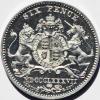 I have 39 of the 1964 sixpence. 38 of them have the 'I' slightly to the left of the bead. One has the 'I" on the bead.
 -
Well, I checked all 35 of my 1965 sixpences and not a single one has the 'I' to gap. Sorry
-
I have 35 1965 sixpences in a bag somewhere. I will have a look through them and, if I have more than one, will be happy to share.
-
Like this one although it is 1st milled issue? For myself, I would like a nice 1863 sixpence and a nicer 1848 sixpence. That would fill a couple of holes.
-
Collectors Coins Great Brit. 2015
jaggy replied to Chris Perkins's topic in British Coin Related Discussions & Enquiries
Outstanding info from both of you. That is really helpful. -
Collectors Coins Great Brit. 2015
jaggy replied to Chris Perkins's topic in British Coin Related Discussions & Enquiries
Question on published weights for sixpences. In CCGB you list the weights for Victoria Jubilee Head at 3.01 grams. When I weigh my coins, I am seeing 2.84g +/- 0.01g. Where do the weights come from and how comfortable are you that they are accurate? -
Appreciate the comments Rob! It would not be the first time I have found mistakes in the latest edition of ESC. I did note that Davies made no specific comment too. Still, for a coin that will probably fetch $2000 plus, I'm not sure I want to take the chance.
-
Heritage have an 1881 Proof sixpence in their upcoming auction. When I look at ESC (6th Edition, No. 3252) it lists an 1881 proof sixpence with two arrows facing up which, I assume, refers to the die orientation. When I look at the coin on Heritage, it would appear that the orientation is different (i.e. two arrows facing opposite directions). So, what does the forum think.? Is this a proof? Is Heritage wrong? Is ESC wrong? Or is this an unlisted variety? Am I misreading this? Or have I got my assumptions horribly wrong? http://coins.ha.com/itm/great-britain/great-britain-victoria-proof-6-pence-1881-pr63-ngc-/a/3044-29743.s?ic2=mytracked-lotspage-lotlinks-12202013
-
The way I see it, the UK market remains very much a 'raw' one whereas the US market is very much wedded to slabbed. London Coins are trying to create a market in the UK for slabbed coins through CGS but that market remains pretty limited to their own auctions. If I want to sell coins in the USA I really need to get them slabbed and the grade assigned is everything. There is often a significant price difference between an MS63 and an MS65 and these coins often sell at a premium to what we see in the UK. If I want to sell coins in the UK, 'raw' still works just as well. Maybe not at London Coins but certainly at Spink or DNW. Perhaps that will change over time. But I think that CGS have made a mistake by creating their own grading scale. They should have adopted the US one. That would have given their slabbed coins more credibility in the international market. I would not have my coins slabbed/graded by CGS because that would be too limiting.
-
I don't have an issue with slabbing. Although most of my coins are raw, at least 50 of them are slabbed. Neither do I have a problem with CGS or London Coins where I am a regular bidder/buyer. My question is really one about market credibility. As a regular buyer at Heritage, I see NGC and PCGS all the time. I never see CGS. Neither do I see CGS at DNW or Spink where I also buy. It is only really at the London Coins auctions. So my question is how credible compared to the more established third party graders is CGS and how well are they accepted in the market place as a result?
-
Let's See Your Toned English Milled Silver!
jaggy replied to Paulus's topic in British Coin Related Discussions & Enquiries
Appreciate the offer but Crowns are not really my thing. -
Let's See Your Toned English Milled Silver!
jaggy replied to Paulus's topic in British Coin Related Discussions & Enquiries
Yes, same one. Both the 1816s I bought were MS 65 but I like this one the best. -
Let's See Your Toned English Milled Silver!
jaggy replied to Paulus's topic in British Coin Related Discussions & Enquiries
This is one of the 1816 sixpences I referenced above: -
Let's See Your Toned English Milled Silver!
jaggy replied to Paulus's topic in British Coin Related Discussions & Enquiries
I don't remember the third ... but no matter. If you are happy with your buy then that is all that counts. I remember watching the 1899 go and I was surprised at the price it fetched. I already have two 1899 sixpences in UNC grade so wasn't planning to bid on yours in any event. Edit: You are right, there were three 1816 sixpences but the third was only an MS 63. I bought the two that were MS 65. -
Let's See Your Toned English Milled Silver!
jaggy replied to Paulus's topic in British Coin Related Discussions & Enquiries
Was that the same auction where I bought both the 1816 sixpences? If so, your 1899 wasn't cheap. -
I won both lots that I bid on and both at under my max bid. An 1826 sixpence and an 1887 withdrawn type sixpence with JEB on truncation. The latter is not quite the grade I wanted but will do until the right one comes along.
-
1860 Pattern Pennies in Spink Auction
jaggy replied to Bernie's topic in British Coin Related Discussions & Enquiries
Well, I did buy a Charles I sixpence at Spink. A bit of a 'cheapie' but no photos till I receive it. I have two bids in at London Coins so we will see how that goes. And then there is DNW; not much there for me so I don't know if I will come away with anything. I do bid at Heritage and remember seeing the Bob Bennett collection. But, unfortunately, I don't know anything about him. Perhaps an email to Heritage would help. I have always found them to be very good. -
1860 Pattern Pennies in Spink Auction
jaggy replied to Bernie's topic in British Coin Related Discussions & Enquiries
I don't buy coins as an investment either. But I apply the same form of discipline as I would when I am investing. I have been collecting for 30 years so if I have to wait another 5 years to get the right coin then that is okay. In the meantime there will be plenty of other right' coins to keep me happy. -
1860 Pattern Pennies in Spink Auction
jaggy replied to Bernie's topic in British Coin Related Discussions & Enquiries
That's absolutely true, of course. I've made several auction bids where the winning bid has been just £50 above mine. As you say, we never know. You need to have that line in the sand above which you will not bid. In an auction, discipline (as with other forms of investing) is essential otherwise you can get drawn into a bidding war and end up paying well over what a coin is worth. I was the underbidder on the 1791 pattern sixpence. Having recently acquired the 1788 and 1790 patterns, I had a view on what this coin was worth. My line in the sand was £650 and the coin went for £700. Well above estimate I would add. Coin collecting is a long game and another 1791 Pattern will show up sooner or later and, hopefully, I will get it then. -
Pounds, Shillings, Guineas and Florines
jaggy replied to guiri's topic in British Coin Related Discussions & Enquiries
half-crown was also 'half a dollar' (at least in Glasgow) -
Looking to grade my sixpence
jaggy replied to bhx7's topic in British Coin Related Discussions & Enquiries
Yes, sounds like a fair price. -
Looking to grade my sixpence
jaggy replied to bhx7's topic in British Coin Related Discussions & Enquiries
By way of comparison, here is my 1924 sixpence: -
Looking to grade my sixpence
jaggy replied to bhx7's topic in British Coin Related Discussions & Enquiries
That was my first impression too. -
Has anyone started going through their collection and reconciling 5th edition and 6th edition? I just started and I am concerned. For example: 5th Edition - 1844 sixpence ESC 1690 - S; ESC 1690A - 1844 sixpence, large 44 in date - R2 6th Edition - 1844 sixpence ESC 3178 - R2 - x-ref 1690A; ESC 3177 - 1844 sixpence, large 44 with serifs - S - x-ref 1690. Am I missing something or has the 6th edition managed to get this the wrong way around?
-
Received my copy today. First impressions are positive although I have not started working through on a coin by coin basis. I'm not quite sure what the purpose of the Provenances section is. If a coin is unique then fair enough. But I looked at it with regard to a couple of my 'R4' coins and I could not see how it was relevant to me.