
Sword
-
Posts
2,498 -
Joined
-
Last visited
-
Days Won
133
Content Type
Profiles
Forums
Events
Downloads
Store
Gallery
Articles
Everything posted by Sword
-
4 Points Difference Is Valued At £350
Sword replied to azda's topic in British Coin Related Discussions & Enquiries
It seems clear to me that the coin on the right is the sharper, better strike. The one on the left has lovelier tone certainly, but less detail. Am I alone in thinking that the coin on the right is acutally a matt proof and not a currency coin? The strike looks to me to be too good for normal currency (esp. in the area of St George's chest and strap). The grading would make more sense if that's the case. -
I think NGC is claiming that they have now graded more coins in total than PGCS. I wonder how profitable is their Paris branch compared to their US operations.
-
Plastic Fever? Am I Missing Something?
Sword replied to brg5658's topic in British Coin Related Discussions & Enquiries
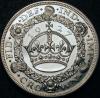
There is a Proof 66 PCGS 1927 crown in the next W&W auction. Estimate of £800!! -
Yes, the old 50p is thicker than the new ones. The old ones are 2.5mm, the new ones are 1.78mm. What is thickness of your coin?
-
I assume you have checked that it is not two coins joined together (i.e. no joining line at the edge)? There is no reason why a fake should have a thick flan.
-
The Britannia Designs
Sword replied to damian1986's topic in British Coin Related Discussions & Enquiries
Thanks for the info Rob. A nude Britannia must have been controversial at the time and the artist was very brave. Since it is probably very rare and sex sells, I guess it must be exceedingly expensive today. (Just guessing as I don't collect bronze) -
Always Buy The Highest Graded Coin That You Can Afford
Sword replied to damian1986's topic in Beginners area
I like to collect high grade coins. A F or VF coin doesn't do the original design / engraving enough justice as much of the details are misssing. However, with a modest budget, my collection will always be very small and there will be many interesting coins missing. I am a type collector and have no interest in owing different dates of the same coin let alone a date run. The logic is on the line of, if you own a UNC1894 halfcrown then why bother spending more money on the other more common Old Head halfcrowns? I also only buy coins I like the look of and try not to buy a coin just to tick a box. Buying high grade coins have the advantage of a) being better investment not needing to upgrade later on. But I do admit that one learns alot more about all aspects of coins by handling a large number and this will not be possible (without deep pockets) if one insists on owing high grades. But be sure you know how to handle coins properly before getting high grades. Wouldn't want to turn an UNC into EF by friction! -
The Britannia Designs
Sword replied to damian1986's topic in British Coin Related Discussions & Enquiries
I have zero knowledge with copper coins. Is this a token of some kind or an official pattern? -
The Britannia Designs
Sword replied to damian1986's topic in British Coin Related Discussions & Enquiries
This is my favourite Britannia so far! You'd have to have it in UNC, though, it wouldn't be the same otherwise!This is indeed a beautiful design with a graceful Britannia. -
It is certainly a fantastic looking coin. Shame that the seller was difficult.
-
I'm not sure about the predecimal position, but anything post-1971 can't be melted; that IS illegal. This is from the guidelines issued by the HM Treasury. "(1) No person shall, except under the authority of a licence granted by the Treasury, melt down or break up any metal coin which is for the time being current in the United Kingdom or which, having been current there, has at any time after 16th May 1969 ceased to be so." https://www.gov.uk/government/uploads/system/uploads/attachment_data/file/194220/guidance_coinage_banknotes.pdf This statment suggests that it is fine prior to that date. People melt pre 1947 silver coins, and I can't see why bronze coins should be any different. Unfortunately, that quote was the very one that caused the earlier uproar! If you examine its logic, it is saying that even if a coin WAS legal tender in the UK, but has been declared no longer legal tender after 16/5/69, it's still illegal to melt. That little word "or", you see. Thanks for pointing that out Peck. So one can't melt pre decimal pennies as they were demonitzed after 5/69. But by that logic, one can't melt silver shillings or florins or come to think of it, even sovereigns? Doesn't make any sense now.
-
I'm not sure about the predecimal position, but anything post-1971 can't be melted; that IS illegal. This is from the guidelines issued by the HM Treasury. "(1) No person shall, except under the authority of a licence granted by the Treasury, melt down or break up any metal coin which is for the time being current in the United Kingdom or which, having been current there, has at any time after 16th May 1969 ceased to be so." https://www.gov.uk/government/uploads/system/uploads/attachment_data/file/194220/guidance_coinage_banknotes.pdf This statment suggests that it is fine prior to that date. People melt pre 1947 silver coins, and I can't see why bronze coins should be any different.
-
I would also support TPG discussions to be moved elsewhere. Debating this topic every couple of months doesn't do any good to the harmony of the forum. It is just about the only discussion topic that can make people fall out.
-
Blimey, TPGC's what? Yes, what's happened Stuart? Or have you, like me, just finished reading all the posts in this thread?! On the head, Paulus! Right on the head! Edit: it really needs its own dedicated forum page, it's such a popular debate! It would would probably get the google number 1 slot for search terms 'CGS' NGC' PCGS' ahead of the slabbing companies themselves, such is the volume of material in this area! Just sayin'! I am mostly finished with the subject myself, I have to say! I did suggest that a while back. We have surely generated over 100 pages of discussion by now. Just for fun, I have just search "CGS NGC PCGS" on google. Predecimal Forum only comes up on top of page 2
-
I am simply speechless!
-
Could have been a dealer who believes (rightly or wrongly) that the slabbed coins will sell quicker or for a little more?
-
I am not sure if CGS has scaled back. They graded about 4000 coins in the past year which is about the norm for them. Someone has supposedly submitted over 1000 coins in a single consignment last June. One problem the novice learning the Sheldon Scale is that the TPGs (and some dealers) would say one thing but do another. The definition of MS on the Sheldon scale is that there should be absolutely no wear. But we all know that the majority of coins MS62 / MS63 or below do have some wear and should really be graded AU58 at best. Consistentcy can only be achieve if people actually grade according to the agreed criteria.
-
Happy Birthday guys!
-
Just a thought. If there are collectors in say the US prepared to pay £20k for such a coin, then the Royal mint should consider making a single gold specimen of all the coins they produce each year. Price these "unique coins" at £10K each and they will make several hundred thousands a year!
-
Just an Idle thought. When the 2012 50pence coins were made, 2 examples of each design (29 designs in total) were produced in gold. One was given to the artist and the other to the Royal Mint museum. In the not so long future, they will surely come onto the market. How much do you think each coin will sell for? For me, the insane number of commenorative coins produced by the Royal Mint in the last 2 decades has put me right off in collecting anything recent. I don't find the idea of owning a gold 2012 50pence exciting even if it is the only example available to the public. Still, I am sure some collectors will love the idea of owning a practically unique coin!
-
I read the article. But I think that, if we are commemorating the sacrifice of our troops in WW1, then a focus for 2014 should be the sacrifice of the BEF at Mons, Le Cateau, the Aisne and Ypres rather than a recruiting posters supposedly representing a call to arms. My grandfather was in the reserve in 1914. As a member of the Royal Garrison Artillery, he arrived in France in February 1915 and stayed there until he was demobilised in February of 1919. Both his brothers also served with the youngest contracting TB from which he died in 1921. I have his medals in my possession (including his Imperial Service Medal) and have been able to access his medal card via Ancestry. I agree that images highlighting the waste of life in battles, suffering, heroism in the field would be a lot more appropriate than the Kitchener poster.
-
There was an article in the daily mail discussing the coin. http://www.dailymail.co.uk/news/article-2531850/Royal-Mint-unveils-2-coin-featuring-famous-image-Lord-Kitchener-commemorate-100th-anniversary-World-War-One.html
-
I think it would have been better if the RM waited until 2018 and commenorate the end of the war instead. Apparently, they are going to issue coins with WWI themes for the next 4 years.
-
I agree Dave, trouble is they would f*ck it up! Look what the French have done to Roty's beautiful Sower Geez that looks like a Lowry. The only recent Design i like was the 1997 £2 Britannia REV design, they must of sacked that engraver because nothing has come up to scratch since and i can't remember what was great previous to that, i think we're talking decades. They don't seem to have any artistic flair at the mint anymore.Was that the standing Britannia in a warship with flowing hair and robes? That was a cracking design! I have just been to the engraver / designer's website. http://www.philipnathanart.co.uk/coins/ Really like some of his work. He is in his seventies and so I guess has retired from royal mint coin designing.
-
Very nice!