Sword
-
Posts
2,464 -
Joined
-
Last visited
-
Days Won
127
Content Type
Profiles
Forums
Events
Downloads
Store
Gallery
Articles
Everything posted by Sword
-
2 x 2, Quadrums, Capsules and paranoia
Sword replied to Sword's topic in British Coin Related Discussions & Enquiries
Thanks for your advice guys. I am into halfcrowns at the moment and will try out Quadrums / Everslab as the coins will fit perfectly in 32mm holes. -
I know this have been discussed before but I still need some advice. What is the safest way to store a high grade coin so that it can withstand some “rough handling”? We all know the conventional wisdom is to use a coin cabinet, wear gloves, don’t talk and control humidity. However, I am just not the careful type and have picked up some bad habits from my childhood days when I was collecting modern proofs sealed in plastic. I have a habit of looking at my coins during TV adverts and sometimes even on the garden table when the weather is nice. Initially I tried coin capsules but immediately realised that even with less than 1mm of extra space, the coins can rattle a bit and might pick up high point friction. I have read some nice things about quadrums. However, the foam holes also come in 1mm increments and so in theory the coins won’t be held totally tight either. I confess to using CGS when I was buying high grade coins from LCA. However, we all know what happened to CGS and it is no longer an option. Currently, I am using 2x2 self-adhesive coin holders. I like the way the coin is sealed in. However, the problem is that the coin stands proud of the card holder and I am worried it rubbing against surfaces. So to be safe, I would cut up another coin holder, remove the plastic windows and stick the two halves on the original holder. This way, I have double the thickness of the card and the coin is no longer proud. Am I just paranoid about friction? Are coin capsules and quadrums 100% safe even if there is a tiny bit of movement?
-
Tips with hammered coins?
Sword replied to Sword's topic in British Coin Related Discussions & Enquiries
Many thanks for your expertise gents. -
My understanding is that you can access photos, population reports, CGS valuations etc. once you have paid the £99. In addition, you can also apply to be a grading member if you pay a £499 deposit upfront (unless you have slabbed enough coins with them in the past) If you don't want any more coins graded but simply want to access the CGS data such as photos, then they intend to charge £49 for it. However, this level of service is not currently available and you will have to wait. http://www.coingradingservices.co.uk/lcgs_menu/price.php You might want to consider trying to take your own photos instead.
-
You can no longer download CGS photos from the London Coins site unless you have paid unfortunately.
-
Tips with hammered coins?
Sword replied to Sword's topic in British Coin Related Discussions & Enquiries
My Charles I halfcrown has been delivered today and the weight is 15.09g. Can anyone tell me what is the acceptable weight range? Thanks. -
Tips with hammered coins?
Sword replied to Sword's topic in British Coin Related Discussions & Enquiries
GF examples are indeed very common in auctions. Thanks for the link. Looks like I might want to aim for better than just VF. This particular coin type loses its appeal for me if one of Edward's eyes is not showing well (as in GF examples) -
Tips with hammered coins?
Sword replied to Sword's topic in British Coin Related Discussions & Enquiries
Many thanks for the advice Tom. I confess that I have never handled a hammered coin before and so your tips are really appreciated. I totally agree that eye appeal is even more important for hammered. (I really won't enjoy owing a near mint coin that has weak king's feature for instance) I have been looking at coins from the DNW, LCA and Lockdale websites for quite a while to get an idea of the sort of coins available. I think I will need to save up for an Edward VI shilling next. Having said I am aware that a VF problem free example is pricey. -
Tips with hammered coins?
Sword replied to Sword's topic in British Coin Related Discussions & Enquiries
Thank you so much for sharing that. -
Tips with hammered coins?
Sword replied to Sword's topic in British Coin Related Discussions & Enquiries
Many thanks Rob for your expertise! Much appreciated. Is it more usual for the legend to read MAG and HIB rather than MA and HI? -
I wanted to buy my first hammered coin and have decided that a Charles I halfcrown would be the best bet. A common type can be picked up at a reasonable price. The history of that period is fascinating. A halfcrown is an impressive large lump of silver too. The problem is that my knowledge of hammered coins is very limited and I am not certain about what to look for. (But then again, I will probably not get better until I have brought a few). At the end I have brought this Charles I halfcrown from the recent LCA. I like the coin because 1) it's round, 2) well centred, 3) no weak areas, 4) decent enough grade, with rather good details ( LCA graded it as VF) 5) full flan as far as I can tell. It ended up costing me £260 + juice. I am very grateful to receive any comments. Are there any problems with it? Would you grade it VF? Is the price OK? Just be frank! I noticed that there are some letters missing on the legend and think this sort of thing is rather common. Can any one tell me how that occurred. The mintmark is bell and I assume that the year is therefore 1634-5 (from Spink). The Bell mint mark is given the number 60 in spink. How was the number 60 assigned? Many thanks!
-
Looking at the table in the link, I do find it rather amusing that the grading terms in foreign languages can't be taken literally either. I can read very little Japanese and hope that I haven't translated too badly: Sheldon Japanese Grade My Translation AG3 収集不適品 Not suitable for collection MS63 未使用品 Goods that have never been used MS66 完全未使用品 Completely unused goods MS68 空前絶後品 Never seen before and will never see again
-
Most people would admire a 100+ years old circulating coin graded MS68 (or CGS equivalent) as an object of high rarity. I certainly can't see any interest for a modern proof coin wrapped in plastic moments after birth and later graded as MS70 or CGS123...
-
Thanks for sharing your experience! I think LCA's grading and their descriptions have gone downhill a bit in recent years. Things like hairlines often don't show up on photos and so accurate + comprehensive descriptions are so important. Having said that I have also placed a bid on their weekend auction.
-
I agree that it is probably best to leave it alone. It looks rather nice for its grade and the "stuff" is not distracting and has blended in rather well. If you decide to clean it, then it is the right sort of coin to experiment on and gain some experience. You don't want to attempt your first cleaning on a UNC valuable coin. (Personally, I have not attempted any cleaning myself)
-
Let's See Your Toned English Milled Silver!
Sword replied to Paulus's topic in British Coin Related Discussions & Enquiries
NGC MS62. No wear as far as I can tell but a rather large number of contact marks and scuffs on the obverses. -
Let's See Your Toned English Milled Silver!
Sword replied to Paulus's topic in British Coin Related Discussions & Enquiries


-
Let's See Your Toned English Milled Silver!
Sword replied to Paulus's topic in British Coin Related Discussions & Enquiries
It's interesting that some Edward VII coins can tone so darkly around the legend leaving the rest of the coin untoned and lustrous. Here are a couple examples of mine. They are common coins but I like the tone.

-
There were times previously when the main forum was dominated by heated discussions on the merits (or lack of) of TPGs. This was undoubtedly off-putting for a number of people. However, TPG discussions now take place discretely in its own sub-forum. People entering the TPG sub-forum should know what to expect. I think I have exhausted the things (both good and bad) I can say about CGS for now. But since this is the called the negative thread, I will join in the fun and add this: https://taxfreegold.co.uk/cgs-uk.biz.html
-
Personally, I think there is (or was!) some premium for coins in CGS holders providing the grade is high. E.g. CGS 80+ for later milled crowns and CGS 80/82+ for smaller coins. Most of us would agree with the cliche "buy the coin and not the slab". However, I think a grade on a slab does influence opinions. e.g. if a crown is graded CGS 80, many would assume it is UNC unless observations proved otherwise. The coin is somehow given the benefit of the doubt. Looking at Non's 1913 HC, I confess I can't tell from the photo how much of the loss of details in the obverse is due to wear and how much is due to weak strike. But if it has a grade CGS 75, then many people can believe it is weak strike if they have only a photo to go on. I have no reasons to think that CGS has graded the coins in this tread inaccurately. But as Paul and Azda have also pointed out, grading early George V by photos alone is just difficult. Weak strike can be mistaken for wear. With regard to my own 1911 HC, the original auction description was "UNC toning over original mint lustre". With the coin in hand, I don't think the CGS 80 grade given later on is unreasonable. CGS has annoyed me on numerous occasions by long grading times, using scratched or even cracked holders, slabbing foreign matter with the coin etc but I think their grading is generally OK. (I have always been suspicious of the grades they give to their own coins however) I do agree with Azda to some extent that LCGS / CGS slabs might be less desirable in the future. Now there is no guarantee of any kind. They have become first party grading. People are now more likely to break open their slabs and eventually the meanings of their grades can fade.
-
I suppose they would be flexible in this case. They have been flexible enough with slabbing rare pennies with verdigris providing the grades are low. I think either Tom or Coinery has mentioned before how would they deal with hammered coins with small flan cracks. Guess we might never find out due to the lack of hammered coins submitted to them.
-
The old CGS website gave a list of things they would reject a coin. These included flan flaw, flan crack, lamination, etc.
-
I think it is important to wipe all possible properties from photos before posting them. To be safe, I also use a camera without GPS.
-
Yes, you can crack the coin out and resubmit it again
-
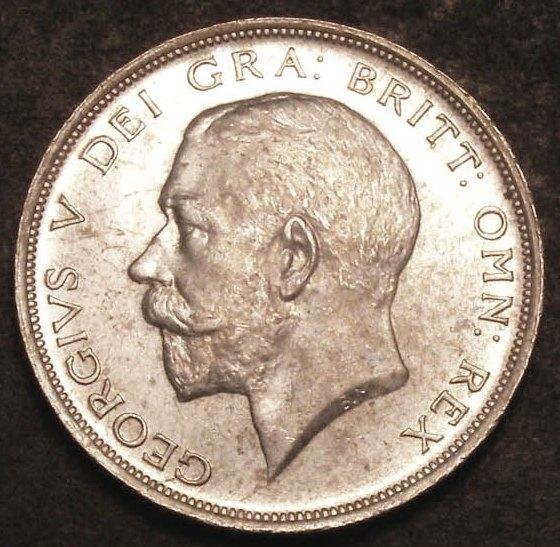
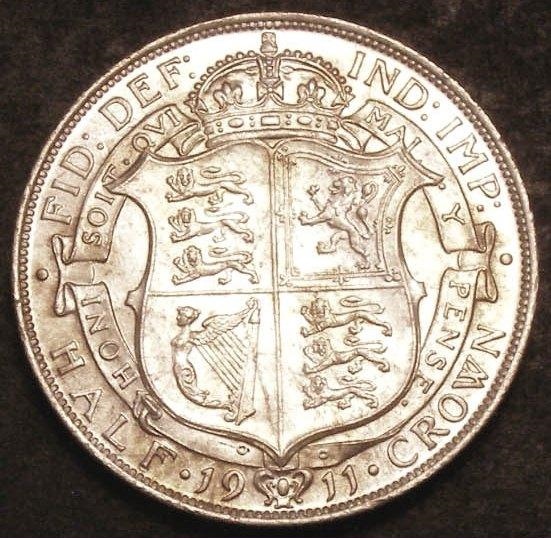
Enough of the company CGS and back to George V halfcrowns. I have brought a 1911 a few years back. I had it slabbed with CGS afterwards and it got a CGS 80 grade. Interested to hear how you think it compare with the ones posted earlier.