Coinery
-
Posts
8,039 -
Joined
-
Last visited
-
Days Won
137
Content Type
Profiles
Forums
Events
Downloads
Store
Gallery
Articles
Everything posted by Coinery
-
Amazing that they’d gamble an 1800+ positive feedback on something like this? Crazy!
-
 Equally, the bottom lip of the upper image extends beyond the top lip, plus the cheek has a flatter profile on one. Also, and I realise it’s exaggerated by one of the images being slightly tilted, but the alignment of her features below the nose are also very different!
-
Just seeing this for the first time…were there thought to be any differences in those bust profiles, because clearly there are?
-
Credit as attached!


-
So it looks like the only defining difference, according to Withers, between type 1 and 2 is the pellet in annulet at the centre of the reverse cross hence, I’m guessing, the migration of the lombardic H into type 2? Obviously Lis pm is Type 1 only, but these can also be pm none. Type 2 is none. They’ve grouped the third and the posthumous coins together, they say, because of a lack of clarity, with separations previously being uncertainly made by the Lombardic/Roman H. Whitton says punctuation with saltire/trefoil being third issue, and pellet/lozenge representing the posthumous issue. You’ll obviously know a lot of the above, it’s only added to the question for easy assimilation of the new details. All interesting stuff. Oh, and the red dots represent illustrated coins (not always matching ob/rev, though, so worth bearing that in mind). Edit: this is of course for Tower coinage, I didn’t look at anything else. Interestingly, I was just looking at North and he separates the 3rd/posthumous tower coins by Roman/lombardic lettering, whereas the SCBC goes with the Withers’ distinction (or vice versa).
-
In bed, post nights…will come back at this tomorrow. Speak soon
-
Just collected my book from the mother-in-laws… So, assuming that’s a Roman H, we’re talking Type 2 (no IM) with only one documented ’standard’ reverse (rev a) with no errors mentioned. I did look through the earlier reverse dies of Henry’s reign, just in case it was an earlier die, but no mention of inverted G for D throughout his reign. There are 11 obverses recorded for Type 2…easier to attach than quote (credit the Galata Guide to Small Change, P & B Withers 2023)

-
Here’s another example of a no-contraction class 8 (this one’s 8a)! I only took a closer look because I wondered whether it was a die-match for yours…sadly it’s not, so the 8a 8b saga continues.

-
It’s definitely not a class 9, different bust and eyes entirely, plus the legend is much less ‘chunky’ on the 9a1 - you only have to decide which S you have, and then you can decide whether it’s an 8a or 8b I have to be honest and say I’m not exposed to enough of these coins to make a call either way on what S you have, you’ll probably need to find an identical coin/die, with hopefully the S undamaged. I’m reliably informed that class 8 is a rarer class and a difficult group to collect in better grades, so you might have some searching to do!
-
Here are the notches on my 8a and 8c with clear contraction marks but, as I mentioned, it’s well documented that they don’t all have them.


-
It’s an 8a or 8b with the S being the deciding factor, whether it’s a top-tilted S or not? If it were mine I’d be looking for a die-match to decide, once and for all, which S’s they are, though there may be some here with sharper/more honed eyes than mine, who can say which S that is? re the apostrophes, they don’t all have them.
-
Penny Acquisition of the week
Coinery replied to Paulus's topic in British Coin Related Discussions & Enquiries
Yes I was referring to the bead you mentioned…it sits pretty well protected in a channel between deep devices and looks to be present, even on Jerry’s low-grade example? Of course, if it’s common across other obverses, it’s nothing but a moot point.
-
Penny Acquisition of the week
Coinery replied to Paulus's topic in British Coin Related Discussions & Enquiries
Would that eclipse on the middle bead also be a tell tale, it’s a well-protected bead for ID, and is also on both coins? Or is this present on other dies? -
I’ve got a copy in transit, so can let you know later this week. The inverted G is clear, unlike the N…is it not a clogged left leg and a broken right, with the fragment eastward either a scud, or maybe even the broken leg itself?

-
James I Shilling ID
Coinery replied to Sleepy's topic in British Coin Related Discussions & Enquiries
Hi there! The James I shilling is indeed S2654 with the mint mark actually being a worn Lis. The Charles I shilling is correct 👍 -
Nothing wrong with a bit of lippy
-
"Penny Overs" 1865 Penny 5 over 3
Coinery replied to The Bee's topic in British Coin Related Discussions & Enquiries
Really? Is that all it means? -
It’s an absolutely beautiful thing, though, gorgeous photography.
-
Trying to Unravel the Edward I Class 6 Pennies
Coinery replied to Coinery's topic in British Hammered
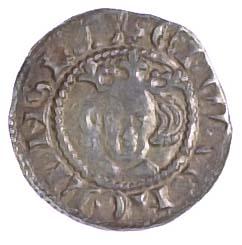
-
Trying to Unravel the Edward I Class 6 Pennies
Coinery replied to Coinery's topic in British Hammered
Further complicated by this ?6a (6a1) from the Harris sale. Definitely not the crude workmanship of the other examples?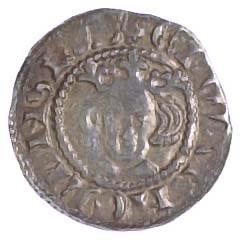
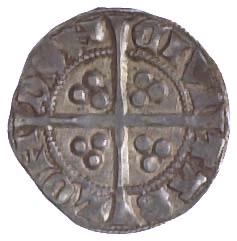
-
Trying to Unravel the Edward I Class 6 Pennies
Coinery replied to Coinery's topic in British Hammered
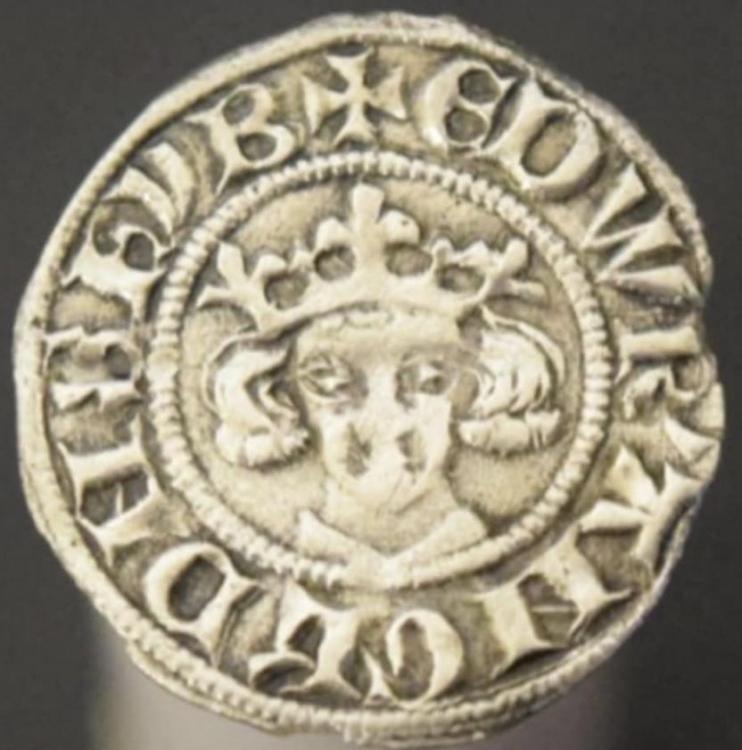
And Descartes old coin that is thought to be a 6a2, the only example I’ve been able to look at!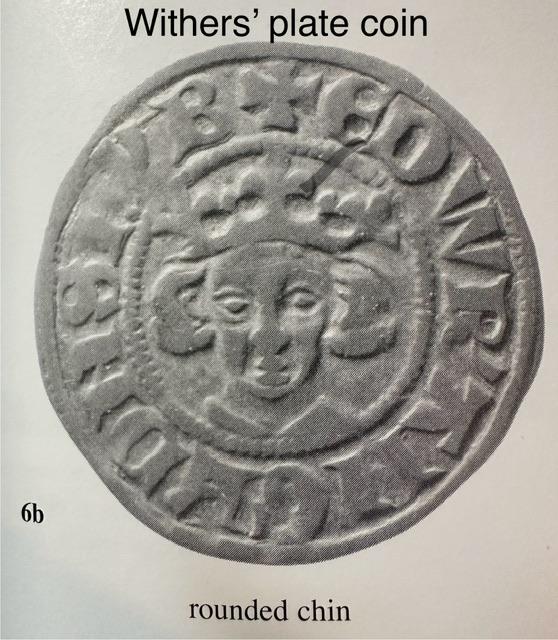
-
Trying to Unravel the Edward I Class 6 Pennies
Coinery replied to Coinery's topic in British Hammered
Pellet eyes of 6b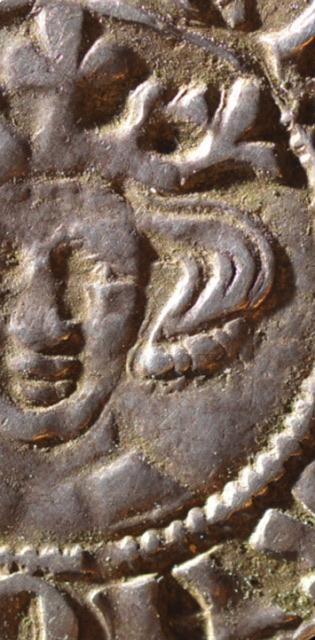
-
Trying to Unravel the Edward I Class 6 Pennies
Coinery replied to Coinery's topic in British Hammered
Withers’ plate coin…almond eyes or not? What class would you call it?
-
Trying to Unravel the Edward I Class 6 Pennies
Coinery replied to Coinery's topic in British Hammered
Spink coin, likely the same die as the North plate coin for 6a with the B of hYB over the initial mark.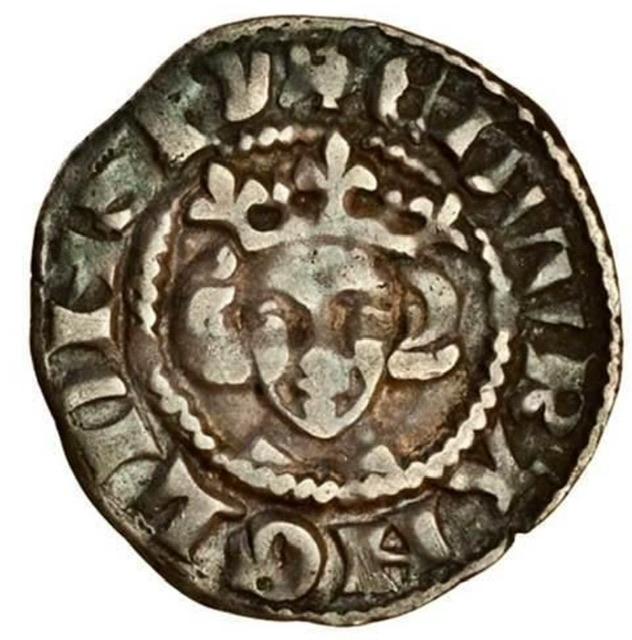
-
Trying to Unravel the Edward I Class 6 Pennies
Coinery replied to Coinery's topic in British Hammered