
VickySilver
-
Posts
3,769 -
Joined
-
Last visited
-
Days Won
70
Content Type
Profiles
Forums
Events
Downloads
Store
Gallery
Articles
Everything posted by VickySilver
-
I tend to agree - photos can be most deceiving. I can show you graded MS 64 Brit coins that would absolutely KNOCK your socks off. In general a grade of 64 would certainly not be a VF in Brit standards. I agree the photo does not look good and an in-hand view would be necessary.
-
Sorry to have missed it as I had an engagement. I really missed that one. Regrets.
-
My 1887 Young Head Halfcrown Went Prooflike at NGC!
VickySilver replied to VickySilver's topic in TPG Discussions
Was that a proof? Wow, if ever to sell I need that venue! I bought a proof 1863 florin about 10-12 years ago from Baldwin's (basement?) for 1250, possibly a better piece - it graded proof 63+, subjective but probably accurate IMHO... -
My 1887 Young Head Halfcrown Went Prooflike at NGC!
VickySilver replied to VickySilver's topic in TPG Discussions
Obviously subjective, but as it is my coin that I got because of its superior "finish", and yes Proofllke presentation I requested specific evaluation as such in recognition of that I have seen a great many Victorian silver pieces and note that many from even the 1840s and 50s to be of more than average attractiveness with very reflective fields. And this includes the 1887 halfcrown denomination. BUT, as I have said this coin stood out and was remarkable enough that even a very well-known export (whose name I shall leave out) that was visiting on this side of the Atlantic agreed. As I think even Rob might agree that the coin is of special status in that regard. A particular varietal? Not in my opinion. I would not dismiss it as simply a subjective and go on. A really pleasant coin in its own right but not beginning to match a currency 2/6 1839 in true mint state or an 1848/6 in like condition for that matter. -
I concur. As you might guess, I do like Victorian silver (certainly including shillings) but have no real interest in die numbers or "micro-varietals" for that matter. Nothing against those that do, and more power to them. Now, some die numbers and their associations do interest me - like the DRITTANIAR issues of 6d that went to Cyprus & die number 6,etc.
-
Yes, this coin is superior to all that I have seen, regardless. It went MS 63PL and is the only prooflike YH verified at either major TPG. Some other specimens are verging on it, but just not quite there. I will tr to post some pictures, but am having trouble at the moment. (still!).
-
There certainly appear to be significant remnants of the "H" on this one, look again. I have a GVF 1882 but of the wrong overall type that I bought off Colin Cooke many years ago. It has no sign of an "H". To me, this coin is a bit like the USA 1922 "no D" cent, where all coins were known to be struck at the Denver mint but some with the "D" polished away. The mintmark was variously said to not show as the die was filled or worn or both & so many middle spectrum coins. I am still not sure how in the case of this cent or the OP 1882 coin how it can be ruled out that mintmarks were committed from die prep on any reverse dies even if the coin is not of accepted reverse type for "genuine" no-H coins.
-
George V 1916 Half Crown .....Flaw from mint?
VickySilver replied to Citizen H's topic in TPG Discussions
I was thinking perhaps grease in the die as there is no relief to the part of the "E" it seems you are referring to. -
Weigh it please.
-
Thanks for that. It seems, if we take him exactly that the proofs are a lot more common that the much lower figures we had seen before (which I have always felt to be the case given the frequency of their sales). It does leave that bit of the auction record though....
-
This just sold at auction for 160,000 Swiss Francs, so I guess with commission just over that in pounds...Sorry no pictures here for now. Very rare and right up my alley but WAAAY out of my affordability range. I have the die module/trial for the reverse gotten some years ago but not nearly as exciting as this one.
-
1956 Thin Flan Thruppence, not Gurnsey
VickySilver replied to DrP's topic in British Coin Related Discussions & Enquiries
I have thin planchet struck pennies, threepence, shillings, and I think halfpennies - all this much more common in the late '50s to '60s. So legit specimens do exist and probably not all that valuable but interesting none-the-less. -
Hi Richard,
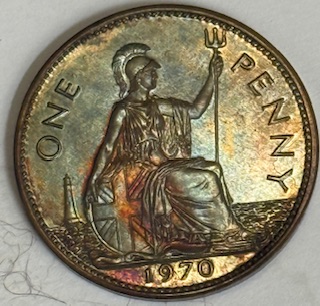
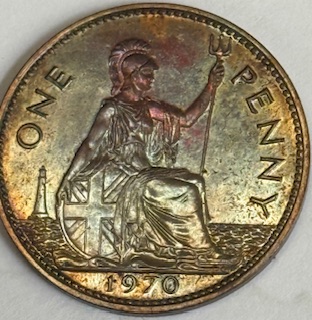
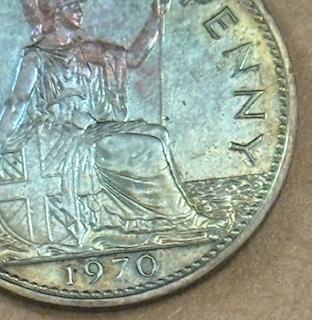
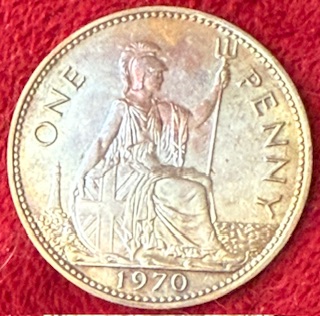
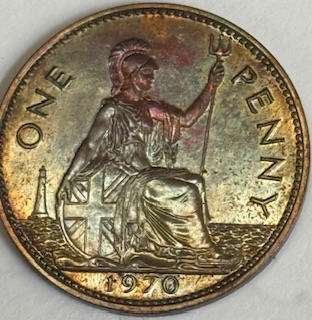
What do you think of the 1970 proof penny with double reverse that I posted? Weight seems accurate (9.4 gms) and don't see the usual seam or residuals of it?
Best,
Eric
-
It is from the die [skip] rotating about an axial radius and can affect other areas depending on the axis.
-
I think some have called that "skip" with the die slipping on strike...Something of that sort...Comes with a shelf-like appearance at the date and occasionally other devices.
-
1956 Thin Flan Thruppence, not Gurnsey
VickySilver replied to DrP's topic in British Coin Related Discussions & Enquiries
Indeed, as have I. However, the mint did "flub" on occasion and struck coins on thinner planchets. I bought a bunch of them as a lot from London Coins about 10 years ago. Have a few others and thrown in were some off metal strikes and off center, etc. -
Should I dip this coin?
VickySilver replied to ozjohn's topic in British Coin Related Discussions & Enquiries
My chemistry classes and background beckon, and they say, well that it is an oxidant that chemically further oxidizes the surface for removal of the top layers of the coin. Ammonia does not react with the metal surfaces so would in fact be less aggressive. -
I bought this coin some years ago at, I believe, DNW (Noonan’s) or perhaps Baldwin’s. It looked like the real thing but PCGS called it counterfeit. I have a currency 1964 double reverse error confirmed but thought this bit unusual in that it was a proof only year. i looked for seams or signs of them around the edge and then, where it is sometimes seen, just inside the rim on both sides looking for a seam or the residuals of such but could find none. It weighed on balance scale (ok, old fashioned) 9.19 gms so just a bit light compared to the standard 9.4 gms. So below are some pictures and I know the usual caveats but curious if any are oreoared to advance any opinions - I might not, LOL. I might need some help if anybody wants to email me as I can’t figure out how to compress on thi newer iPhone.
-
Should I dip this coin?
VickySilver replied to ozjohn's topic in British Coin Related Discussions & Enquiries
Hmmm, I vote for a bit less aggressive. My fave is clear ammonia, diluted 1:1 that haw worked well on CuNi or silver coins. Try it on some cheaper bits and think you will likely see.... -
Florins, Shillings and Misc .... on going sort out.
VickySilver replied to Citizen H's topic in Free for all
Sad to hear. As you will recall olive oil has an acidic pH and so not for lustrous copper coinage as you've found out. -
Thorburn Collection of 1887 coins
VickySilver replied to Mr T's topic in British Coin Related Discussions & Enquiries
Yikes! Not a buyer at that for sure. Too bad as I have my own "pet" collection of 1887 Young Head silvers as you might imagine. What did the currency Gothic go for? -
Yes, I noticed that too - relative rarity - but maybe dependent on demand as well?
-
Yes, I agree that the coin is generally scarce & got a couple a few years ago, one came up MS65 at PCGS & thought it might even go higher...