

Rob
-
Posts
12,934 -
Joined
-
Last visited
-
Days Won
371
Content Type
Profiles
Forums
Events
Downloads
Store
Gallery
Articles
Everything posted by Rob
-
That sounds like my approach - you use the "darker coloured folders" method, i.e. the ones that show new content? No, I just look at the dates as I did with this one. I've never stopped to work out what all the various symbols and colours mean.
-
I just look and see which entries have appeared since I was last on. I just tried view new content for the first time and it included a post of mine - so clearly not that new as it is reasonable to assume I read my post at the time.
-
Because they are yours?
-
You could always cut out the middlemen and buy an UNC. It means one thing off the list.
-
That drew a lot of interest - not. In the post.
-
Interestingly I just found this on the Coin Community Forum ... it's from a thread about 'crossoever' slabbing (ie getting a coin reslabbed by a different TPGS, a service they are now apparently happy to provide!) Yup. Says it all. If anyone is interested, I have around 100 slab labels including many of the preferable PCGS variety, all 63s-66s and therefore very desirable. Offers please over £10K. The largely irrelevant coins have been removed and discarded into a mahogany box.
-
A few years ago, a group were talking about the arguments for slabbing. One was that dealers could list coins as UNC or EF, etc but there was no defining difference to permit a significant premium to the price for the grade and so dealers would continue to make a butty, but not a lot of money. Slabbing offered the chance to gear up returns by appealing to those who wanted the 'finest known' for example. This is clearly what has happened in the States where a 67 and upwards will command a seriously inflated price. The same rationale was applied when setting up CGS. As a business model it has credibility, because that involves extracting better returns by adding value than would otherwise be obtained. However, the spanner in the works is that by and large, people collect because they like coins, and not so that they can have bragging rights etc. The premium prices are therefore only likely to be paid by people who think they can get a return on their investment, or who have few funding pressures because the main benefit of attributed grades on slabs is really limited to sorting out the pecking order within the best examples, but it is still only an opinion. The concept of slabbing fits in well with the American psyche. Slabs have absolute numbers with none of this wishy-washy variable grading depending on who you talk to. Unfortunately, it is still an opinion of the grader at the TPG. Whilst it has led to an increase in collectors in the States who believe they are buying a product of fixed quality on account of the number assigned, it has done nothing to expand the numismatic knowledge of the collecting community. So whether the TPG is CGS or an American company, the rationale for slabbing is to produce a visibly premium label that will sell for more bucks than a raw coin - and to a certain extent they have succeeded.
-
There are other metals as well. Private patterns means you can do what you want - as indeed can the RM. I think I posted an image somewhere. What was the primary purpose of a private pattern? Was it a private submission to a Royal Mint commission for a currency coin? Usually. You have to remember that contracts were given out worldwide for currency, so any coin would show the engraver's/manufacturer's competence. Some were popular despite being rejected by the RM such as Moore's model pennies and halfpennies to the extent that they had to publicly disclaim them.
-
I can see stops on this no stops variety lol No stop after GEORGIVS applies. See Nicholson 205 & 208
-
There are other metals as well. Private patterns means you can do what you want - as indeed can the RM. I think I posted an image somewhere.
-
What planet have you been living on scott? It's been steel since the early 1990s! I didn't know that! Not that I should, of course! Really? Yep, copper plated steel since 1992. Wow, makes me feel sorry for the future generations of collectors! Imagine the questions on post-decimal.com in 50 years time! "How exactly do you store a piece of steel"? "Can I dip it?" "My tuppence has developed a series of nasty orange bubbles, what can I do?" I already have that concern with my Huth double florin.
-
Nah, it's an illusion created by people who can't count. Don't understand why 1947-92 and 1992-2012 didn't get the same treatment.
-
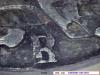
If an underlying E is present, I would think it ought to be in this position. The large raised loop on the bottom I think is a repair job. Thoughts please, particularly anyne who has a number of Exeter sixpences so that we can see if the punch is a single one or if the E is made up of 4 straight lines or L plus 2 straight etc. Paul, I will delay getting it back to you in case someone wants an additional image or two.

-
I'm not convinced either so far. Putting it under the microscope produced this, which can be compared with an outlined B.

-
Maybe, but not before I had spent a few thousand on coins that would not have been purchased had I known, and the vast majority of things are still in their original slabs.
-
1967 penny goes for silly money
Rob replied to Peckris's topic in British Coin Related Discussions & Enquiries
I've just taken it to be an April fool's joke as the link goes to the metro news site with no obvious sign of anything coin related. -
The inability to examine the edges is a serious problem in my view. I've bought a few things over the years which have had edge damage visible on removal from the slab but not before. There was a proof 1817 shilling which had to go as a result of the edge nick (image available in a CC list in the last year or two) was slabbed PF63, an otherwise delightful 1723 halfpenny slabbed MS65 had a huge flaw hidden by the holder, an 1844 halfcrown had a large rev. nick despite being graded MS64, plus a few other disappointments. The thing is, those flaws/damage were either seen and ignored, or not seen because the coin was graded with only a cursory check. If you are going to assign a grade based on an inspection, then it is only reasonable to give a report on anything that is not visible from outside the slab. Although the TPGs depend on customer confidence, they also appear to misguidedly believe that nobody will call their bluff and check the slab contents. Unfortunately, they can also claim that the deslabbing nullifies their grading exercise, which is another way of saying that if they can hide a coin's faults, it need not be registered as damaged. Not good. Confidence is paramount, and whilst Bill and a few others will sing their praises, for anyone who has done a number of autopsies on slabbed coins the grades are inconsistent and as such not good for confidence.
-
Not at all. A GCS redefinition as proposed is by far the cheapest way to get an upgrade to the collection - it would have cost me 100s to upgrade my (sorry, EF78 and not AU78) P1133A penny (ref. 000057-PE.G3.1797.03) by the traditional route of acquiring a coin in a better grade/condition. And it has the further added bonus of upgrading from the good EF assigned by Spink in the Adams sale (lot 36). A lot can happen in 10 years. The proposal by CGS to remove the prefix qualifier on its numbering system is to allow different players interpret as they believe is best so now if you feel CGS coin rightly UNC - you do not have a contradiction from CGS saying it is AU (or one time EF). I have written elsewhere about grading creep and how the older or scarcer a coin is the the 'higher the perceived grade' that may be allocated to it by a collector / dealer / auction house. You were fortunate that your coin from Spink graded as CGS 78 - some coins I bought from Spink over the years (and numerous other dealers) as UNC have been rejected by CGS (normally for having been cleaned). Of course, others I have bought as UNC have graded in the CGS 80's but alas some at lower than CGS 70. I am grateful to the CGS service for showing me how to better judge coins I now buy in the raw. Not necessarily fortunate. The example in question was graded as gEF in the Spink sale - full lot description below. Auction: 3011 - The Colin Adams Collection of British Pennies, Foreign Coins & Medals Lot: 36 George III, Copper Penny, 1797, laureate and draped bust facing right, wreath of 11 leaves and 2 berries, upper berry with only a trace of stem, top tie riband at rear points outwards, K.: on shoulder, within broad raised rim with large incuse legend, georgius iii . d : g . rex. rev.inverted die axis, Britannia seated to left on rock amidst waves, .: raised on rock, olive branch of 10 leaves in right hand, left hand clasps trident with shield, soho raised below shield, ship sailing at left with 6 incuse gunports, ensign at stern, all within broad raised rim with date below and large incuse legend, britannia (Peck 1133A KP22 VS; S.3777), toned good extremely fine and very rare, the finest specimen we can recall seeing of this variety Estimate £ 400-500 Croydon Coin Auction, 20 February 1996, lot 729 Sold for £420 I would concur with the description as I have not seen better of this variety to date. There may well be a mint state piece somewhere, but I don't know how or where to find it. One significant point that can be taken from the sale is the potentially detrimental effect a slab number and grade can have on the value of a coin. In the 2003 sale it realised about £500 all in. I bought it 4 years later at a London Coins sale for about £200 all in. The first price reflected the fact that it was exceptional for the type, whilst the second reflected it didn't have much/any appeal for those that collect by numbers being only EF78 whilst there are many uncs (of the general type) in existence. The price in the Adams sale was probably about right for the conditional rarity, the price in the London Coins sale was a no-brainer even at double the hammer.
-
Saxon Coin for ID - Eadred? Moneyer?
Rob replied to Paddy's topic in British Coin Related Discussions & Enquiries
Eadgar 2 line, NE variant. N 741, moneyer is CAWELIN/CAPELIN depending on whether the Saxon P for W applied in the north-east -
"CGS comes of age"
Rob replied to 1949threepence's topic in British Coin Related Discussions & Enquiries
Couldnt agree more....if this is an attempt by CGS to sway my opinion on slabbing/grading, it hasnt worked. I would add however that the idea of cgs just grading between 0 and 100 is a good move, for those into such things as wanting the highest in the scale, it will satisfy them. But.....they shot down this fantastic earth shattering change to their system with the inclusion of that table. i wonder Peck how serious they will take your reply.....it would be great to think there may be an alternative route to slabbing.....BUT......i still like to grade my own coins and more importantly ...those i wish to purchase. i get it wrong sometimes, i get it right sometimes, but in both ways i buy what i like not what a number says. And that i wonder is how slabbing/grading companies can ever satisfy those who like to grade our own purchases. Or make our own minds up about what we should be liking or disliking, and not just a grade number to aspire to. -
Not at all. A GCS redefinition as proposed is by far the cheapest way to get an upgrade to the collection - it would have cost me 100s to upgrade my (sorry, EF78 and not AU78) P1133A penny (ref. 000057-PE.G3.1797.03) by the traditional route of acquiring a coin in a better grade/condition. And it has the further added bonus of upgrading from the good EF assigned by Spink in the Adams sale (lot 36). A lot can happen in 10 years.
-
You can miss the k out and claim ignorance, but to miss the n and leave the k makes you a look a bit arborial.
-
No. It was worth 48d (4 shillings). A florin was a tenth of a pound (24d) or two shillings. Bring forth the abacus and you can deduce that a double florin was 48d or 4/-.
-
Nor do a lot of people. It is much to do with bragging rights - my average score is better than yours, nah nah nah nah nah etc. I would like to brag that I own one slabbed CGS coin - an 1826 proof shilling graded unc 88 which I left in the slab as it was going into the bank and the box had space left. I also have an eclectic mix of a dozen formerly slabbed coins from AU78 to UNC 90. Or as we must now say UNC78 - UNC90. It's always good to upgrade.
-
You will need a copy of Derek Allen's Grading Guide, Freeman - bronze, Davies - silver and Dave Groom's silver and bronze books to act as references. Stick your nose into them and learn the identifiers thoroughly and you are set up to collect.