All Activity
- Today
-
I probably paid too much for my 2025 definitive set, but the simple fact is that they are SO much nicer looking coins than anything the US has made since 1947 when they stopped making the Walking Liberty Half Dollar. Even that was a straight lift from Oscar Roty's La Semeuse but at least they had the good taste to steal from something good . Still, the Salmon, the bees & the four plants are such exquisite designs to my taste...
-
The 2024 Salmon 50p is actually selling for £22 at the moment (ignoring the silly prices people are asking for) and around £50 for a full set. Will be interesting to see what happens in the next six months or so.
-
Might be "silvered" i.e. coated in silver or similar-looking metal, a not uncommon practice in Victorian times. I've got a young head penny version. Can you see inside the hole at the metal colour?
-
there was cupro nickel proofs in,1875, 1877, its such a shame the state of it and punched through, but what a find if it is, even in that state🤩
-
Many thanks for the suggestion – I could list a dozen Brexity coin matters, but you immediately came up with one that I never thought of! Three points come to my own mind concerning the BM “Money Gallery”. 1) There is a useful account about how it came into existence here – straight from the horse’s mouth https://icomon.mini.icom.museum/wp-content/uploads/sites/20/2019/11/The_HSBC_Money_Gallery_at_the_British_Museum__Access_to_excellence.pdf “In 1995 HSBC Holdings PLC, the international financial group, with a deliberate focus on the increasingly globalised nature of monetary transactions, agreed to provide a donation worth £2,000,000 for the project” I am not sure when you visited – but the “deliberate focus on the increasingly globalised nature of monetary transactions” definitely lay behind that 1997 plan - to make sure every country got representation - and this seems surely linked to the advertising strategies of HSBC some years back (Just search Youtube for “HSBC” and “culture”). So my feeling is not that Soho matters were deliberately dropped. More like - it just did not fit the HSBC core narrative and was forgotten. I will add, knowing the sort of money that international brands pump into football, at 2 million, the BM rather sold itself short. Or maybe, scholarly interest is just a niche matter these days? 2) From my own side, it was the reorganisation of the gallery under Citi funding around 2012 that troubled. You point out the change of name, from “Coins and Medals” to “Money”. Under Citi only one long wall was left devoted to “Coins”. The other entire wall was now devoted to “Money”. Predictably the “Money” wall culminated in……... credit cards. Citibank made many billions from Credit cards, and was part of the associated anti-cash/coin advertising push back in the day. It seems curiously difficult to find the Citi BM donation on line – but I seem to recall it was 4 million. Personally that seems to me a cheap price for what rather looks like a shot at re-writing history. 3) More fundamentally, my fear is that these international money men are coming to the institution with the mind set of an advertising agent. Grabbing the attention of the general public is the core aim, scholarly accuracy sometimes lagging a long long way behind. Very specifically I can point to a Youtube video of the current curator, appointed post Citi, holding a silver pound coin of Charles I and saying the words: “it is a pound weight in silver” Oh dear. Rob Tye
-
Thanks, but I used to visit Birmingham now and again so was hoping to combine a trip. That no longer applies. If I phone them up again I'll see if they know this Dave Symonds.
- Yesterday
-
 Again, some very lovely coins we have here.
 -

British Coin Type set.
copper123 replied to Coins Of the UK and US's topic in British Coin Related Discussions & Enquiries
I suppose if any shopkeeper was offered up a gothic crown they would be a bit daft to not take it for face value seeing as coins were bought and sold as antiques in victorian times . Wreath crowns come into the same bracket -
 Steve Vincent joined the community
 -
British Coin Type set.
wlewisiii replied to Coins Of the UK and US's topic in British Coin Related Discussions & Enquiries
Beautiful! But I am happy with the one I have, if anything, I'd like to get a scruffier one to carry as a pocket coin 😇 I just noted it with interest while looking for something else considering the conversation in this thread. -
British Coin Type set.
Sword replied to Coins Of the UK and US's topic in British Coin Related Discussions & Enquiries
Consider getting a specimen crown rather than the RE proof as it is much cheaper. The specimen is nice, has reflective fields (but no frosting), and comes in the same red box as the proof. My specimen (top) cost me £50 in 2020 and my RE proof (bottom) cost £500 15 years ago.-Copy.jpg.2c588ce105ce4add953990bc7684bba5.jpg)
-Copy.jpg.99ed70fff3cb1123b6b0487666b46107.jpg)
-Copy.JPG.3a8d4752925046782defcbed3e7a9426.JPG)
-Copy.JPG.63b62e71f732190c680b7a61215b9d19.JPG)
-
British Coin Type set.
wlewisiii replied to Coins Of the UK and US's topic in British Coin Related Discussions & Enquiries
Speaking of Crowns... https://www.sovr.co.uk/products/george-v-1935-silver-jubilee-crown-raised-edge-letters-ngc-pf63-cameo-km39433?_pos=3&_psq=1935&_ss=e&_v=1.0 One of the 2500 proof with raised lettering on the edge inscription rather than embossed lettering. I love that design anyway and if I could, I'd get it in a heartbeat. But my regular one, in AU condition that I got for $31.50 will just have to do 🤣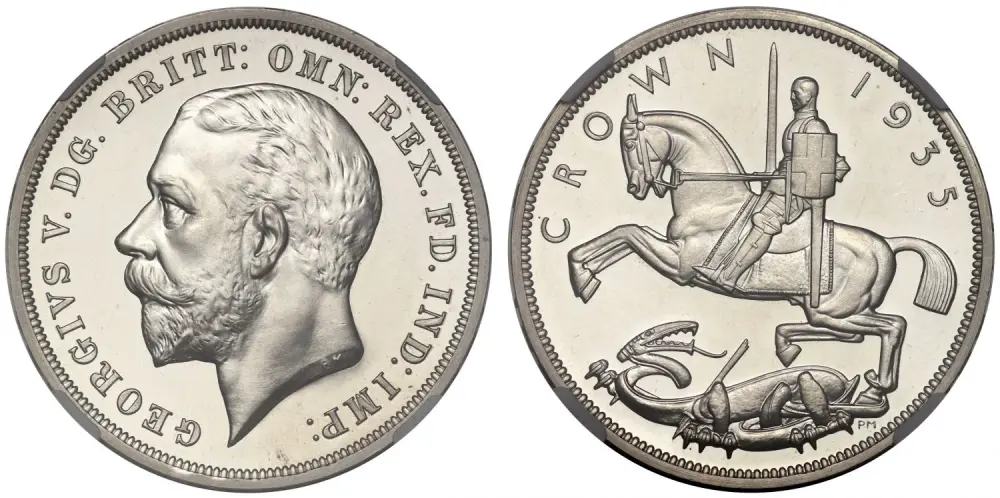
-
How to tell if coins have been cleaned.
Coins Of the UK and US replied to Coins Of the UK and US's topic in Beginners area
Thanks Rob. Apologies for the quality of the photo. -
Have a word with Dave Symonds. He used to be looking after the coins in the Museum before they decided they didn't need him any more. He might be able to help with a contact.
-
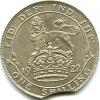
How to tell if coins have been cleaned.
Rob replied to Coins Of the UK and US's topic in Beginners area
Colours seen aren't very helpful. Is it a bronze currency piece or a cupro-nickel proof? I assume the former, but the colours don't tell me. If the former, then it has seen so much circulation that cleaning wouldn't change its value by much. They are quite common in mint state. -
Thanks for posting, that's an interesting history about the societies. I haven't had much experience of the numismatic academia personally though the BNS journals from start (~1903) are all now freely available on the internet. Peter Mitchell produced an entertaining description of many of the personalities in numismatic life, including museum staff and dealers, which is here: https://www.britnumsoc.org/publications/Digital BNJ/pdfs/2003_BNJ_73_21.pdf I am saddened but not surprised by the Leftward tilt of academia - this has happened over the last several decades and is in general anti-any celebrating or pride in Western history, culture and achievements, though I'm sure there are many honourable exceptions. The social pressure to conform to versions of this mindset will be strong. So parts of academia will exhibit an underlying anti-Western bias and this includes pre-20th century Western achievements (which includes our coinage, both from an artistic point of view and the great technological creation of modern coinage via Soho), as it will be lumped with "elitism, colonialism", etc etc, whatever buzzwords they need to fit the ideology of equivalence i.e. every society's culture/art is the same. An example of this is in the BM's Money and Medals (formerly Coins and Medals) gallery. The display has chronological descriptions around the walls of the history of coins. Now, coming to the late 18th century/early 19th century one would expect a big emphasis on the introduction of the steam press to machine make coinage, which was of a higher and more uniform standard to anything that had gone before. Boulton and Watt essentially created modern coin manufacture, which was then exported/copied around the globe. But instead GB is lumped in with Russia (!) in the title. Reading the small print revealed that we made some coins for them, but at first glance it looks like they were equals in coin manufacture/technology! No other country in the world would so underplay its own glorious heritage. The staff are of course wonderful as I have visited the reading room on several occasions over the years to view their collection, and they couldn't have been more helpful. I made another depressing discovery when I phoned Birmingham Museums a few years ago to ascertain if it was possible to see Peck's Soho collection which he bequeathed to them. Result - I ended up talking to someone who obviously knew nothing about coins (or Peck for that matter). She told me that their last official numismatist lost his job in 2014, and access to the collection was now impossible as it was all locked away and inaccessible. I don't think Peck would have approved somehow.
-
It seems to me that British history is filled with “Brexity” events, and this goes back to the very start of British written text. I could list quite a lot of them that involve money and thus coins. Has anyone else given thought to this matter in general, or is willing to mention historical examples of it that spring to mind? Meanwhile I am new to this group and still trying to find my way around. Recently I tried to raise a matter somewhat linked to this, by reviving a very old thread in the members only section. Few seemed to notice it, so I hope moderators will look sympathetically if I repeat it here, as I am still hoping to get (any) response. It concerns events in 1903 when several committee members at the Royal Numismatic Society resigned to create the British Numismatic Society, having concerns about “continental bias” at the RNS. I wrote: ~~~~~~~~~~~~~~~~~~~~~~~~~ Here are some details about the past and present relations between the Royal and British Numismatic Societies. I select what seem to me the most important facts, and I do it because I think past events throw a light on current predicaments. This story is primarily selected from the Official History of the Royal Numismatic Society here: https://numismatics.org.uk/wp-content/uploads/2014/05/a-history-of-the-royal-numismatic-society.pdf The RNS was founded in 1836, and was a mix of officials (BM, Mint, Academia) along with with coin dealers and coin collectors. It was wide ranging, with of course a lot of influence from the aristocratic grand tour inheritance – coins of Rome and Greece - along with an interest in Oriental coins, especially of India, due to Britain’s Imperial context back then. The RNS went into crisis in 1903 in a row over a paper by W J Andrew about the coinage of Henry I, which was aggressively attacked by two officials from the Public Records Office. Andrew resigned and other members backed him stating that the Public Records Office writers were “not members of the Society and that they confess with an air of superiority, that they have no knowledge of numismatics” That paper was the straw that broke the camel’s back. Two further members of the RNS council resigned, having been accused of telling tales in public about what had been said in private at RNS committee meetings. They created a new breakaway society, the British Numismatic Society. Prominent amongst them was Carlyon-Britton, the new BNS president who published this paper in 1904 https://www.britnumsoc.org/publications/Digital BNJ/pdfs/1903_BNJ_1_17.pdf Where he complained about the condescending and self interested positions taken by the British Museum. Whilst personal animosities were not made explicit we should note a BNS view that “British numismatics were inadequately catered for by the Royal Numismatic Society with its classical and continental bias”. That at time when Barclay Head was the curator at the BM, and an editor of the RNS Journal. He published exclusively on Greek coinage, and a RNS tribute on his death noted that of the thirty contributors to his Festschrift, “ten wrote in German, five in French, one in Italian, and one in Greek”. Moving forward now to my own lifetime, having become a member of the Yorkshire and Oriental Numismatic Societies in the 1970’s, I joined the Royal Numismatic Society in 1986. I was struck by a general and genuine camaraderie that existed at that time. Both between the two societies themselves, and also between senior society officials members (Professors and the like) towards ordinary collector/dealer members. Correspondence was entirely on first name terms. In my own experience that camaraderie began to break down around 2000. Prior to 2000 official/academic posts seemed to be recruited from trained historian, many of whom had developed in interest in coin collecting itself at a young age. After 2000 we started to see the jobs going people trained in archaeology, a culture which was largely hostile to private coin collecting and very often noticeably politically left leaning (the two matters being somewhat linked). Today I see a landscape where RNS and BNS are joined at the hip, but isolated from the world in their ivory towers. Members of the same small elite group run both societies. The attitudes of condescension voiced in 1904 have re-emerged. However the will of individual collectors to band together against it has evaporated. 2026 is a fractured world. Collectors and elite professionals hardly seem on the same planet. Others will no doubt differ, and of course I would welcome comment. Robert Tye
- Last week
-
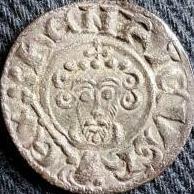
British Coin Type set.
Ukstu replied to Coins Of the UK and US's topic in British Coin Related Discussions & Enquiries
Try and get some more capsules for them like the one the Jubilee head Victoria is in. Those PVC ones break down over time and leave a sticky green residue on your coins. -
How to tell if coins have been cleaned.
Coins Of the UK and US replied to Coins Of the UK and US's topic in Beginners area
Thanks Citizen H. Your help is much appreciated. -

How to tell if coins have been cleaned.
Citizen H replied to Coins Of the UK and US's topic in Beginners area
maybe its been washed, to remove grime it will tone down in time, its been circulated so expect scratches, wear, and dings. 👍I must dig out some of mine... -
How to tell if coins have been cleaned.
Coins Of the UK and US replied to Coins Of the UK and US's topic in Beginners area
Thanks everyone. The help is much appreciated. This is the coin in question. -
How to tell if coins have been cleaned.
Citizen H replied to Coins Of the UK and US's topic in Beginners area
just chipping in.... I tend to wash mine, warm soapy water, ultra soft brush to remove all the hand grime, some of my circulated Maundy's have improve immensely ....I tend to leave tarnished one's alone and never used silver dip,..... as mention by others gentle sympathetic washing wont harm the coins, rinse with cool clean water and pat dry, it works for me👍 -
How to tell if coins have been cleaned.
Rob replied to Coins Of the UK and US's topic in Beginners area
Maybe. It all has to be looked at in context, but is one of the things you would check. A band of parallel lines would likely be cleaning with a cloth, but you would only see that on a proof or a coin with otherwise good surfaces. Thankfully, the application of a Brillo pad is blindingly obvious. Interpretation is everything. -
British Coin Type set.
Citizen H replied to Coins Of the UK and US's topic in British Coin Related Discussions & Enquiries
ah! these are some of mine, the better ones.... to heavy to put in a folder so left in pouches 👍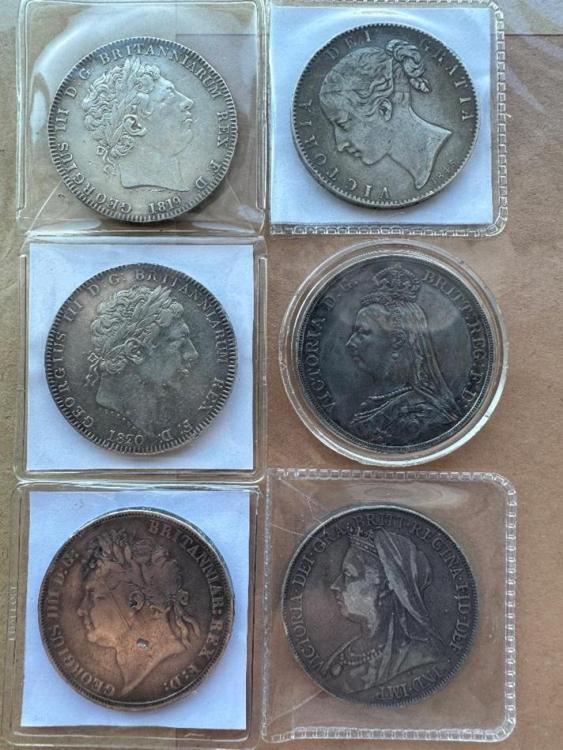
-
How to tell if coins have been cleaned.
Coins Of the UK and US replied to Coins Of the UK and US's topic in Beginners area
If a coin has straight lines across it, is that a good indicator that the coin has been cleaned? -
How to tell if coins have been cleaned.
Coins Of the UK and US replied to Coins Of the UK and US's topic in Beginners area
Thanks Rob. Your help is much appreciated.