
jelida
-
Posts
1,816 -
Joined
-
Last visited
-
Days Won
111
Content Type
Profiles
Forums
Events
Downloads
Store
Gallery
Articles
Everything posted by jelida
-
No idea! No pictures in the NGC registry, but there are 307 higher graded examples! It’s not really a very helpful label. Jerry
-
Interesting report on Silver content of Saxon coins
jelida replied to Paddy's topic in British Hammered
That will be KAROLVS, ie Charlemagne, the obverse following the Roman style. Jerry- 1 reply
-
- 1
-

-
Martin Allen has now recorded the coin and all is explained! https://emc.fitzmuseum.cam.ac.uk/full-record/20240117?&0=10540980&1=10540981&2=10540982&3=10540983&4=10540984&5=10540985&6=10540986&7=10540987&8=10540988&9=10540989&10=10540990&11=10540991&12=10540992&13=10540993&14=10540994&15=10540995&16=10540996&17=10540997&18=10540998&19=10540999&20=10541000&21=10541001&22=10541002&23=10541003&24=10541004&25=10541005&26=10541006&27=10541007&28=10541008&29=10541009&30=10541010&31=10541011&32=10541012&33=10541013&34=10541014&35=10541015&36=10541016&37=10663673&38=10663674&39=10663675&40=10663676&41=19870154&42=19880184&43=19930227&44=19940222&45=19950173&46=19950174&47=19970154&48=20000052&49=20010662&50=20060124&51=20070062&52=20100263&53=20120085&54=20130102&55=20130350&56=20150295&57=20170052&58=20180144&59=20180289&60=20200413&61=20210408&62=20220008&63=20230112&64=20240117 Jerry
-
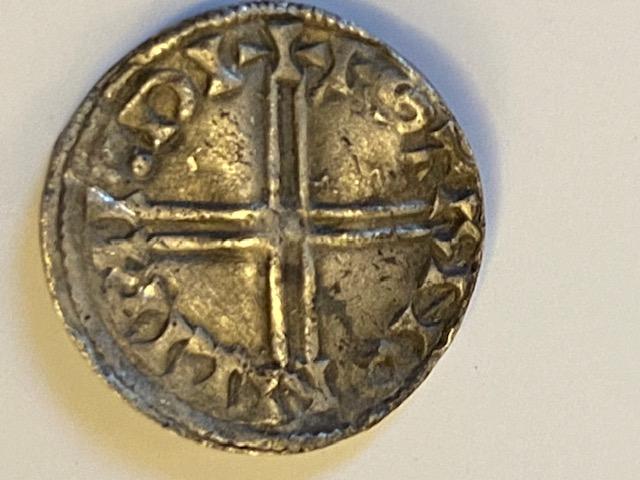
AESTAN worked at Winchester and Warwick in the time of Edward the Confessor according to the EMC, but I can’t see either of those in the mint name. Jerry
-
That may well help, and Lincoln was my first thought when I saw the photo, but there seems to be an extra letter(s) and Estan is not listed in North. I will see what I can find on the EMC website. Jerry
-
This small flan penny of Edward the Confessor was found by a detecting cub member on a rally in the south of England, and I am trying to identify the mint and moneyer. The latter seems to read ESTAN or similar, and the mint clearly ends in DI but I cannot find the combination in North or Seaby and would welcome some help here! Thanks, Jerry
-
Halfpenny ID check
jelida replied to mrbadexample's topic in British Coin Related Discussions & Enquiries
Certainly it could be either, I don’t think the photos are definitive. A little but of gunge removal and closer images would help. Jerry -
Halfpenny ID check
jelida replied to mrbadexample's topic in British Coin Related Discussions & Enquiries
I have to say that given that there appear to be two obverse dies, the original does seem to be F over B and the latest an E over B. Richard, you have your work cut out.🧐 Jerry -
Oooh, I bet Guy will be cross at having let that one go……. Jerry
-
That’s an impressive spot, Pete, another one to watch out for. Did you buy it? Jerry
-
Yes, I had a couple. Jerry
-
Stuff to Make Us Laugh
jelida replied to Madness's topic in Nothing whatsoever to do with coins area!
Darwin Award candidates both! (Look it up if you haven’t heard of it…some very funny examples, reality too.) Jerry -
With a provenance of this quality it’s got to be worth well into three figures……..😁 Jerry
-
Referring to the F14 mentioned above, I had been watching this one for a week out of interest (I already have two unc examples) and must admit to surprise at the outcome. There clearly is demand out there, which comes back to my comment on rarity/ availability. https://www.ebay.co.uk/itm/285732487208 Jerry
-
I agree that it is obverse 1 rather than 1*, the gaze is forward rather than downward, and the rim is too thin. But they are out there, I have a couple of Ebay examples in low grade and a nice AEF F763 that was advertised as F6 at Lockdales a few years ago, less than £200; keep looking. Jerry
-
Yes, well done. I actually think that Freeman marginally underestimated the scarcity of these. Jerry
-
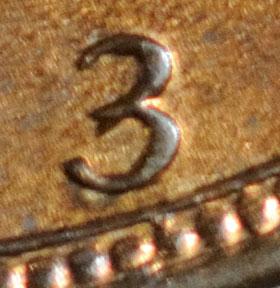
Yes, yours has the missing line too Pete. Seems to be pretty much a feature of all 3/2’s, possibly many of the minor degree dies Gouby shows too. I see that Richard’s website has been updated to include this feature, though I don’t think that the filled die repair and the overstrike are directly associated in that 1893 coins that are clearly not overstrikes, even minimally displayed, can also have the line flaw. Jerry
-
Well, there really ought to be some 1892’s with the flaw, unless there was just a single batch of flawed 1892 dies which were all updated into the progression of altered ‘3’s including the clear ‘ 3/2’ that Gouby shows in detail. Or the ‘3/2’ could be regarded as a ‘2/3’, an 1893 die mis-repaired using a ‘2’ punch, which I do not favour. Either way I feel that there must have been a flawed master die to enable the missing line to occur on dies producing both overstrike and normal coins. Jerry
-
No, I can’t see it either. I wonder whether this flaw was on a master that was used to make several dies/dates over the 1892 to 93 period. You have a nice doubled inner circle to the lower left of the date too! (Spellcheck initially converted ‘doubled inner’ to ‘double dinner’ , quite a nice interpretation I thought!). Jerry
-
Yet it looks the same flaw. Not sure what to make of that. Does yours have the bulge under the upper loop of the ‘3’ that you see on 3/2 coins? Jerry
-
So do my 1893 over 2 pennies (all three) but not my plain 1893's. Jerry
-
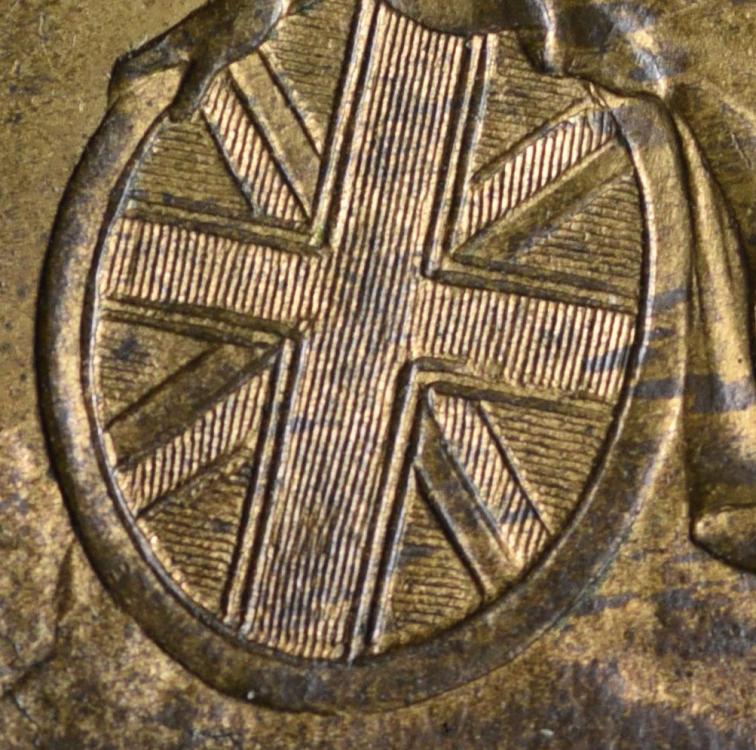
That is interesting, I wonder whether a partly filled die could have been repaired by re-engraving the vertical lines? What coin is this? It might be possible to track the die fill and repair by looking at other examples . Jerry
-
https://en.wikipedia.org/wiki/Frank_May_(cashier)#:~:text=Frank May was the Chief,£10 banknote of 1888. ?
-
Likewise, so job done. He did say it didn’t look like a beaded to him either; perhaps a little more research would have been in order, but his response is fair and honest; I dare say we all make mistakes. 😮 Jerry