

jelida
-
Posts
1,817 -
Joined
-
Last visited
-
Days Won
111
Content Type
Profiles
Forums
Events
Downloads
Store
Gallery
Articles
Everything posted by jelida
-
Phew.....you didn’t.
-
Don’t do it Rob!
-
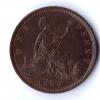
Anybody good on Jettons or have the Mitchener book?
jelida replied to Paddy's topic in British Hammered
It is a French Jetton, very similar to Barnard 7a, (Barnard, The Casting-counter and the Counting Board, 2nd ed Fox 1981); ”A man standing, full faced, under a decorated canopy; he has long hair, and wears a wreath of roses and a 14th century jupon; in his right hand is a rose bush (?), in his left a garland of roses; below his left elbow is a large rose or cinquefoil; all surrounded by a granulated circle from which issue eight cusps; his feet pass beyond the circle and rest on an exergue ornamented with small crosses. Legend SVR.MA.TEST E CHAPEAVD . Rev as that of no 7, but reading T V E M. T.C.R.,I, No 1401” The reverse 7 quoted is as yours, but for the letters AVEI, yours appears to read AVEO. The reference T.C.R refers to a series of catalogues in French around 1900 by De la Tour. Jerry -
How to deal with sticky coins?
jelida replied to Ozzy1977's topic in British Coin Related Discussions & Enquiries
Except that it is much more effective than acetone at softening or dissolving the waxy residue around the lettering on some of our well handled bronze, enabling it to be gently removed with a soft brush. To be fair I only do this sort of thing under high magnification using a binocular microscope, the same one I use for archaeological conservation work. IPA, DMSA and Industrial meths also seem inert as far as the coin is concerned. Petrol of course has a multitude of additives, and to be safe the coin needs a wash in acetone after treatment. Don’t knock it if you haven’t tried it, most collections (not yours of course Pete) will have a dirty and inexpensive coin to practice on, and get a fine artists brush and cut the bristles to 1/4 inch. Jerry -
How to deal with sticky coins?
jelida replied to Ozzy1977's topic in British Coin Related Discussions & Enquiries
Petrol will work in most cases, followed by a wash in pure acetone, neither of these will alter the coin physically. But most important is not to rub the coin surfaces, nothing more than a dab with clean cotton wool or soft artists brush to wash away any softened residue. As ever, practice first on a less valued coin. Jerry -
Shame we can’t report people for being a PRATT! Jerry
-
Report under ‘Prohibited and restricted items’ then choose ‘Stamps, currency and coins’ then you have a choice including ‘Replica coins, replica currency, replica stamps’. Jerry
-
Report please. His Charles shilling is a replica too. https://www.ebay.co.uk/itm/Very-Rare-Edward-6th-Hammered-Silver-Shilling-C1549-1550/323505234992?hash=item4b526a2430:g:-WIAAOSw0W9byGdB Jerry
-
Ouch! I would try and find a way to pay promptly, their terms appear fairly strict (though I have no personal experience of them) and I suspect any default would work out expensive in the long run. Can you not eliminate the wire fee by paying with PayPal, as a ‘gift’ if necessary? Even a standard PayPal fee would probably be cheaper than the wire charge. They give the sale price as $336, I presume this includes the buyers premium? Nice coin though. Jerry
-
Spotting that it is the only example in a database of 500 sounds pretty good research to me! And a good buy for 100 Euro I would say, whether or not it currently attracts a premium, it probably will when you have finally published your study. Jerry
-
Penny Acquisition of the week
jelida replied to Paulus's topic in British Coin Related Discussions & Enquiries
Yes, I saw that on Numisbids, but a few hours after the auction! Correctly described, but wonderfully cheap! Well done, I wondered if it would find its way back to the UK. Jerry -
And done.
-
It can only have been made out of two separate coins, as the halfpenny has been struck within a collar - it has an outer edge. Somebody has been playing about with a lathe. It has no numismatic value. Jerry
-
I assume that when there is a genuine bid, but below the reserve, they have to introduce a ‘house’ bid before they can knock the item down, otherwise the genuine bidder might think he has won the item. Not an issue when there are no bids at all, of course. Jerry
-
Also don’t forget the RM might still have the original dies............ Jerry
-
Yes, this is one of the other differences between the two reverses. Well done on the ‘shuttle’ penny, you must look at a lot! Jerry
-
Wheras this coin is positively angelic! https://www.ebay.co.uk/itm/1864-QUEEN-VICTORIA-PENNY-UPPER-SERAPH-4-NICE-COLLECTABLE-COIN-SCARCER-DATE/273479590540?hash=item3faca7628c:g:idkAAOSwzfNbqhDZ Jerry
-
That was pretty much my thought. Interesting, but not I think what the seller implies. Again.....
-
It isn’t......is it? https://www.ebay.co.uk/itm/Victoria-Penny-1877-Small-Date-RARE/332817636500?ssPageName=STRK%3AMEBIDX%3AIT&_trksid=p2060353.m1438.l2649 Jerry
-
Halfpenny ID check
jelida replied to mrbadexample's topic in British Coin Related Discussions & Enquiries
The rounded top lighthouse coins are rare, I think you have done well to find 1-2 per cent of your 1861’s with this reverse. It is possible that a new master die was made up rather than an existing die modified, though at what stage in the process the Britannia/lighthouse/rock were changed I have no idea, whether an existing punch was altered or a new punch made from scratch. As there are no 1860 reverse F we can I think safely assume that the reverse D came first and if an existing die was modified this would seem the most likely candidate. Jerry -
You are lucky you were outbid. This is a common fake, and a common fake sellers ploy, sticking it in amongst a load of c**p, this often happens with siege pieces too Jerry
-
Try and get some crisper photos, very difficult to be sure from these. But if the surfaces are genuinely as described by the auctioneer, he may well be right. Throughout this thread, as Rob alludes to in an earlier post, some of these variations are in the die and strike, ie we are grading the die rather than the coin. The Davissons photos suggest a nice coin, but I do agree some of your other illustrations show coins with a little more detail. It comes down to experience with the coin in the hand, and I feel that a continuation of the protected field surface over the raised elements of the design is a massive clue in terms of lustre, sheen, texture, colour, indicating whether the coin has actually had much handling. Some of the early twentieth century bronzes that I collect have minimal remaining fine detail yet full original lustre. The combination of a crisp early strike and lack of circulation can be elusive - and attracts a premium even for a relatively common coin. Jerry
-
I would get on to DNW. This is an issue they should resolve. Jerry
-
I think most are genuine , but they are continental and plain and I find them rather uninteresting. They are at least cheap. There are many fakes around though on EBay and good feedback is no guarantee. Have a look at the Ebays worst offerings thread. Don’t be afraid to seek a second opinion here before purchase. Jerry
-
I have scales the same type , they have lasted several years with no problems and seem accurate. Jerry