
ozjohn
-
Posts
1,282 -
Joined
-
Last visited
-
Days Won
63
Content Type
Profiles
Forums
Events
Downloads
Store
Gallery
Articles
Everything posted by ozjohn
-
.Correction the coin was PCGS MS62 not NGS MS 62 as previously advised. Sorry if there has been any confusion
-
Hi Blakeybou, I guess you would expect the coin to look different if it is cleaned. The real question is. Has it damaged the coin in some way? The images show a NGC MS 62 coin I cleaned using the bicarb Al foil method. I think I prefer the cleaned version. Like I say cleaning is something that should be approached with caution. In addition when you think about it toning is really a form of corrosion that has already effected the coin's surface. PS how did those seeds go? Regards, Ozjohn


-
I've seen small ultrasonic jewelry cleaners in Aldi here in Australia. no doubt there are similar in the UK. Don't know how effective they would be for cleaning coins but I suspect they wouldn't inflict any damage as they are low power devices. However any attempt to clean coins should be approached with caution, Personally I still think the bicarb of soda and Al foil in hot water is the best method as it does not attack the coin's surface and the silver sulfide is converted back to silver metal.
-
https://www.coingradingservices.co.uk/index_org.php They still seem to be in business. like all grading services they can be patchy with their appraisals. Personally I have never used a TPG'er but have acquired coins that have been slabbed by these companies NGS , PCGS and CGS. IMO judge the coin not the grade TPG'ers assign to the coin. If you are new to coin collecting I suggest that you obtain a copy of the excellent book The Standard Guide to Grading British Coins published by Rotographic available from Amazon in book and Kindle formats.
-
1903 'open 3' penny and 1903 florin
ozjohn replied to blakeyboy's topic in British Coin Related Discussions & Enquiries
Date of my 1903 florin. Looks about the same as the previous example.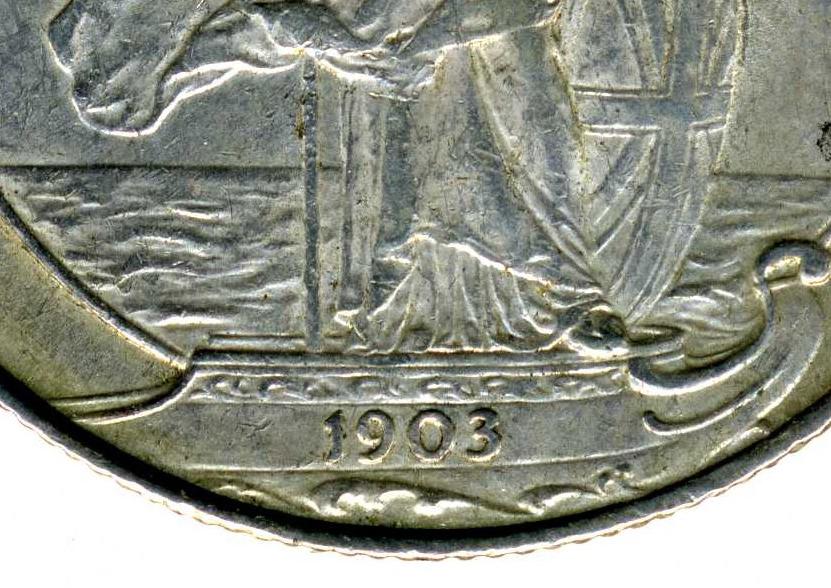
-
Poor grading by TPGs is not unknown as witnessed by the many examples I have posted on these forums. To the coin in question. I noticed the marks on the queen’s neck and they are definitely old as they are toned into the mark which is probably damage sustained during the minting process or circulation.There does not seem to be any evidence of deliberate alteration of this coin and TPG’ers should take account of this during their appraisal process. Better that the mark be noted on the slab.
-
So why did the RM advise that the 1927 set was in a leather case when plainly it was issued in at least two formats?
-
I've seen some cardboard 1927 specimen set boxes on Ebay similar to the 1950 proof set box. An example is below. Possibly its a fake but it seems to have some age. https://www.ebay.co.uk/itm/162915958842?hash=item25ee8c403a:g:nF8AAOSwQYZWxiTC

-
More about biggus dickus
ozjohn replied to copper123's topic in British Coin Related Discussions & Enquiries
Just finished watching Robson Green's Hadrian's wall walk. Apparently there are 56 phallic symbols on the wall. This time it was described as a good luck charm and used to ward off the evil eye. -
IMO still looks like wear to me especially the obverse. The highest points are all worn with the only detail on the lower parts of the hair where contact wear is minimized. In my experience lightly struck coins of this era are for the most part are patchy. For example a George V first type florin. On the obverse the King's ear, and the hair just above are the most likely affected with the lions on the shield on the reverse corresponding to the same area similarly affected with the rest of the coin remaining fairly sharp As for technical grade I think PCGS etc. should in their opinion note that the coin is a lightly struck example. I have and old set of encyclopedias called The Children's Encyclopedia by Arthur Mee that shows the operation of the Royal Mint in the 1930s. One thing that struck me, pardon the pun was the visual inspection the freshly minted coins shown as part of the process. You would hope that most of the really badly minted coins would have been culled at this stage of production.
-
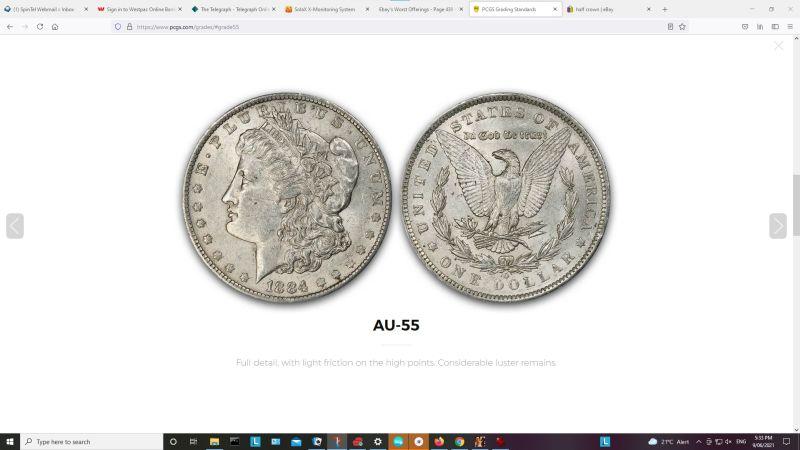
https://www.ebay.co.uk/itm/224490919818?hash=item3444b3978a:g:QOoAAOSwYjReLcLD Saw this one on ebay.uk a PCGS slabbed coin graded AU-55. Also included a screen shot of the PCGS photo. I think this coin is badly over graded and think F-15 would be a more accurate grading as there is considerable wear on the obverse that cannot be putdown to a light strike. The reverse although appears to be less worn is not anywhere near to AU grades. Again I do not thing these professional graders are producing a constant product. I know you should buy the coin not the assigned grade but new collectors can be badly miss lead by this sort of miss grading. A PCGS AU-55 grading example is included for comparison.

-
Side effects of the covid vaccine
ozjohn replied to 1949threepence's topic in Nothing whatsoever to do with coins area!
Had the first AZ shot in May. No side effects at all. Second shot due in July. Vaccination hesitancy rife in Australia but the recent Victoria cases have focused people’s minds and vaccination rates have accelerated. -
More about biggus dickus
ozjohn replied to copper123's topic in British Coin Related Discussions & Enquiries
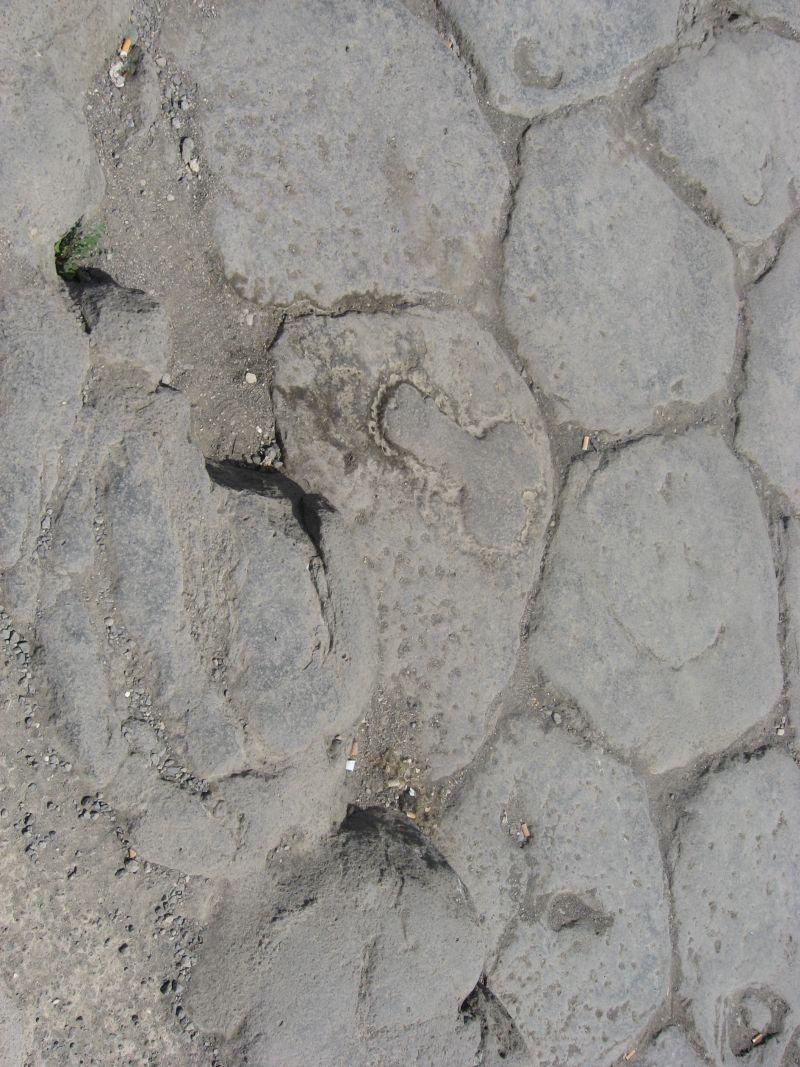
Saw this one in Pompeii on a trip to Italy. According to the guide it was pointing the way to a brothel.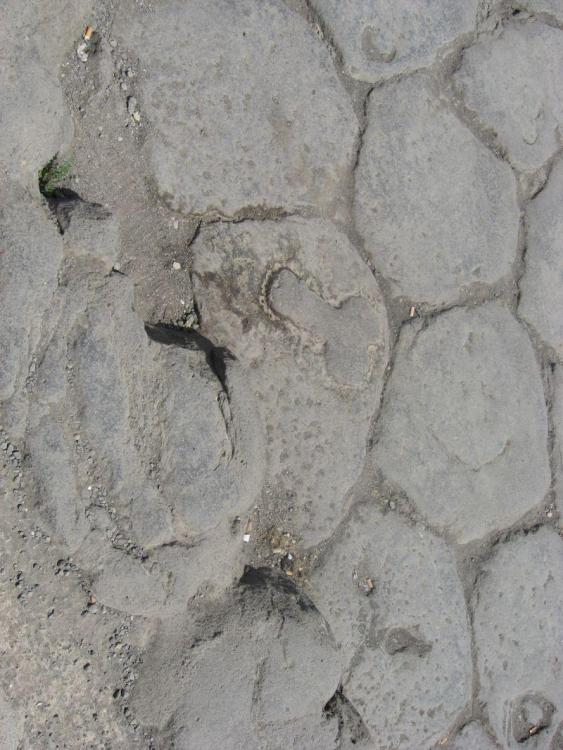
-
Some of the best images of coins I have were from scans on a flat bed scanner. This is probably due to the coin being very close to the light source eliminating reflections from the plastic surface.
-
Just as a belated aside my coin was photographed thru plastic but presents IMO as a better coin than the subject of this discussion.
-
The mark on the cheek as does the flatness of the veil look like wear to me. I agree it can be difficult to photo graph thru the plastic. Perhaps CGS would help their grading reputation by allowing access to their pictures of coins as do PCGS .
-
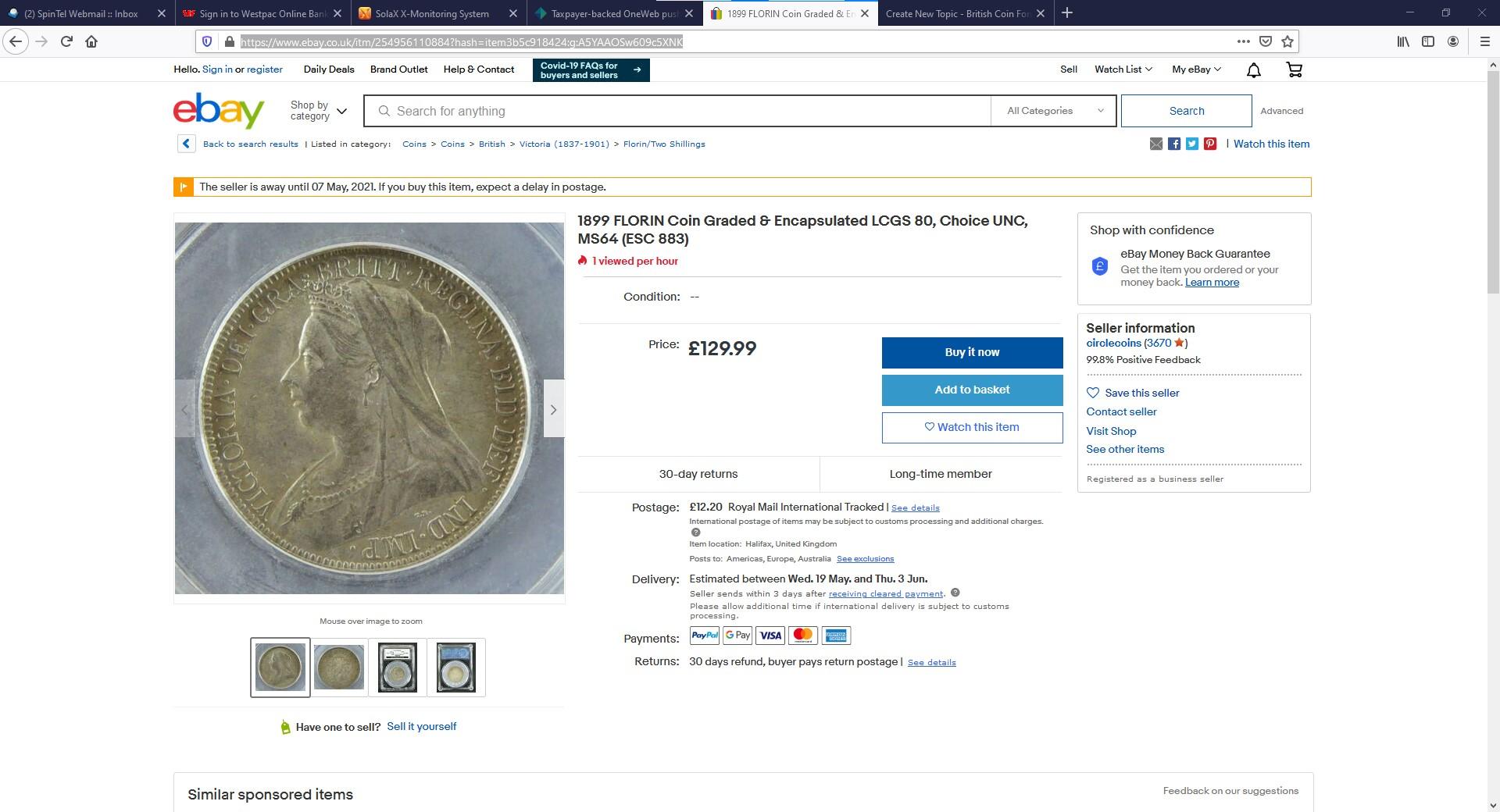
I note the price for this item is low perhaps because of the quality of the coin. For example the following coin https://www.sterlingcurrency.com.au/1899-silver-florin-victoria-s-3939-pcgs-ms64 has a price tag of $AU 425 about GBP 236 also cataloged at GBP 225, Spink Coins of England 2016.
-
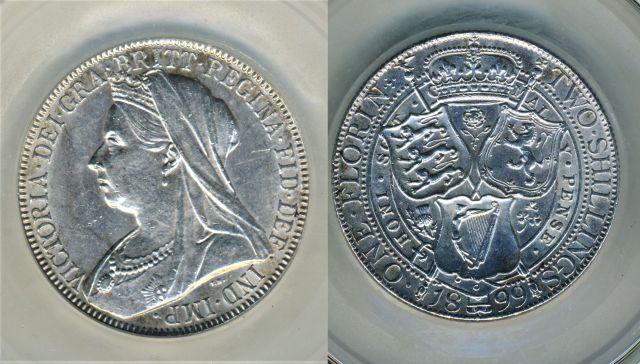
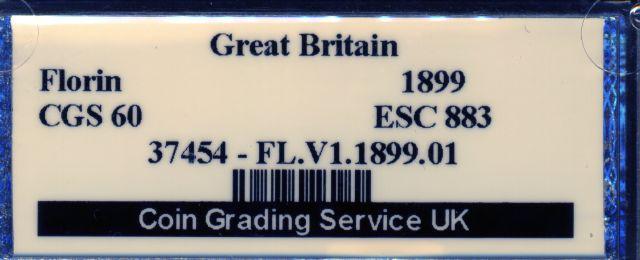
https://www.ebay.co.uk/itm/254956110884?hash=item3b5c918424:g:A5YAAOSw609c5XNK This coin has been graded at CGS 80. I have a coin of the same date and TPG that has a CGS 60 grading assigned. Personally I think the coin I have is of a higher grade than the one listed on Ebay. As I have observed before the whole point of TPGers is consistency in grading and confidence in the product you are buying. This one fails on both counts

-
Penny Acquisition of the week
ozjohn replied to Paulus's topic in British Coin Related Discussions & Enquiries
I use Firefox on my PC and notebook with a DuckDuckGo plugin and also the Express VPN and have on issues posting to these forums. -
Anyone here into loudspeakers?
ozjohn replied to blakeyboy's topic in Nothing whatsoever to do with coins area!
That is the permeability constant ur of magnetic materials change with the current exciting it where as the permittivity of a dielectric remains constant. -
Anyone here into loudspeakers?
ozjohn replied to blakeyboy's topic in Nothing whatsoever to do with coins area!
That's right I suspect the magnetic materials used in modern speakers is much improved over that used in the 1960s also large speakers were always better for good bass response. I've always liked the idea of electrostatic speakers from the point of view they are linear because the dielectric stays the same with different voltages applied where as magnetic materials change as the current exciting it is changed. Quad brought out some in the late 1950s and still make them to this day along with Vacuum tube amps. They are probably expensive and may be limited in their power handling. -
Anyone here into loudspeakers?
ozjohn replied to blakeyboy's topic in Nothing whatsoever to do with coins area!
I had a look into the difference between the KT 66 and KT 88 tubes. The KT 88 was an older tube and of a higher power rating than the KT 66. KT 66s were probably used in domestic HiFi amps as 20 watts output power was deemed sufficient as the dynamic range of vinyl LPs was about 45 dB and with an average listening level of about 0.5 w to 1 w the headroom was sufficient to prevent excessive distortion. There were also a lot of power amps based on the Wireless World Williamson amplifier that delivered 10 w output power using EL 84 tubes in push pull. Most modern domestic HiFi amps are in excess of 50 w output power to accomodate the much increased potential dynamic range of 100 dB offered by CD and other digital streaming as the dynamic range is determined by the number of quantisation levels during digitisation rather than a voltage level or the distance a stylus can travel on a vinyl record. -
My Grandfather had a pewter tankard with a glass bottom. On the glass bottom there was a picture of a man on the gallows and an inscription, "Good to the Last Drop."
-
Anyone here into loudspeakers?
ozjohn replied to blakeyboy's topic in Nothing whatsoever to do with coins area!
Impressive setup. I'm afraid I like math approach. Yes the KT66 was the lower power tube while the KT 88 was a higher power device. KT stands for kinkless tetrode . -
Penny Acquisition of the week
ozjohn replied to Paulus's topic in British Coin Related Discussions & Enquiries
They both came from the same seller.