alfnail
-
Posts
792 -
Joined
-
Last visited
-
Days Won
84
Content Type
Profiles
Forums
Events
Downloads
Store
Gallery
Articles
Everything posted by alfnail
-
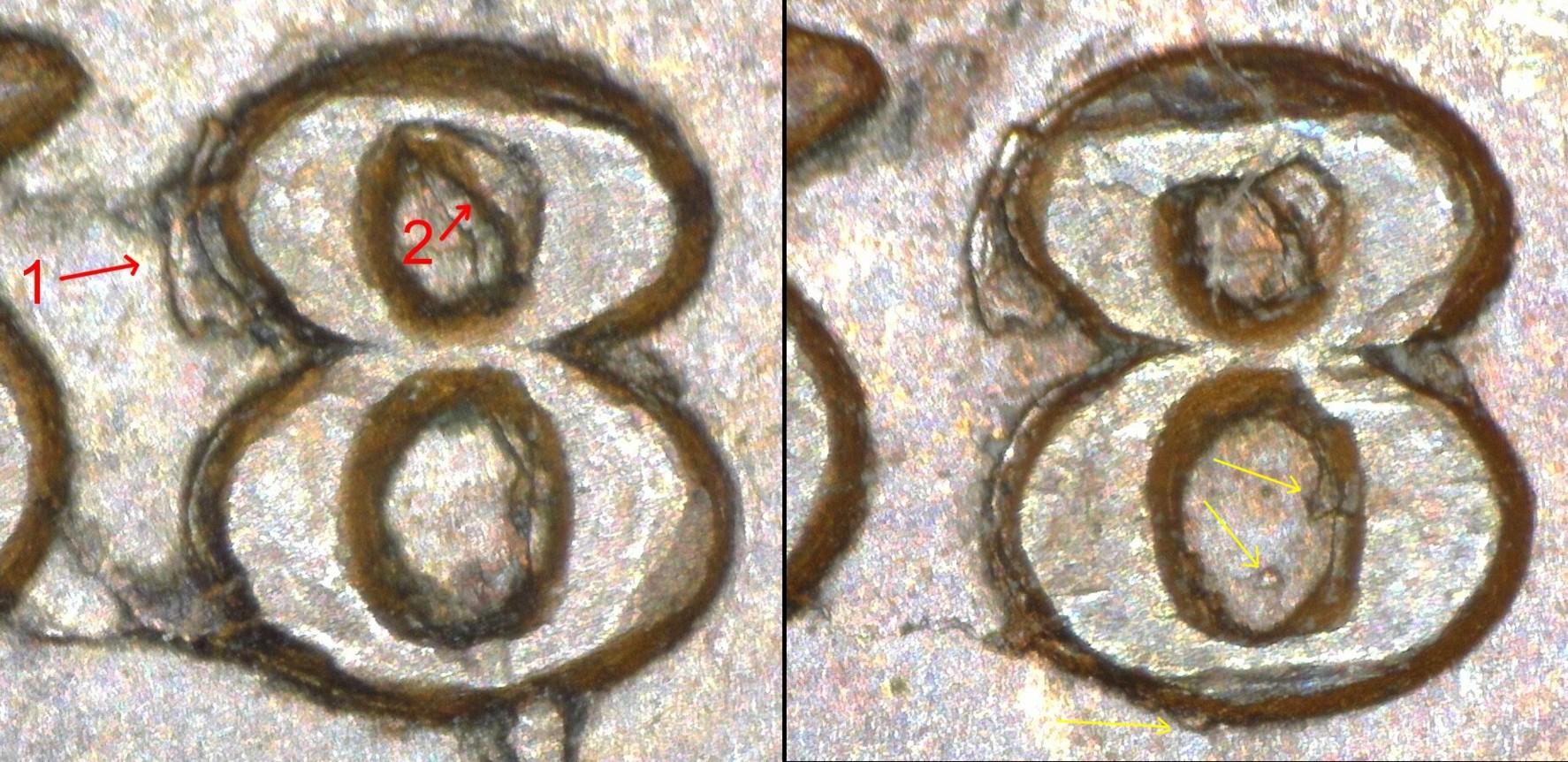
While I’m at it I thought I would also show close up’s of what is now regarded as 1858/2. I believe this type is the one Bramah has referenced as his 25b, but note that he thought the 8 was over a 3, not 2. I think this has caused some confusion, with different collectors now calling this variety both an 8/3 and 8/2 The left coin shows the usual flaws, which are seen running through both the top and bottom of the entire date, and also down from the 8 to the border. The second example (right) is the earliest strike I have found for this type. On this piece the flaw only runs ‘weakly’ through the bottom of the date. This piece allows the top left of the underlying numeral to be seen more clearly because the flaw, which later develops, has not yet broken through this protrusion i.e. the protrusion clearly has a nice curve on this example. Additionally, although not entirely convincing, this earlier piece allows better visibility within the bottom loop of the 8, to the point where one can perhaps see other features of an underneath numeral 2; highlighted in Yellow. A final thing to note on this second early strike example is that less of the ‘upper curve’ of the underlying numeral within the top loop is visible. My guess is that the ‘die fill’, prior to re-cutting with an 8, has broken away after a number of strikes…… thereby revealing an extra portion of the 2.

-
Ridiculous I know!!
-
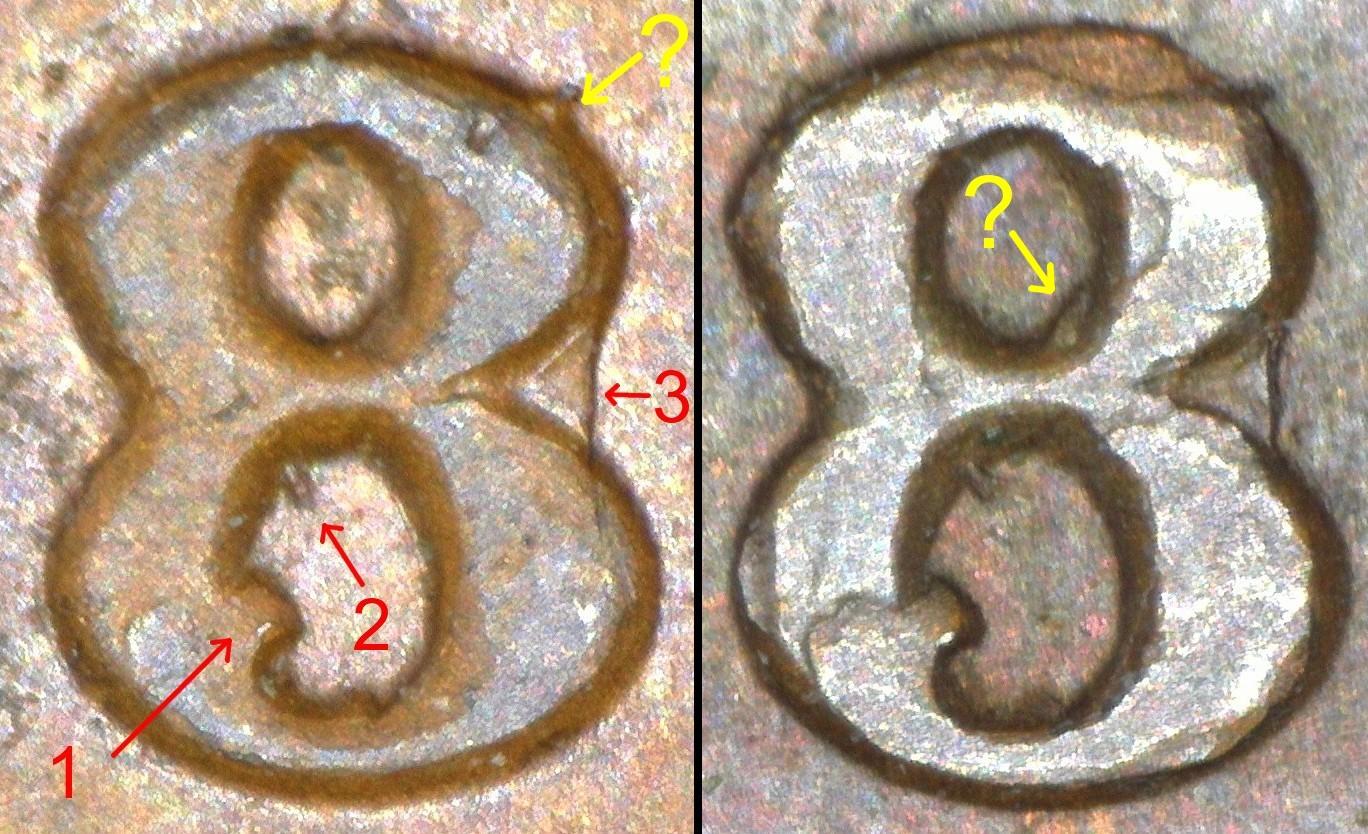
Please excuse the huge pictures, but I thought necessary to see the detail. Below is the text from Bramah for his 25c. I have inserted red numbers to align with the features highlighted in the coin pictured left…….which is undoubtedly an example of what he was describing. Something I have noticed, I think mentioned on the forum before, is the additional protrusion top right of the 8. This looks like a 90 degree corner of a numeral which has straight horizontal and vertical lines at that point. I have also shown a second example with same features 1 to 3, although the protrusion top right is less obvious. This piece shows yet another protrusion within the top loop at bottom right side; a straight line at about 45 degrees. This was not particularly clear on the left hand coin, but is present. When I stared at that numeral, like I used to stare at those pictures on pub walls where tigers or other things would eventually appear, I thought I could almost see a numeral 4 starting to show itself!!

-
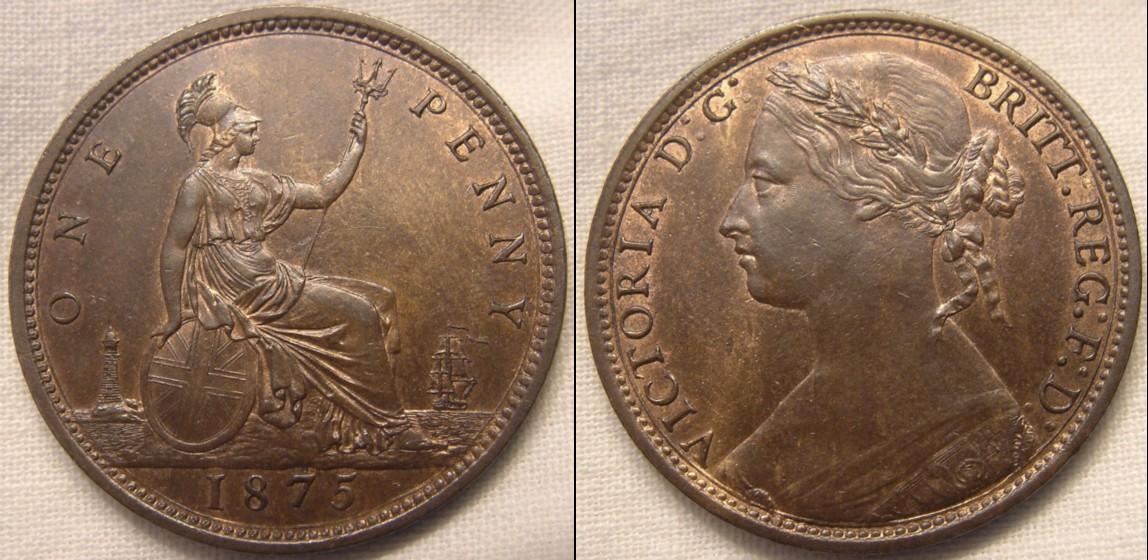
1875 F79 Penny
alfnail replied to secret santa's topic in British Coin Related Discussions & Enquiries
Here's my example Richard. Looking at my past records I see that over the years I have sold 6 of them, none as good as this though!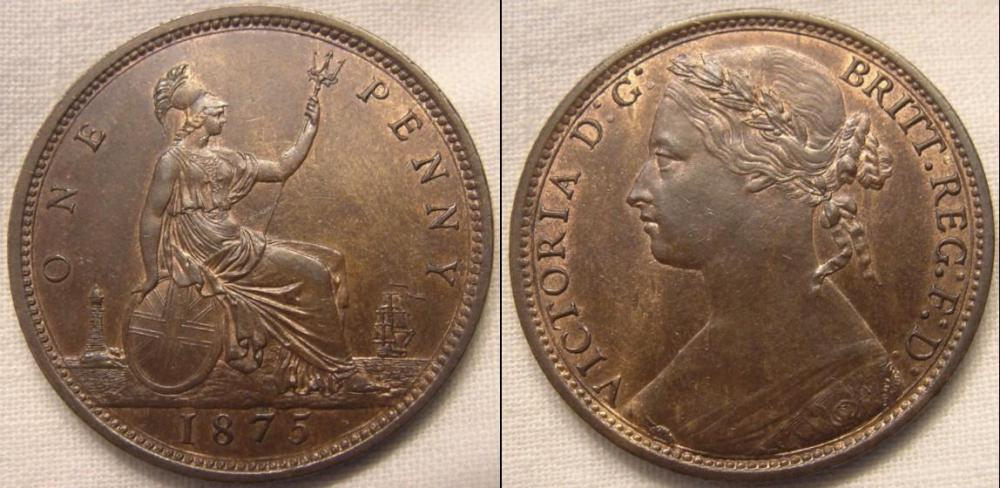
-
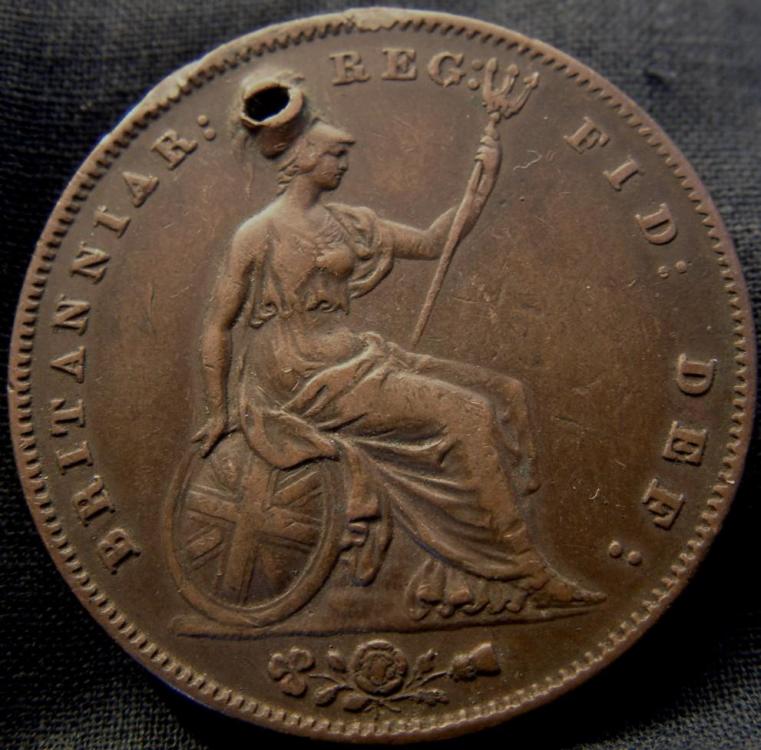
Hey Jerry, if you want another project perhaps you can stitch this one back together and then re-engrave....now that we all know what a wizard you are with the needles!
-
Anyone get this one at Stacks Bowers yesterday? MS64, but a few marks, not as good as the one Pete sold at Baldwins.
-
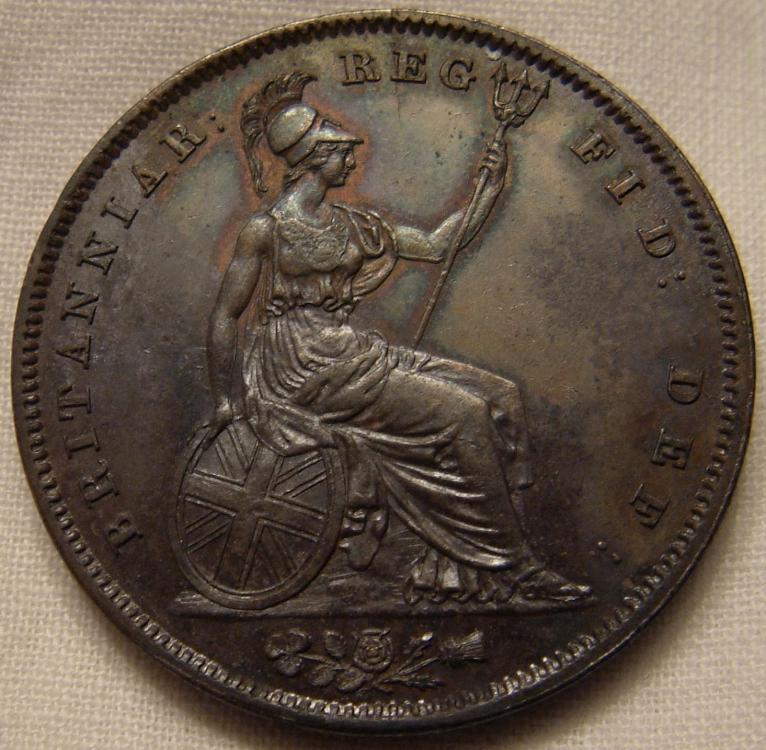
more detailed picture of reverse
-
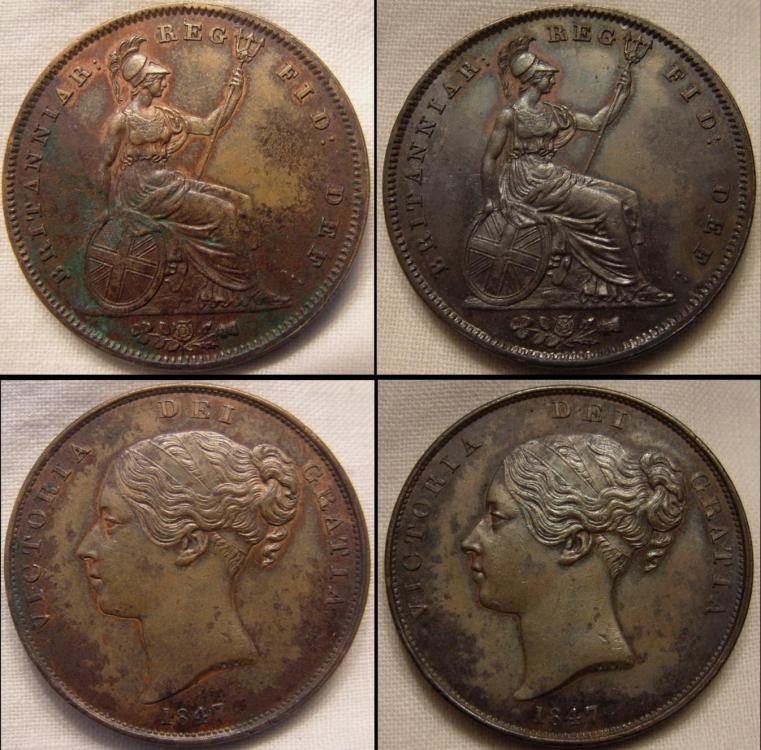
I think Jerry has done an excellent job removing the verdigris. He has also started getting the coin more evenly toned, but is leaving with me to decide how far to take it. Any thoughts welcomed, thanks.
-
Ha, you beat me to it Mike....should have checked!
-
Can't be 100% sure but when blow up the picture of the one on ebay earlier I think there is that bit sticking out bottom right of the T of GRATIA which we have discussed on the forum before now.......and again typical of the 1859. There is also a die flaw on the ebay one from earlier; 4 beads from left hand side of numeral 1 and running from front of truncation to border tooth in a curved shape. I have just checked all my 1859's but cannot find a piece with same die flaw location.......but maybe another member can find on one of theirs.
-
Reverse colon positions are clearly different locations on yours compared to the one on ebay earlier Gary. e.g. slanting opposite directions on FID : I see that the 1 on yours also has the protruding underneath numeral 1, top left, and bits sticking out of the 0 (zero), which is typical of an 1858 or 1859 (no w.w.) .....think yours is a 9 under.
-
Picture is blurry Mike, but think good enough to be fairly confident it has been tooled. Also if had been authentic then would have expected a w.w........ which looks to be missing. That points the finger to a tooled 1858 or 1859 to me.
-
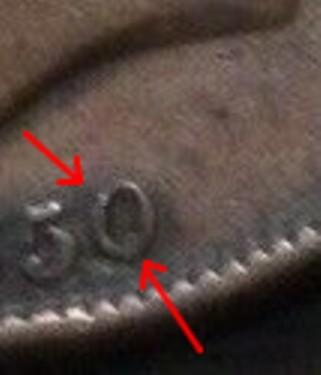
No, I didn't buy it, but probably could have done as I saw it as soon as it came on, on an auction not BIN, Zooming in on the available pictures it did not look authentic to me, but I asked the seller for better date pictures anyway, and was considering bidding as a curiosity. It was then sold before receiving better date pictures from the seller. On the picture that was available (see below) I could NOT see w.w. , but could see what looked like metalwork around the circumference. This morning the seller has said the following:- I bought it in March 1992 for £20.00 from Seabys supposedly part of old man Seabys own collection
-
What do you make of this, was on ebay earlier today?
-
There is also an F14 from the 2009 Crocker sale which looks like it has a flaw right of ship, different to other F14's. Unfortunately that is the best image I retained, did anyone here buy it? Maybe a 5th F14 die!?

-
But it's not the only F14 with those flaws Mike, check out this one form LCA June 2017.
-
....and which of the 3 reverses is this one?
-
Hi Jerry, I think there are at least 3 different reverse dies for the F14, all with different, mutually exclusive, die flaws. Please refer to my 2015 post below. More Pennies - Page 29 - British Coin Related Discussions & Enquiries - British Coin Forum - Predecimal.com
-
Grannie's old sayings
alfnail replied to terrysoldpennies's topic in Nothing whatsoever to do with coins area!
"Bye, it's a rum do" and "hello stranger" when I hadn't been round recently.......front door always left open in those days! Probably preferred my grandad's though, two of his favourites:- "Just do the Maths lad" "That's right champion, the lad had a grand knock"...............generally when Yorkshire were beating Lancashire in the 1960's.....or anyone else for that matter! -
Thanks Pete, the coin will be winging it's way to Jerry in the next couple of days, he has kindly offered to give an expert opinion.
-
Many thanks to everyone who has replied about my 1847. No one is telling me to just leave it 'as is', so I guess I will need to do something...........but not brave enough to have a go myself at the moment. The verdigris does look quite hard, so I don't think it will be an easy job to remove. I think in the first instance I may ask a TPG to advise, and perhaps provide me with a cost. Apart from the member who emailed me about that possibility does anyone else have any experience of passing to a TPG and getting good results with this type of thing? I'm thinking the coin must be worth spending a little bit if necessary just to get it done professionally by someone with experience, unless anyone here has had a bad experience which might put me off. Thanks again
-
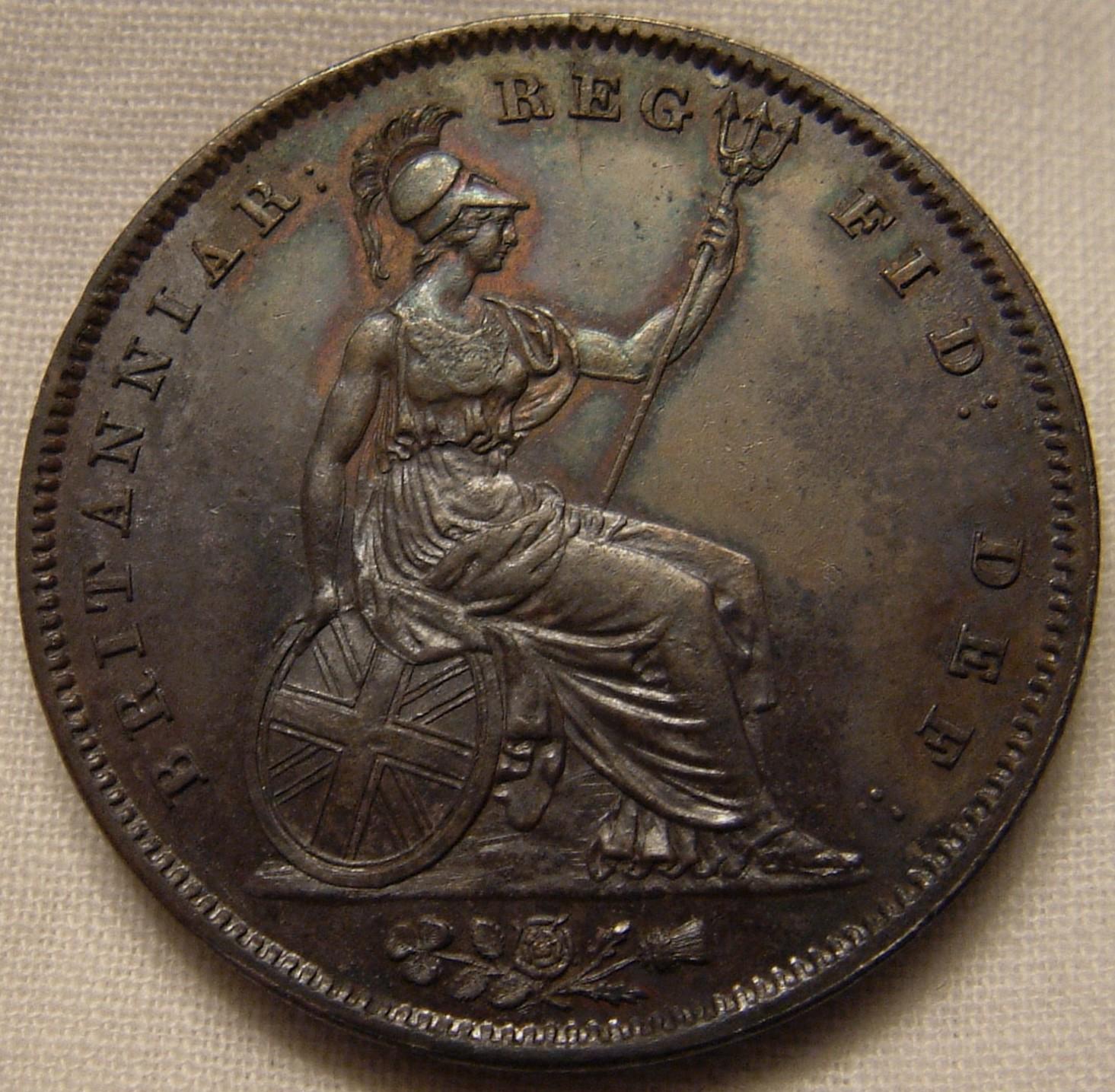
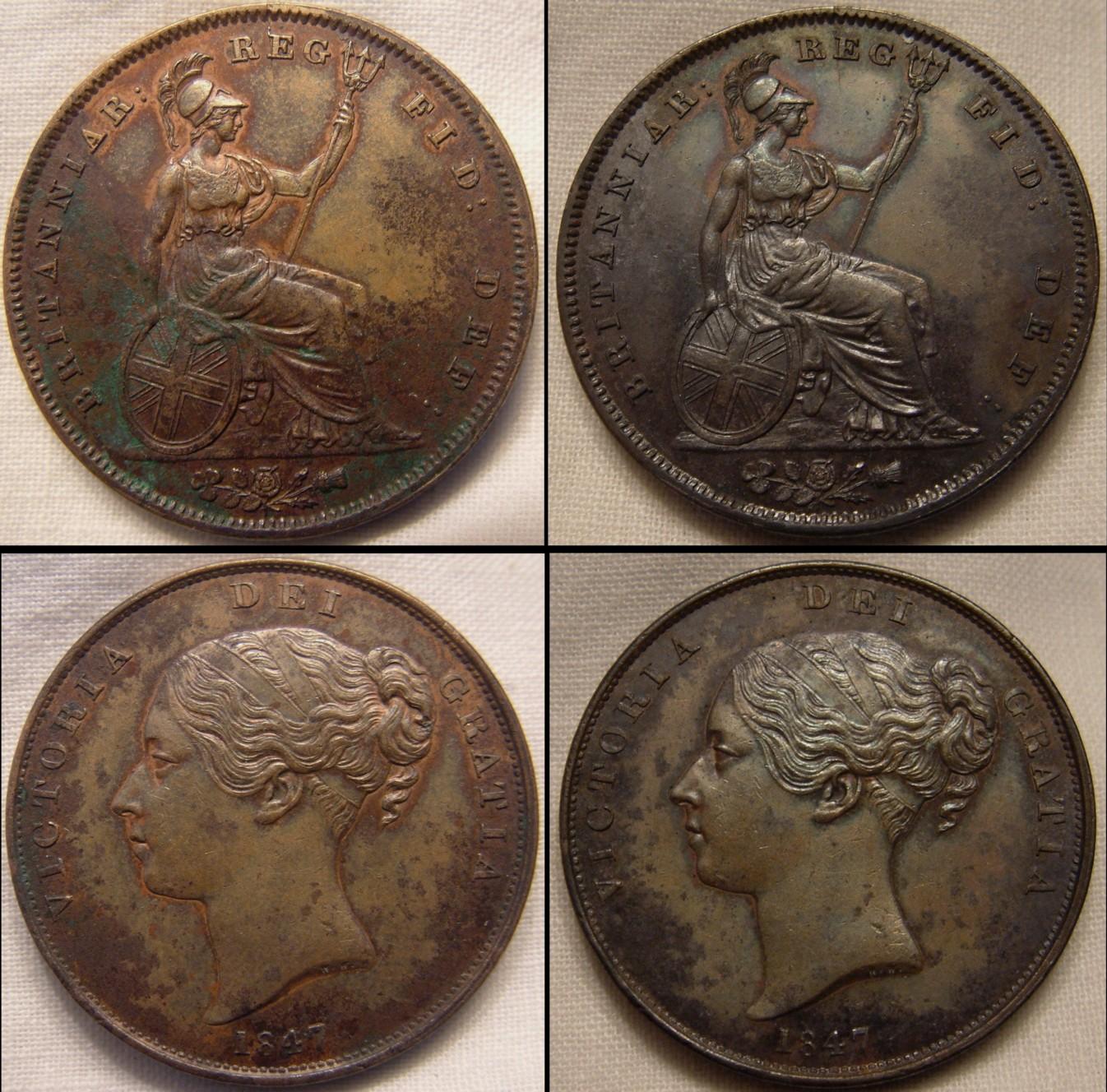
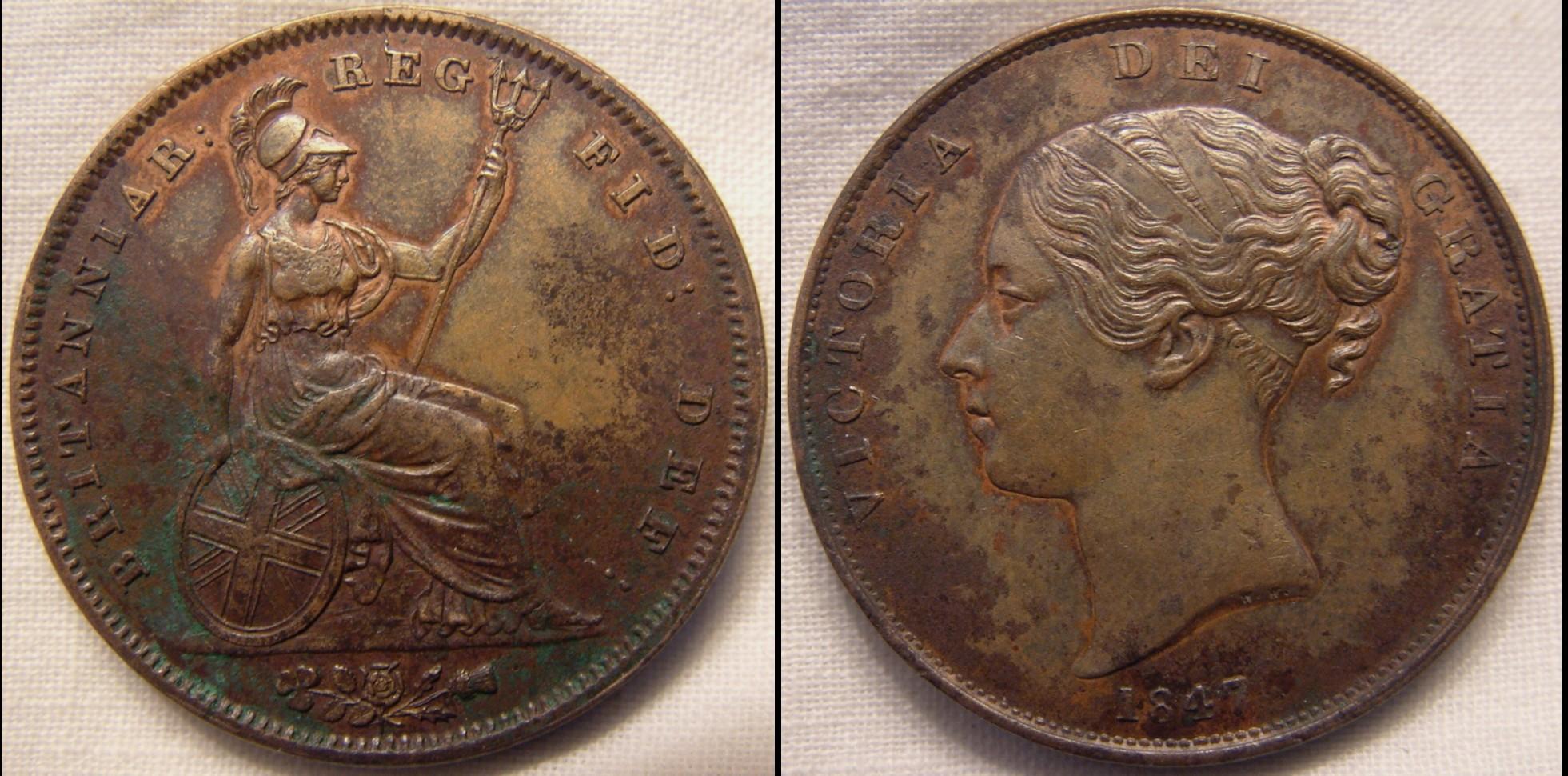
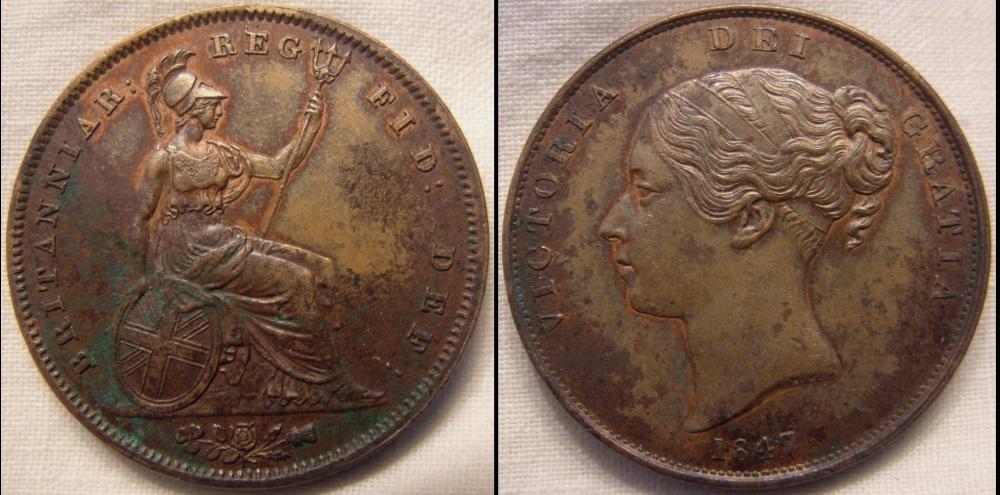
I have CP1847MJ, pictured below. It has pretty good detail, but does have the verdigris as can be seen. I keep coming back to the question of whether I should try to remove it / improve the coin if possible. As yet I haven't been brave enough to attempt anything myself; I have never tried verdigris removal before, and would first want to have practice attempts on less valuable similar pieces anyway. There's also a part of me saying leave it alone....but then I'm worried that the verdigris may develop. I would welcome views from members on this please, thanks.
-
Thanks Martin, I'm thinking you are probably right.........let's see if any member claims to have a positively identifiable Cd
-
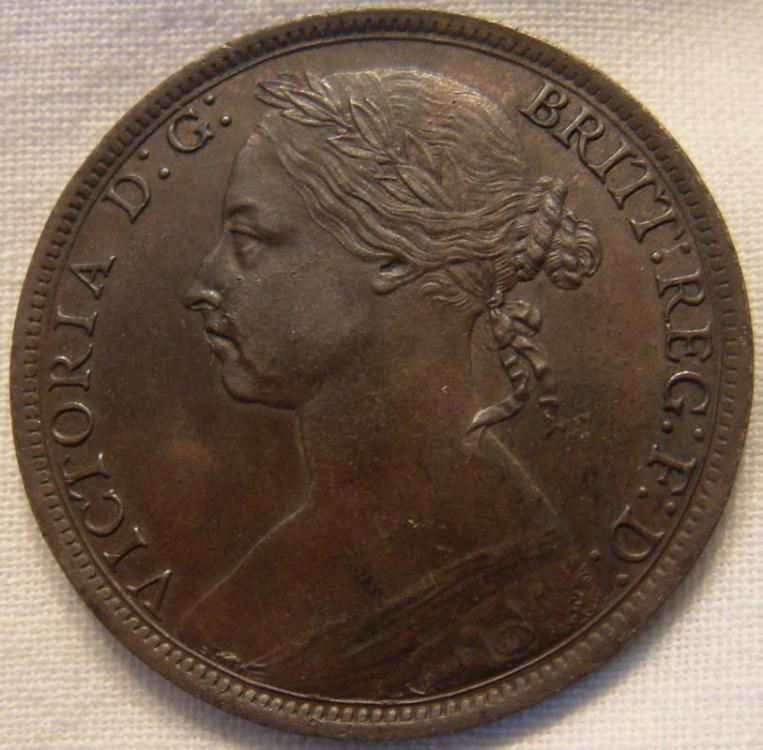
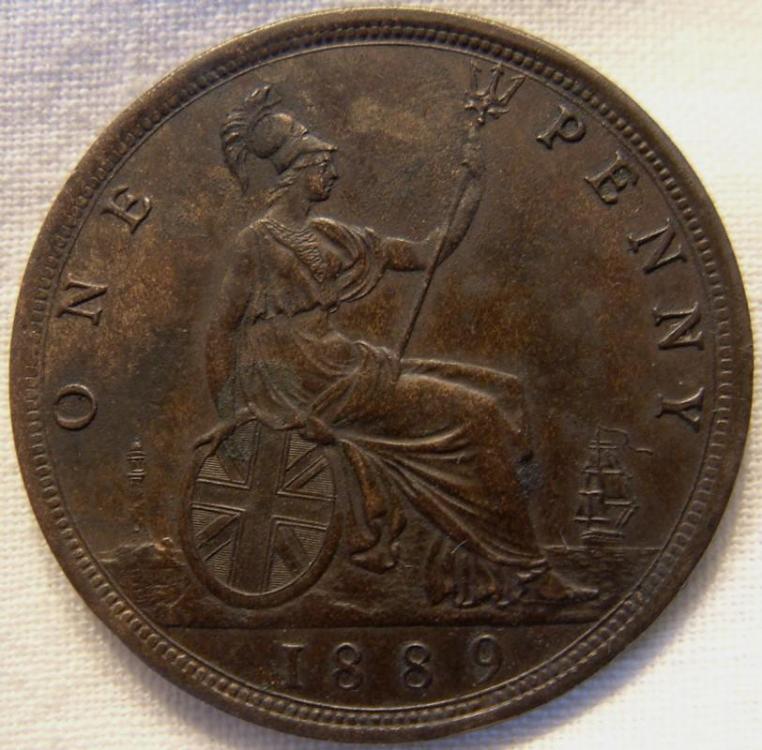
Here is my own widest date, which I think is an undocumented BP 1889Ad (R + r). Extra leaf is definitely visible, also right for a 'd' date width suffix.
-
Hi Pete, it looks as though your obverse probably has the extra leaf, making it Gouby Obverse R, and also looks like the 9 is wide enough to make it a BP 1889Ad. MG in his new pages has the widest 9 as only seen on Obverse S, i.e. BP 1889Cd. He has not documented a BP 1889Ad. Have you had opportunity to check the width accurately? I have just checked Richard's englishpennies and he has the widest date as Obverse R, but then called it a Cd. I think it needs to be either Ad (R + r) or Cd (S + r). Don't think the example is high enough grade to examine the important leaf area and decide which obverse type for sure anyway. Hoping this is making some sense as 2 bottles down today!