

Rob
-
Posts
12,944 -
Joined
-
Last visited
-
Days Won
373
Content Type
Profiles
Forums
Events
Downloads
Store
Gallery
Articles
Everything posted by Rob
-
I would never, ever bid blind at their sales. I put my foot in it the first time I went there when a Victorian sixpence listed as UNC fell out of the envelope and I immediately called their guy back on the grounds that I wouldn't have asked for a VF 6d, so it must therefore have been the wrong lot. That was before I fully understood their grading.
-
I take a similar view to Mat. Most of what I have seen in the past on offer at W & W is overgraded and generally a waste of time. I drove down to their last sale in February as there were 2 pattern halfpennies I was interested in. When I looked at them, both were only currency pieces with no features even vaguely resembling the defining points of the patterns. I asked if there was a list of notices and was told no. I pointed out the mistakes and asked if anyone was going to generate a notice. I was told no. When another lot which was listed as gilt was clearly a currency piece with the quality of gilding akin to a painted Christmas decoration I gave up, stopped looking and left to have a more productive day. When asked if I was going to the sale, I pointed out the futility of doing so. Maybe that is why I didn't get a complimentary catalogue this time round. That could just be a plus, folks.
-
What did it realize in the Norweb Sale? Lot 731 made £4000 hammer.
-
I only have 1997 Krause, but there isn't anything illustrated that matches the design. The monogram dividing the date looks ok for KM12 & KM12b which is a 1/48th taler except I can't see a letter (A or F) under the monogram and the latest they go to is 1770. These are struck in .250 silver, so with such a high copper content could possibly look like the picture if badly corroded. However, there is no match for the reverse design indicated for any denomination. Copy or medallet?
-
If it is 1783 it won't be Republique Francaise because France was still a monarchy then, so any coins would have the king and his titles on the obverse. I couldn't find anything in Krause under France that fits the description. Try and post a picture.
-
It may or may not work because the 150Kb attachment limit could prevent really good detail being shown.
-
You're lucky, mine pays 0.1%.
-
George III crown, M over N
Rob replied to Q.E.D.'s topic in British Coin Related Discussions & Enquiries
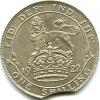
You could be right, but there is so much recutting of letters on these dies (particularly at the end of the series which 1820 is) that it is difficult to be conclusive. The N is about 15% narrower than the M on three examples I have just examined and so the right leg of N would be at the edge of the left side of the M's right vertical. More interesting is that one of my three appears to have a composite M with the left leg showing as a discrete thin I. One of the coins also has a badly double cut N in the garter legend which is extremely variable in the thickness of the angled bar and resembles the underlying N in question, though is clearly not from the same punch as the letter is smaller on the reverse. It could therefore be an underlying N but one which is defective, hence the shape. The images of the M and N in the legend of three coins shows quite a bit of variation in the shape. Of the above 3 points only the first one is specific to an N, but if the letter is composite as on the bottom M in the attached then the verticals would be made with I's which should have 4 serifs. Basically we need a glass on it.
-
George III crown, M over N
Rob replied to Q.E.D.'s topic in British Coin Related Discussions & Enquiries
Is it not just a flaw? There is no sign of the left leg of an N which ought to be there because the N is considerably narrower than the M. -
THE NEW POBJOY MINT LOGO
Rob replied to Pobjoy Mint Ltd's topic in British Coin Related Discussions & Enquiries
A logo is irrelevant. The name Pobjoy doesn't lend itself to allegorical illustration and so the name is all that is required as it tells me who the manufacturer is. In this case a logo complicates matters as it might induce me to look at the product not knowing the company behind it. Those who wish to persue the company's products will do so whether or not there is a logo. Conversely, others will avoid the name and after exposure to the logo ignore that too. I think it is an un-necessary complication. In line with other comments, I have a chess set together with a spare should the first one self-destruct and so don't need another. -
Nice idea Peter, but if you use the eBay route you have to remember that only crap sells for way over it's reasonable value. On the whole, if you put something decent on then buyers assume there is a catch and so bid low. It's psychology - everyone wants a bargain either by bidding low on the good stuff, or hoping that the washer portrayed in the listing will turn out better in the flesh and so justify the OTT price paid.
-
Nice lustre on the index finger though shame about the carbon spot, or is it a mole? On a more serious note, I'm amazed the vendor was able to establish the monarch let alone the overstrike on the date!
-
Coin Collections seized in Germany
Rob replied to Hussulo's topic in British Coin Related Discussions & Enquiries
Which should be good news for collectors of higher grade or rare pieces with a decent provenance traceable from illustrated sales catalogues over the past 100 years or so. -
large date, small date 1840's halfcrowns
Rob replied to freewheels's topic in British Coin Related Discussions & Enquiries
It could be your lucky day. Give me your email addres & I can send clear pictures of 1845/3, 1846 with 8/6, 1848/6, 1848/7, 1849/7, 1849 SD & 1849 LD. Unfortunately they add up to about 3.5Mb with none being smaller than 300K, so fall foul of the 150K limit. -
Based on the info given by Peck, the metal used initially for George VI bronze coinage was an alloy containing 95.5% copper, 3% tin and 1.5%zinc. On 14/4/1942 the tin content was reduced to 0.5% as a result of wartime shortages and the resulting alloy had 97% copper and 2.5% zinc. On 15/11/1945 the original composition was restored, so to find out your coin's composition it would be necessary to analyse the metal as either composition could apply.
-
It's quite normal and a frequently asked question. For the period up to 1887 it was the rule that coins had an inverted die axis although there were a few issues starting from 1787 that were not. Since the Jubilee Head issues of 1887, I think I am right in saying there have been no intentionally issued coins with this die axis in this country, nor any patterns.
-
It's not only the mismatch between title and picture. The title is a coin, the picture is of a Levi's label but the description is for a pair of Nike tracksuit bottoms.
-
Only a couple thousand dollars over the top, therefore quite reasonable by ebay standards. 1806 penny
-
1938 brass three pence die crack
Rob replied to viola133's topic in British Coin Related Discussions & Enquiries
It looks like a laminating flan from the image and not a crack on the die. Either way it isn't worth more than a pound in that condition because of the wear and verdigris - that is if you can find someone willing to buy. Very few 20th century coins are worth a significant amount when not in mint state due to the numbers available. 1938 is a slightly scarcer year, but still not difficult to find. -
The nearest regular one to you will be the Wakefield Fair at the Cedar Court Hotel just off junction 39 of the M1. The next one is on the 25th January. It opens at about 9:30 and runs until 1 or 2 o'clock. There is also a twice yearly fair at York racecourse on the 3rd Friday and Saturday of January and July; next sale is 16-17 Jan opens at 11am Friday and 10am Saturday but you are best going on the Friday. There is also an annual 2 day event at the Old Swan Hotel in Harrogate, the next one is the 20-21st March 2009. I am not aware of any fairs specifically in the north-east, but Corbitts hold an annual sale in the summer most years. Wakefield is only an hour and a half from Newcastle.
-
There are a lot of reputable dealers and a lot of iffy ones. ebay can be good for coins if you know what you are looking at, but will frequently scam you for an overpriced, polished, corroded or otherwise defective coin. There are bargains to be had if you know what you are doing, but much better to have a discussion with someone who knows what they are talking about before buying anything and everything. Much of what is listed on ebay is overgraded and many items are not worth the 99p starting price. Some dealers do charge very high prices which is why it is important to do your homework first. But importantly, the prices in books are only indicative and may not reflect fully the rarity or demand for a specific item. They can be both under and overpriced in these volumes. You need a reference point, so get yourself a book which gives indicative prices such as Chris' CCGB or Spink's Coinage of England and then use the web to find similar examples of specific coins. Spink's book for example has three pages dedicated to grading at the start of the milled coinage section and shows coins of a similar type in a range of grades. Look for examples of these on websites to compare the claimed grades and the prices asked. You will see that pictures of uncirculated and extremely fine coins frequently don't look too different, but when you come to sell there is a world of difference in prices. Genuinely uncirculated pieces are actually quite difficult and some virtually impossible to find unless modern. Most UNCs on ebay will be VF or upwards, though sometimes you will even find things without detail described as such. Do not rely on the claimed grade, learn to do it yourself. Visit coin fairs and talk to dealers as they will be happy to help. There is one in Birmingham on the 2nd Sunday of each month and one in Wakefield on the last Sunday of each month except for December. Someone else will have to fill in the details of the London fairs. Best advice is to read, then read some more, then look at coins and see if the literature makes sense. If not, ask questions. Royal Mint commemoratives are best left alone. They are produced in bulk for the masses, overpriced and almost without exception will never become valuable collectables.
-
Your favourite coins
Rob replied to Red Riley's topic in British Coin Related Discussions & Enquiries
First of all I would like to point out that unlike just about everyone else, I don't have a love affair with half-crowns. As a result I only have about 20 in total including a few oddballs. As regards the most aesthetically pleasing design, I would put the George VI silver threepence reverse right up there. Simple, but effective. Obverses are more difficult because they are typically just a head. Therefore the gothic has to get my vote because of the detail. These are of course subjective and liable to be superseded by the latest stunning acquisition - whatever that may be. I tend to have favourite individual coins as opposed to types. -
There are a couple of programs about including one, details or contacts for which was posted on this site in the last couple of months. I use Access for details of my collection.
-
We still get the second post every day, usually round about 11am, however, they have cancelled the first post, which used to arrive about 8.00 - 8.30am. You were lucky. Our first post used to arrive any time up to 4 o'clock in the afternoon, though second post was usually here by mid-day. Apparently it was all due to the first post postman having to do two rounds, while the second post postman only had to do one round. Ah, the wonders and nonsense of job demarcation.
-
1887 sixpence with A over A in Victoria
Rob replied to a topic in British Coin Related Discussions & Enquiries
All 1887 sixpences are common. It would make no difference to the value if a character has been recut or if two distinctly separate cuts were made. This is just human error, but not on a big enough scale to be a collectable rarity.
