

Rob
-
Posts
12,944 -
Joined
-
Last visited
-
Days Won
371
Content Type
Profiles
Forums
Events
Downloads
Store
Gallery
Articles
Everything posted by Rob
-
If you clean it you will damage it in any case, so best sell them on as is. Are you sure they are proofs and not just an early strike? People who own proofs usually know they are a special strike and the chances of them getting into circulation are therefore unlikely given they would only have been current for 35 years from production. Good hi res images would be needed to ascertain whether they are proofs or not as there is more than a polished field required for a proof.
-
I think he had got as far as Anne.
-
Is your 1967 penny full lustre? I will swap for THREE BU 1971 pennies... Done. 3x sod all chance of selling something is better than 1x.
-
Up to 2789 listings now, including a 2006 with no date on the obverse going off shortly with 2 bidders Most seem to be going in the £200-300 range, though I see one is over £400 with 5 days to go. Bizarre. Given the mentality of these people, it is little wonder the Royal Mint manages to offload vast quantities of overpriced bling. Or for an alternative investment - 1967 1d anybody? Only 100,000,000 left.
-
Firstly, congratulations on getting the kids to clean their rooms - we've all been there. All of the regulars or semi-regulars on this forum are collectors, Chris Perkins who owns the site is a dealer who also has a collection of oddballs as I understand and a few of us, myself included, do a bit of dealing. The balance is mostly people who register in order to post a query such as yourself and that is the last you hear of them. Banknotes are a different matter and not my department. I do know the condition is even more important than for coins unless the item is exceptionally rare. So pin holes, foxing, creases or any other marks has a profound effect on their value. A lot of collectable notes have been ironed to make them appear better than they really are and which definitely detracts from a collector's point of view. I haven't the foggiest idea about Lira banknotes and don't know anyone with any knowledge about them, but would suspect that unless they are particularly old or had a very short issue period they are unlikely to be valuable. Most currencies post-war are readily available from what I have seen. Hope this helps. Rob
-
Hi David, auction has finished. We got £240 for it. We are off to Argos now. My son is so pleased that he can buy a PS3 for £50 and of course 20p! Thanks for all the advice given by you guys. Anna Crazy
-
To put this particular coin into context, there are only 2 examples available to collectors. The last time a 1933 penny was sold appears to be the one on Mark Rasmussen's Spring 2006 list for £45000. I think I would prefer to have a single 1933 penny to 10 or even 200 undated 20p's even if they did cost the same amount.
-
It will always be a collectable coin as long as there are people collecting them because the Royal Mint makes very few errors and this is a true error coin as opposed to a faulty strike which would be a random event. Having said that, 2 minutes ago on ebay there were 563 undated 20p coins listed. These have been known about for months and have had a continuous presence on ebay since their discovery, so ebay listings alone must run into thousands. The mint estimated 100,000-200,000 were struck. This is NOT rare. The general consensus is that they are worth about £30 or so based on coins of similar rarity. If you can find someone stupid enough to pay £300 or whatever for it then I suggest you take the money and run. You can always find another one to replace it, and if you really want one for posterity you should be able to get one for a few tens of pounds by waiting long enough for the hysteria to die away. This is a ludicrously overheated market.
-
It looks like an F but is probably an E as this is the following letter. It will make some difference to the value but will depend on overall condition and whether there have been any others noted which have passed through a sale room to provide a price reference. Should be worth at least double the standard type though. There wasn't an example in the Adams sale and I know he ploughed through mountains of William III half crowns, so it is almost certainly going to be rare.
-
Gary, This is a subject I brought up many years ago, when the Royal Mint ran a forum, but then closed it never to reopen when some idiot started posting all sorts of rubbish on it. I have a 1937 proof set, the coins of which I understand to be standard proofs i.e. polished finish all over and not cameoed (not sure if this is a word!). The crown in my set is exactly like this one, i.e. it has frosted devices, as has the Scottish shilling, unlike all the other coins. I tried getting an explanation for this, but opinion on the forum was divided over whether mine was a VIP proof or whether it was a fact that the early proofs were cameo and as the dies wore, the effect was gradually being lost. I don't personally buy this latter explanation but have never been able to figure why my set has a combination of two styles, unless, of course, it was a re-constituted one. However, this would still imply that the mint was producing both standard and cameo coins at the same time. Anybody got any ideas? DaveG38 A moot point. I am inclined to buy the frosted = early theory in general. VIP proofs can come in both frosted and unfrosted styles, so this feature is not specific to VIP proofs, nor is it an obligatory feature. I would suspect that for a year when there was a large issue of sets for the general public, a VIP set would be accompanied by a different box or some other notable feature. Human nature being what it is, VIPs tend to appeciate being identified and treated as such. Lot 187 in the April sale at DNW was a 1953 set in a roughly square box instead of the normal rectangular one and described as almost certainly a VIP presentation set. In the case of those years where no general issue sets were made, they must by definition be classified as VIP issues. Possibly it was a matter of chance whether the design was frosted or not, though there are notably more unfrosted examples amongst the smaller denominations and these seem to be the later issues.
-
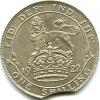
very small victorian silver coin
Rob replied to a topic in British Coin Related Discussions & Enquiries
There weren't any dated 1849. Possibly it is 1843 with the last two digits struck over 34 giving the impression of a 9 on the last digit. Post a picture and it will be possible to say what it is. -
1720 isn't a rare date for the plain angle shilling, so I'd say it might possibly make £50ish in that grade. Ebay would be a total lottery as the prices paid are frequently over the top or way too low. The obverse is only scraping fine, though the reverse looks a bit better - as always.
-
Hi, I know it was 3 years ago she was banned from eBay, but has anyone got an address for CAROLINE BROWN, who was INVESTCOINS 2003 , on eBay? This seems quite a long time ago for a follow up. Any reason why?
-
You would have to post a picture to get an idea of the grade which is all important. It could be anything from bullion value (£1.50-2) to £100 or more.
-
Both 1920 and 1921 use 2 different obverses namely Freeman 2 & 3. 2 has a smaller gap between GRA & BRITT and the colon after IMP doesn't line up with a tooth. Obverse 3 has a wider gap and the colon lines up with a tooth. Obverse 3 was also used on the 1926 non-ME penny. All is explained in The Bronze Coinage of Great Britain by Michael Freeman which covers 1860 onwards and is a reference book all bronze collectors should acquire. The 1985 version is ok as the descriptive contents were not revised in 2006; only the prices were changed, which of course immediately became obsolete.
-
My 1/3 farthing set complete!
Rob replied to Hussulo's topic in British Coin Related Discussions & Enquiries
I still think the US companies are too inconsistent to use as a benchmark. The 1884 I sold you was better than MS62 for wear. I think they took the filled crown on the reverse for wear as opposed to what it is. It would be interesting to have all of them slabbed from raw (to eliminate preconceptions) by CGS and see what they give. However, this would also be a gross waste of funds that could be better employed elsewhere - like halves and quarters. -
Edge readings can be either way up. The letters are not put on the edge at the same time as the coin is struck so there will be a 50/50 chance of it being in either orientation.
-
Help needed please
Rob replied to cpringle1965's topic in British Coin Related Discussions & Enquiries
Nothing stands out that would be worth a great deal. The 1861, 1903 and 1926 pennies have rare types, but the crucial word here is rare. They would need to be in a good grade to be worth much. Pictures always help. -
The coins looks to be dated 1885. is this the same coin ???? http://cgi.ebay.co.uk/ws/eBayISAPI.dll?Vie...52BSI%26otn%3D4 No, this looks to be dated 1880. And the first one is dated 1885. One is Melbourne, the other Sydney. The letters below the bust are clear. Both obverses are similarly not very good though, so I had to do a double take on them to be sure.
-
Up for sale once again (or still) -- at a new lower price... a second chance He must have some real gems. It is only 1mm thick instead of the normal 2mm. Perhaps someone should email him and point out that even his 2mm coin(s) are rare - so get it/them listed NOW!. Sadly, all my 3d's are 2.75mm thick.
-
Auld Scottish Acquisitions
Rob replied to scottishmoney's topic in British Coin Related Discussions & Enquiries
Snap -
An article in the 2001 BNJ entitled "Coin-Weights made by the Founders" by Norman Biggs refers to the exact description of your piece. The article identifies it as a shilling coin weight (for assessing if the mass of silver is the same as found in a full shilling) but merely notes that some of the bullion weights have additional countermarks that raise interesting questions. It mentions a rampant lion, possibly to make it acceptable for use in Scotland. Other marks noted are a fleur de lys and a cinquefoil. If a rampant lion was for Scotland, then the logical extension of this is a French lys and an English rose. French silver at this time was to a standard of 0.917 as opposed to the English 0.925. I don't know if this has any relevance though.
-
Have a word with Paul Withers at Galata who is one of the best experts in this field. He collects coin weights, writes about them and may have one of these too. In any case he would be able to point you in the right direction. I see the mark is a cinquefoil, rose or pansy. This was also used as a mark in Henry VII, Henry VIII, Edward VI, Elizabeth I, James I and Charles I so there are numerous possibilities as to its origin. The alternative would be the use of the mark which is specific to a place. Besides the tower mint, York and Canterbury also used these marks at various times. The inscribed letter D could refer to the person in charge of the mint as opposed to the location. A precedent for this is a series of weights with a TR monogram which can reasonably be attributed to Oxford as Thomas Rawlins signed some medals with the same.
-
If it sells he can spend some of the cash generated on literacy classes. Why are so many people in this country incapable of spelling words, or communicating in general in their own language?
-
Certainly a halfpenny was one of them last time round and your description fits what I saw. This is probably the same as last time as there is no way anyone with even the most basic knowledge would accept it as a genuine gilt proof, so is probably the same item rejected and included a second time round. I think most auctioneers put rejects in their following sale - but fail to mention the reason it was returned the first time. Certainly I have always checked for my returned items in the following sale and been able to identify them despite the description rarely mentioning the reason for return as a revision of the original, whoever's sale it is. The coin/antiques shop is Peter Viola's. His prices are fair from what I have seen.