

Rob
-
Posts
12,801 -
Joined
-
Last visited
-
Days Won
347
Content Type
Profiles
Forums
Events
Downloads
Store
Gallery
Articles
Everything posted by Rob
-
there's one here if anyone needs one, bit like buses David In that grade, "possibly cleaned at some time" is somewhat irrelevant.
-
Here is the link to the one on the CC site: 1860 copper halfpenny I don't think there is any doubt it's a fake. Worn coin, clear date like it was added yesterday (as it probably was) in numerals that look thicker than normal. Looking at the hair detail, much lustre presumably refers to the quality polishing that has most likely occured.
-
It's probably been over-dipped which has removed the somewhat more extensive toning in the previous listing. It makes it go a very dull matt tone and has exposed what looks like a previous scraping for want of a better word.
-
I like the 30 tray size too. A good chunky cabinet that is in no danger of being knocked over or off a surface.
-
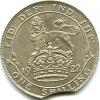
William III Shilling collectors
Rob replied to Coindome's topic in British Coin Related Discussions & Enquiries
It's difficult to assess the relative rarities because you need to consider only those that crop up in general sales. Complete collections coming to market distort the numbers because a collector will only want one example of each variety rather than a number in proportion to the numbers extant. The provincial mints are not very common in high grade and so most examples must remain hidden within the numerous bulk lots at the end of the auction catalogues. The only individual examples in a sale will be high grade unless exceptionally rare which will also skew the data. I have a feel for what seems to be difficult in high grade, but whether that is representative of the populations as a whole is open to debate. In my opinion, Bristol is the commonest followed by York, Chester and Exeter of similar scarcity with Norwich being the hardest in desirable grade. -
Maundy Error coins now in hand
Rob replied to azda's topic in British Coin Related Discussions & Enquiries
The E's in this period often have a thin line linking the serifs and I'v e often wondered if the die sinker put in a thin guide line prior to making up the letter from a few different punches. You see it from William 3rd onwards, so I'm not convinced it is an underlying letter because it occurs too frequently. The O is over an R however. -
First come first served? Yes
-
Sold
-
Comparative rarity scales
Rob replied to freewheels's topic in British Coin Related Discussions & Enquiries
It looks like yours are all unique. I've sent the article off and just need to hear from the editor and referees that everything is ok. -
The 1663 1st bust shilling listed as being A/G in FRA is in fact also R/A. The bottom of the G fills the space between the feet of the A and there is a curved line for the left side of the G. The square ended tail of the R and the bar filling the indent half way up on the right confirm the underlying A. There is no sign of an underlying M below the F to suggest that MAG was entered twice, so we can assume that having entered the A after the F the die sinker thought that he was entering MAG - hence the following G. Seriously rare and the first one that I have seen. Up for grabs if anyone is interested.

-
Comparative rarity scales
Rob replied to freewheels's topic in British Coin Related Discussions & Enquiries
I think you will find there are insufficient people with the necessary resources to do such a study. We all have gut feelings for relative rarity, but very little concrete evidence resulting from systematic study. Most of us will do some sort of number crunching in our respective field of interest, but unless the statistics are collected under standardised procedures it will be comparing chalk & cheese. You shouldn't underestimate the amount of work required to do such a study. I've just completed a study of the Weyl patterns for publication in the BNJ which has taken me about 2 years off and on. Looking through about 4000 catalogues and lists I've located somewhere in excess of 420 records for the approximately 100 varieties. Tedious - yes, and that is for a series of unique or nearly so coins. If you do a survey of the coins listed above you will have many, many more data points to consider. If you don't get an adequate number the statistics will be meaningless. It isn't just a question of recording the number of times examples of a particular coin come to market, you also have to establish which coin is which to avoid double counting. This is easier with hammered because of the variation in shape and strike, but milled is a nightmare as you only have toning, spots, flaws and other imperfections to rely on when identifying specific coins prior to the introduction of colour catalogues. 50 years or more ago the illustrations were taken from wax impressions, so the first two items above don't apply from before say WW2. You also have to contend with those coins that have been dipped. Welcome to the world of provenances. Who has access to sufficient reference material other than myself and who is going to do the donkey work? I could do some given the time but it would take an eternity and in any case my library is nowhere near complete. I'm not aware of anyone else on this forum with a large enough library and if there is an individual out there, they are keeping very quiet. -
Comparative rarity scales
Rob replied to freewheels's topic in British Coin Related Discussions & Enquiries
For currency coins just about every rarity attribution underestimates the quantity available. For patterns and proofs the numbers tend to be reasonably accurate but with a few glaring exceptions. Many rarity values assigned by Peck, Freeman, Rayner or whoever are numbers plucked out of the air and should be disregarded. It is worth doing your own research from past sales because you will be surprised by the results obtained. Rare currrency pieces in high grade will almost always be recorded and illustrated which helps. I know of R7s in ESC where there are many more known and equally an R rating where I can't find a single example. The job is harder for base metal because until Peck and Freeman published, you were an oddball if you collected pennies et infra and they were rarely listed in catalogues, rather lumped together as job lots sometimes running into hundreds of coins. So to answer your question, given they are all inaccurate, correlating the different numbers is a pointless task. -
Well it might be my vivid imagination but if you look at first scan it looks like a numeral '7' in the rim just below the D of 'DEI' its small but can you see what I am on about now??? Russ777 I see a vague shape which is presumably what you mean, but it is in minimal relief. There is also a stop between the G & R of GRATIA which is more prominent than the '7' but which also shouldn't be there. Given the condition of the coin, any non-standard feature would have to be very prominent to gain any credibility. Unless you can show a similar feature on one that is close to mint state or where there is no question of environmental damage, you are on a hiding to nothing.
-
Question for you knowledgable types
Rob replied to azda's topic in British Coin Related Discussions & Enquiries
Which is precisely what every politician has done since they have had the inconvenience of the public voting them into office. -
Question for you knowledgable types
Rob replied to azda's topic in British Coin Related Discussions & Enquiries
The PCS are hardly a model of neutral assessment. What they fail to do is make an objective argument based on the overall liabilities of the nation, i.e. they are living for today because tomorrow is too horrible to contemplate. I note they are getting their public debt figures out before the real ones are released. Not included in their figures are the costs of buying the stakes in the banks which have yet to appear in the public financial statements, the PFI future costs and the enormous future liability of unfunded public sector pensions, which don't show up in the current statistics because they are laibilities whose cost has yet to be crystallised. If you take on board all the off-balance sheet items such as PFI so beloved by GB (as the cost would only be realised once he was gone)and the liabilities not yet showing up in the national debt statistics then you get an entirely different picture. Figures bandied about vary from £2 trillion up to £5.5 trillion for the true national debt depending on who was providing the argument. The answer is usually somewhere in the middle and indeed the ONS puts the number at £4 trillion. That's a very big number - over 250% of GDP, but shows the true cost of public sector employment and fiddling the balance sheet. The public sector pensions do not figure in the national debt, yet most left of centre people desire an expansion of the public sector with the consequent increase in future liabilities beyond even today's stratostpheric level. If the banks can resume steady earnings and profits then the state can cash in its stake at a convenient time to maximise the return. (As with the private individual, it is much better for nations to pay down debt than to pay interest over the rate of inflation). This is probably the best and only option as things stand to recoup money because PFI was a commitment to spend lots of money way into the future on the taxpayers' behalf and the public sector unions are unlikely to willingly give up their future pensions amounting to around the £1 trillion mark. So repaying debt and stopping excavation work on the already large hole we are in should be the order of the day. Cutting the future liabilities is a fundamental part of solving the public sector problem. And for the record I am not, nor am I every likely to be a member of or affiliated to any political party - I just believe everyone, nation states and myself included should be living within their means. So no triple unite for me (as this is a coin forum). -
Question for you knowledgable types
Rob replied to azda's topic in British Coin Related Discussions & Enquiries
The deficit appeared as a result of Gordon Brown's incompetent housekeeping. From coming to power in 1997 up to 2000 he broadly balanced the books in an attempt to show that he was fiscally responsible. All that went out of the window between 2000 & 2005 when he spent 44% more than he took in taxation. The only way that can not be described as a deficit is if the sum involved is zero. 44% of f*** a** being f*** a** etc. etc.. On top of that he continued the time honoured tradition of politicians of wanting to be loved by handing out freebies to whoever labour decided was in need, all provided by vast armies of public sector workers. You can't have a successful economy based on a booming cost base, and sure enough chickens came home to roost because now the outlay has to be paid for. Very, very few public sector jobs directly create wealth for the country. Sure banks do irresponsible lending sometimes. They always have done, factoring in an allowance for an historical average percentage of bad debts. But, and this is equally important, the availability of credit has to be matched by someone equally willing to spend it without considering repayments. Anyone who has a credit card knows the limits get moved ever higher, but nobody is forced to buy goods they can't afford and in particular the large ticket dicretionary items. A little mea culpa is due from most of roughly half the population who don't pay the cards off every month. Used sensibly a credit card is an asset, used irresponsibly it may land you in the shit; but don't worry, New Labour also made it much easier for bankrupts by allowing people to walk away from their debts and have a clean slate after a year. I think that principle is a disgrace and believe everyone should honour their debts for as long as it takes. If there was a stigma attached to being unable to pay your debts - good!! it might make a lot of people take steps to avoid getting in that position in the first place. If Labour had stopped trying to play Father Christmas and concentrated on being the miserable git in charge of the bank of 50 years ago, there would likely be little or no credit crisis here. -
Question for you knowledgable types
Rob replied to azda's topic in British Coin Related Discussions & Enquiries
It's a farthing (P922), not a halfpenny. The weight is 8.85g which is marginally above the average recorded by Peck. This frequently causes confusion as the halfpenny weighs a whopping 17g or so. The coin is actually the one from the Oxford collection (217) which made £1000 when sold by Colin Cooke. The image on their site shows a much more honest image as there are quite a few marks which you can't see in the Swiss catalogue, so not so desirable and not for me. The estimate is too high given the problems. Have you ever seen the subsequent lot 448 before? Based on the identical toothed border and a possible trace of spotting between A & N on the reverse in the Spink 95 catalogue, I'd say it was this sale's lot 330 referred to in the Nicholson lot 308 notes. Despite the crap picture in the catalogue, it clearly isn't Nicholson's piece which had a different border profile and which in any case is now slabbed and probably in the US at the moment as NEN had it. -
Question for you knowledgable types
Rob replied to azda's topic in British Coin Related Discussions & Enquiries
It's a farthing (P922), not a halfpenny. The weight is 8.85g which is marginally above the average recorded by Peck. This frequently causes confusion as the halfpenny weighs a whopping 17g or so. The coin is actually the one from the Oxford collection (217) which made £1000 when sold by Colin Cooke. The image on their site shows a much more honest image as there are quite a few marks which you can't see in the Swiss catalogue, so not so desirable and not for me. The estimate is too high given the problems. -
Question for you knowledgable types
Rob replied to azda's topic in British Coin Related Discussions & Enquiries
Highly desirable, what catalogue is it from? -
Question for you knowledgable types
Rob replied to azda's topic in British Coin Related Discussions & Enquiries
The price of Aussie gold is going through the roof because of Aussie demand. Almost any piece in UNC will be snapped up for a 4 figure sum. Even slightly impaired top grade pieces are mopped up easily. A genuine UNC will easily surpass Spink prices which are playing catchup. My Melbourne Victoria sovereign cost more than Spink book, and in the case of the Sydney & Perth coins I have bid on recently I didn't even come close, despite bids over book. All that is without premiums. -
Question for you knowledgable types
Rob replied to azda's topic in British Coin Related Discussions & Enquiries
Quite agree. Ever since the introduction of credit cards in the 1970s, people have been deferring payment as there is no requirement to pay up front for the luxuries you covet but are unwilling to work or wait for. It's no coincidence that Germany doesn't have a credit problem and the populace are reluctant to embrace credit cards. As you say, if you can't pay cash, don't buy it - and they don't. As a rule they don't fritter away their hard earned savings on depreciating liabilities like the latest fashionable item that has to be bought because it is available, yet discarded tomorrow because it's old hat. They tend to buy quality and insist on it lasting for years or even decades. I'm glad my wife is German - or maybe I was born in the wrong country. -
The proofs and patterns of this series have plain edges. This also applies to the shillings.
-
A VERY strange looking medal
Rob replied to azda's topic in British Coin Related Discussions & Enquiries
Be careful what you ask for. The Cerne Abbas Giant is rumoured to have connections to Oliver Cromwell according to the blurb at the viewing point. Looking at it, it is easy to see why this country opted for the restoration of the monarchy. -
A nice coin but has copper gone mad?
Rob replied to azda's topic in British Coin Related Discussions & Enquiries
The man is a complete twat. With a name like styx collectables, it is entirely appropriate that he likes holes. -
Is this news? 1841 penny variety?
Rob replied to freewheels's topic in British Coin Related Discussions & Enquiries
A decent library will always pay dividends. You can never have too many books.
