

Rob
-
Posts
12,944 -
Joined
-
Last visited
-
Days Won
373
Content Type
Profiles
Forums
Events
Downloads
Store
Gallery
Articles
Everything posted by Rob
-
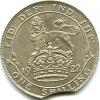
Being somewhat flattened, the effigy has been modified - just not in the accepted manner.
-
Insert the phrase 'it's been in' at the correct point to clarify the description.
-
How much literature do members have and use?
Rob replied to Rob's topic in British Coin Related Discussions & Enquiries
Many thanks to all who have taken part in the poll at the beginning of this thread over the past 2 or 3 weeks. As expected, the usual suspects contributed, though a handful of regulars on this forum were notable for their absence. I was hoping for a greater contribution from less experienced collectors, as this would have given an insight into their perception of the hobby, the obstacles they face and the decisions that have to be made when looking for a field or series to collect - all things which long term collectors have mostly forgotten. Serious collectors have obviously got the persistence to look for the information they require, but without sufficient knowledge of where to find the reference material I can see that the easy option is to do nothing, and longer term to lose interest. Clearly the easiest way to get people engrossed in this or any other hobby is to have material at your fingertips which you can refer to or read for pleasure. Perhaps a list of material could be pinned to the top of a forum or two (like a read this first thread) whereby people can know what books to look for. Many visitors are clearly casual ones looking for a single piece of info, but a handful are, or convert to longer term collectors. Looking at the various posts I get the impression that people are on the whole not too dissatisfied with the books that are available. I know we can only use the material at our disposal, but there was no obvious call for a new reference in any one particular field with the best material for the job known to the longer term collector (unsuprisingly). The only revision that has been mentioned in this or other threads is one for farthings. Maybe the farthing collectors would like to give ColinG a nudge in that direction for a future project given Colin Cooke would require a medium and a ouija board to finish his work. If anyone is able to identify a section of the hobby that is inadequately catered for, please speak up, as there might be sufficient enthusiasm to fill that hole. -
Good question. I also had one with a fault above the tie knot, which from the discolouration I had put down to someone soldering it to a piece of jewellery or similar. The interesting point is that mine was also 1857, but the mark is in a slightly different place on the two pieces shown being to the left of the bar. The third piece has apparently the same location, but as you say a lamination fault is unlikely. It is possible that there could have been some trapped material which adhered to the die given the identical location from the images. A spanner in the works to this theory is that the dies are different. The clash marks are at different positions on the two reverses and the profile of the 7s appears to be a bit different too.
-
Rostrum - Dubious attribution?
Rob replied to rosecoins's topic in British Coin Related Discussions & Enquiries
Those were my thoughts as well Scott. I looked at it and although by no means an expert on shillings it did not look right. The legend is too bulky. I have an 1696 and an 1697 and the lettering seems to be much thinner. I know there are more than one obv types so maybe its just a different obv, like I said no expert! There are so many dies in this recoinage that the thickness of the letters probably isn't an issue. It looks cast because it has pitting, but that could well be because it has been underground. The detail matches ok. The missing ties are not unknown in this period either. The apparent E/A is seen on halfpennies where you frequently see a join between the middle and lower arms of the E. In fact the legend could be made using punches for this denomination. I think it probably is ok, but a weight would be useful. Anything around 5 grams would be dodgy, anything close to 6 ok. An enquiry as to the weight would probably clinch it. A quick comparison of a few pieces suggests the halfpenny punches are maybe 10% bigger in both directions. -
Rostrum - Dubious attribution?
Rob replied to rosecoins's topic in British Coin Related Discussions & Enquiries
RLC35's thread earlier in this forum has an 1854 1/2d with one. Go to the forum and scroll down the first page. -
Rostrum - Dubious attribution?
Rob replied to rosecoins's topic in British Coin Related Discussions & Enquiries
Not convinced from the image. I'd want to see it in the hand. -
undated 20p coin
Rob replied to freddyyjones's topic in British Coin Related Discussions & Enquiries
Form another one. Sell your pennies which are riding at an all time high and buy shillings. Simple. -
undated 20p coin
Rob replied to freddyyjones's topic in British Coin Related Discussions & Enquiries
There aren't any gold 1902 pennies. If it is gold coloured it has either been plated or chemically cleaned to give this colour. -
They just don't understand, do they? Having indicated how much a specific lot was likely to go for, I was told to go out and get it. Having duly bought it for 25% less than I expected to pay, I was told I was spending too much on coins. I guess the first sentence being on Tuesday and the second on the Thursday after the sale - I hadn't been around during that day to get in the **** until then.
-
undated 20p coin
Rob replied to freddyyjones's topic in British Coin Related Discussions & Enquiries
Unfortunatly rare coin and small budget don't appear side by side in the same sentence. Yes they do, you just said it! -
The tin farthings and halfpennies had a copper plug in the centre to deter forgeries.
-
Bizarre Cupr0-Nickel Penny
Rob replied to Red Riley's topic in British Coin Related Discussions & Enquiries
Brilliant find!! Struck on a two shilling planchet, must be worth at least £500 Seems a bit much for a wrong flan coin. My Eliz.II florin on an underwight flan (possibly a Burundi 10Fr) cost £1.79 (including postage). -
Bizarre Cupr0-Nickel Penny
Rob replied to Red Riley's topic in British Coin Related Discussions & Enquiries
These 'clacking pennies'. Do you mean coins with a laminating flan? If so, these were quite common amongst the decimal patterns of the late 1850's when they were experimenting with metals other than copper. The problem has been ascribed to using excessive pressure when struck, though this should presumably also apply in 1920 and I haven't seen any signs of this effect on early .500 silver unless they were typically struck with too little pressure which often appears to be the case. -
Black puddings from Bury market or tripe beat jellied eels any day. Though if I was abroad (or south of the Watford Gap), I'd still eat them. Not all foreign food is bad. And to get it back on topic - just about anything is more palatable than the tin farthing served up at the beginning of this thread.
-
Bizarre Cupr0-Nickel Penny
Rob replied to Red Riley's topic in British Coin Related Discussions & Enquiries
It's always worth checking the weights of these pieces. The mint was not only using Cu-Ni, but was also experimenting with steel in the early years of Elizabeth II. Bronze is mostly copper, and the density of nickel means that there is not likely to be too much difference between these two metals (flan size variation not withstanding). Iron is over 10% less dense than either copper or nickel, so if the dimensions are ok as for a standard penny and it is underweight then check for magnetism. Nickel and iron both being magnetic should give a clue as to its composition. I think the steel experiments predated this coin as Freeman records a pattern farthing (which was demonetised in 1960) and I have a steel halfcrown (halfpenny size), so the first half dozen years of the reign are more likely to apply but you can never rule anything out. -
UK silver pre-1920 is 0.925, 1920-1946 is 0.500. Some debased issues from Henry VIII & Edward VI will always be worth more than melt. Irish early is 0.750, but the 1966 Easter Uprising 10/- is 0.833. These are quite popular too & likely to sell above melt whatever the condition.
-
Shanghai tin smelter? No, they wouldn't pay the postage! A forum member who shall remain a non e mouse Must have got it for the plug then, to replace a missing one.
-
Shanghai tin smelter?
-
I haven't won any lots for resale recently. The only things I'm getting are those that I really want and am prepared to bid strongly on, and even then my bid frequently isn't enough. This is where a generalist collection is an advantage. As hot items come and go, it gives the opportunity to collect the out of favour types or denominations, but there aren't many of those about at the moment. Should we be having a bell-boy in the lift moment?
-
Dream on. Metal prices only affect bullion value coins. The simple reason for prices going up is that there are virtually no cash deposits that pay interest that is even close to inflation after tax. It doesn't make sense to hold cash on economic grounds and we have yet to see the effects of all the money the government has and will have to print to get itself out it's economic hole. That will result in another bout of inflation because the asset base of the country hasn't changed, just the amount of money in circulation equal to those assets. Governments almost always print money to reduce debt as it is easier to penalise a non-voting organisation holding bonds than it is to tell people who use public services that they can't be afforded because the country doesn't earn enough net income or raise enough taxes to pay for them. As to what a coin is worth - the answer is it's intrinsic value based on the commodity price. It's just that collectors adjudge it is worth paying a premium to that for the ability to hold a piece of history in their hands, nothing more. And don't we all go overboard, every single one of us, and irrespective of the asset class.
-
....going on 206
-
I haven't been to Neuschwanstein for nearly 25 years. I was doing a job at Innsbruck University in 2009 and drove back over the Fernpass, that's how I knew. Other times I've gone via Garmisch having seen the relations, but hadn't noted the name of the mountain as it doesn't have any large signs on top unlike the village.
-
It's a village and a hill just off the main road 10 miles(ish) north of Austria through the Fernpass. Passed by it a year or so ago on my way back from Innsbruck. I think its about an hour from me on the Sbahn, its Garmisches Patenkirchen area The hill is above Garmisch, but the village is near Fussen. I just remembered the name of the village on a sign and it appealed to my warped or childish sense of humour not sure which. Clearly a popular name. Just googled this, and this for further entertainment. I don't understand why the Brits didn't take the cheaper option of visiting Uckinghall, south of Worcester.
-
It's a village and a hill just off the main road 10 miles(ish) north of Austria through the Fernpass. Passed by it a year or so ago on my way back from Innsbruck.