

Rob
-
Posts
12,800 -
Joined
-
Last visited
-
Days Won
347
Content Type
Profiles
Forums
Events
Downloads
Store
Gallery
Articles
Everything posted by Rob
-
This weekend is Lockdales sale over 3 days. I can't speak about the bits I haven't looked at, but the English collection selling on Monday is going to find a distinct lack of interest unless there are a lot of very patient potential bidders. There are a large number of Charles I halfcrowns and shillings which are essentially listed in random order. Because both Lockdales and London Coins list things by denomination rather than chronologically (which p's me off no end) there is little continuity in the list. This sale has compounded the problem by listing ........under Parliament, followed by ........... under the King on the grounds that 'the' is later than 'Parliament' alphabetically. The mint marks appear to be random too, so that finding a particular issue is well nigh impossible. I've given up because there are easier catalogues to read and I'm only a couple of decades away from the end of my likely life span. Could be some bargains for those with patience, but bids have to be in by tomorrow and the quality on the whole is, well ....... Both LC and Lockdales list hammered things by ruler's name, so it is quite normal to find a Byzantine coin followed by a Charles II followed by a sceat. It's completely unworkable for those of limited attention span such as myself. Am I the only one who finds this frustrating?
-
Rarest Circulation Coin?
Rob replied to PatrickCoin's topic in British Coin Related Discussions & Enquiries
-
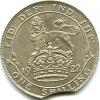
That's why I said negotiate. The coins tend to be ones you remember quite easily at auction, so you know what his input costs are for any specific piece. You know what he is asking and somewhere in the middle it should be possible to have a meeting of minds. It's a much clearer position than the anonymous VF coin dated 1868 which could have come from anywhere and cost anything. That particular shilling was lot 1914 in Triton XV.
-
You should be able to knock him down to £130-140K.
-
69 or 70. Link I've only got his lists for the last 10 years plus a summer 1998. If anyone has any of the missing issues I would be interested in acquiring them. Thanks.
-
Interesting that their letter to you states "breakdown of machinery" while the actual Report states "fully occupied with gold and silver [issues]". I wonder where the modern Mint gets its information about "breakdown" from? I'd hazard a guess from the 1875 report. The text says that the 1876 coins were contracted out because the equipment was fully occupied striking silver and gold. The number of presses at the Tower mint would have to be investigated, but is likely to have been a minimum of half a dozen, so if a couple of them were unavailable, then sub-contracting the copper would be the logical option security-wise. Also, the Heaton mint was regularly striking coins on the same size blanks, so familiarity with the product wasn't an issue. There were a lot of halfcrowns and shillings coming off the press in 1874 onwards. How long this upsurge in demand lasted I don't know because I don't have the records, but thinking about it, the equipment probably broke down due to the excesses of the previous two years because there was no time for maintenance and a lot of coins produced.
-
What are the areas that are neither orange nor green - a rare example of humanity happily tolerating and living with others not the same as them?
-
What does anybody think
Rob replied to SEnumis's topic in British Coin Related Discussions & Enquiries
The 'Patina' things are a pain in the ****, but at no point were they intended to deceive. There are probably 10000+ of various types out there all hidden away. A private venture that played the mint at their own game and they all sold. -
LOL If I had that sort of money I couldn't bring myself to spend it on just one coin! I think if you had that sort of money to throw around your attitude would probably change. There are more than a handful of £50-100K cars, which by definition are 'in your face' as they don't fit into a coin cabinet very easily and certainly won't be around in 500 years time - but people buy them to keep for a few years in the full knowledge that they might get back 1/4 of the original price when they get rid. Hopefully the new owner won't run it into the ground so that it is only worth scrap 10 years from now. Anyway, he only paid $35K hammer for it plus 18% premium and presumably 5% import, so there is plenty of room for negotiation. Give Roddy his due, as he does have top grade coins available for which he will pay handsomely if you are selling, and obviously it works both ways. I know of a few coins that have been sold pre-auction on the basis that what was offered was way in excess of the expected price at auction. If he has a customer willing to pay much higher prices than me or thee, that isn't his fault.
-
That's a rather precise number which should therefore have a singular reason for its existence - what is it?
-
Don't confuse collecting bullion as an investment with collecting coins as a hobby. Buy bullion for a few pounds (literally) under value and sell it for closer to bullion value if you can, preferably within hours whilst at the same time being grateful for the pound or two profit made (if successful). If you think you know where the market is going in a given time frame, there is scope for a longer view, but do not anticipate a fat profit. Bullion dealers make a small margin on quick turnover. Bullion coins are sold across the world for more than their value, because once they have left the mint, very few issues are desirable as collectables and so are repurchased on a price related to their bullion values and nothing else. If you want to collect coins whose value is not direcly related to the bullion price, then there is far more material available than with bullion and a good depth of knowledge available on this forum.
-
The line of bagmarks(?) running along the middle of the truncation looks wrong too. I would have thought that was almost impossible to achive in normal handling. It's almost as if the raised portion of the design is cominaway from the surface.
-
London Coins Auction 2nd-3rd June
Rob replied to Accumulator's topic in British Coin Related Discussions & Enquiries
It is. -
That's a very good point Rob. Though I don't buy 10k coins, I have bought several for £1-2k+, which means that when I spot an example on eBay that would perhaps be a nice upgrade for a relatively common coin worth only perhaps £100, I might nevertheless stick in a bid for £150 just to be sure of getting it. This doesn't mean the coin would generally be worth more than £100, just that there's a fool out there (me in this instance ) willing to pay over the odds to save the time and hassle of finding another such example. I did this very thing the other night, buying an UNC 82 grade CGS slabbed upgrade for over the odds. I can't be alone in ocassionally acting this way! You're not.
-
Even the sharpest get stung there occasionally. The most successful strikes on e bay fall into two camps, in my experience:- a) Nice coins with a high initial bid price, which nevertheless is still nowhere near their true value. Would be bidders are strangely put off by the high start price, and often by-pass it completely, leaving someone else to make the only punt at the original price, thus bagging a real bargain. b ) Really high end coins which would be better off in a proper auction. They will sell, for sure, but usually end up at between 55% to 75% of what they could potentially realise elsewhere. It's a real mistake for high quality expensive coins to be put on e bay. Gambling strikes which may or may not pay off, are on those with poor photography, where the coin cannot properly be seen. This often puts buyers off, leaving the speculator room for a potential killing, or to get their fingers burned. I'd agree with this analysis apart from the one factor you missed out - certain key dates that somehow seem to do far better on eBay than elsewhere, I'm thinking of things like 1903 and 1905 halfcrowns. Regarding the above point b I absolutely agree with the percentages, but I'm not sure which auctions outside of eBay are being talked about for better prices? I spent a few days, six month's back, looking at the realised prices for a number of major auctions...I didn't find that many there that were making Spink book prices either, and sellers premiums aren't any better than eBay (mostly). I know minus 5% has been mentioned before but, generally speaking, eBay aren't off the scale at 10%, and they know it! Does anybody know how often nice coins make their book price in major auctions? Would it be more often than not? I mean, the book prices are set according to the major auction results, so one would think they must more often do, it just doesn't look that way. Do you think books like Spink attempts to 'drive' the market, rather than be an honest reflection OF the market? Out and out raities, best known or way better than average pieces you can disregard the book. Just below that will try to push the boundaries, but not too much. Mid-range pieces will probably make around book after you have added buyer's premium, low grades won't sell unless an acknowledged rarity. Spink doesn't attempt to drive the market prices. As a rule, there will always be a specific coin that goes way over the odds and the reason for it doing so filters into the market gossip. Consequently the yearly price revisions will not reflect a high price in full. We all notice the lots that sell for more than expected, but rarely comment on those that mark time in keeping with the estimate. The latter is a truer reflection of where the market is at and will probably go in the future. The top end is driven by a larger number of people who recognise relative quality and have sufficient funds to not worry about overpaying on occasions. If you are happy paying £10K or more for a coin, it doesn't really matter if you pay £300 for a £100 coin in the overall context of the collection as the overpayment will be a praction of a percentage point of its total value. The problem with overpaying on ebay is that most culprits are doing so out of ignorance with respect to the general market, what dealers have on offer (usually at substantially lower prices), have a reliance on the quoted grade as gospel, and mostly have never seen a high grade coin with which to make a considered judgement.
-
Yes, both are last small cross. It would be easier to read if the pictures were smaller and not pixelated, but the second is a London coin. I think the moneyer is Lifinc.
-
1868 sixpence with double pofile
Rob replied to TerryT's topic in British Coin Related Discussions & Enquiries
Die 10 will only refer to the reverse. The obverse die could have been made the day, week, month or year(s) before, though obviously within the time constraints that the obverse design was current. The profile of the underlying bust is different too which suggests it might be older. Does it match any other portrait styles? Postscript: Willie was let off without any action being taken. -
Looks it bearing in mind you have three sizes of H for pennies, halfpennies and farthings. One of the 1876H halfpennies has a 6 over a farthing 6 and one 1856 halfpenny die has the 6 over a penny 6. I think these punch varieties are more common than people might assume with some taken for a displaced underlying letter rather than a larger one.
-
Yes. One is generally flat, the other is extremely flat.
-
Other than playing the part of an erotic car accessory, does she have any other public persona - porn star, royal correspondent, model? Sorry, I'm not familiar with her.
-
Only 7 weeks It would take me longer to establish I couldn't get out of Kelly Brooks bed. Am I missing something here? Link Just kidding. I'm sure I'd recognise her if I saw her again. In fact I'm sure I saw her sister today, and I'm sure the wife saw I saw her sister too.
-
It's worth breaking my rule not to get two coins of the same type if possible. I have a Cissbury last small cross as a Hobson's Choice piece because all bar one of 39(?) coins for the mint are of this type, but Warminster is sufficiently difficult as a mint to justify doubling up on the type.
-
Excellent, which sale?
-
How many ridges are there on a 10p coin?
Rob replied to Curiousity's topic in British Coin Related Discussions & Enquiries
Round here we have a rhyming word for spade, it's called.............. spade. -
Is it for sale?