

Rob
-
Posts
12,800 -
Joined
-
Last visited
-
Days Won
347
Content Type
Profiles
Forums
Events
Downloads
Store
Gallery
Articles
Everything posted by Rob
-
Lucky b****r. I had to drive to Thatchers. I always used to go and fill the van up on trips home before it became too commercial - 60 or 70 5 litre containers on every run at less than a couple quid each. Much easier to fit in the van than the 144 gallon barrels they had there in the barn. Taste as much as you wanted. Wonderful. It's all gone to pot now they've gone national and exported it outside the local area. The little family business is no more.
-
Port and kippers? Euwww. Peck you should go for it.Everything cancels out for an afternoon lovefest. This really is TMI, Peter! Depends. Could be a sales pitch. Double port and kippers anyone?
-
With the exception of the half sovereign there is nothing of value. As to collectability, that is up to you. If you want to start collecting in depth, you first have to decide on what you like. Your focus will change over time, and there is no right or wrong. For obvious reasons it will be easier to find British material than foreign, but the latter tends to be much cheaper reflecting the lower demand. Junk bins such as you find on market stall would be a major source of foreign coins. At the end of the day it is up to you.
-
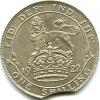
W3 No Stop After DEI?
Rob replied to Coinery's topic in British Coin Related Discussions & Enquiries
1926 halfcrowns suffered a similar fate with the No Colon variety, as I recall! Also 1961 halfcrowns "E.F. designer initials missing reverse" - I bought an example of this in 1978, but at no great premium, so I'm not downcast! However, there are clear cut 'no stop' varieties which aren't blocked dies - the 1787 shilling comes to mind. Even then a spanner gets thrown in the works because the no stops at date reverse die ends up with the first adjacent stops on both sides blocking to produce a 'no stops at date and in the immediate vicinity' variety! -
W3 No Stop After DEI?
Rob replied to Coinery's topic in British Coin Related Discussions & Enquiries
In the overall context of a collection it is unlikely to have much effect as very few people have a collection that could be counted on their fingers. For any single coin in a collection, when the time comes to sell, it may or may not recoup the amount paid. Collections should be looked on as a whole rather than as individual pieces and accordingly will only register a loss if coins are routinely bought way in excess of current market values. A balanced or diverse collection will probably increase in value over time as long as long as the bottom doesn't fall out of the market across the board. With the exception of Scott , we all overpay for something along the way. The key to building a collection that will hold its value is to only do this occasionally. -
Mmmm. Blue cheese.
-
I think you are on the right line, coincidentally the only other year that saw this number of overdates/reuse of dies was 1848, and the same numbers were in use as well 3, 6 and 7 In the case of 1848 there was a lot of concern regarding die longevity which was documented in the mint records. Whatever the reason for this may have been, it is the most likely reason for the 1848 overdates. In the case of 1858 the reason may well have been a delay in the bronze coinage. Quite a lot of the 1857 and 1859 patterns display laminating flans, suggesting they were struggling to get conditions right for the new thinner flans. A further consideration may be that they were using up old dies before being forced to cut a new obverse. It is in 1858 that the no WW bust is introduced. WW died in 1851, so obviously couldn't have produced a new bust punch in 1858, but without any initials on it, do we know whether the no WW bust punch is the old one refurbished or a new one that is practically identical to the WW below? Anyone?
-
You've included several alloys there Rob - shouldn't the "Silver 0.500" be amended to show the various compositions of silver alloy used from 1920 to 1946 (and 1986)? Probably, but that is a research project in itself given there was usually little or no controls over the purity of the additives. I have used the nominal finenesses as proclaimed or indentured in the case of the precious metals. Any trials in lead or tin are likely to have varying degrees of the other element as impurities, but there would likely be no strictly adhered to specification for metals such as this. Metals other than those indicated in the indentures are therefore quoted as observed with no regard for the accurate percentages. I could probably add a couple more for the variation in bronze during the war and immediately afterwards. Even in the case of some nominally sterling standard silver issues there was variation in the fineness, for example, the Civil War coinage was never pyxed although an attempt appears to have been made to retain the standard. In practice though, this was variable as different prices were paid for touched and untouched plate, but you can rest assured that all the silver brought in would be used. The figures for York halfcrowns analysed by Besly (BNJ 1984) show that the purity of the silver varied from 91.1% to 93.2% with varying amounts of copper, gold and lead together with other traces in the mix. Touched silver could be melted and used without assay, but other silver needed to be refined. The figure higher than 92.5% was probably due to the inclusion of ducatoons or similar in the raw material, as these were 0.940 pure.
-
These are the metals from which coins have been struck in this country that I've identified so far to be included in the collection. METAL TYPE Aluminium Aluminium-Bronze Antimony - Probably doesn't exist. Freeman gives P2114 as Sn/Pb 2:1 Barton's Metal Billon Brass Bronze Bronzed Copper Brown Gilt Copper Cadmium Copper Copper/Brass Copper/Nickel-Zinc Copper plated Steel Cupro-Nickel Gilt Copper Gold Gold 20c (0.8333) Gold 22c (0.916) Gold 23c (0.9583) Gold Fine (0.979) Gold Fine (0.992) Gold Fine (0.994) Gold Fine (0.995) Iron Lead Nickel Nickel-Brass Palladium Pewter (various alloy ratios) Phosphor Bronze Platinum Potin (Cu/Tin alloy) Silver 0.999 fine Silver 0.958 fine Silver 11oz3dwt (Ed.VI) Silver 0.925 fine Silver 0.921 fine E1 5th iss Silver 0.916 fine (11oz) Silver 0.833 (Ed.II) Silver 9oz2dwt Silver 8oz2dwt Silver 6oz2dwt Silver 0.500 Silver 4oz2dwt Silver 4oz Silver 3oz2dwt Silver Plated Copper Steel Tin Zinc
-
Oooh! Real James Bond stuff! Snap open the Calcium, drop it in water and stand well back! I think you mean Caesium.
-
Thanks John. May as well and stick it all in the mix. I think the main point to be taken from this so far is that the flawed die where the line runs through the base of the digits is unambiguously the same on quite a few coins, all of which have been previously considered 8/3, but based on my example would not appear to be. The varying states of the last digit also show that you can get the impression to a greater or lesser extent that there could be an underlying 3. On the two images posted above by John, the line flaw clearly links the die, but the inside loops of the 8 show curves which would be compatible with a 3(?)!. My coin, which doesn't show any sign of what could be a 3 is presumably a different state of disintegration of the filled digit. The problem is compounded by a choice of methods whereby the die can degenerate. You can have detail that can be progressively blocked with time, but you could also have a filled die where the material used gradually comes away. You could also have subsequent infilling of the areas where bits have fallen off the filler - ad infinitum! It beggars beleif that the die could be filled with a piece of metal that was exactly the same shape as that of the digit on the die and so we must consider the possibility that the die was filled using material that was probably the best achievable fit, but that this may have been repeated a few times until no more material could be added. A variation on this theme would be to force a soft piece of metal that was slightly larger than the hole into it using a vice or similar, polish it down level with the field and then reharden the die. All options considered, that could potentially result in any apparent shape you care to mention at any point in time depending on the integrity of the material used as filler. The angled lump superimposed on top of the 5 on my coin is consistent with a smaller digit and ties in with the top of the 7 as regards alignment. I've not seen this elsewhere, but reinforces the argument that what appears to be the top of a smaller 7 is correct. It is also a logical and well documented overdate known from a few dies.
-
And under the microscope from a different angle

-
different colour and contrast

-
Mindful that different screens give different colours and contrast. Here is one with the bits that match a 7 highlighted followed by one with different colours and contrast. Compare with the initial image.

-
Weight of Henry VII halfgroat required
Rob replied to Rob's topic in British Coin Related Discussions & Enquiries
What a great story! Does this help Rob: English Coins 1180 - 1551 Thanks, I know I can buy it and it isn't a problem finding copies. Just haven't got around to it yet. -
It is the flaw in this image that is characteristic of the usually attributed 8/3. Later strikings have a similar flaw along the top of the date. The image I posted earlier has a trace of this flaw, but it isn't fully developed.
-
The coin I have as 1858/3 has been discussed in the past, and I now believe it is something else altogether. I really haven't studied the copper overdates, certainly not to the extent of someone like John (Chingford) but I'm keen to get a better knowledge. Anyway, for comparison, here's my (probably not) 8/3: That looks like a lower and higher 8. The debate over the 1858/3 has gone on for years and Michael Gouby has spent a considerable amount of time on it. However, this coin has the crossbar of the 7 showing on top of the 8 whereas this is not seen on others and there is also the remains of the downstrike crossing the base of the 8. It also has the top left angle of the small 5 superimposed on the large 5 in quite high relief. It's always a good thing when they don't fill the old digits in perfectly. . I can feel a short note in the Circular coming on and that's one less entry in Peck unless someone can come up with a suitable alternative. It's a great shame that Peck's notes have gone walkabout as it would have been useful to see what he noted against each variety and in particular this one given its ambiguity. Unfortunately I've only got his notes for the first ten years of the bronze coinage. You may be right about my coin, though it does exhibit a portion of what is potentially a '3' to the lower right of the '8' (the 3's do protrude more) and there's no evidence of the lower part of a 'higher' 8 anywhere at the bottom. Have you got a small date '57 to compare with your coin? I only have a poor photo, but comparing to this the serif on the 7 of your coin is way too short. I'm not convinced its a 58/7. The amount of the previous digit remaining depends on how well the die was filled before the replacement digit was added. If the new character was only subtly different from the original then you may find that the die was not filled at all before recutting. 8 over 6 would be a good candidate for this sort of thing as would 8 over 3. When the shape of the new character is completely different then they would fill the old character in on the die. How, I'm not sure. It could sheet metal, annealed chips or wire hammered into the space - whatever. Depending on the amount of metal crammed into the old space, you may or may not see the shape of the previous character superimposed on the top of the new one. In the case of detail showing on top of the new character, this would be where the void wasn't completely filled prior to recutting. That was how I identified the 1807 proof halfpenny die's origins (see confirmed unlisted section for images and BNJ 2007 for the article). In the case of the serifs, they would be visible on the die in the field and so it would be possible to check that the hole has been completely filled at this point, something which cannot be done deep down in the die. The minute you fill a die you are on a hiding to nothing trying to match fine detail such as serifs, but the overall outline of the previous character is frequently seen.
-
The chances are that most will have no value above scrap prices, but you can always get a nice surprise. Gold and silver will be worth bullion as a minimum, bronze in general needs to be in reasonable condition to have value, though there are a few exceptions to this. Most 20th century British coinage needs to be in high grade to have much value. You will have to post a few pictures if you want specifics. Before you see anyone for a valuation, there are enough people on this forum to give you some ballpark figures. Living in Penzance, you might find your nearest dealer is in New York. - just kidding.
-
The coin I have as 1858/3 has been discussed in the past, and I now believe it is something else altogether. I really haven't studied the copper overdates, certainly not to the extent of someone like John (Chingford) but I'm keen to get a better knowledge. Anyway, for comparison, here's my (probably not) 8/3: That looks like a lower and higher 8. The debate over the 1858/3 has gone on for years and Michael Gouby has spent a considerable amount of time on it. However, this coin has the crossbar of the 7 showing on top of the 8 whereas this is not seen on others and there is also the remains of the downstrike crossing the base of the 8. It also has the top left angle of the small 5 superimposed on the large 5 in quite high relief. It's always a good thing when they don't fill the old digits in perfectly. . I can feel a short note in the Circular coming on and that's one less entry in Peck unless someone can come up with a suitable alternative. It's a great shame that Peck's notes have gone walkabout as it would have been useful to see what he noted against each variety and in particular this one given its ambiguity. Unfortunately I've only got his notes for the first ten years of the bronze coinage.
-
Six years on it is worth resurrecting this post. I've just acquired what I think is a fairly definitive example of the 1858/3. It has the flaw through the bottom of the date and just a trace of the top flaw showing, though not fully developed. It is a 58 over a small date 57.

-
The Last of Die Punches?
Rob replied to Coinery's topic in British Coin Related Discussions & Enquiries
I would have thought that a set of punches was still available for use in the event of repairs being required, though used infrequently. -
1876 H farthing large 6
Rob replied to copper123's topic in British Coin Related Discussions & Enquiries
I'd distinguish "dedicated buyers competing" from "sometimes naive, sometimes idiotic, sometimes conned buyers" though. Been there. Sometimes you have to push the boat out, though it helps if you have a reason such as first example in decades, only decent example available, or even only example available. US commission bids are particularly problematic as they are frequently unrelated to the estimate or book price. Then it becomes a case of how many times estimate either party is prepared to bid which is alright once in a while as long as you don't make a habit of it. -
Weight of Henry VII halfgroat required
Rob replied to Rob's topic in British Coin Related Discussions & Enquiries
A couple of enquiries has sorted it or so it appears. Lord Stewartby's book talks of Henry VII's expedition to Boulogne in 1492 when approximately 2 million halfgroats were struck and used to pay the soldiers. Being underweight, it is assumed they were trying to offload these in France, but the scheme apparently rebounded as they were declared not to be legal tender in England on their return and had to be exchanged for coin of full weight at face value. So presumably the ploy cost Henry dearly. The find of these coins in Ireland may well be coincidental and due to a soldier returning home, or alternatively an enterprising individual trying to present them at face value in Ireland where the value of silver approximately equalled that in the Irish coinage. That still leaves the question of which coins are behind the proclamation of 1491 which would have preceded the lis marked issue if struck in 1492 and why the order should need to be repeated in 1497 and 1499, though it might refer to Dublin mint coins which were progressively reduced from 45 grains to the groat at the beginning of Edward IV's reign to around 30 grains by the 1490s. If anyone has a copy of the book I would appreciate a scan of the relevant section which is on page 342(?). Also any indication of the article or document from whence the info was gleaned. Thanks in advance if you can help. -
Weight of Henry VII halfgroat required
Rob replied to Rob's topic in British Coin Related Discussions & Enquiries
Agreed, but looking at the above, I don't think they were clipped. All the halfgroats tend to be on small flans, whether full weight or not. It is the 3:2 ratio of the pound in Ireland to the English pound that makes me think the coins are actually at the intended weight. Groats and fractions were struck in Ireland at this time with mints at Dublin, Drogheda and Waterford operating at around the time of Henry VII's accession. It didn't help that Lambert Simnel, who was crowned Edward VI in Ireland had coins struck reading EDWARDVS in Dublin. The master of the mint at Waterford was a Lancastrian and so we effectively had a continuation of the War of the Roses being played out. With this backdrop, it would make sense to suspend coinage until the situation was resolved. Accordingly, there is justifiable reasoning to consider the lightweight Lis marked Henry VII halfgroats as part of the solution to this problem. If you have English 2d coins of 2/3 the weight of those current in that country, they would pass as full value (2d) in Ireland. They would also be unambiguuously Henry's coins. Political, propoganda, probably although without documentary evidence you can't be certain. But having produced them to a lower weight, it would also help explain why there was a lot of effort expended trying to stop their reintroduction into England given they only contained 1.33p. -
Weight of Henry VII halfgroat required
Rob replied to Rob's topic in British Coin Related Discussions & Enquiries
There is a further consideration which I've just woken up to (dozy b****r). What if they were coined specifically for use in Ireland? I haven't found any records suggesting this, but given the propensity for anything sent to Ireland to be either underweight or debased, this is a distinct possibility. In 1487, the English pound had a de facto value in Ireland of £1.50. Now, this is roughly the ratio of the weights of the lis marked coins in relation to the other marks. I think we could be onto something here. In 1897 a hoard consisting solely of Henry VII 2nd coinage halfgroats bearing the lis mark was found in Wicklow (BNJ vol.10 p.313-4). All were considerably clipped, but showed no signs of having circulated, i.e. they were fresh from the dies. Clipping was a serious problem in Ireland at this time to the extent that an Act was passed on 15th April 1491 prohibiting the payment or receipt of any clipped or counterfeit currency and later on the import of coin from Ireland above the value of 3s4d was forbidden. This was reiterated in 1497 and 1499. There is a possibility that coining in Ireland was suspended for an unknown length of time during the reign of Henry VII. What if the Lis marked coins were earmarked specifically for Ireland to overcome the problems emanating from this country? The coins in the Ashmolean bearing the lis mark are slightly small, but not 35% small and so the sheet from which the flans were cut must have been thinnner. Below is a selection of Tower lis halfgroats followed by the York Royal Mint attributed coins from the sylloge. At the bottom of the second page are some struck under Abp. Savage. Coin 151 is the lis on rose example, plugged, but only weighing 0.94g. Above this are a few typical lis marked second coinage halfgroats. I don't know if any of the illustrated coins were part of the Wicklow hoard. Although the lis marked coins are small, they are typically no smaller than the flan size of most Canterbury or York episcopal coins. Challis (BNJ vol.XL p.97) and Dolley (SNC.1971 p.370-374) both consider the question of Ireland's Tudor coinage, but only in isolation. I think we may well have an English dimension to the coinage in addition to those items struck in Ireland. If all the lis marked coins were clipped down to roughly 2/3 size, then we could comfortably say that they started at full weight, but the size of flan is not dissimilar to those struck elsewhere. Consequently I think it quite likely that they were struck intentionally for Ireland to a reduced weight in accordance with the prevailing exchange rate on the ground, despite the lack of documentary evidence. All good fun.


